
AI Voice Agents for Business: Stop Losing the Calls You Can't Answer
AI voice agents answer calls 24/7 for $50–400/month vs $2,500–5,000 for a human receptionist. Real call data, costs, and a decision framework for your business.
An AI voice agent is a system that answers and makes phone calls in natural language, resolves simple requests and transfers to a human with full context, 24 hours a day. An analysis of 1,446,980 real calls across 2,074 businesses (NextPhone, 2025) shows that 28.5% of inbound calls arrive outside business hours — and 34.8% of those after-hours callers have buying intent. Meanwhile, an AI voice agent costs between $50 and $400 USD per month, versus $2,500–$5,000 for a human receptionist. If your business depends on the phone, the question isn't whether this makes sense anymore. It's what it costs you not to have it.
The problem isn't your phone: it's what happens when you don't answer
Start with the numbers that hurt. From the same 2,074-business dataset:
- 51.2% of inbound calls are real leads. 4.8% want to buy or book right now.
- 28.5% arrive outside business hours; 12.8% come in between 6 and 9 PM.
- 34.8% of after-hours callers express buying intent.
- 51.5% of calls signal urgency: "today", "right now", "as soon as possible".
Practical translation: if you get 100 calls a month, roughly 29 arrive when nobody is there, and about 10 of those are buyers who hang up and call the next business on Google. At 500 calls a month, that's ~50 lost buying-intent calls every month; at a $500 average ticket, that's $25,000 USD per month in calls your competitor is answering. CloudTalk's data on trades is brutal: roofing contractors answer just 37 of every 100 inquiries. The industries that depend on the phone lose the most.
Speed kills too. Invoca reports that 37% of phone leads convert during the call itself; 56% of customers expect a response within an hour of submitting a form, but only 36% actually get one. A Harvard Business Review study found that contacting a lead within an hour makes it ~7× more likely to qualify. We covered this in depth in lead response speed and conversion: the phone is where lost speed is most expensive.
What a voice agent is (and isn't)
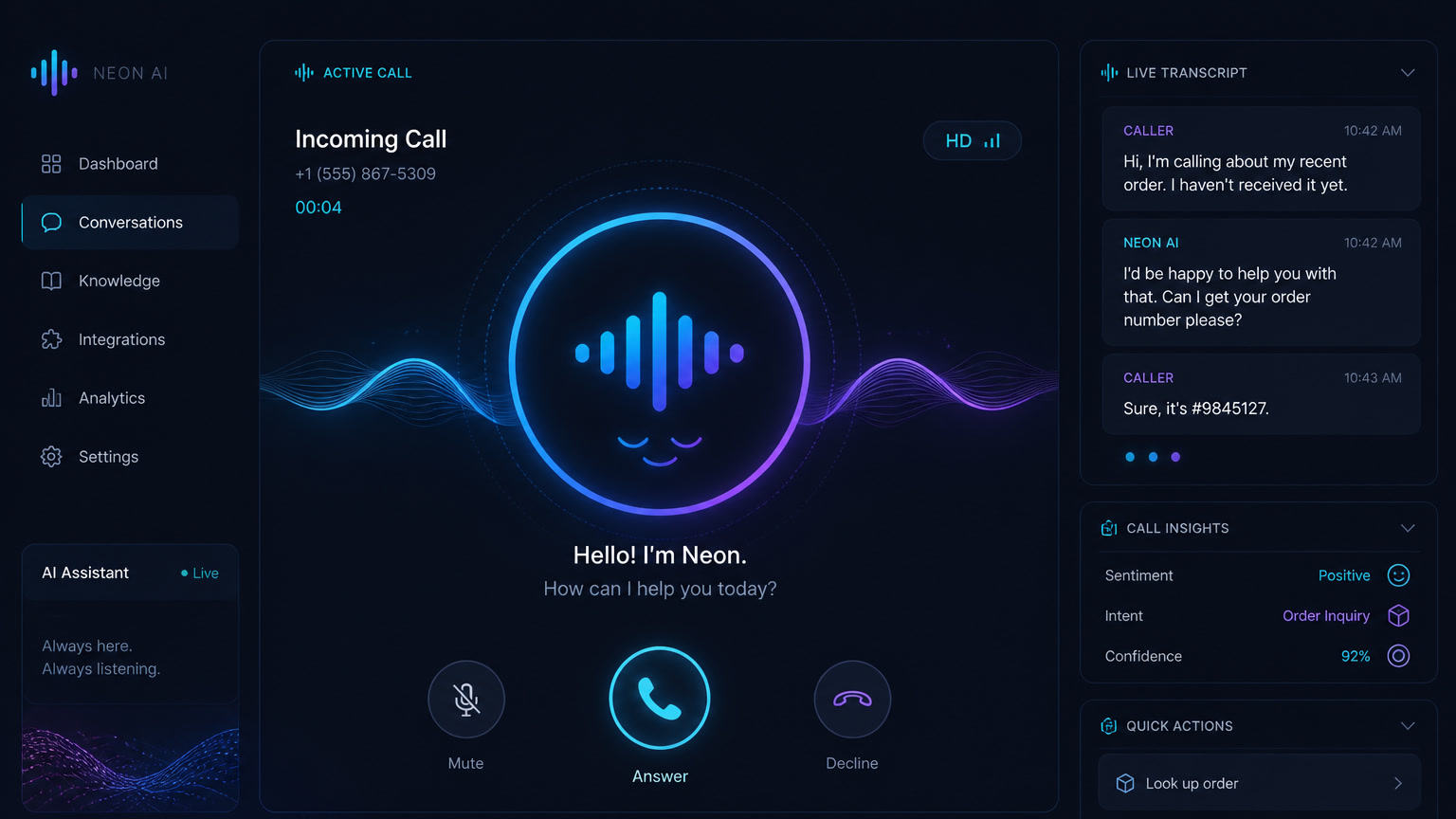
It's not an IVR. An IVR tells you to "press 1 for sales, press 2 for support" and leaves you on hold. A voice agent holds a conversation: it understands what you're asking, answers, books, captures data and transfers with context.
It's also not a text chatbot with a voice. In the NextPhone dataset, the average conversation lasts 7.1 exchanges, and booking calls average 15 full turns: the agent proposes times, checks availability and confirms details. 99% of callers rated the interaction positive or neutral, and 8% of calls were handled in Spanish with no bilingual staff hired. We've already broken down chatbot costs for local businesses: the voice agent is the missing layer of the same problem.
The market confirms it. Grand View Research values the AI voice agent market at $2.54 billion (2025), heading to $35.24 billion by 2033 (39% CAGR), and 52.1% of current revenue comes from inbound agents: reception, support lines and booking. The dominant use case isn't AI telemarketing. It's not losing the call that's already looking for you.
The 3 routes to implementing a voice agent
| Route | Examples | Monthly cost | Setup | Best for |
|---|---|---|---|---|
| 1. Receptionist SaaS | NextPhone, Fonema, Kosmo | $50–400 USD | Hours to days | SMBs that live off the phone, multilingual, no technical team |
| 2. Phone platform with AI | CloudTalk, RingCentral AIR | From ~$30–100 USD per user + AI module | Days | Teams with an existing phone system, combined sales and support |
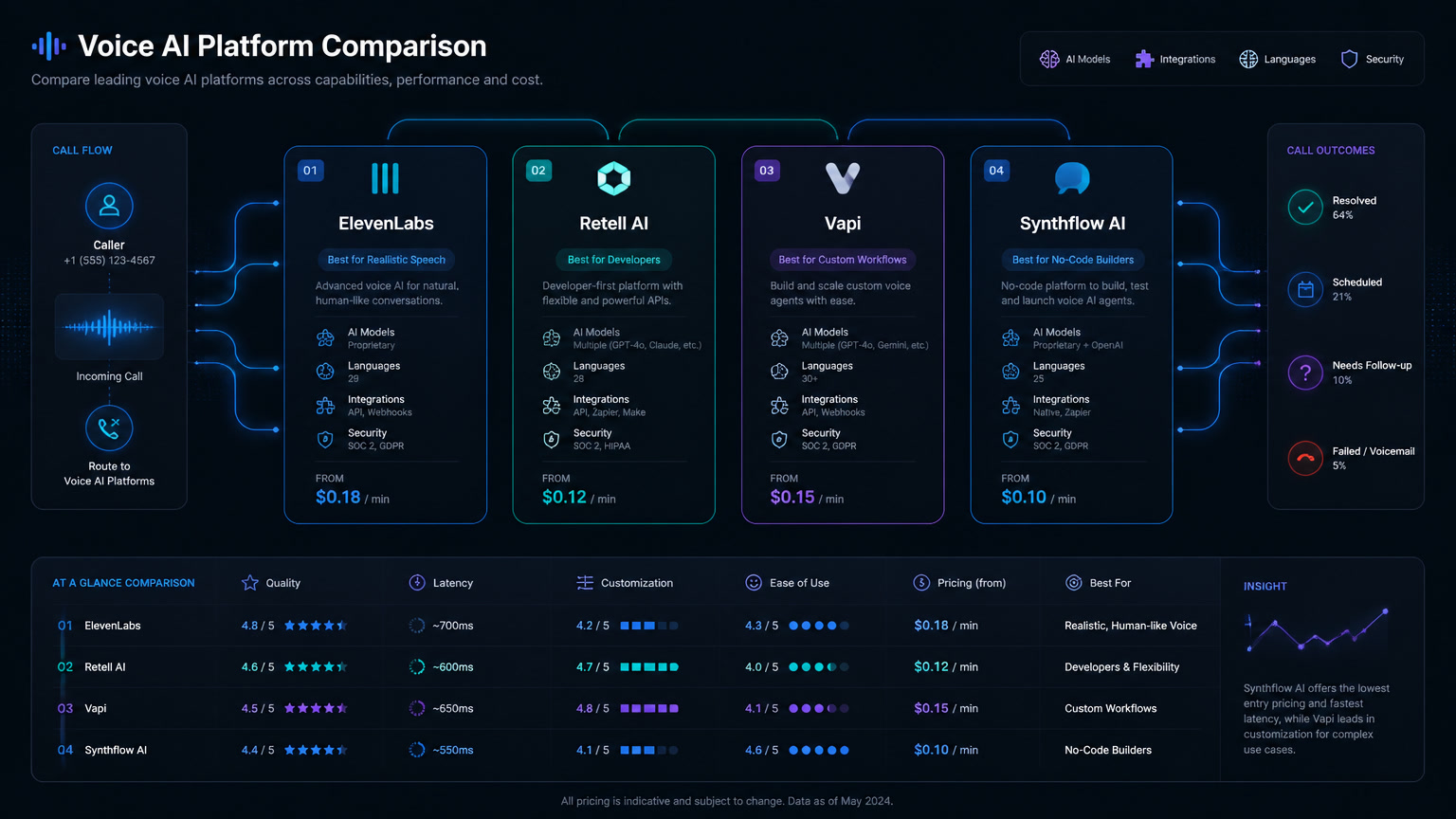
| 3. DIY with n8n + voice APIs | n8n + Twilio + Deepgram/ElevenLabs | $20–150 USD infrastructure + minutes | 1–3 weeks | Custom integrations, sensitive data, your own CRM |
Per-minute costs matter: ElevenLabs/ContactBabel puts a voice agent at ~$0.08 USD per minute versus $7.16 for a human-handled call. In Mexico, the real entry point is $1,290 MXN/month for 200 minutes (Kosmo), with overage at $2.20–$2.80 MXN per minute.
Our position, after evaluating these routes for clients: for most SMBs route 1 is right, but the real competitive edge is connecting that agent to your CRM and automation flows so the call doesn't end in a transcript PDF nobody reads. It's the same architecture pattern we documented in AI lead generation agents with n8n: capture, enrich, score, deliver.
Decision framework: voice, WhatsApp or web chat
The right question isn't "should I use AI?" — it's "which channel wins at each customer moment?" Here's the matrix we use:
| Customer situation | Winning channel | Why |
|---|---|---|
| Urgency ("are you open today? any appointments?") | AI voice | 51.5% of calls signal urgency; answering in <2 seconds |
| Needs evidence or time to decide | Written record; the customer reviews when they want | |
| Browsing your site with quick questions | Web chat | Page context, low friction |
| High-ticket purchase or complex problem | Human with AI support | Rapport closes; 88% prefer a person for complex help |
| After hours, any channel | AI (voice and WhatsApp) | 28.5% of calls happen there; the agent captures and books |
And five questions to decide if a voice agent is for you:
- Does your business depend on the phone to sell or book? If nobody calls you, you don't need it.
- How many calls are you losing today? Under 10 a month: fix hours and notifications first. Over 30: the agent pays for itself.
- What do most calls resolve? Appointments and quotes → route 1. Complex support or multi-department → route 2.
- Does someone on your team maintain integrations? No → SaaS. Yes → DIY with n8n connected to your CRM.
- Do you handle sensitive or regulated data? Yes → verify provider compliance or evaluate self-hosted, the same criterion we applied in WhatsApp automation in regulated industries.
What voice agent vendors won't tell you
Three warnings you won't find in the brochure:
1. Customers want to know they're talking to AI. Salesforce reports 72% of consumers consider it important to know whether they're interacting with a machine. Say it at the start of the conversation: trust drops harder when customers find out on their own. It's no coincidence that trust in autonomous agents fell from 43% to 27% in a year (Capgemini), and Gartner projects over 40% of agentic AI projects will be canceled by 2027. The survivors start small: reception, not total autonomy.
2. Containment isn't satisfaction. The agent "resolving" 70% of calls doesn't mean 70% of callers were happy. In the NextPhone dataset, 73.8% of interactions end in smart transfer to the right human — and that's the system working as designed, not failing. Design the handoff with context (who's calling, what they want, how urgent) and measure post-call CSAT, not just containment rate. And like any chatbot, the agent needs continuous training: apply the same continuous improvement framework we use for chatbots.
3. Nobody is mass-firing receptionists. Per Gartner, only 20% of service leaders cut headcount because of AI; 55% kept staffing stable while absorbing more volume, and 42% are creating specialized AI roles. The winning pattern is augmentation: AI covers the hours nobody covers, the lunch-hour overflow and the Spanish nobody speaks; your team focuses on closing and retention. In Latin America, where dollar-cost sensitivity is decisive (we documented it in no-code automation for LatAm SMBs), the voice agent competes against a part-time receptionist — and still wins on coverage and language.
Where to start, without over-engineering
- Audit for two weeks: how many calls you get, when they arrive, what callers ask for. That baseline is what 90% of businesses don't have.
- Pick a route from the table above. If in doubt, start with SaaS: setup takes days.
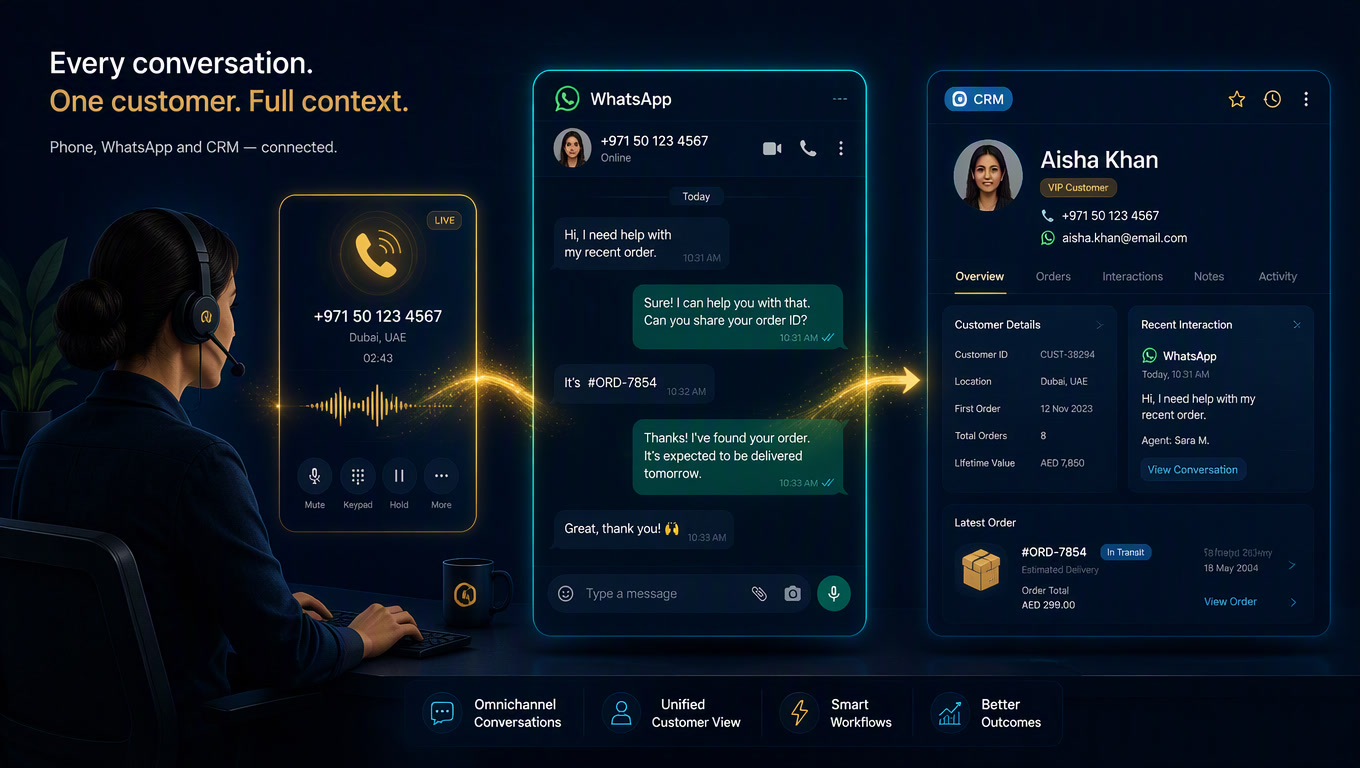
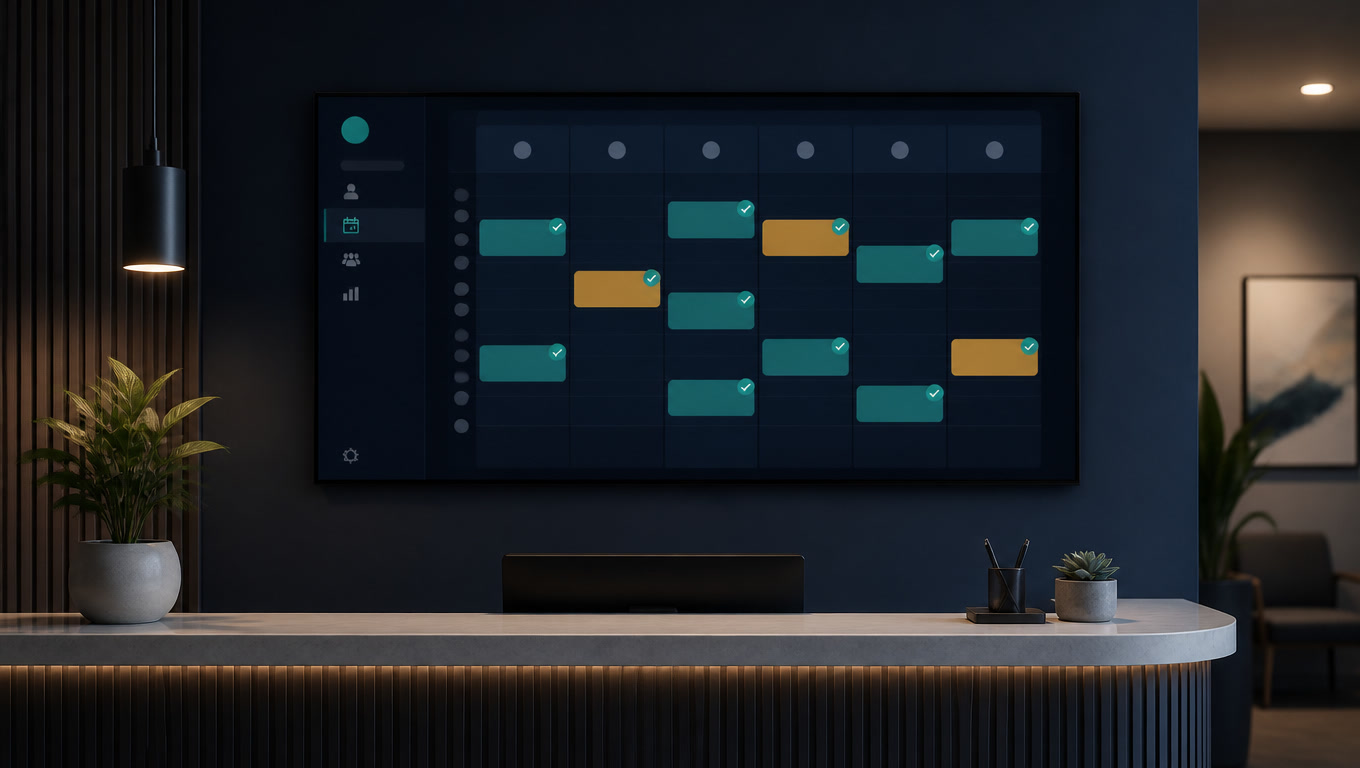
- Configure the script, handoff and CRM on day one: the agent should create or update the contact in your CRM (we do this with Clientify) and notify the team when a qualified lead comes in. AI-powered scheduling is already proven, as we showed in AI agents for appointment scheduling.
- Measure what matters: calls answered, correct transfers, appointments booked and CSAT. Not "conversation time".
- Extend later to WhatsApp and email in the same flow. The voice agent is one more piece of your automation stack, not an isolated project.
An AI voice agent isn't a luxury or a gadget. It's the 2026 version of answering the phone. The data says a third of your calls arrive when you can't answer, and a third of those have money in hand. The technology to capture them costs less than an ad campaign. The real question is whether the call that rings at 8 PM gets answered by your competitor — or by a system that books the appointment and leaves it waiting for you in the CRM by morning. If you want to evaluate whether a voice agent makes sense for your business, that's exactly the kind of automation and chatbot work we build at Mintec.
Frequently Asked Questions
What is an AI voice agent?
It's a system that answers and makes phone calls in natural language, resolves simple requests (hours, pricing, appointments) and transfers to a human with full context. It works 24/7 and costs a fraction of a receptionist.
How much does an AI voice agent cost for a business?
Between $50 and $400 USD per month for a receptionist SaaS, with per-minute costs around $0.08. A human receptionist costs $2,500–5,000 USD per month, and the average return on generative AI is $3.70 per $1 invested within about 13 months.
Does an AI voice agent replace the receptionist?
In practice, no: only 20% of service leaders cut headcount because of AI, and 55% kept staffing stable while handling more volume. The winning pattern is AI covering hours, overflow and languages nobody covers, while humans focus on closing and retention.