

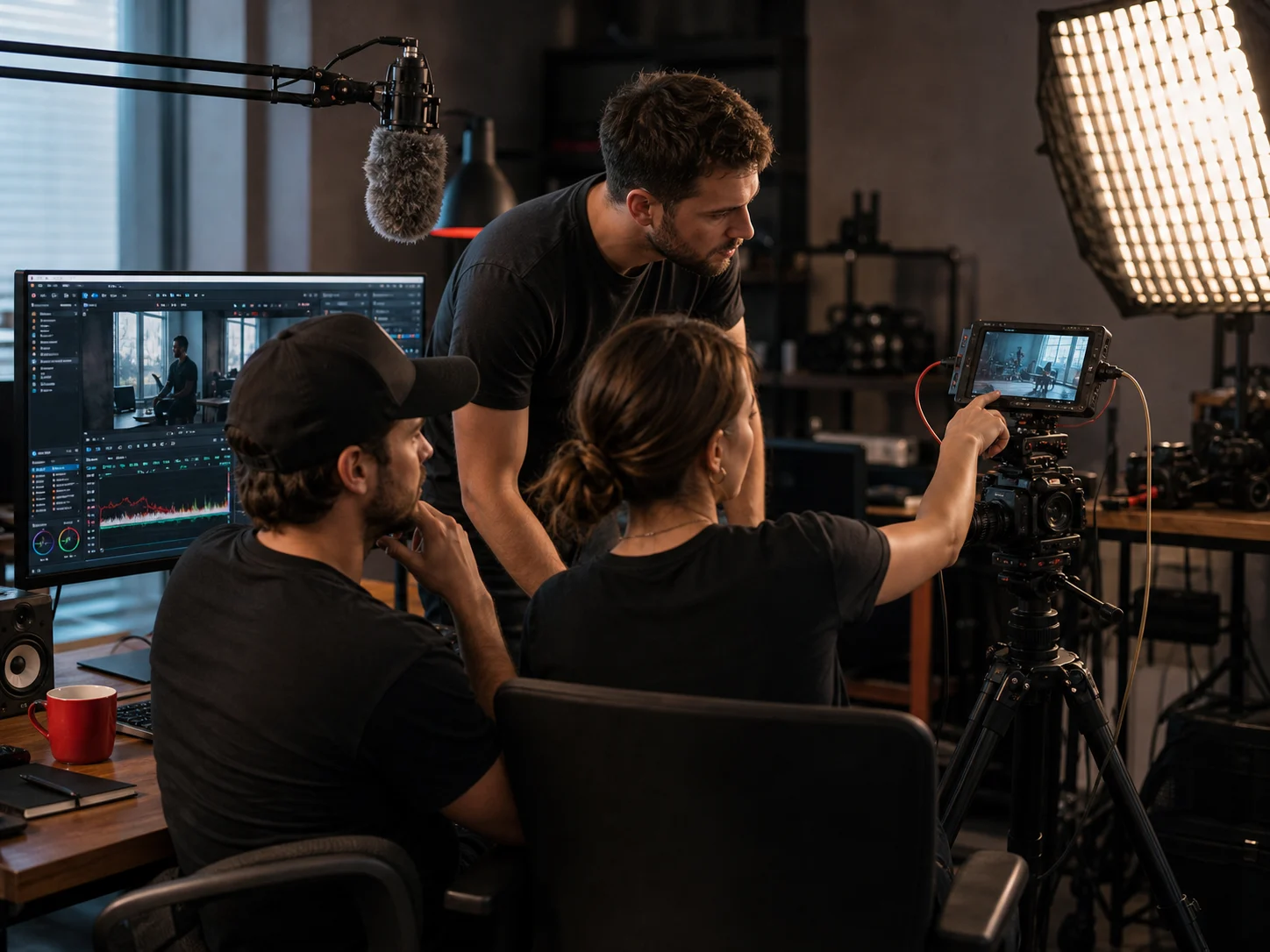
The Future is Synthetic
The constraint of physical production—cameras, lights, scheduling—is disappearing.
At Mintec, we are at the forefront of Generative Media. We help brands build content factories that can produce hours of high-quality video and audio in minutes. Whether you need to train a global workforce in 20 languages or send personalized sales videos to 10,000 prospects, AI makes it possible.
The Numbers Behind Synthetic Media
According to Forrester Research, organizations using AI-generated video content report up to 90% reduction in production costs and 2.5x higher engagement compared to static content. The ROI is not theoretical—it's being realized by early adopters across industries.
Real impact: A multinational retail brand with operations across Europe needed to train 5,000 employees in 30 regional offices on new compliance procedures. Using traditional methods, this would have required filming 30 separate versions with different presenters and languages—budgeted at over $400,000. Instead, we deployed a single AI avatar, cloned the CEO's voice, and generated localized training videos in 29 languages in just 3 days. Total cost: under $15,000. The training completion rate increased to 94%.
We've documented how enterprise teams measure real ROI from synthetic video beyond the initial hype. Our analysis of Meta's Andromeda creative diversity framework explains why AI-generated video variants outperform single-creative campaigns. For brands investing in YouTube as a channel, our YouTube marketing guide covers how AI video scales your presence cost-effectively.
Beyond the Hype: Where Synthetic Media Drives Real Revenue
The most effective uses of AI-generated video go beyond cost savings—they unlock entirely new go-to-market motions. In e-commerce, brands using personalized AI video in email campaigns see click-through rates increase by 3x–5x compared to static product imagery (Wyzowl State of Video Marketing 2026). For real estate, AI virtual tours with cloned narration reduce property-showing-to-offer time by an average of 40%.
One channel often overlooked: multilingual product demos at scale. A B2B SaaS client in Mexico City needed localized walkthroughs for prospects in Brazil, Colombia, and Spain. Instead of filming three versions, we generated a single AI avatar trained on their product specialist, then localized the script and lip-sync in Portuguese and two Spanish dialects. Deal velocity improved by 28% in the first quarter because prospects could watch a demo in their native language immediately after the first sales call.
The technology is evolving fast. Our analysis in Synthetic Media: Revolutionizing Video Production covers the latest capabilities in avatar fidelity and voice cloning accuracy. For brands that also need custom visual assets alongside video, Generative AI for Unique Brand Assets explains how to build a complete owned-media library without traditional photoshoots.
The Enterprise Adoption Curve
The synthetic media market is projected to reach $34 billion by 2030 (Grand View Research, 2026), growing at 28% CAGR. Early adopters in financial services and insurance are already using AI video for compliance training, policy explanations, and personalized claims communication — verticals where consistency and accuracy are non-negotiable. A mid-sized insurance group we worked with in Colombia replaced 12 static policy explainer PDFs with a single AI avatar that narrates personalized coverage summaries. Customer comprehension scores improved by 42% and support calls about policy terms dropped by 31%.
For enterprise teams managing compliance at scale, our framework on synthetic media accessibility and compliance covers the regulatory requirements across markets. We've also documented how Meta's AI dubbing pipeline handles multilingual lip-sync at production quality, and for audio-first applications, our guide on AI podcast and synthetic audio production explains where voice cloning adds the most value versus human narration.
AI Video in Sales Development: The First-Touch Advantage
The highest-ROI use of synthetic video we see today is in outbound sales development. A prospect who receives a personalized video—an AI avatar speaking their name, referencing their industry, and delivering a 45-second tailored pitch—is measurably more likely to engage than one who receives another wall of text. Vidyard's sales research shows that adding video to a prospecting email raises reply rates by an average of 26%, and Wyzowl's 2026 State of Video Marketing reports that 91% of businesses now use video as a marketing tool, with 87% of those marketers calling it a positive ROI driver.
Example: A B2B SaaS company in Bogotá had a team of six SDRs sending 900 cold emails per week with a 2% reply rate. We trained an AI avatar on their head of sales, built a template engine that personalized the first 15 seconds for each prospect's company and role, and integrated it with their CRM so every follow-up sequence included a fresh video variation. Reply rates climbed to 7%, and 40% of the meetings booked in the next quarter were attributed to video-touched sequences—without adding a single headcount.
For a broader view of where synthetic media fits in the funnel, our AI video marketing guide maps use cases from awareness to retention. If you want to run this stack on open-weight models, open-weight video AI in 2026 covers the self-hosted options that keep customer data on your own infrastructure. And for teams that manage video across many languages and regions, our piece on video content models in headless CMS explains how to structure assets so they can be repurposed everywhere.
AI Video as a Product Feature, Not Just a Marketing Asset
The most durable deployments we see embed synthetic video directly into the product experience. Onboarding videos that regenerate when a feature changes, personalized video receipts after a purchase, or avatar-led explainers inside a mobile app all convert a marketing cost into a retention feature. A fintech client in Lima embedded a cloned-voice narrator into their app's in-app guides: support tickets about navigation dropped 26% in two months, and average session depth on the help center doubled.
When synthetic video lives inside a product, it needs the same engineering rigor as any other feature. Our ecommerce platform development team builds the pipelines that serve personalized video at scale, and our content creation practice keeps the underlying scripts and assets fresh. If the video is tied to paid campaigns, pairing it with digital ads creative testing multiplies the number of variants you can put in front of the algorithm without new production spend.
Hybrid Production: When AI Meets the Crew
The debate isn't AI versus traditional production — it's knowing which assets belong in each lane. According to MediaBridge's 2026 Video Production Survey, 73% of enterprise video teams now run hybrid workflows where AI handles volume and localization while human crews shoot hero content. The ratio matters: brands that assign AI to repetitive, high-variation tasks (personalized intros, multilingual explainers, product walkthroughs) while reserving crew time for emotionally resonant hero pieces produce 4.2x more total video assets per quarter at 40% lower blended cost than teams using either approach exclusively.
A consumer retail holding company in Colombia operating 12 brand subsidiaries needed quarterly product launch videos in both Latin American Spanish and Brazilian Portuguese. Previously, each subsidiary hired its own production crew — 24 shoots per year across two countries, averaging $18,000 per shoot. We restructured the pipeline: a single 2-day studio session captured all hero footage (product close-ups, lifestyle shots, spokesperson segments), then AI avatars and voice cloning generated localized explainers, social cutdowns, and distributor training versions from the same source material. Total annual production cost dropped from $432,000 to $127,000, and time-to-publish for each launch went from 6 weeks to 11 days. The freed budget funded a dedicated audiovisual production investment in one flagship brand film that became the anchor for the holding company's digital strategy across all 12 subsidiaries.
Measuring Synthetic Video Performance: The Metrics That Matter
One risk of scaling video with AI is producing volume without measuring impact. Vanity views don't pay bills — watch-through rate, cost-per-qualified-lead, and pipeline attribution do. Vidyard's 2026 benchmark report found that personalized AI videos in outbound sequences generate 2.4x higher reply rates than text-only emails, but only when the first 5 seconds reference the prospect's specific pain point. Generic avatar intros perform no better than plain text.
We built a measurement framework for a B2B SaaS client in Bogotá running 40 AI-generated videos per week across LinkedIn and email. By tagging each video with UTM parameters and feeding engagement data into their CRM, they discovered that videos under 45 seconds outperformed longer formats by 68% on reply rate — but videos over 90 seconds had 3x higher close rates once a meeting was booked. The insight restructured their entire outbound sequence: short synthetic videos for first touch, longer product walkthroughs for post-demo follow-up. Pipeline influenced by video grew 41% in one quarter after the segmentation shift.
For teams building measurement into their synthetic video pipeline, our guide on AI video marketing strategy maps use-case-specific KPIs from awareness through retention. And for brands exploring self-hosted video generation to keep data in-house, open-weight video AI in 2026 covers the infrastructure trade-offs.
Ready to scale your voice? Let's generate.