WhatsApp Automation in Regulated Industries: The Compliance Layer Nobody Builds
Automating WhatsApp + CRM in health, finance, or legal requires documented consent, 24-hour opt-out, and per-category retention. What LGPD, LFPDPPP, and Ley 1581 demand — and how to automate the evidence.
Automating WhatsApp with your CRM in a regulated industry is not an automation project — it is a compliance project that uses automation as its tool. The data protection laws of Brazil, Mexico, and Colombia, plus Meta's own consent policy, converge on the same operational requirements: documented per-channel consent, opt-out that works within 24 hours, limited retention by data category, and auditable evidence of all of it. The good news: the same stack that sends your messages — n8n, Make, Clientify — can generate that evidence automatically.
A growing share of our clients are clinics, accounting firms, and insurance brokers that handle sensitive data and, for years, automated without thinking about the law. Until 2024 that was a theoretical risk; in 2026 the authorities are issuing real fines. This article maps what each regulation demands, why Meta adds a fourth layer nobody can ignore, and how we automate compliance, not just message sending.
Why 2026 is the year this stopped being optional
Brazil entered real enforcement. The LGPD has been in force since 2020, but the ANPD moved into active enforcement in 2025 and has already applied fines to businesses using WhatsApp without a proper legal basis. Penalties reach R$50 million per infraction or 2% of Brazilian revenue. One detail almost nobody knows: the ANPD has made clear that consent given by email does not cover WhatsApp. They are separate channels and require separate consents, each with its own record of timestamp, IP, and exact text.
Mexico hardened chatbot review. The INAI already has a known review order when someone files a complaint against a bot: an accessible privacy notice mentioning WhatsApp, third parties listed (Meta, AI provider, payment gateway), a working ARCO mechanism. Fines range from 100 to 320,000 UMAs — roughly $11,400 to $36 million Mexican pesos in 2026 — and failing any of those points almost guarantees a sanction.
Colombia keeps Ley 1581 active. The SIC oversees personal data processing, and for regulated industries — healthcare, finance, education, legal — it is one of the most active enforcement focuses. The bot must state what data it collects and why, with free and informed consent — no pre-checked boxes — and sanctions range from fines to suspension of activities.
Underneath all three laws sits Meta: without explicit, documented opt-in — a web form, SMS confirmation, or in-app prompt naming your business and describing the messages — you cannot send proactive messages. Even if your country had no law, Meta invented one.
The regulatory map in one table
| Aspect | Brazil (LGPD / ANPD) | Mexico (LFPDPPP / INAI) | Colombia (Ley 1581 / SIC) |
|---|---|---|---|
| Consent | Explicit for marketing; contract execution for transactional | Tacit for ordinary data; explicit and recorded for sensitive | Free and informed; pre-checked boxes prohibited |
| Separate channel | Email consent does NOT cover WhatsApp | Privacy notice must mention WhatsApp/chatbot explicitly | Bot must state what data it collects up front |
| Data subject rights | 9 rights; 15-day response | ARCO; 20 business days + 15 to make effective | Consultations, complaints, data updates |
| Suggested retention | Marketing ~2 years after last interaction; transactional 5 years; consents 5 years after revocation | By data category (e.g. audio 90 days, text 2 years, metadata 5 years) | Only as long as needed for the purpose |
| Sanctions | Up to R$50M or 2% of revenue; data blocking | 100 to 320,000 UMAs (~$36M MXN) | Fines up to suspension of activities |
| Vendors | Operator contract with the BSP; Meta as sub-operator | Processor contract with every vendor; transfers listed | Restricted access and per-employee roles |
The column everyone forgets is vendors: in a typical automated conversation, data passes through Meta (servers in the US and Europe), the chatbot platform, the AI provider, and the payment gateway. Each flow must be declared in the notice and covered by contract. In Mexico, that is the first thing the INAI checks.
The 5 automated compliance layers
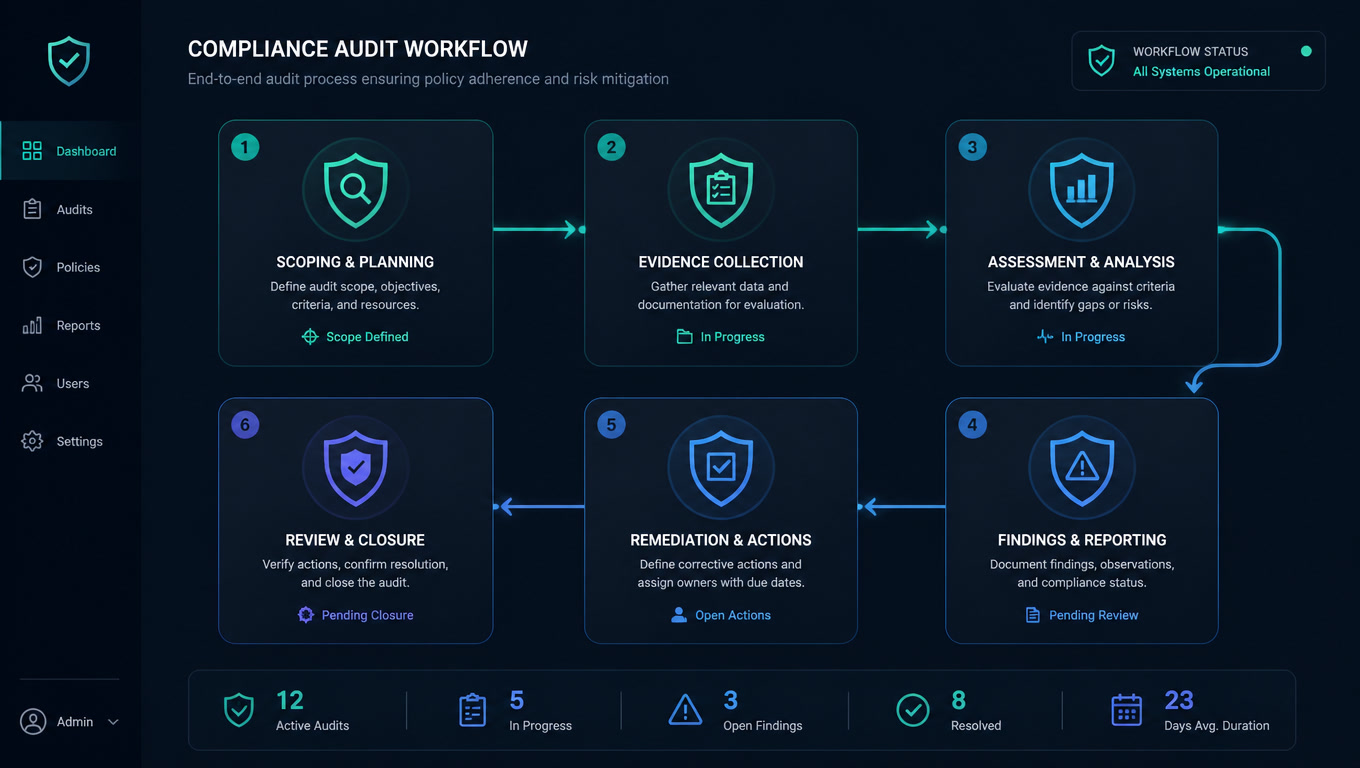
In our implementations for regulated industries, we build five layers, all on the same CRM process automation stack with n8n we already use for sales and support:
Layer 1 — Consent registry. Every opt-in is recorded with a full timestamp, capture channel, the privacy notice version in force, and the exact text the customer accepted. In the CRM, this is a structured field per purpose: one checkbox for marketing, one for transactional. No bundled consents, no pre-checked boxes — the ANPD considers them invalid.
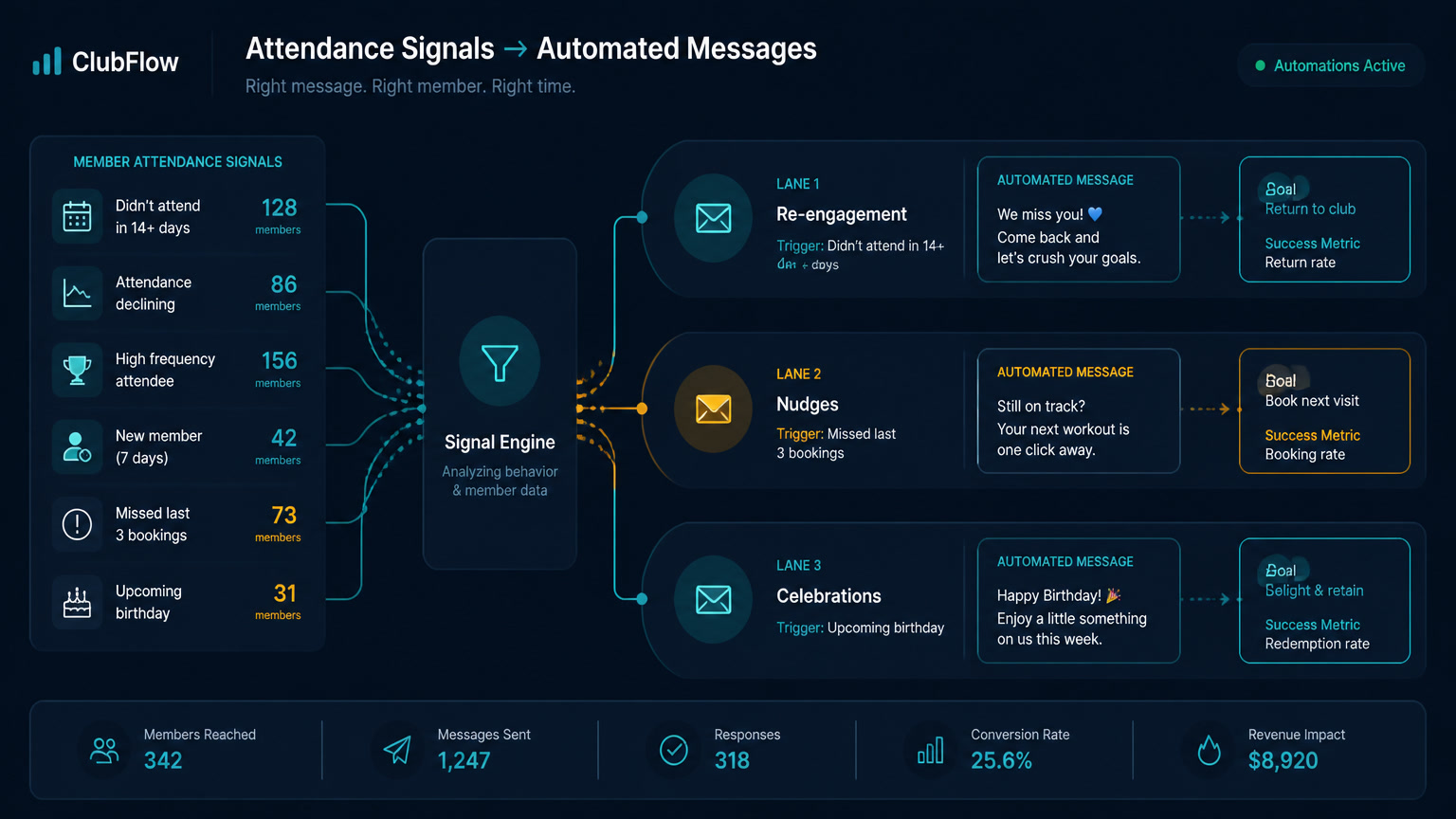
Layer 2 — Enforcement at send time. Before n8n fires any proactive template, a validation node checks the contact's consent flag. If it does not exist or was revoked, the send is blocked. Universal opt-out keywords — STOP, BAJA, NO MÁS — feed a global suppression list that pauses all automated messaging to that number, confirms the opt-out to the customer, and processes within 24 hours.
Layer 3 — Retention and traceability. Records are classified by category, each with its own policy: marketing conversations, transactional messages, operational logs, and consent records. Each category has its term and its automatic deletion or anonymization when the term expires. Anonymization is not reversible encryption: once the term ends, the data stops being identifiable.
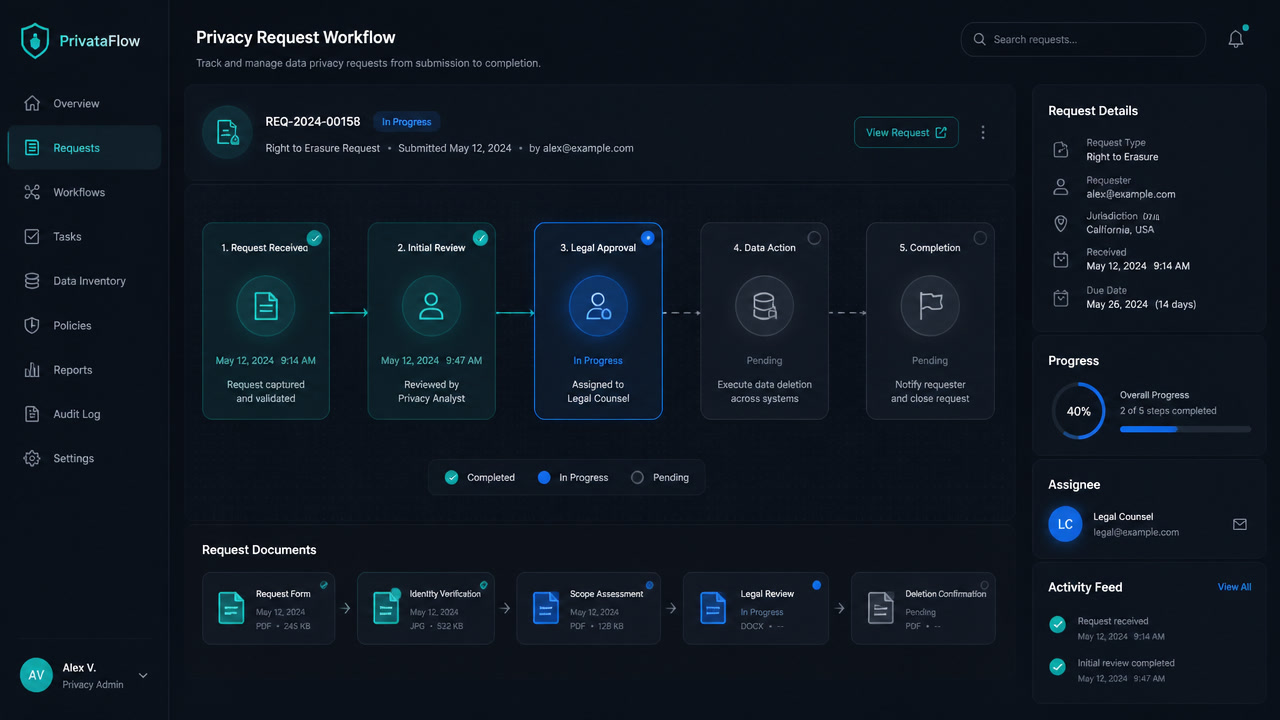
Layer 4 — Data subject rights. The ARCO flow is automated: the request arrives through the email published in the privacy notice, identity is verified, a phone-number query locates the records, and the workflow executes the action — export, correct, block, or delete — with evidence. Deadlines are tracked inside the workflow: 15 days in Brazil; 20 business days plus 15 in Mexico.
Layer 5 — Incidents and breaches. The five most common incident vectors in automated WhatsApp: an agent who forgot to log out, an exposed API key, a send to the wrong recipient, a former employee with panel access, and phishing against a BSP admin. Automation detects the detectable ones — wrong recipient, rotated keys, ex-employee access — and triggers the response plan: notify the authority within 72 hours (24 in serious cases) and keep documentation for at least 5 years.
Sensitive data in chat: the golden rule
The rule is minimization: do not ask in chat for what you do not need for the purpose. Mexico's LFPDPPP is explicit: if you only need a name, phone, and date for an appointment, do not ask for an RFC or date of birth.
Second: sensitive data the customer shares spontaneously — health, financial, legal — requires explicit, recorded consent, typically a message like "Do you accept that we process your health information to schedule your appointment?" with the answer saved.
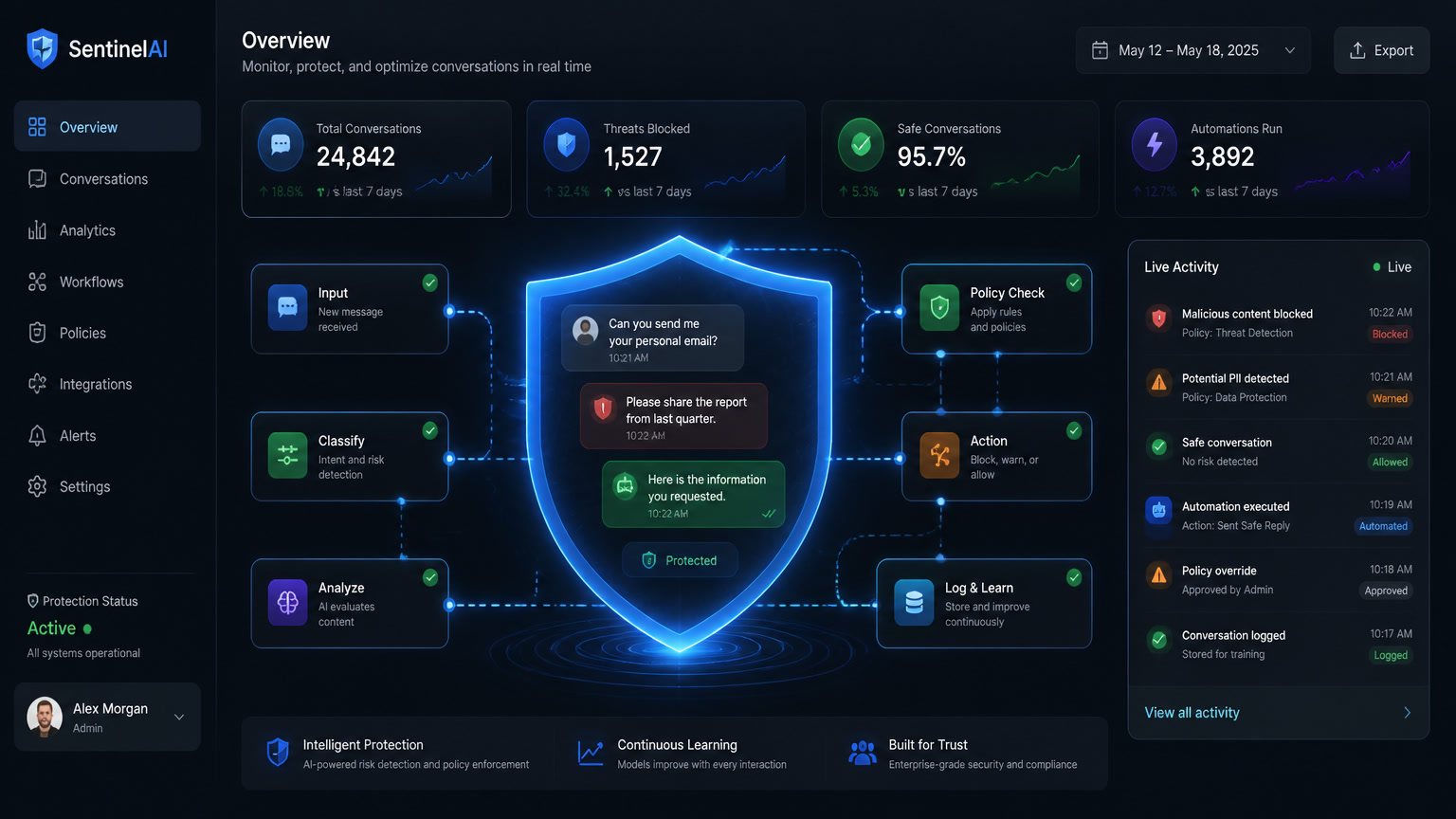
Third, and this hurts to say because we have seen it: never let a credit card number, an ID document, or a tax record sit in plain text in your database. We configure bots to detect those patterns (regex + classifier) and deflect the conversation to a secure payment link: "for your security, please don't share your card in chat." That single pattern avoids the most expensive breach this channel has.
What we have seen in real implementations
At a dental clinic in Mexico City, the bot's first message includes the line we recommend for any regulated business: "By continuing this conversation, you accept our privacy notice: [link]." The consent is recorded in Clientify with its timestamp, and the marketing list only receives people who accepted that specific purpose. The difference from the previous approach — a list accumulated for years, with no origin or date — is defending yourself before the INAI or having nothing to show.
At a health center, we implemented retention by category: voice notes deleted after 90 days, text conversations kept for 2 years, and operational metadata for 5 years for fiscal audit. No human deletes anything: the workflow does it.
And at a logistics operation in Bogotá, the critical piece was the suppression list: the bot confirmed opt-out ("Done — we will no longer send you promotional messages") and recorded the date. It sounds trivial, but it is exactly the record the SIC asks for when a customer complains about messages arriving after opt-out.
The errors we see most in audits: email consent reused for WhatsApp, lists with no visible opt-out, bots requesting unnecessary sensitive data, and BSPs without a signed operator contract with minimum clauses. If your automation has any of those four, your problem is not technology — it is evidence.
10-minute audit checklist
| # | Question | If the answer is NO |
|---|---|---|
| 1 | Does your privacy notice mention WhatsApp as a channel and list the third parties receiving data? | The INAI already has point one against you |
| 2 | Does every purpose have a documented legal basis? | Direct sanction risk in all three countries |
| 3 | Is WhatsApp opt-in separate from email? | The ANPD considers it invalid |
| 4 | Does every consent have a timestamp, channel, and notice version? | You cannot prove anything to the authority |
| 5 | Does every proactive campaign validate consent before sending? | Meta can restrict your number |
| 6 | Does STOP/BAJA work within 24 hours and confirm the opt-out? | Operational requirement in Brazil; universal best practice |
| 7 | Do you have per-category retention with automatic deletion? | Accumulated data is a fine waiting to happen |
| 8 | Is the ARCO email published, monitored, and the flow automatable? | Legal deadlines do not wait |
| 9 | Do you have a signed operator/processor contract with every vendor? | Joint liability in a breach |
| 10 | Does your incident plan include authority notification within 72 hours? | The breach already happened; the fine comes next |
Compliance as a competitive advantage
When a clinic, a fund, or a law firm evaluates vendors, data compliance is no longer an abstract legal requirement — it is a purchasing criterion. Documented consent, automatic retention, and a working rights flow are exactly what gets audited in a vendor approval process. Businesses that automate it win contracts that non-compliant competitors cannot even bid for.
If you operate in a regulated industry and automate WhatsApp, start with the 10-question audit, then decide which layers to build. If you need them built, it is exactly the kind of project we implement in automation and chatbots — and we have already covered the adjacent questions in our WhatsApp + CRM platform comparison for LatAm, our analysis of where your automation should run with sensitive data, and our bot-to-human handover framework. The laws will not get looser. Automated compliance is the only direction that moves.
Frequently Asked Questions
Does email consent cover WhatsApp messaging?
No. Brazil's ANPD has published specific guidance: email consent does not cover WhatsApp. They are separate channels and require separate consents, each with its own record of timestamp, IP, and the exact text the customer accepted.
How long should WhatsApp conversations be retained?
It depends on the category and the country. Recommended practice under LGPD: marketing records up to 2 years after the customer's last interaction, transactional messages 5 years (Brazil's Consumer Defense Code limitation period), and consent records 5 years after revocation. After that, data must be deleted or anonymized.
What happens if a clinic or firm automates WhatsApp without complying?
Cascading risk: fines of up to R$50 million or 2% of revenue in Brazil, up to ~36 million Mexican pesos in Mexico, and sanctions or suspension of activities by Colombia's SIC. On top of that, Meta can restrict or suspend your number for violating its consent policy.