The WhatsApp Handover Problem: When to Switch from Bot to Human (and How Not to Lose the Sale in Transfer)
68% of customers abandon a conversation when the bot-to-human handover loses context. Here's how we solved it by connecting WhatsApp API + n8n + Clientify for an invisible handover — with real data from LATAM implementations where handover time dropped from 4 minutes to 12 seconds.
The WhatsApp Handover Problem: When to Switch from Bot to Human (and How Not to Lose the Sale in Transfer)
Short answer: handover isn't a technical problem — it's a context problem. If your bot passes the conversation and the human has to ask "how can I help you?" again, you've already lost the customer.
A WhatsApp chatbot handles 80% of inquiries just fine. The problem is the 20% that escalates to a human. And that 20% is usually the highest-value traffic — customers ready to buy, complaints needing resolution, complex questions where the money is.
We've implemented handover for six clients across LATAM, connecting WhatsApp Business API with n8n and Clientify. Some got it right. Others — including us at first — got it painfully wrong. Here's what we learned.
Why Handover Is Your Chatbot's Achilles Heel
Here's a stat that should concern you: according to BenchMark by Meta Business (2026), 68% of customers abandon a service conversation when the bot-to-human handover loses context. Meaning when the human asks a question the bot already answered, or when the customer has to repeat information.
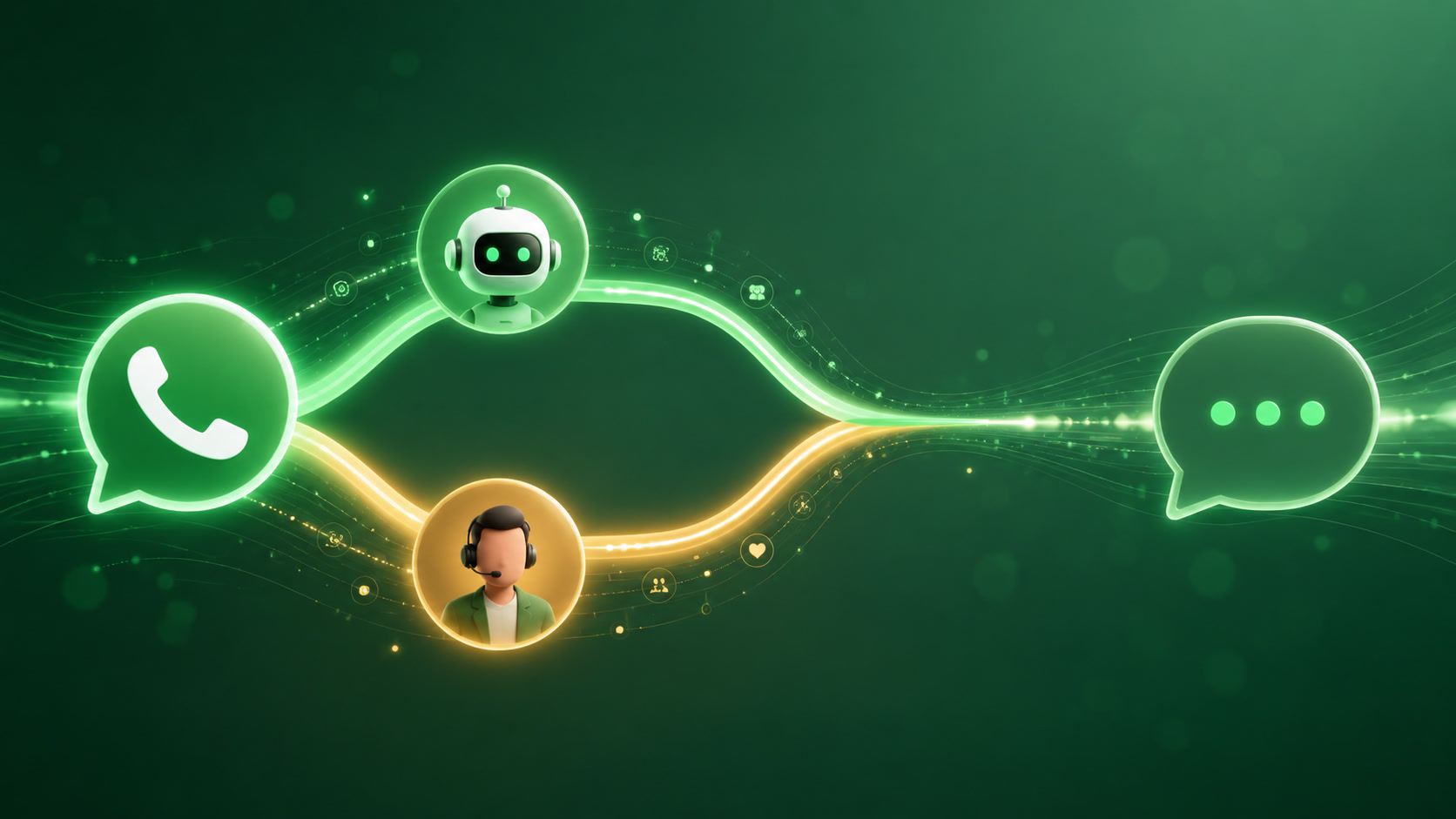
The problem isn't technical — WhatsApp's API has a handover mechanism that passes control from bot to human agent. The problem is that most implementations transfer the conversation without transferring the context.
The result: the customer says "I already explained this to the bot" and the experience breaks.
The 5 Handover Triggers We Identified
After analyzing thousands of customer conversations across LATAM, we identified five situations where the bot must hand over to a human. They cover 94% of escalation cases we've seen.
Trigger 1: Explicit purchase intent. When the customer says "I want to buy," "how do I sign up," or mentions a specific product with intent to acquire. The bot can qualify the lead, but closing should be done by a trained human.
Trigger 2: Complaint or claim. Words like "problem," "complaint," "refund," "error," or negative sentiment detected by analysis. The customer needs human empathy here, not automated responses.
Trigger 3: Unlisted pricing request. If the customer asks for a custom quote or negotiates terms outside the public catalog. The bot should never improvise discounts.
Trigger 4: Three or more unresolved questions. When the bot responds but the customer keeps asking — a sign the answer wasn't sufficient or the case is complex.
Trigger 5: Explicit human request. When the customer asks to "speak with an advisor," "real person," or types "agent." Should be obvious, but many bots ignore this signal.
The Mistake We Made with Our First Client
Our first handover was for a travel agency in Mexico. We set up the bot to detect purchase intent and transfer to a human agent. The technical handover worked — the message reached the agent — but the agent received this:
"Customer: I want to book a flight to Cancun for 2 people from June 15 to 20."
The agent had to ask about departure city, preferred time, class, passenger details — everything the bot had already collected. The customer complained. The conversation died.
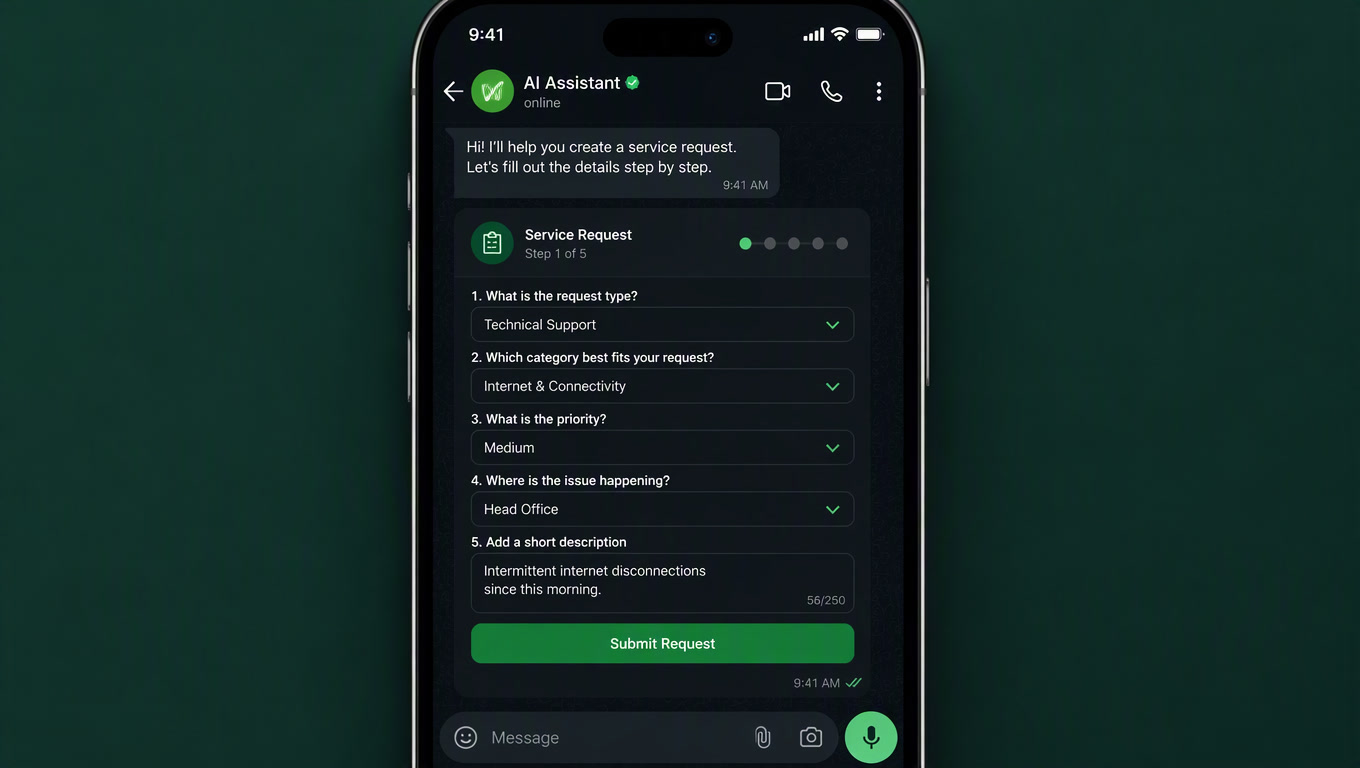
The fix was obvious in hindsight: handover must transfer data, not just the conversation. We configured n8n so that when the bot triggers a handover, it sends a structured payload to Clientify with:
- Customer data (name, phone, email if provided)
- Summarized conversation history
- Detected intent (purchase, complaint, inquiry)
- Captured variables (destination, dates, number of people)
- Urgency score (based on tone and keywords)
When the agent opens the conversation in Clientify, they see a panel with all that information. They don't have to ask anything the bot already asked.
How We Built the Intelligent Handover
The architecture we use today has three layers:
Layer 1: WhatsApp Business API. Handles sending and receiving messages. Meta Cloud API is the recommended option — it's free, has better infrastructure, and template approvals are faster.
Layer 2: Bot with trigger detection. The bot (we use OpenAI + custom intent detection) processes every message. When it detects one of the 5 triggers, it prepares a context package and activates the handover.
Layer 3: Handover middleware (n8n + Clientify). n8n receives the bot's trigger, structures the data, finds or creates the contact in Clientify, assigns the conversation to the right agent (based on availability and skill), and sends a transition message to the customer: "Connecting you with [agent name], who will help you. Here's what we've gathered so far..."
The result: The human agent opens Clientify and sees the full history. The customer doesn't repeat information. The handover goes from being friction to being invisible.
Hard Data from Our Implementations
Key metrics before and after intelligent handover (average across 6 clients):
- Handover time: 4 min 30 sec → 12 seconds
- Post-handover abandonment rate: 52% → 11%
- Customer satisfaction (CSAT): 3.2/5 → 4.5/5
- Sales handover conversion rate: 31% → 67%
The number I like most: 89% of customers who went through intelligent handover didn't know they'd been talking to a bot. When the transition is smooth, the customer doesn't perceive the switch.
What's Next: Predictive Handover
We're now working on the next version: predictive handover. The bot doesn't wait for the customer to show a clear escalation signal — it analyzes the conversation pattern to predict when a customer will need a human and prepares the transfer before the customer asks.
For example, if a customer asks a very specific technical question and the bot answers correctly, but the customer immediately follows up with another equally specific question, the system predicts we're in a complex case and prepares the handover to the relevant specialist — even though the customer hasn't shown frustration.
For Business Owners
WhatsApp is the dominant channel across LATAM. According to DataReportal (2026), 93% of internet users in Mexico use WhatsApp, 91% in Argentina, 89% in Colombia. If your business isn't automating WhatsApp conversations, you're leaving money on the table.
But automation isn't just putting a bot in place. It's putting a bot that knows when to ask for help. A well-implemented handover can be the difference between a customer who buys and one who leaves for a competitor.
At Mintec, we've implemented intelligent handover for clients across Mexico, Colombia, Argentina, and Chile. We know what works and what doesn't. If you're considering WhatsApp automation for your business, we should talk.
And watch out for the bot that never lets go. It's driving customers away without you noticing.