From Basic Chatbot to AI Agent: When Local Businesses Should Make the Leap
Most local businesses get chatbot implementation wrong — either overpaying for AI they don't need or outgrowing basic tools they started with. Here's a practical 4-tier framework based on real implementations in Latin America.
AI chatbots stopped being a luxury in 2026 — they're an accessible tool for any local business. But only if you choose the right tier.
The problem is most businesses choose wrong. We see restaurants paying $200-500/month for advanced conversational AI when all they need is a conditional bot that answers 20 FAQs. And the reverse: dental clinics with 300 daily queries trying to solve everything with static pre-written responses.
The sentence "my business needs an AI chatbot" is as precise as "I need a vehicle." A tricycle? A pickup truck? A refrigerated lorry? The answer changes everything: budget, implementation, maintenance.
This article is a practical decision framework based on real client implementations across Latin America.
The Four Levels of Chatbots for Local Businesses
Not all chatbots are created equal. The industry has matured enough that we can classify them into four clear tiers, each with a distinct business profile, cost, and complexity.
| Level | Type | Monthly Cost | Example Tool | Technical Complexity |
|---|---|---|---|---|
| 1 | Conditional chatbot | $0-49/mo | Tidio, ManyChat, ChatFlow | None (no-code) |
| 2 | Basic AI chatbot | $24-99/mo | AssistBot, ConversAI | Low (templates) |
| 3 | AI chatbot + CRM | $75-200/mo | Tidio + n8n, ManyChat + Make | Medium (API connections) |
| 4 | Custom AI agent | $15,000-45,000 (setup) + $200-500/mo (ops) | n8n + OpenAI + CRM | High (development) |
Level 1: The Conditional Chatbot (Where to Start)
This is the most basic chatbot: button menus, pre-written responses, simple "if the customer says X, reply with Y" flows. No generative AI. It's the digital equivalent of a phone tree.
Who it's for: Businesses with under 30 daily queries, very predictable questions (hours, address, prices), and minimal budget. A coffee shop, a barbershop, a small auto repair shop.
Real cost: $0-49/month. Most platforms have free plans with conversation limits. Tidio offers a free plan for up to 100 unique visitors per month.
What nobody tells you: This level works well until a customer asks an unexpected question. Then the bot blanks out or gives a generic answer that frustrates the user. Escalation rates to humans can hit 60% when questions vary.
We built this for a client: A dental clinic in Mexico City started with Tidio's free plan. They automated 80% of queries in the first month, but that remaining 20% required the receptionist to monitor the chat constantly. The savings were real (~15 hrs/week), but the 20% of patients who had to wait for the receptionist became a problem. The fix: moving to Level 2.
Level 2: Basic AI Chatbot (The Sweet Spot)
Adds a natural language engine (GPT-4o mini, Claude Haiku, Gemini Flash) that understands free-form questions and responds with context. No coding required — most platforms let you upload documents (PDFs, FAQs) and the bot learns from them.
Who it's for: Businesses with 30-100 daily queries, semi-varied questions, 24/7 coverage needs but no complex integration requirements. A restaurant with delivery, an online clothing store, a medical practice with variable scheduling.
Real cost: $24-99/month. AssistBot ($24-49/mo), ConversAI ($19-89/mo), Tidio Lyro AI (~$25-50/mo added to base plan).
The key stat: According to the 2026 Small Business Digital Transformation Report, businesses using AI chatbots report 42% more qualified leads, 37% lower customer service costs, and 78% faster response times. But these are averages from businesses already at the right tier — they don't apply if you're handling 10 queries a day and paying $99/month for AI you don't need.
We built this for a client: An eyewear chain in Guadalajara with 4 locations deployed AssistBot connected to their product catalog. The bot answers questions about frames, prices, promotions, and hours. In 3 months: 31% of queries resolved without human intervention, 22% more appointment bookings. Cost: $39/month.
Level 3: AI Chatbot with CRM (When the Business Grows)
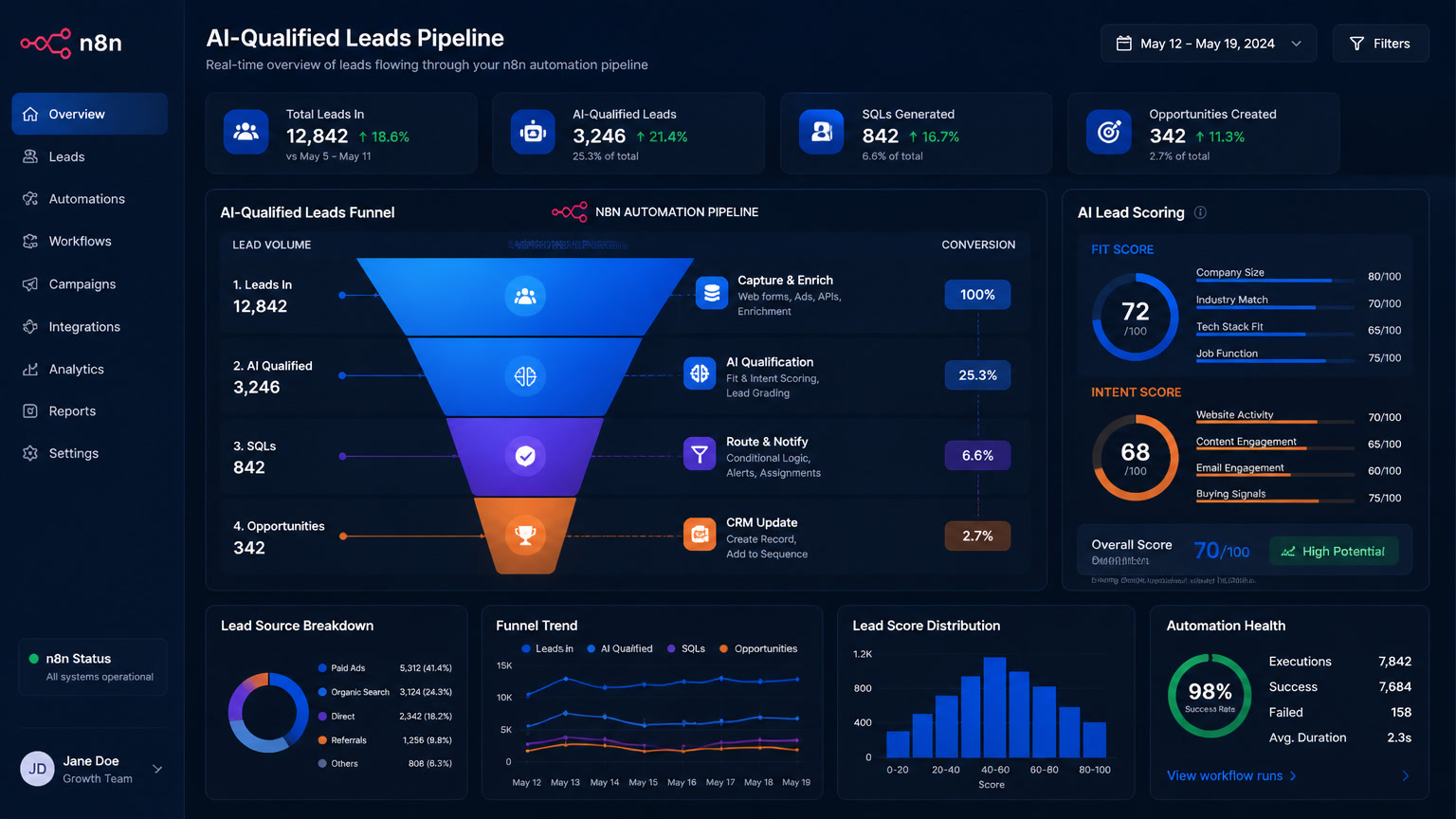
Here the chatbot doesn't just talk — it reads and writes to your CRM, creates tickets, checks inventory, books appointments directly. Requires API integrations using tools like n8n or Make.
Who it's for: Businesses with 50-200 daily queries that need the bot to do more than answer: update customer profiles, create sales opportunities, trigger email sequences. A clinic with a booking system, a small dealership, a real estate agency.
Real cost: $75-200/month combining chatbot platform ($25-100/mo) + integration tools like n8n (self-hosted from $6-20/mo) or Make ($9-29/mo) + AI APIs ($20-40/mo).
Surprising hidden costs: This is where the real costs that chatbot salespeople don't mention start to appear. According to KUMO's 2026 chatbot cost analysis, CRM integrations add $5,000-15,000 in development when done properly. Well-designed human handoff costs an additional $5,000-15,000. And annual maintenance runs 20-30% of implementation cost.
For local businesses that don't want to spend $10,000+ on development, the alternative is self-hosted n8n with pre-built connectors. We've implemented chatbot → Clientify → WhatsApp flows in under a week, with development costs of $500-1,500.
Level 4: Custom AI Agent (Only for Specific Cases)
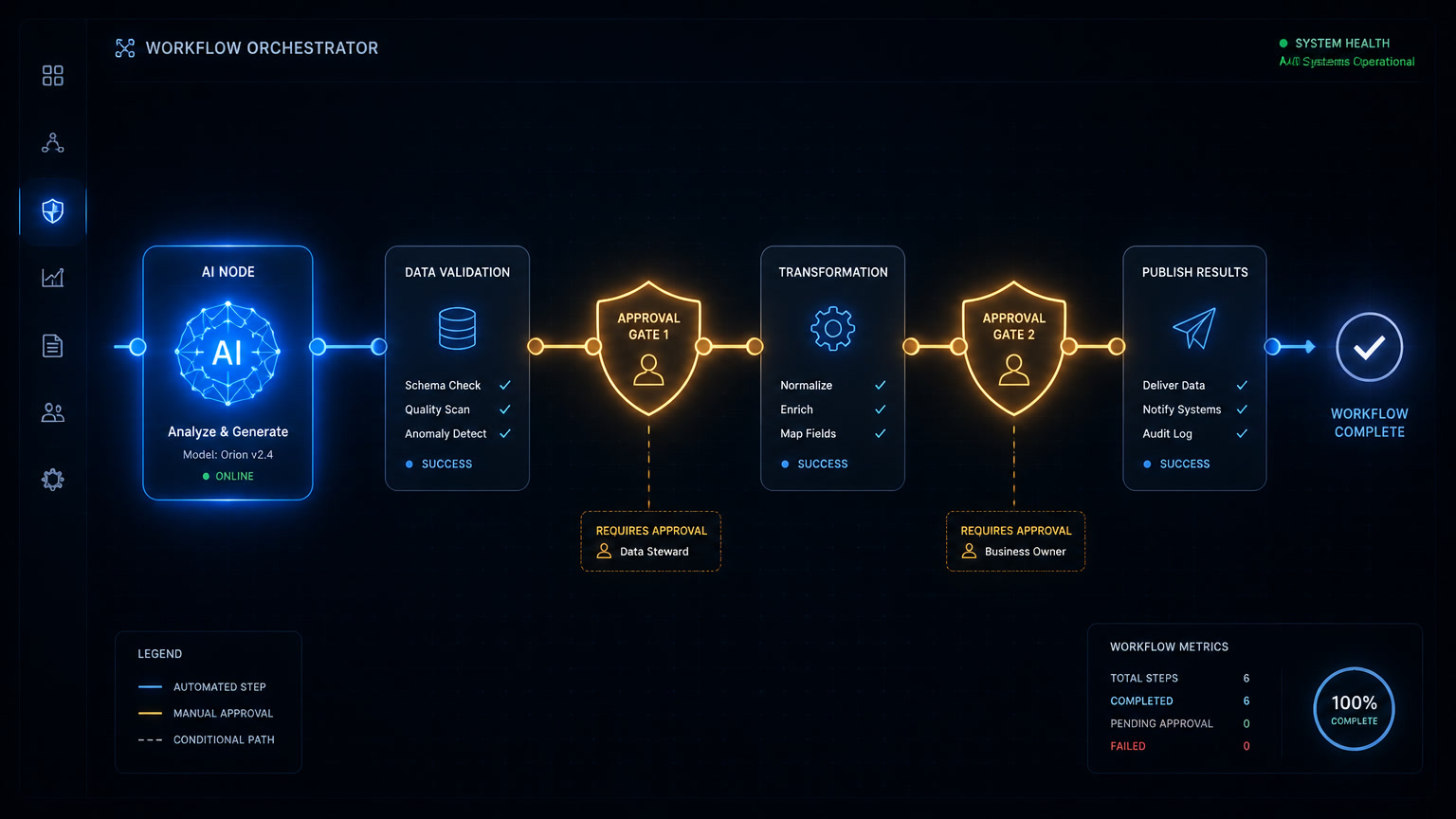
A complete system: the agent converses, executes actions across multiple systems, remembers context from previous conversations, and learns from mistakes with human supervision. Requires custom development.
Who it's for: Businesses with 200+ daily queries, complex processes (purchase orders, billing, medical records), and regulatory compliance requirements. A clinic chain, a finance company, a regional logistics operator.
Real cost: $15,000-45,000 initial development + $200-500/month operations (models, servers, maintenance).
The question few ask: According to Elementum (2026), 88% of firms use AI in some form, but only 23% scale agentic AI reliably. The rest are still experimenting. And Forrester warns: less than a third of decision-makers can tie AI value to financial growth. This applies to local businesses too — before investing $20,000 in a custom agent, ask yourself whether your monthly revenue justifies that outlay.
The 3-Question Decision Framework
Before evaluating any platform, answer these three questions:
- How many conversations do I handle daily? Under 30 → Level 1. 30-100 → Level 2. 100-200 → Level 3. Over 200 → evaluate Level 4.
- Does my chatbot need to do more than answer? If it only responds → Levels 1-2. If it needs to create tickets, update CRM, book appointments → Level 3+.
- How much does a mistake cost? If a wrong answer means losing a customer or incurring a fine → you need human supervision no matter the level.
Hidden Costs Vendors Don't Mention
No chatbot vendor will tell you this, but it's why many projects fail:
- Data curation and training: Someone has to review conversations, flag incorrect answers, and improve the knowledge base. That's 2-5 hours/week even at Level 2.
- Integration maintenance: When your CRM updates its API or you switch billing systems, chatbot connections can break. KUMO's cost framework recommends budgeting 20-30% of implementation cost annually for maintenance.
- Model drift: AI models change over time. What worked in January may give weird answers by July if not monitored. This applies mainly to Levels 2-4.
- Handoff cost: If your chatbot can't transfer a complex conversation to a human with full context, the customer gets frustrated and leaves. Designing proper handoff costs money — but not having it costs more in lost customers.
Where to Start (Mintec's Recommendation)
If you're a local business owner reading this, our recommendation is simple:
Start at Level 1 or 2. Don't buy an AI agent because it's trending. Buy the simplest tool that solves your current problem. In 3 months, measure: how many conversations are you handling? How many resolve without human intervention? How much time is your team saving?
Only when you know those metrics should you consider moving up. We've seen local businesses jump directly to Level 3 or 4 and fail because they hadn't documented their FAQs, clarified their processes, or cleaned their CRM data.
As the team at KUMO puts it: "A bad chatbot answers fast. A useful chatbot knows when to shut up and hand the conversation to a human."
At Mintec, we help local businesses across Latin America implement chatbots at the right level — no overengineering, no hidden costs. If you'd like a free assessment of what tier your business needs, contact us.
Related Reading
- When NOT to Use AI for Business Automation — the broader decision framework that complements this article
- AI Customer Support Automation — how to implement automated support in your business
- Beyond the Chatbot: AI Agents That Execute Actions in CRM — when it makes sense to leap from chatbot to agent
Frequently Asked Questions
How much does an AI chatbot cost for a small business in 2026?
From free conditional chatbots (Tidio, ManyChat) at $0-49/month to mid-tier AI-powered solutions at $24-99/month (AssistBot, ConversAI), up to $15,000-45,000+ for fully custom AI agents with CRM integration and handoff systems.
When should a local business upgrade from a basic chatbot to an AI agent?
When you handle 100+ daily conversations, need CRM or inventory integration, or require multi-step workflows like appointment booking, lead qualification, or automated follow-ups that basic conditional bots can't handle.
What's the most common mistake small businesses make with AI chatbots?
Starting with the most advanced technology first. Most small businesses should begin with simple conditional chatbots or basic AI, measure results for 3 months, and only then consider upgrading to a full AI agent.