

People Also Ask Is 97% AI Overviews Now. What You Optimize For Instead.
AlsoAsked sampled 19.2 million People Also Ask results: 97% are AI Overviews, up from 86% in August and 12% a year ago. The excerpt your page could win is gone. Here is what replaced it.
People Also Ask Is 97% AI Overviews Now. What You Optimize For Instead.
Google answered 97% of People Also Ask questions with an AI Overview in the first week of September 2026, up from 86% in August and roughly 12% in July 2025, according to AlsoAsked's sample of 19.2 million English-language People Also Ask results. The questions are still there. The excerpt from your page mostly is not. Google writes the answer now and cites one or two sources inside it. You can no longer rank in People Also Ask. You can get quoted by it.
For a decade, People Also Ask was the cheapest visibility on Google that didn't require being number one. You'd run a commercial query, spot the box of questions, expand one, and there it was: half a paragraph of your copy with a link to your site. You didn't have to lead the SERP. You had to answer one specific question better than everyone else in a hundred words.
That opening closed in fourteen months, with no announcement and no blog post.
The data: 12% to 97% in fourteen months
Mark Williams-Cook, founder of AlsoAsked, analyzed 19.2 million English People Also Ask results collected during 2026 and posted the findings to LinkedIn in early September: 97% of People Also Ask answers in the first week of September were AI Overviews, up from 86% in August. His own words: "It seems highly likely we are on track for 100% shortly." Search Engine Roundtable picked it up on September 9.
The series:
| Period | AI-generated share | Dataset |
|---|---|---|
| July 2025 | ~12% (12.6% in the original analysis) | AlsoAsked, earlier study |
| August 2026 | 86% | AlsoAsked, 19.2M sample |
| First week of September 2026 | 97% | AlsoAsked, 19.2M sample |
| From August 2026 | ~100% | Allintitle, Also Ask Miner |
Two honest caveats. First, AlsoAsked and Allintitle both sell People Also Ask tracking tools, so the number works in their favor. Second, two independent platforms measuring the same thing with different datasets, plus manual checks by outlets like Browser Media (September 17: expanded answers are now labeled "AI Overview"), point the same direction. That's enough for us to act, and not enough to stop verifying: opening ten of your own money queries and looking at them is still a half hour that beats anyone's chart.
What you see when you expand a question today
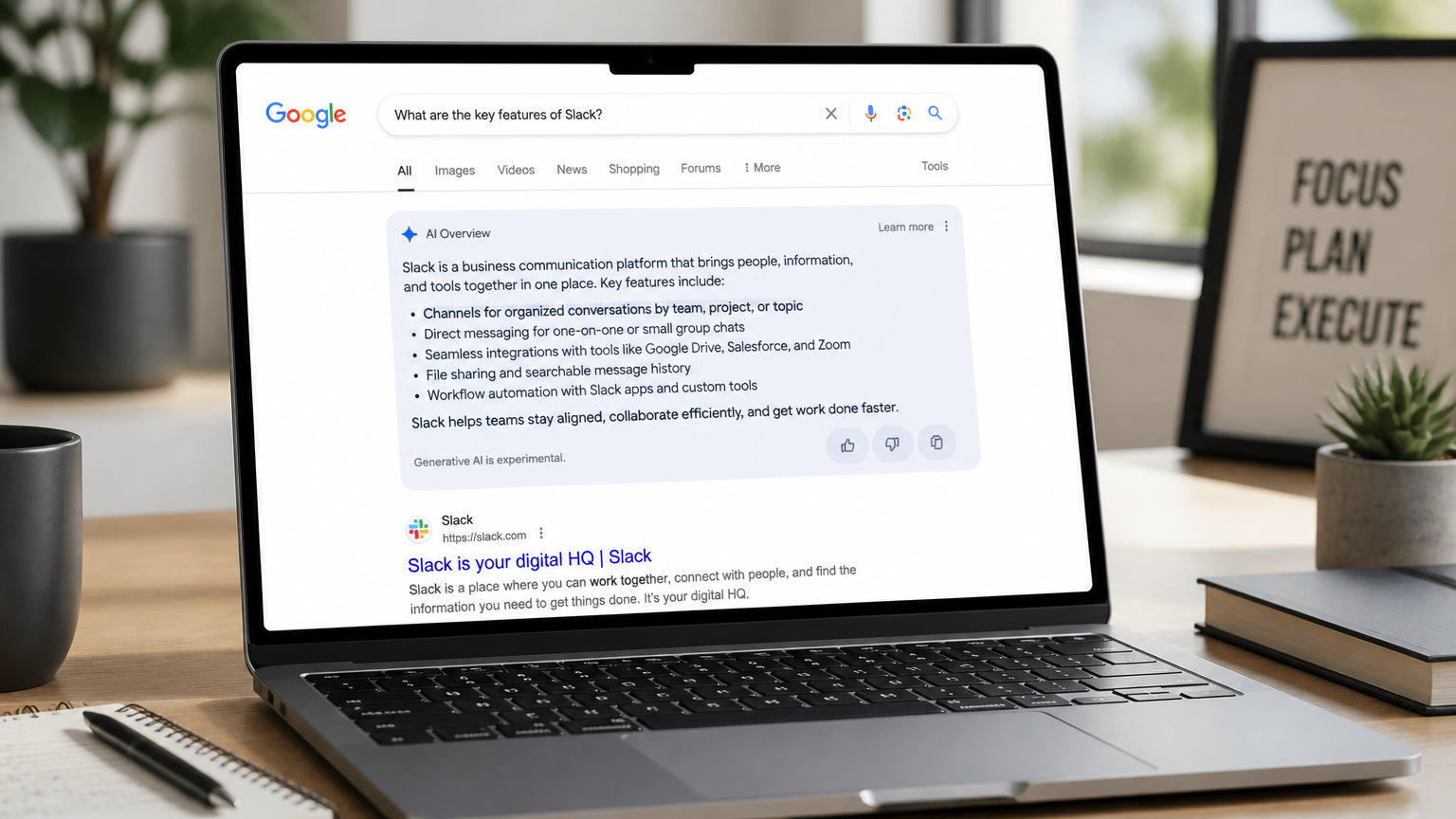
The questions didn't change. Open one and Google shows a synthesized answer drawn from several sources, labeled as an AI Overview, instead of a verbatim excerpt from a single page.
The link didn't die, it became conditional. In Browser Media's manual check, each expanded answer still showed one prominent link to a website; Allintitle reports more than one per answer. And Google is explicit in its AI features documentation: the page has to be indexed and eligible to appear with a snippet before it can become a supporting link. Same requirements as ever, except the prize is no longer "your text in the box." It's "your URL backing up the answer Google wrote."
| Before | Now | |
|---|---|---|
| Who writes the answer | Your page, verbatim excerpt | Google, synthesis across sources |
| Your way in | A clean hundred-word answer served on your page | Being cited: indexed, snippet-eligible, quotable |
| How it was tracked | People Also Ask position in rank trackers | One shared position for every link in the AI Overview |
| What you optimize | The perfect answer under the question | Answer block + evidence + a layer of first-hand judgment |
| How you lose | Not being in the top 10 | Having nothing worth citing |
What we structure instead: the answer block
We still harvest People Also Ask questions, more than ever: they come from real searches, which makes them the best inventory of customer doubts you will find. What changed is what we do with them. Our structure per question, in order:
- The question as a heading, using the exact words people type. Don't rewrite it with prettier synonyms.
- The answer in two sentences, forty words maximum, self-contained: a named entity, a concrete number, no throat-clearing. That's what a model can extract and attribute without dragging in half a page.
- The evidence right underneath: your own data, a real example, a table, a case. The synthesized answer already covered the definition; this is what forces Google to link you as a source instead of absorbing you.
- The layer no generated answer has: opinion, first-hand experience, current specifics. This is where you say what you think. It's also what separates a citable page from a thousand results saying the same thing.
None of this is new to us. It's the same writing for GEO we've been arguing for, and it fits the GEO, AEO and SEO distinction: People Also Ask was always AEO territory, and AEO is now won by being citable, not by being tidy.
One warning we've given before and it's worth repeating: FAQ schema does not buy you a spot here. Google retired FAQ rich results long ago, and as we covered in FAQ rich results: what replaced them, structure helps machines understand you, it doesn't get you inserted. If your agency still sells you FAQ schema as a People Also Ask tactic, it's selling you 2023.
How it gets measured now (and what to stop paying for)
Three Search Console rules that explain why your old metrics are dead:
- AI feature traffic is folded into the web search performance report. It is not a separate channel you can cleanly filter.
- Every link inside a single AI Overview shares one position. As we laid out in Search Console and AI Overview positions, an averaged position of 1 does not tell you whether you were the first link or the last. It's a block position, not a ranking.
- Links that open a new Google query count as neither a click nor an impression. The user left and left no trace in your data.
In practice we stopped reporting "People Also Ask position" and replaced it with a citation checklist per priority question: who cites, with which URL, which competitors sit next to you, date and device. Manual work, yes. But it's the only metric that answers the question that actually matters: when someone asks, do we come out? We run it on top of Search Console's generative AI report using the same routine as our 30-minute GEO audit.
And if your monthly report still carries a "People Also Ask rankings" line from some tool, kill it. It's measuring a box that no longer has an excerpt to rank.
The part we can't predict
On September 21, SEO specialist Gagan Ghotra recorded a case where underlined text inside an AI Overview, which looked like a link, opened an AI Mode conversation instead of a website; Search Engine Roundtable published the screenshots the next day. Same week, Peec AI charted the share of AI Overviews containing an external link inside the answer text jumping from near zero to 26.2% on September 20 (daily average, August 25 to September 20). Two observations, not an announcement: Google hasn't commented and it may be a limited test.
If that trend reaches People Also Ask boxes, the last link surviving inside the expanded answer goes too. We're not banking on it. What we do see is the direction: Google keeps the reader inside and redefines what a "click" means along the way. The one asset you still control is unchanged: being the source the answer can't avoid citing.
What to do this week
- Pick ten money queries. Open them, expand People Also Ask, and note whether the answer is labeled an AI Overview and who it cites. Half an hour, zero tools.
- Rewrite the answer block on each of those pages: two sentences, forty words, entity and number. Place it directly under the question heading.
- Remove the People Also Ask line from your report and put the citation checklist in its place, with today's date as your baseline.
- Keep harvesting questions. The box didn't disappear; it changed who does the writing.
And one opinion, for the record: people still optimizing "to rank in People Also Ask" are optimizing for a prize Google no longer hands out. The new prize is being cited, and that one can be worked: structure, evidence, first-hand judgment — in that order.
Frequently Asked Questions
Does People Also Ask still exist?
Yes. The questions still appear and still come from real Google searches. What changed is the answer: as of September 2026, 97% of expanded People Also Ask answers are Google-generated AI Overviews instead of an excerpt from a single webpage with a link to it.
How do I get into People Also Ask now?
Google's documentation says a page must be indexed and eligible to appear with a snippet before it can become a supporting link inside an AI Overview. In practice: answer the question in a short self-contained block under a heading that uses the query's exact words, then put the evidence underneath (data, example, judgment) that a synthesized answer cannot bring.
Does a People Also Ask citation show up in Search Console?
AI feature traffic is added to the web search performance report. All links inside a single AI Overview share one reported position, so an average position of 1 does not distinguish the first link from the last. Links that open a new Google query (query refinements) count as neither a click nor an impression.