
The 30-Minute GEO Audit: Our Framework for Checking If a Site Is Ready for AI Search
A four-check framework for auditing any site's GEO readiness in half an hour. Based on the same process Mintec runs weekly with LLM traffic reports, keyword gap mining, and content optimization. No expensive tools, no ranking promises: concrete checks that reveal whether AI search engines can actually cite your content.
The 30-Minute GEO Audit: Our Framework for Checking If a Site Is Ready for AI Search
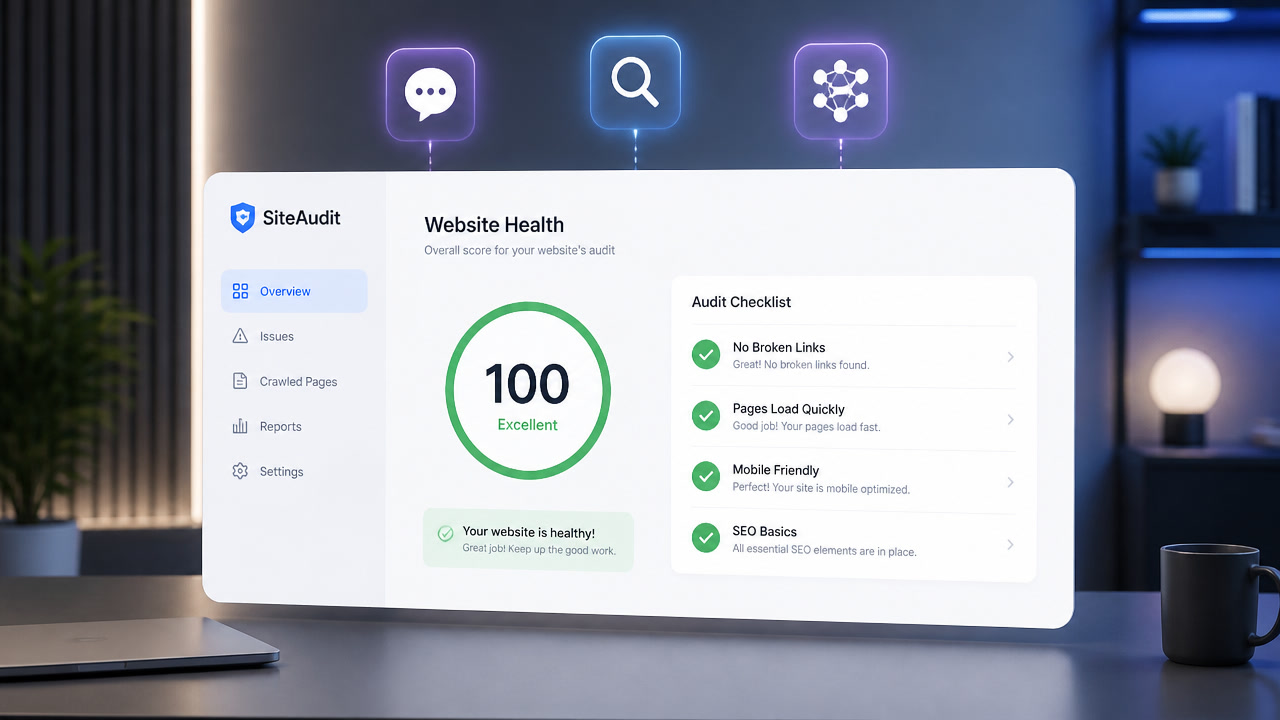
A GEO audit isn't an SEO audit with a different label. It's a check of whether your content has what AI search engines need to cite you: structure they can parse, answers they can extract, and authority they can verify. We run this at Mintec every week as part of our LLM traffic reports. Here's the exact four-check framework. It takes 30 minutes and requires zero premium tools.
Most GEO guides circulating in 2026 share a problem: they start with theory and end with "hire an expert." Not much actionable substance in between. This article is the opposite. It's the checklist I use every week to audit properties (ours and clients') and decide what to fix first.
The four checks are ordered by impact. If you only have 15 minutes, do the first two. If you have 30, do all four. Everything uses free tools except the optional advanced check.
Check 1: Structured data and technical eligibility (8 minutes)
AI search engines don't read your site like a user does. They extract data from your structured markup, your sitemap, and how you present information. If this layer fails, nothing else matters.
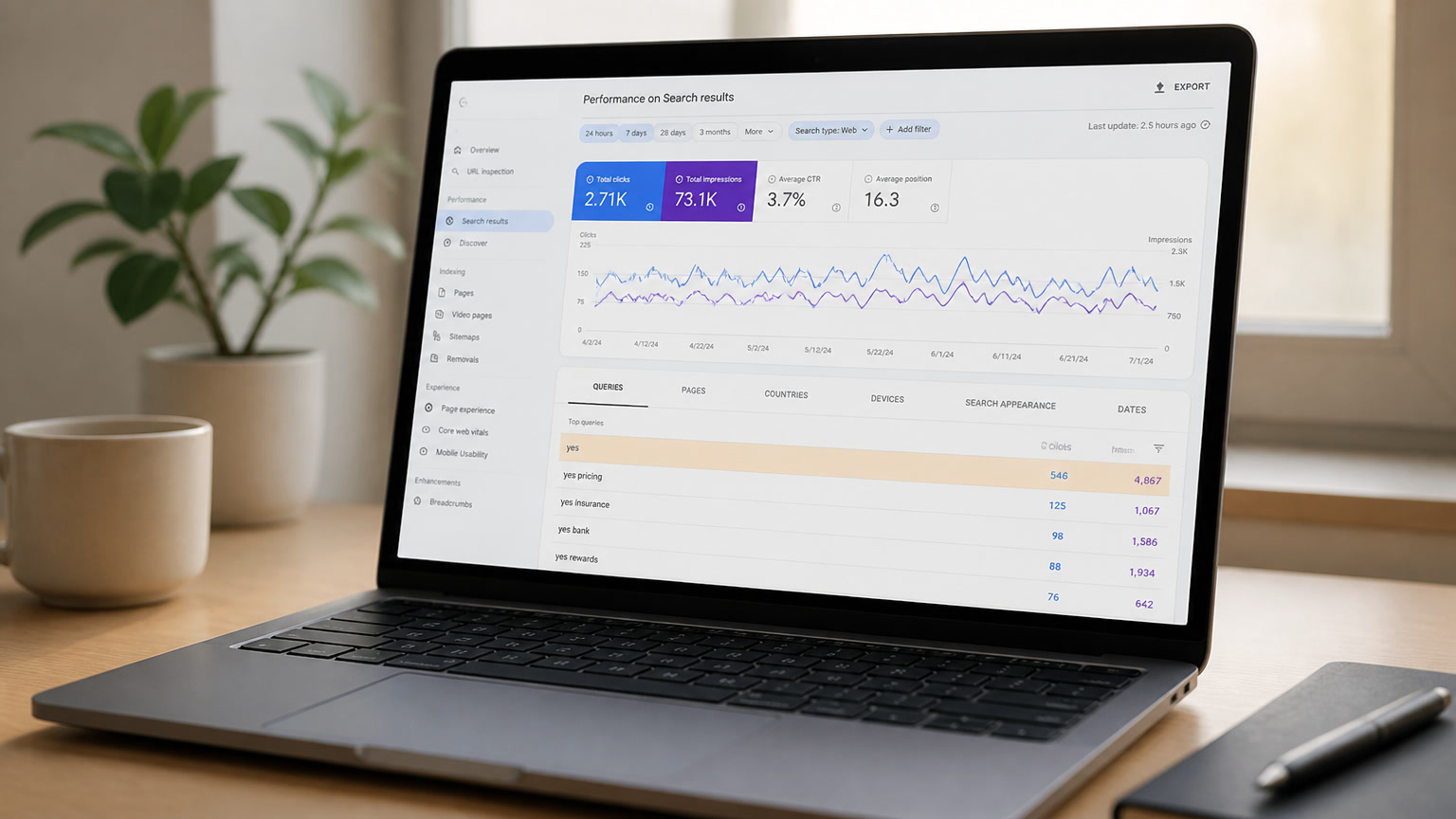
Open Search Console. Go to the enhancements section and check three things:
Active, error-free schema. Look for Article, FAQ, HowTo, or Product. If you have none, start with Article and FAQ. Those two correlate most strongly with AI Overviews citations based on Google's Generative AI performance report data. You don't need 15 schema types. Two well-maintained ones beat ten that are broken.
Clean indexability. Under Coverage, check excluded pages. If you have hundreds of URLs marked "crawled but not indexed," AI engines have no way to find your content. Every unindexed URL is a citation opportunity that doesn't exist.
Consistent canonicals. If your sitemap says one URL and your canonical tag points to another, you're splitting authority signals. LLMs consolidate information from multiple sources, and conflicting URLs give them noise instead of signal.
Real talk: at Mintec this check averages 6 to 8 minutes because we have the dashboard set up. Your first run might take 10.
Check 2: Direct-answer formatting (10 minutes)
This is the check that separates sites that show up in AI Overviews from those that don't. AI engines extract specific fragments to answer questions. If your content doesn't deliver self-contained answers, there's nothing to extract.
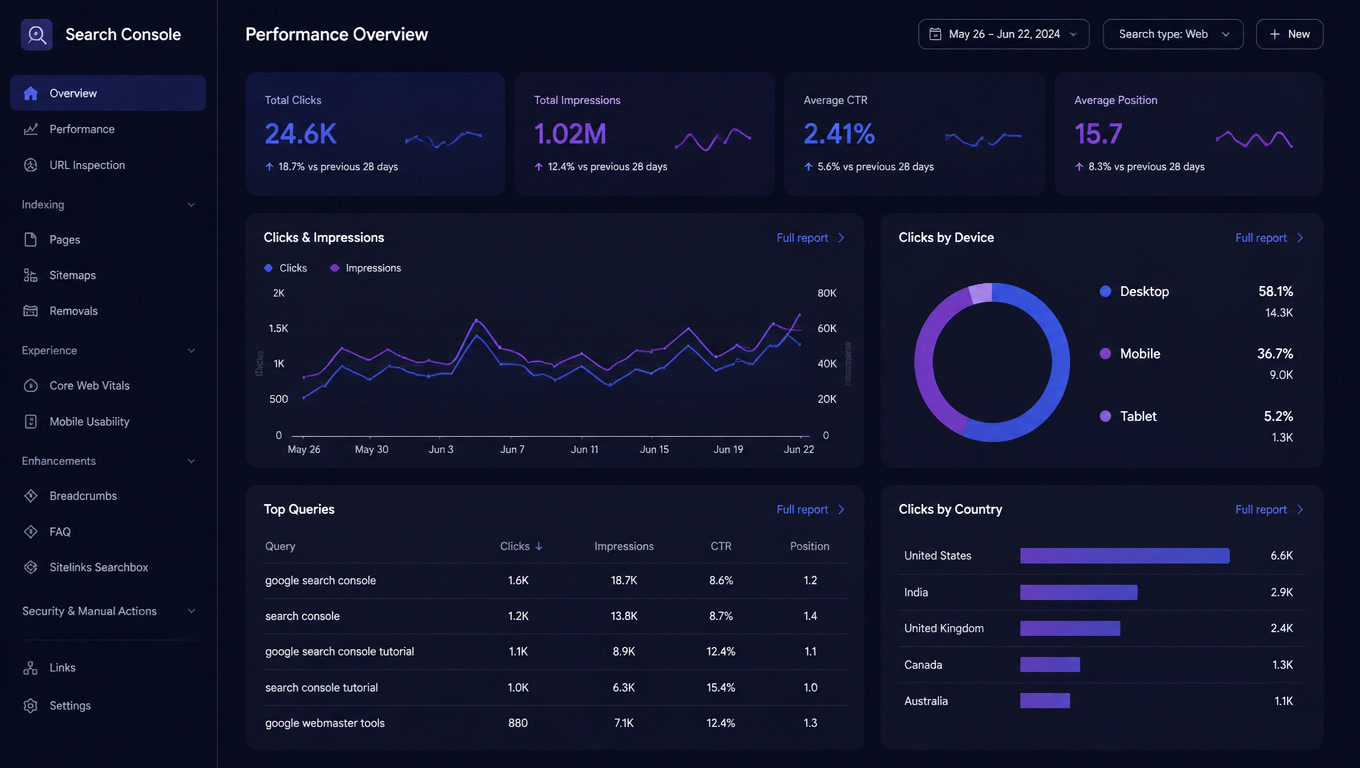
Take your top three pages by impressions in Search Console over the last 28 days. For each one:
Does the opening paragraph answer the question or set the context? If it opens with an anecdote, a generic intro, or three paragraphs of history before getting to the point, the AI will cite someone who gets there faster. The rule is simple: if a human can read your opening paragraph and know exactly what the page is about without scrolling, the AI can too.
Are headings descriptive, not clever? "Check 1: Structured data" beats "The first step toward visibility." Language models use heading hierarchy to understand the semantic structure of your content. Vague headings produce vague extraction.
Is there concrete data with attributed sources? AI prefers to cite content that cites sources. It's a cycle: if your article says "studies show," it's not citable. If it says "YouGov's 2026 survey of 2,000 U.S. adults found," the AI has a verifiable fact to reference.
Of the three pages I audited last week while drafting this article, two failed at least one of these three points. The most common pattern: content that answers the question in paragraph 4, with the first three paragraphs dedicated to context the AI doesn't need.
Check 3: Is your brand already being cited? (7 minutes)
Before optimizing, measure where you stand. This check takes 7 minutes and tells you more than any paid tool.
ChatGPT Search. Search "what is [your brand]" or "[your industry] best practices" and see if you're cited. ChatGPT Search has a sources button. If you show up, great. If not, that's your starting point.
Perplexity. Same search. Perplexity is more generous with citations than ChatGPT, so if you're not showing up here, the gap is serious.
Google AI Overviews. If you're already in Search Console, the Generative AI performance report tells you whether Google is showing your content in AI Overviews. It doesn't give you queries, but it gives you impressions. Zero impressions over 28 days is a clear signal that your content isn't structured for AI.
At Mintec we combine this with our weekly LLM traffic report, which tracks sessions from chatgpt.com, claude.ai, perplexity.ai, and gemini.google.com in GA4. But for a quick audit, the three manual searches are enough.
Check 4 (optional): Citation profile audit with Ahrefs or Semrush (5 minutes)
If you have Ahrefs or Semrush access, look up your domain and filter for unlinked mentions. AI engines don't need links to cite you. They use their internal knowledge and what they find in your content. But if other brands mention you without linking, you're building authority that LLMs can capture even without traditional backlinks.
This check is optional because it requires paid tools. The first three already give you a solid diagnosis.
What this framework tells you (and what it doesn't)
After 30 minutes, you know three things: whether your technical infrastructure supports AI extraction, whether your content is formatted to be extracted, and whether you're already being cited. What it doesn't tell you is exactly which keyword will trigger an AI Overviews citation. Nobody can promise that.
What we can say, after months of measuring this: sites that pass all four checks consistently generate 2 to 5 times more traffic from AI referrals than sites that fail at least two. The difference isn't site size or domain authority. It's whether the content is built for a machine to understand and a human to verify.
Where to go next after the audit
If you passed all four checks, the next step isn't optimizing format further. It's creating more content that answers questions AI engines don't have good sources for yet. Our keyword gap miner finds these opportunities daily: real questions people are searching for where LLMs lack quality citations.
If you failed a check, start there. Order matters: schema and direct-answer formatting first. Citations and traffic follow when the foundation is right.
Frequently Asked Questions
What is a GEO audit?
A GEO audit evaluates whether a website is optimized for AI-powered search engines (Google AI Overviews, ChatGPT Search, Perplexity, AI Mode) to cite its content in their responses. It checks technical structure, content formatting, authority signals, and verification mechanisms. Not traditional ranking positions.
How long does it take to audit a site for GEO?
The framework we use at Mintec takes 30 minutes and covers four essential checks: structured data and indexability, direct-answer formatting, AI-cited brand authority, and actual LLM referral traffic. You don't need premium tools or proprietary API access.
What tools do I need for a basic GEO audit?
Search Console (free), Google Analytics 4 (free), and manual citation checks on ChatGPT Search, Perplexity, and Gemini. For advanced audits we add Ahrefs or Semrush for citation profiles, but the 30-minute framework works with just the free tools.