
AI search traffic converts better. There's just less of it.
AI-referred visitors convert 54% better than organic search traffic. But AI Overviews cut publisher clicks 42%. Here is what the data actually says and what to do about it.
Two numbers that contradict each other
Two numbers arrived within weeks of each other in mid-2026. Read alone, each one supports a different strategy.
Adobe Analytics measured AI-referred visitors to US retail sites converting 54% better than everyone else. Contentsquare measured AI-referred visits at 0.2% of all sessions.
The first says drop everything and optimize for AI search. The second says ignore it for another year.
Both are accurate. The reason they coexist tells you something important about where search is heading.
What the conversion premium actually looks like
Adobe's May 2026 data covers over a trillion visits to US retail sites. The numbers are hard to argue with:
- Conversion rate: 54% higher for AI-referred visitors
- Revenue per visit: 53% higher
- Time on site: 53% higher
- Pages per visit: 23% higher
- Bounce rate: 36% lower
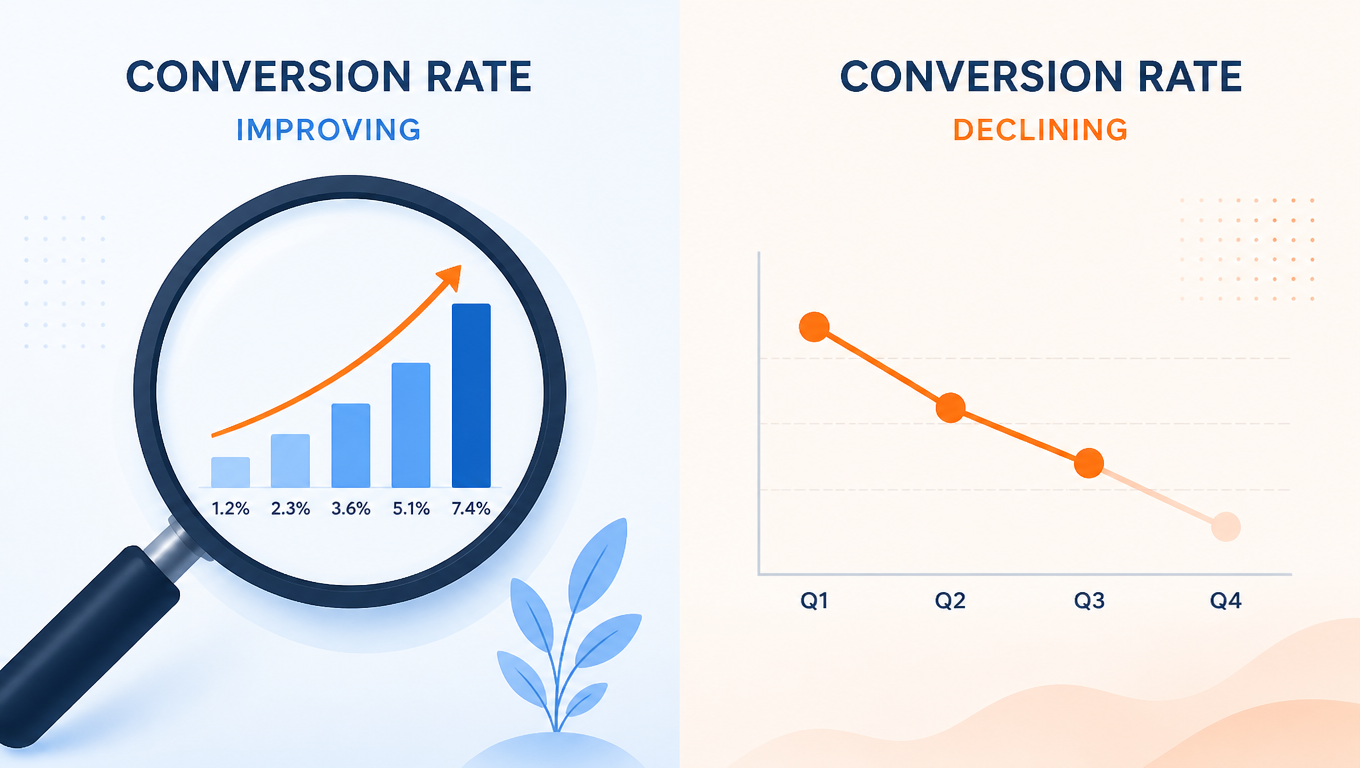
This is not a marginal lift. A year earlier, AI-referred visitors converted at roughly half the rate of regular search traffic. The gap completely inverted in twelve months.
Shopify's Q2 2026 earnings call put a mechanism under the premium. Half of AI-referred sessions land straight on a product description page, 2.5 times the rate of traditional search. New buyer orders from AI channels arrive at nearly twice the rate of other sources. When someone clicks through from ChatGPT or Perplexity, they arrive with intent. They have already read a summary. They already know what they want. The click is the last step, not the first.
One thing most coverage misses: the conversion premium may be even larger than reported. Adobe's tracking only captures visits where the referrer passes through. In-app browsers and noreferrer links strip that data. Cloudflare flagged the same gap in its own methodology. The visitors you can measure are converting 54% better. The ones you cannot measure are probably converting well too.
The traffic drought is real
But there is a catch, and it is a big one.
AI Overviews now appear on roughly 43% of US searches. A randomized field experiment with 1,065 Chrome users, published on SSRN in April 2026, found that when an AI Overview appeared, outbound organic clicks fell by 39.8%. Zero-click searches rose by 34.5%. User satisfaction scores did not change at all.
Removing AI Overviews sent more clicks to publishers. Adding them did not make users happier. It just kept more traffic on Google.
Define Media Group analyzed 64 publisher sites and found organic search traffic averaged 1.7 billion clicks per quarter from early 2023 through early 2024. After AI Overviews launched, traffic fell 16% immediately and never recovered. By Q4 2025, it was down 42% from the baseline.
The traffic that remains converts better than ever. But there is less of it to convert.
Why this paradox exists
The mechanism is straightforward. AI Overviews answer the question on the results page. A user who gets a complete answer has no reason to click through. The click only happens when the overview is incomplete, when the user wants more depth, or when the query is complex enough that the AI cannot fully resolve it.
Meanwhile, the visitors who do click through from AI sources arrive pre-qualified. They have already consumed a summary of your content. They clicked because they wanted more. They are further along in the decision process than someone who found you through a generic keyword.
This creates a split. The top of the funnel is shrinking because AI answers more queries in place. The middle and bottom of the funnel are converting better because the people who arrive through AI channels are more committed.
For publishers and brands, this means the aggregate traffic number matters less than the composition of that traffic. Ten visitors from Perplexity may be worth more than fifty from a broad informational keyword.
What to actually do about it
The practical moves come down to three areas.
Start with your detail pages. Adobe scored retail product pages at 66% machine-readable, against 75% for homepages and 74% for category pages. The pages where AI-referred visitors land are the pages AI systems parse worst. Fix the structured data, product descriptions, and schema markup on your highest-converting pages first. That is where the premium lives.
Then audit what AI says about you. Ask ChatGPT, Perplexity, Gemini, and Claude the questions your customers ask. If the answer does not mention you, or gets you wrong, no amount of organic SEO fixes that. GEO is not optional anymore. It is the new front door.
Finally, track AI traffic separately. GA4 now includes an AI traffic report, but it undercounts because of referrer stripping. Treat your measured number as a floor. Add UTM parameters to any AI-sourced links you control. Watch the AI referral share in your analytics. For B2B SaaS sites, it is already 2% to 8% of organic visits. For technology publishers, it is 5% to 12%.
Where this lands
AI search is not replacing Google. Shopify's president called it a complement, not a substitute. Traditional search still accounts for roughly a third of storefront sessions.
But the trend is unmistakable. AI-referred traffic grew 393% year over year in Q1 2026. The conversion premium went from negative to positive. And the click-through penalty from AI Overviews is real, measurable, and growing.
The brands that win in this environment are not the ones chasing raw traffic numbers. They are the ones optimizing for the visitors who actually arrive, making those visits count, and building visibility in the AI systems that determine whether they get mentioned at all.
The traffic is being divided differently. Your job is to make sure your piece converts.
Related reading
- How to turn off AI Overviews in Google Search for a step-by-step guide on controlling what you see
- ChatGPT Ads: what works and what is coming for the advertiser perspective on conversational search
- Gemini 3 and the latest AI Overviews update for what changed in Google's AI search layer
- How to position your brand in AI Overviews for practical GEO tactics
Frequently Asked Questions
Does AI search traffic convert better than Google organic traffic?
According to Adobe Analytics data from May 2026 covering over a trillion US retail visits, AI-referred visitors converted at a 54% higher rate than non-AI visitors. The same visitors spent 53% more time on site and bounced 36% less. However, AI-referred traffic still represents roughly 0.2% of total visits across measured sites.
How much traffic are publishers losing to AI Overviews?
A randomized field experiment published in 2026 found that Google AI Overviews reduce outbound organic clicks by 39.8% when they appear. A separate analysis of 64 publisher sites found organic search traffic fell 42% from pre-AI Overview baselines. Breaking news traffic, however, grew 103% over the same period.
How do I track AI referral traffic in Google Analytics?
Google Analytics 4 includes a dedicated AI traffic report that tracks clicks from AI sources, trending AI sources, and how AI traffic compares to other channels. Check the Advertising section for AI referrals. Note that in-app browsers and noreferrer links strip referrer data, so treat measured numbers as a lower bound.