

GEO, AEO, SEO: Three Acronyms, One Real Problem
GEO, AEO, and SEO keep getting conflated — but they optimize for different things, on different platforms, with different mechanics. Here's the framework we use to decide which one matters for any given page.
GEO, AEO, SEO: Three Acronyms, One Real Problem
Every week I see another LinkedIn post conflating these three terms. A marketer calls their AI visibility strategy "GEO" when they're actually optimizing for Google AI Overviews — that's AEO. Another claims they're doing "AEO" when they're trying to get cited in ChatGPT — that's GEO. And somewhere in the background, someone is still arguing about whether SEO is dead.
It matters which one you're actually doing, because they optimize for different things, on different platforms, with different mechanics. Mixing them up means you're optimizing for the wrong surface and measuring the wrong outcome.
Here's the framework we use to sort it out.
What each one actually optimizes for
SEO is about ranking in traditional search results and getting clicks. The user types a query, sees a list of links, and picks one. Your job is to be the most relevant result. The metric is click-through rate from position.
GEO is about being cited, recommended, or mentioned in AI-generated responses. The user types a question into ChatGPT, Perplexity, or Gemini. The AI synthesizes an answer and cites sources. Your job is to be the source the AI picks. The metric is citation presence and brand recall.
AEO is about earning direct answer placement in Google AI Overviews, featured snippets, and People Also Ask boxes. The user searches on Google, sees an AI-generated summary at the top, and may or may not click through. Your job is to be the answer Google extracts. The metric is AI Overview impression share.
The confusion comes from the fact that all three share some tactics — structured data, clear headings, helpful content. But the surfaces are different, the citation mechanics are different, and the user behavior is different.
The numbers that make the distinction real
Three data points from the last six months changed how we think about this:
68% of US searches now end without a single click. That's the Vector Gazette's figure from September 2026, citing independent industry research. The zero-click world is here, and it means AEO isn't optional anymore — it's the default for informational queries on Google.
31.3% of the US population will use generative AI search in 2026. EMARKETER's forecast. That's not a niche — it's a third of the country asking ChatGPT instead of Google for at least some of their searches.
Brands cited inside an AI Overview earn 120% more organic clicks per impression than uncited brands on the same queries. Seer Interactive's April 2026 study, based on 5.47 million queries. This is the key insight: being cited in AI doesn't just give you visibility — it gives you disproportionate click share on the queries that still generate clicks.
These three numbers together tell you something specific: the game isn't "show up in search results." It's "show up in the right kind of result, on the right surface, for the right kind of query."
The citation stability problem
Here's where GEO gets hard, and why the distinction matters practically.
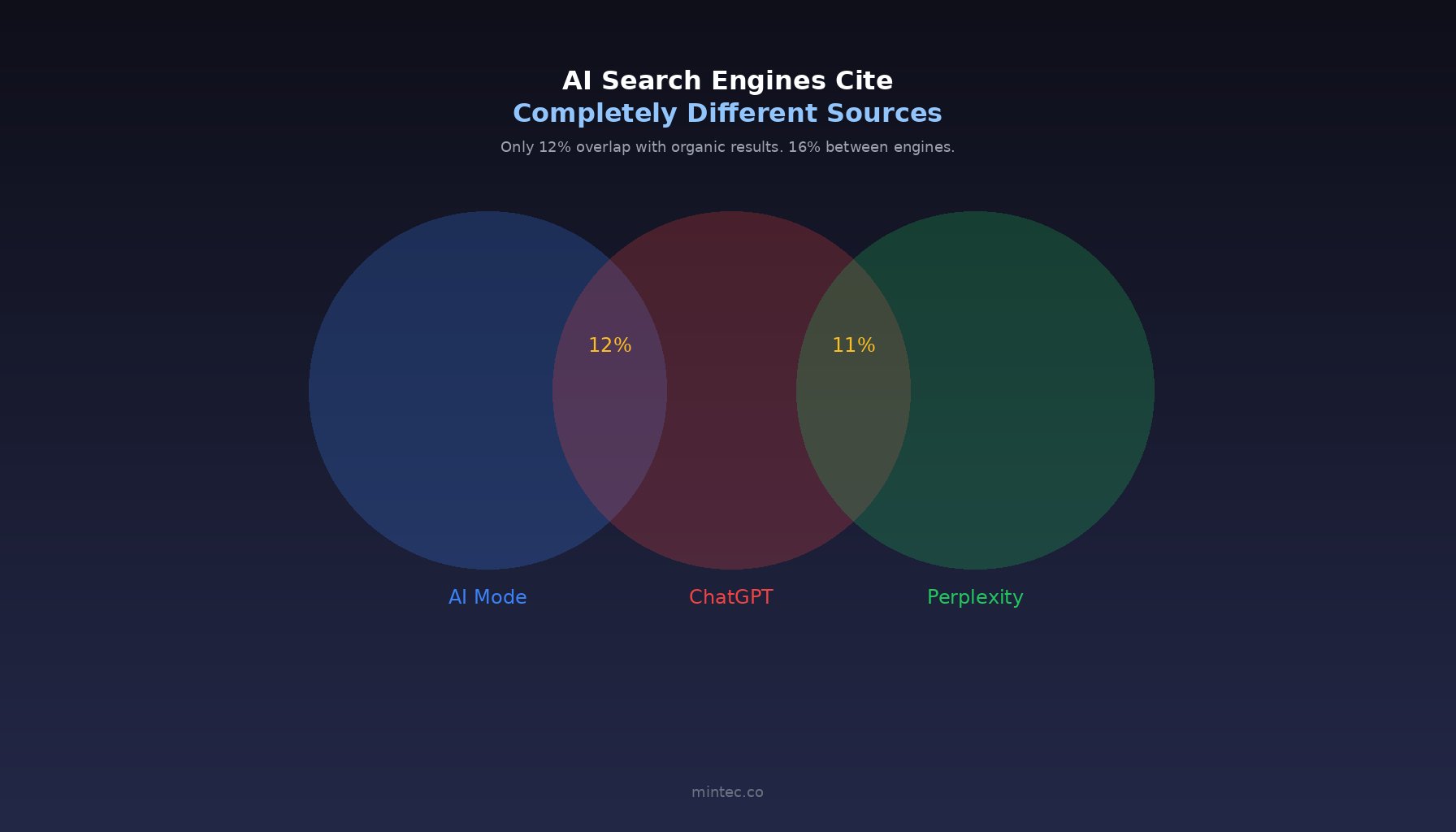
SISTRIX tracked 82,619 prompts across six countries over 17 weeks and found that 53% of cited sources stayed the same — but the other 47% churned at AI Mode's rate. About 11 domains appear per AI answer, 8 of them persistent, but the remaining 3 rotate constantly.
Compare that to traditional SEO, where a well-optimized page can hold position for months or years with minimal maintenance. GEO citations are volatile by nature — the same prompt run twice can produce different answers, different citations, different brand mentions.
This is why "GEO is just SEO" is only half true. Yes, the underlying systems share infrastructure. But the output is different: search results are stable rankings with consistent click patterns. AI citations are volatile mentions with inconsistent attribution. You need different measurement and different maintenance strategies.
The practical framework
We evaluate every page against three questions:
Where does the user's attention go? If they're on Google, AEO and SEO matter. If they're on ChatGPT or Perplexity, GEO matters. If they're on both (increasingly common), you need all three.
What's the query type? Informational queries ("what is," "how to," "compare") are AEO territory on Google and GEO territory on AI platforms. Transactional queries ("buy," "price," "near me") are still mostly SEO — AI hasn't captured that intent yet.
What's the content format? Comparison tables, definition pages, FAQ-rich content, and step-by-step guides perform well across all three. Listicles, opinion pieces, and news commentary are harder to cite in AI because they don't answer a specific question cleanly.
For most Mintec clients, the priority stack looks like this:
- If you're B2B with a long consideration cycle: GEO first. Your buyers ask ChatGPT "what's the best [category] tool for [use case]?" before they ever Google. Being cited there shapes the consideration set.
- If you're B2C with high-volume informational queries: AEO first. Google's AI Overviews are the first thing people see, and 68% of them don't click through. You need to be the answer, not just the top result.
- If you're local or transactional: SEO first, AEO second. AI search hasn't disrupted "plumber near me" yet.
What Pepper's Agent Atlas launch tells us
On September 4, Pepper (the content marketing platform out of Bangalore) launched Agent Atlas — an AI agent that runs GEO work instead of just reporting on it. Their CEO said something worth quoting: "Our understanding of organic growth has moved from SEO to Search Everywhere Optimization, and that needs strategy, agents, and human subject matter experts working together."
The "Search Everywhere Optimization" framing is interesting because it sidesteps the GEO-vs-AEO-vs-SEO debate entirely. The real practice is optimizing for wherever your audience searches — which increasingly means multiple surfaces simultaneously.
But the tooling reality matters: there is no single dashboard that shows your visibility across Google, ChatGPT, Perplexity, and Gemini in one view. You are still stitching together Search Console for Google, LLM referral traffic in Analytics for AI platforms, and manual prompt testing for Perplexity and ChatGPT. Pepper is trying to solve this, but it's early.
The measurement gap
The honest answer is that GEO measurement is still immature. Google's Search Console AI Performance report (launched June 2026) shows AI Overview impressions but not clicks — what Webiano called the "missing click problem." You can see you're being cited, but you can't measure whether it drove traffic.
For LLM platforms, the measurement stack is even thinner. Analytics can show you referral traffic from chatgpt.com or claude.ai, but most of the value is in the unseen: someone asks ChatGPT about your category, sees you mentioned, and Googles your brand name directly. That shows up as branded search, not as AI referral.
The practical approach we recommend:
- Track AI Overview impressions in Search Console as a leading indicator for AEO performance.
- Monitor LLM referral traffic in Analytics as a proxy for GEO citations that generate clicks.
- Run monthly prompt tests on ChatGPT, Perplexity, and Gemini for your top 10 keywords. Log which pages get cited and with what framing.
- Watch branded search volume as an indirect signal — if AI citations are working, you'll see branded queries increase before you see direct referral traffic.
The bottom line
Stop arguing about whether GEO is real or whether SEO is dead. They're different disciplines that share some DNA but optimize for different surfaces with different mechanics.
The question isn't "should I do GEO or AEO or SEO?" It's "where does my audience search, what kind of query are they running, and what content format do I need to show up on that surface?"
If you're optimizing for Google results, you're doing SEO. If you're optimizing for Google's AI answer box, you're doing AEO. If you're optimizing for being cited in ChatGPT or Perplexity, you're doing GEO. Most businesses need all three. Start with the surface that matters most to your buyer, measure what you can, and build from there.
Frequently Asked Questions
What is the difference between GEO and AEO?
GEO (Generative Engine Optimization) targets visibility in AI-generated responses across platforms like ChatGPT, Perplexity, and Gemini. AEO (Answer Engine Optimization) targets direct answers in Google AI Overviews and featured snippets. They share tactics but optimize for different surfaces with different citation mechanics.
Is GEO the same as SEO?
No. SEO targets traditional search rankings and clicks. GEO targets citations and mentions in AI-generated responses. Google's May 2026 guide says the underlying systems are the same, but the measurement, citation stability, and user behavior are fundamentally different.
How do you measure GEO performance?
GEO performance is measured through AI Overview impressions in Search Console, LLM referral traffic (via Analytics), brand mentions across AI platforms (Perplexity, ChatGPT), and citation tracking using tools like SISTRIX or manual prompt testing.