
74% of shoppers now use AI for product discovery. Most brands are invisible in the answers
NIQ and World Data Lab published a report on August 27: 74% of shoppers use AI in product discovery, and AI recommendation is now a fourth discovery channel. Most brands miss why they are invisible in AI answers: it is a citation problem, not a ranking problem. The four moves we run in Mintec GEO audits.
74% of shoppers now use AI for product discovery. Most brands are invisible in the answers
On August 27, NIQ and World Data Lab published a report that puts a number on something every retailer has felt: 74% of shoppers now use AI somewhere in product discovery. The report calls AI recommendation a fourth discovery path, next to search, social, and marketplaces, and sizes the retail media market behind it at $184 billion. Read the number twice. It says shoppers have moved. It does not say they are finding your brand. In most of the GEO audits we run, they are not.
What the 74% actually measures
The report, "A Tale of Two Consumers", comes from NIQ and World Data Lab and is worth reading past the headline. The 74% covers shoppers who use AI to discover products: asking for recommendations, comparing options, building shortlists before they ever open a store page. The $184 billion is the retail media market those behaviors feed. Taken together the message is uncomfortable for brands: the shortlist is now assembled by a machine, before your product page, your ads, or your sales team ever get a shot.
I think the headline actually understates what is coming in B2B, where the same behavior is older and sharper. Buyers have been asking "what tool should we use for X" for years. What changed is that the answer now comes prefabricated from an AI instead of assembled by the buyer across ten tabs. Same mechanics, faster funnel.
Why your brand is invisible in the answers
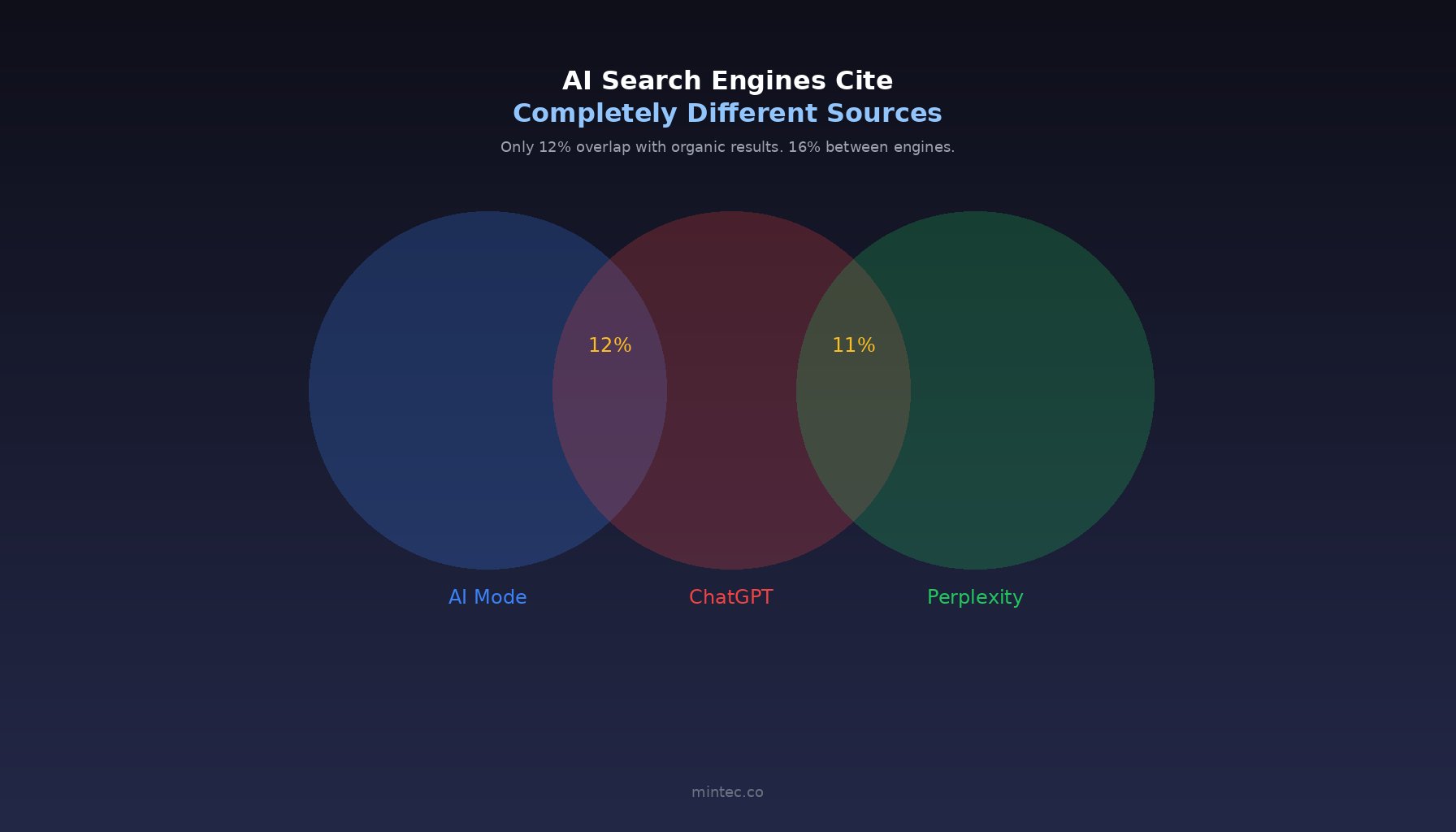
The AI Citation Source Index 2026 synthesized 680+ million citations across ChatGPT, Claude, Gemini, Perplexity, and Google AI Overviews. A small set of domains absorbs most of them: Reddit, Wikipedia, YouTube, LinkedIn, Forbes. For product questions specifically, the pattern we see is narrower still. The model quotes review platforms like Amazon and G2, community threads, YouTube reviews, and comparison lists someone else wrote. Your product detail page is almost never the primary source. It is the review of your product that gets quoted, or the Reddit thread comparing it, or a best-of list you did not write.
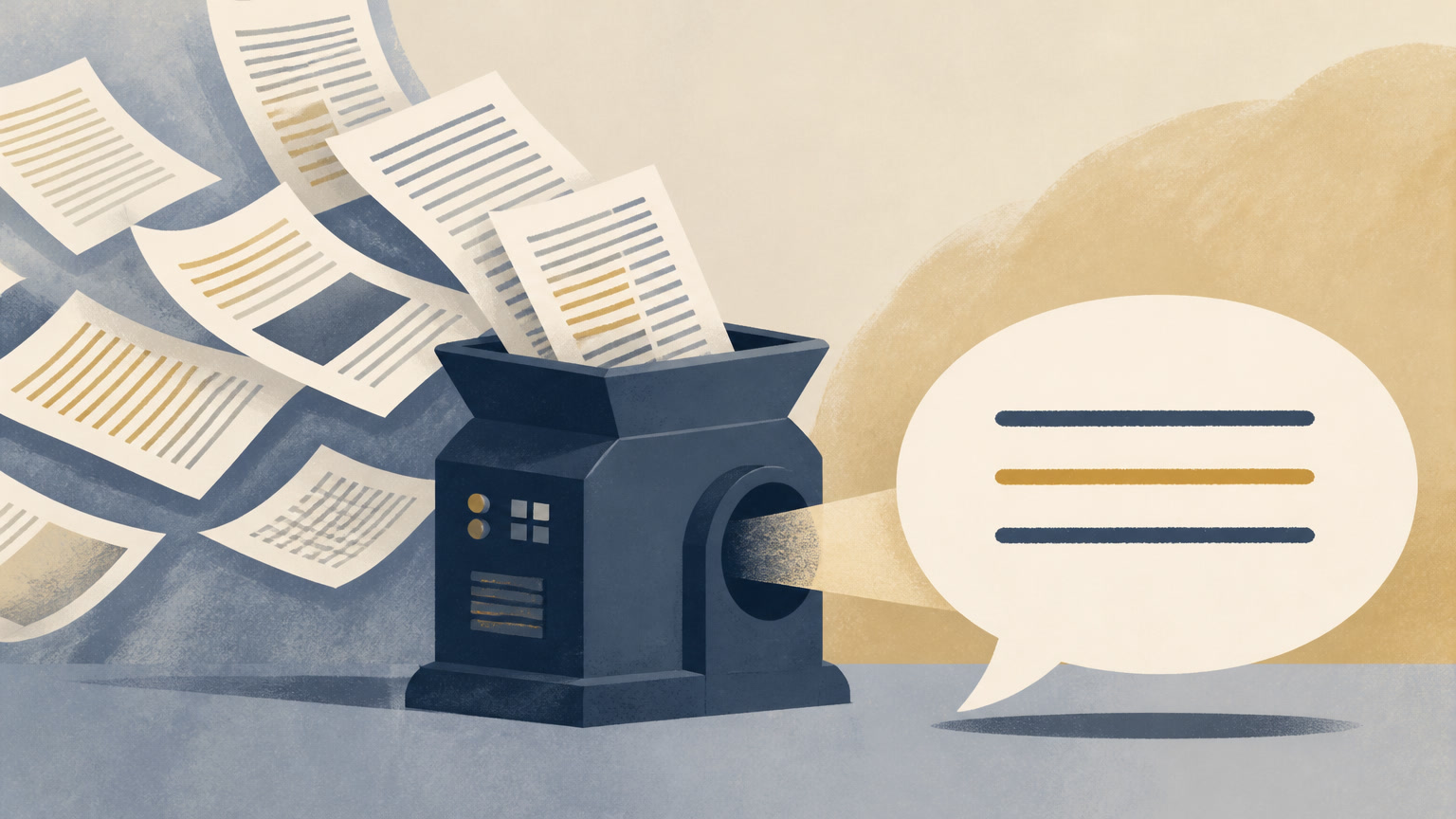
That is why a brand can rank first on Google for its category and be completely absent from ChatGPT's answer to "what's the best [category] for [use case]". The two systems read different source stacks. Most ecommerce teams still treat AI visibility as SEO with extra steps. It is not. It is a distribution problem: you are not distributed across the surfaces the model reads.
What the model actually reads before it answers
Run a real prompt and watch the citations. Try "best standing desk under $500 for a small apartment". The answer rarely pulls a product page. It pulls a Reddit thread where someone with a small apartment compared three desks, a review site's roundup, an Amazon listing for specs and price, and maybe a YouTube review. Notice what the model needed from each: the Reddit thread for the constraint match, the roundup for the shortlist, the listing for dimensions and weight limit, the video for durability claims. If your desk has none of those surfaces, the model has no reason to know it exists.
The practical consequence: product data quality matters more than page copy. When the model quotes your product it quotes facts, the 48-inch top, the 265-pound weight limit, the return window. Get those right and legible everywhere the model reads, because an error in your Amazon listing becomes an error in every AI answer that cites it.
The gap we see in GEO audits
When we run our 30-minute GEO audit for a product brand, we check the same 10 to 15 category prompts across ChatGPT, Claude, Gemini, Perplexity, and AI Mode. The most common result: the brand shows up in zero to two of those answers while sitting on page one of Google. Not because the model dislikes the brand. Because the brand optimized for a surface the model does not read, and neglected the surfaces it does.
The payoff is real, which is why we keep publishing our own numbers. In our GEO traffic report we shared months of measurement: AI-referred sessions are small, dozens per week, not hundreds, but they convert several times better than organic. People who arrive from an AI answer arrive pre-filtered. They asked a specific question and the model vouched for you. That is the quality most product brands are currently leaving on the table, and it is why we never sell AI visibility as a traffic volume play. It is a shortlist play.
Four moves to get named in AI product answers
Win the comparison queries, not the head terms. The model answers "best X for Y", "X vs Z", "X for small kitchens" from comparison content. If you do not exist in that content, you cannot be compared. Publishing your own honest comparison, your product against the incumbents with real specs, is underrated and cheap. New brands face the same loop we broke down in our cold-start guide: no mentions means no citations, and the exit is the specific comparative query the incumbent wrote generically.
Make your product data readable. The model pulls facts: dimensions, prices, materials, warranty, compatibility. If those live only in an image carousel or behind JavaScript, the model cannot read them. Spec tables, structured data, price and stock stated in plain text, FAQ blocks on the page. It is the least glamorous work in marketing and the highest-citation work we do.
Own the review surfaces the model reads. Amazon and Walmart reviews for B2C, G2 and Capterra for B2B, plus Reddit and YouTube. Reply to negative reviews with facts, models do quote replies. And get your product into the comparison lists that are already being cited. Attaching yourself to an asset that already has citations beats building yours from zero, which is stage four of the ramp in the cold-start framework.
Measure mentions, not rankings. Track your brand across a fixed panel of category prompts every week. Log the prompt, the answer, and the source the model pulled when it names you. Once you can see a citation happening, repeating it on the adjacent query is a process, not luck.
Run the test before you spend anything
The 74% is not a trend to watch, it is a channel that is already open. Here is the cheapest diagnostic you can run today: ask ChatGPT, Claude, and Gemini "what's the best [your category] for [your customer]" and count how many times your brand appears against your competitors. Twenty minutes. Most brands have never run it, and the result usually decides whether their next budget line should go to more Google ads or to being nameable in the answers.
For software and B2B the same mechanics apply with the same levers, which is the pattern we documented in our breakdown of AI Overviews and cited brands. The honest caveat: AI product discovery today sends fewer clicks than Google, and anyone who tells you otherwise is selling something. But the click that does arrive carries intent that Google cannot buy. The shortlist is being assembled by a machine that reads the web. Make yourself readable, and be in the room when the question is asked.
Frequently Asked Questions
What is AI product discovery?
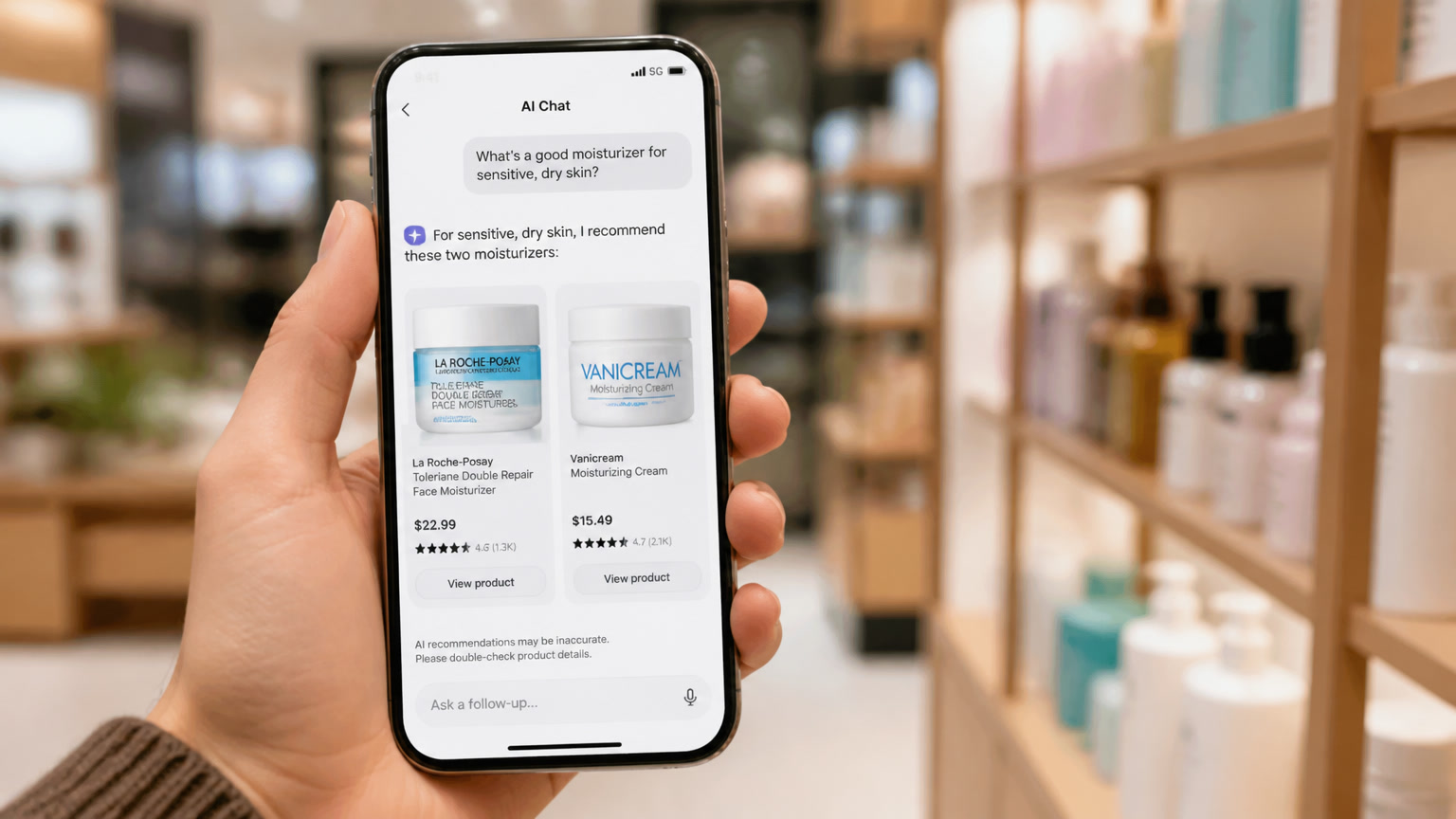
It is shoppers asking AI assistants like ChatGPT, Claude, or Gemini to recommend or compare products instead of starting from a search box or a marketplace filter. The assistant assembles an answer from sources it trusts: review platforms, community threads, comparison pages, and product data it can read. Your brand either appears in that assembled answer or it does not.
How do I get my product recommended by ChatGPT or Claude?
You cannot pay for the recommendation and you cannot buy your way into the answer set. What works is being citable: win the comparison queries in your category, publish product data in a structured format the model can read, and make sure the review surfaces it already trusts mention you accurately. The article breaks that down into four moves.
Does ranking on Google help with AI product recommendations?
Less than most teams assume. AI assistants build answers from the sources they consider citable, and those are often review platforms, community threads, and comparison lists, not the top ranking product pages. Google rankings help with Google. AI visibility needs its own audit.