
How to Get Cited by ChatGPT Search: What Our Own Analytics Show
We track every visit ChatGPT, Gemini, and Claude send to mintec.co. Last week: 16 sessions, 20 pageviews, and a citation pattern that contradicts most GEO advice. Here's what the data actually shows and how to use it.
How to Get Cited by ChatGPT Search: What Our Own Analytics Show
ChatGPT cites pages that answer one specific question in a self-contained block, sit on a domain it trusts, and carry clear attribution signals. We know because we track every visit ChatGPT sends us. Here's what 7 days of that data looks like, and what it means for how you should spend your next month.
Most GEO advice is written by people who have never seen a real citation appear in their analytics. We have. Every week we pull the LLM traffic report for mintec.co: sessions from chatgpt.com, claude.ai, gemini.google.com, and perplexity.ai, broken down by page. The numbers are small. The patterns are not.
The week in numbers
Last week ChatGPT sent us 9 sessions and 14 pageviews. Gemini sent 5 sessions and 5 pageviews. Claude sent 2 sessions and 1 pageview. Total: 16 sessions, 20 pageviews. Modest, but up from 12 sessions the week before, and every one of those visits came without us paying for a single click.
Here's the part that matters, the pages they landed on:
/es/ubicaciones/bogota/salud-storytelling-de-marca/— 3 sessions, all from ChatGPT. A location page about healthcare brand storytelling in Bogotá./es/contacto/— 2 sessions. The contact page. People asked ChatGPT how to reach us and it gave them the page./blog/geo-google-ai-guide-2026/— 1 session. Our GEO guide./blog/pinterest-ai-ad-tools-junio-2026/— 1 session. A niche tool breakdown.- A handful of service and solution pages, 1 session each.
Read that list again. The most cited page on our site last week was not the homepage, not our best-performing blog post. It was a hyper-specific service page in Spanish for one city and one industry.
Pattern one: specificity beats authority
The Bogotá healthcare storytelling page won because it answers a narrow question completely. What is brand storytelling for healthcare providers in Bogotá, and why does it matter? The page states it directly, in the first two sentences, with local context and service detail. ChatGPT does not have to assemble the answer from five fragments. It lifts the block and cites us.
Winston Digital's 2026 playbook breaks citations into eight signals and calls out two big ones: source domain authority and chunk-level citability. Chunk-level citability is exactly what that Bogotá page has. The model can pull a clean, self-contained quote without stitching together loose paragraphs.
Most sites are built the other way around. The homepage is broad, the service pages are vague, and the blog is where the details live. But ChatGPT rarely cites a page that makes the reader hunt for the answer. If your specificity lives in blog posts and your money pages stay generic, the model cites your blog and sends zero commercial intent your way.
Pattern two: the contact page gets cited
Two ChatGPT sessions landed on /es/contacto/. That means people were past the research phase. They asked for contact information, or for a partner in Bogotá, and the model decided our contact page was the right destination.
That is the citation you actually want. Not the impression. Not the "we were mentioned" badge. The referral that arrives ready to talk.
Vaza's GEO playbook argues you need three things to get cited: a high SEO ranking, brand-attributed declarative sentences, and external brand mentions. Our data agrees with the first two and adds a nuance to the third: external mentions help, but so does having the right page exist at all. The contact page earned its citation by being a clean, authoritative answer to a contact-intent query, nothing more.
Pattern three: citations spread wide, not deep
Eleven different pages received LLM traffic in seven days. Most got exactly one session. ChatGPT does not concentrate on your money page. It pulls the best block for each question, wherever that block lives.
This is the opposite of how most companies measure success. One page ranking, one page winning. AI search rewards a site that has a strong block for every relevant question. That means the work is distribution: answer blocks across many pages, not a single hero page.
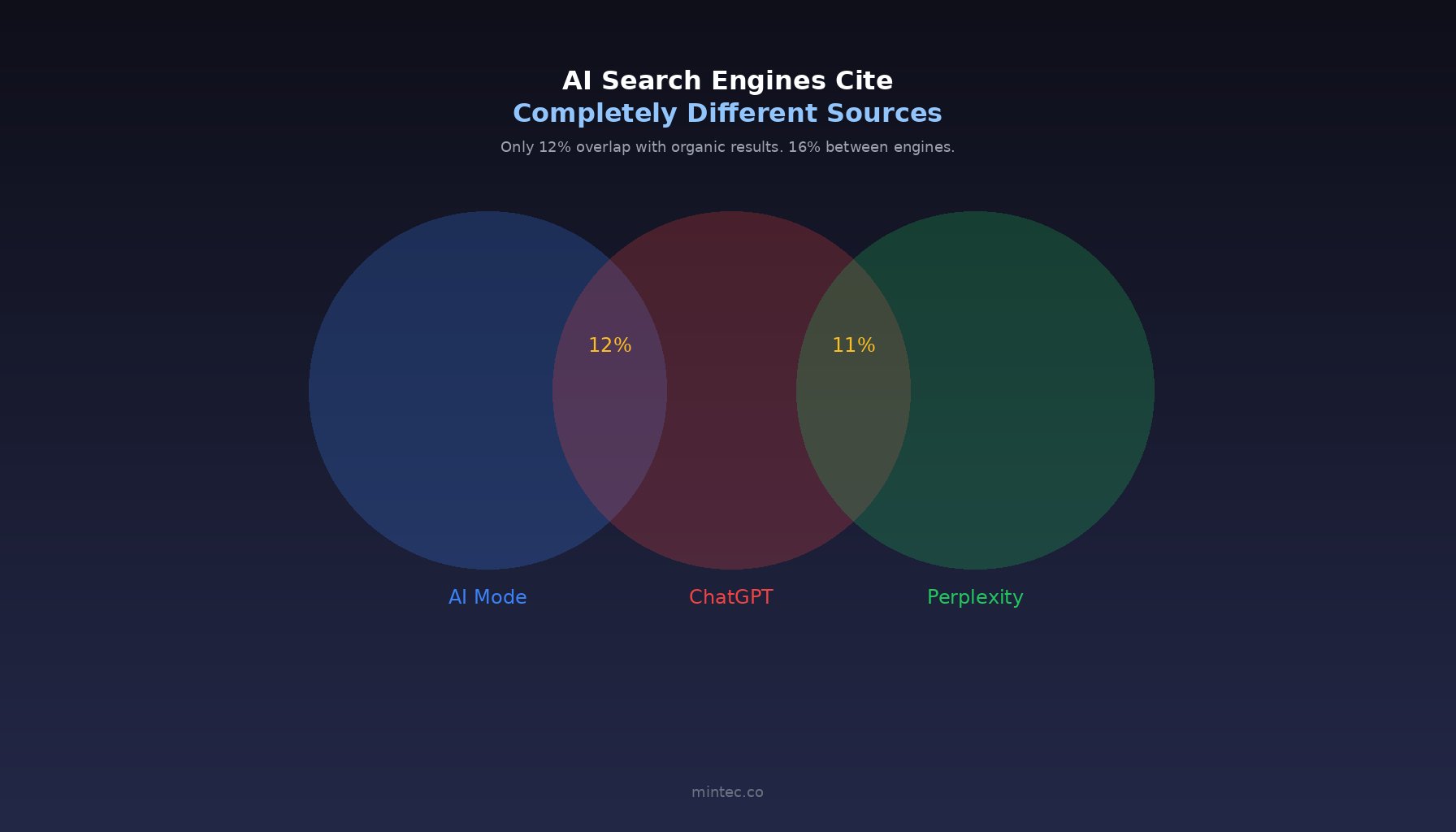
The citation profiles post we wrote showed that engines cite completely different sources for the same query. Our own referral data confirms it. ChatGPT cited the Bogotá page three times and never touched our top organic page. Different engines, different preferences, and the only way to catch all of them is coverage.
The three layers of a citable page
If you want one framework to take away, use this. A page gets cited when it passes three layers:
- Authority. Does the model trust the domain? This is the slow layer. It compounds with every citation, mention, and backlink, and it is why llms.txt matters as a signal that you understand AI crawlers.
- Citability. Can the model pull a clean quote? One question, one answer, stated in the first two sentences, with a visible publish date and author. Yotpo's ChatGPT SEO guide calls this fact density: the ratio of specific, verifiable statements to generic filler.
- Intent match. Does the page answer the question the user actually asked? The contact page won contact queries. The Bogotá page won local service queries. Neither tried to answer everything.
Fail layer one and you never get crawled seriously. Fail layer two and the model reads you but cannot quote you. Fail layer three and you get cited for the wrong question, which produces impressions without visits.
What we changed after seeing this
The data changed three things for us:
We stopped treating the blog as the only GEO surface. Service and location pages now get the same treatment: direct answer, one question per block, FAQ schema where it reflects real content.
We added FAQ schema to pages that answer real questions. The Gemini 3 overviews update made follow-up questions the new battleground, and schema is part of surviving turn two.
We check our LLM referral report weekly and look at the pages, not just the totals. When a new page shows up with sessions, we read it and ask why. Usually the answer is a clean block we did not notice was that good.
And we keep the numbers honest. Real GEO traffic is small. Sixteen sessions a week is not a revolution. It is a pipeline that grows slowly and compounds, and the pages it cites tell you exactly what the models think you are good at.
What not to do
Do not chase citation badges. Tools that claim to show your "AI visibility score" measure something, but it is not revenue, and most of those scores are vanity metrics.
Do not stuff every page with the same FAQ block. ChatGPT sees through padded schema, and Google's own guidance is that markup should match visible content.
Do not neglect rankings. Vaza's point stands: ChatGPT pulls from indexed pages, and search rankings are still the floor. GEO is a layer on top of SEO, not a replacement.
The takeaway
The page ChatGPT cited most on our site last week is a Spanish-language service page for healthcare storytelling in Bogotá. Nobody planned for that. It just happened to be the most specific, most quotable answer on the site for the questions people asked.
That is the whole game. Build pages that answer one question completely, state facts directly, and exist on a domain that has earned trust. Then watch your referral report and let the models tell you what they think you are good at. They are better analysts than most dashboards.
Frequently Asked Questions
How do you get cited by ChatGPT Search?
ChatGPT cites pages that answer one specific question in a self-contained block, sit on a domain the model trusts, and carry clear attribution signals like a visible author, publish date, and factual claims stated as plain statements. In our analytics, the pages ChatGPT cites most are specific service and location pages with direct answers, not generic blog posts.
Why does ChatGPT cite some pages and not others?
Citation comes down to three layers: source authority (does the model trust your domain), chunk-level citability (can it pull a clean self-contained quote from your page), and fact density (does your content state verifiable specifics rather than generic claims). A page that ranks well but lacks a quotable block gets skipped.
How can I track ChatGPT citations of my site?
Filter your analytics by referral source: chatgpt.com, claude.ai, gemini.google.com, and perplexity.ai. Google Analytics 4 shows sessions and pageviews per source. Pair that with Search Console's AI Performance report and a manual check of ChatGPT answers for your target queries.