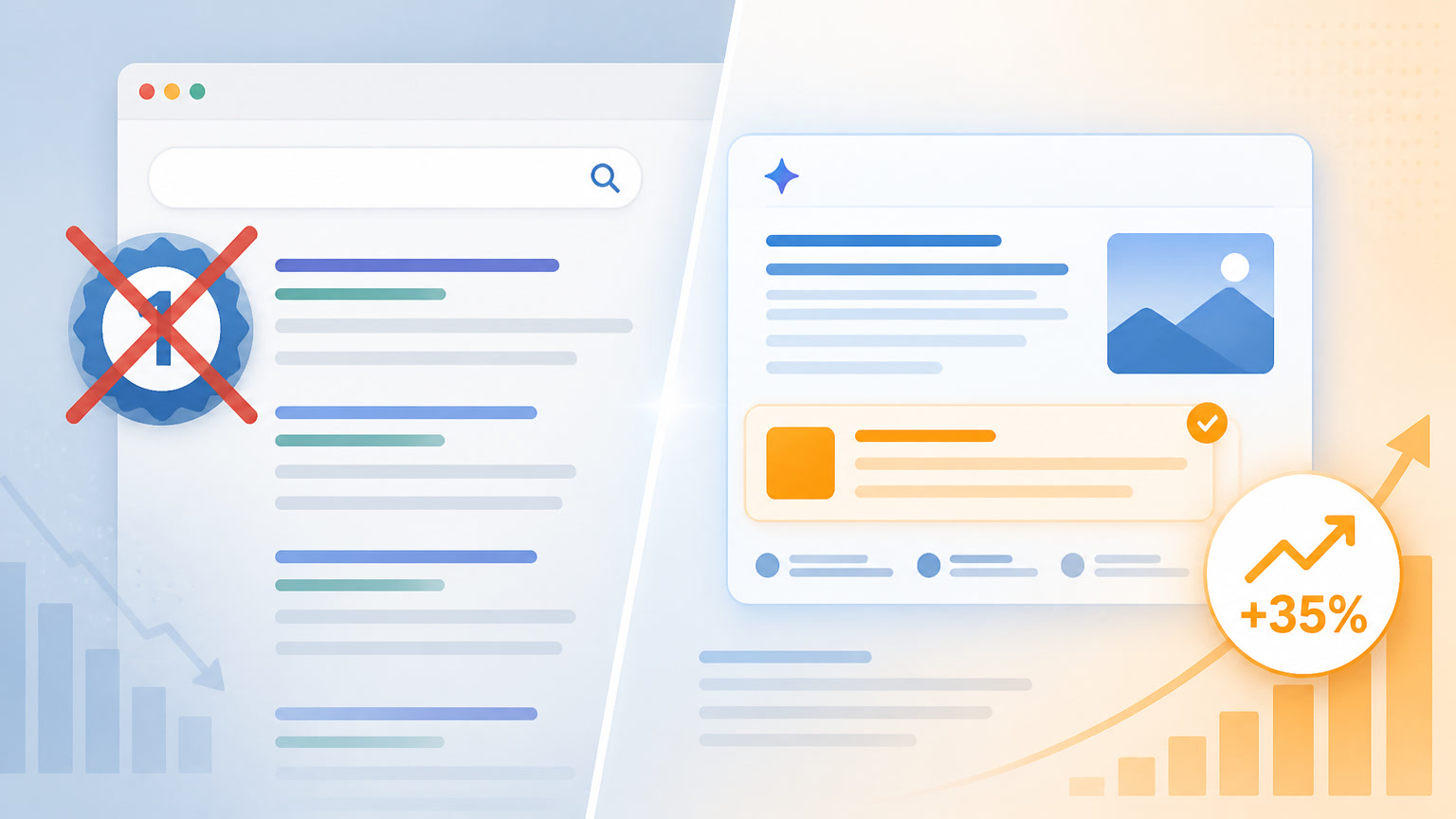
AI Overviews Cut CTR by 61%. Cited Brands Get 35% More Clicks. The Math Only Works If You're Cited.
AI Overviews appear on 48% of searches and cut organic CTR by up to 61%. But cited brands get 35% more clicks and 91% more paid clicks. The strategic question isn't whether SEO works anymore — it's whether your content is built to be cited, not just ranked.
AI Overviews Cut CTR by 61%. Cited Brands Get 35% More Clicks. The Math Only Works If You're Cited.
I've been staring at the AI Overviews data for weeks now, and I keep coming back to the same uncomfortable conclusion: the SEO industry is measuring the wrong thing.
Here's why.
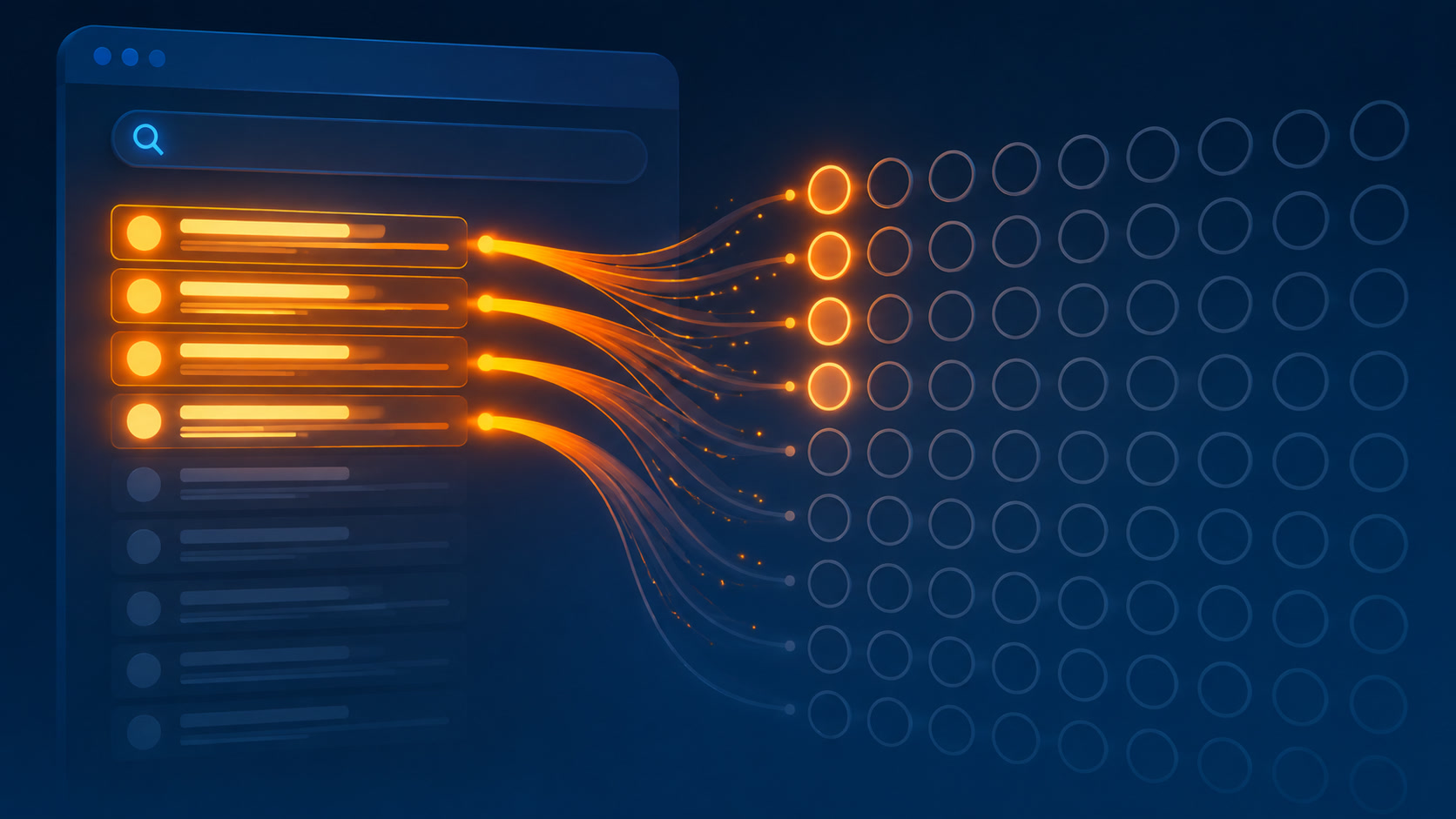
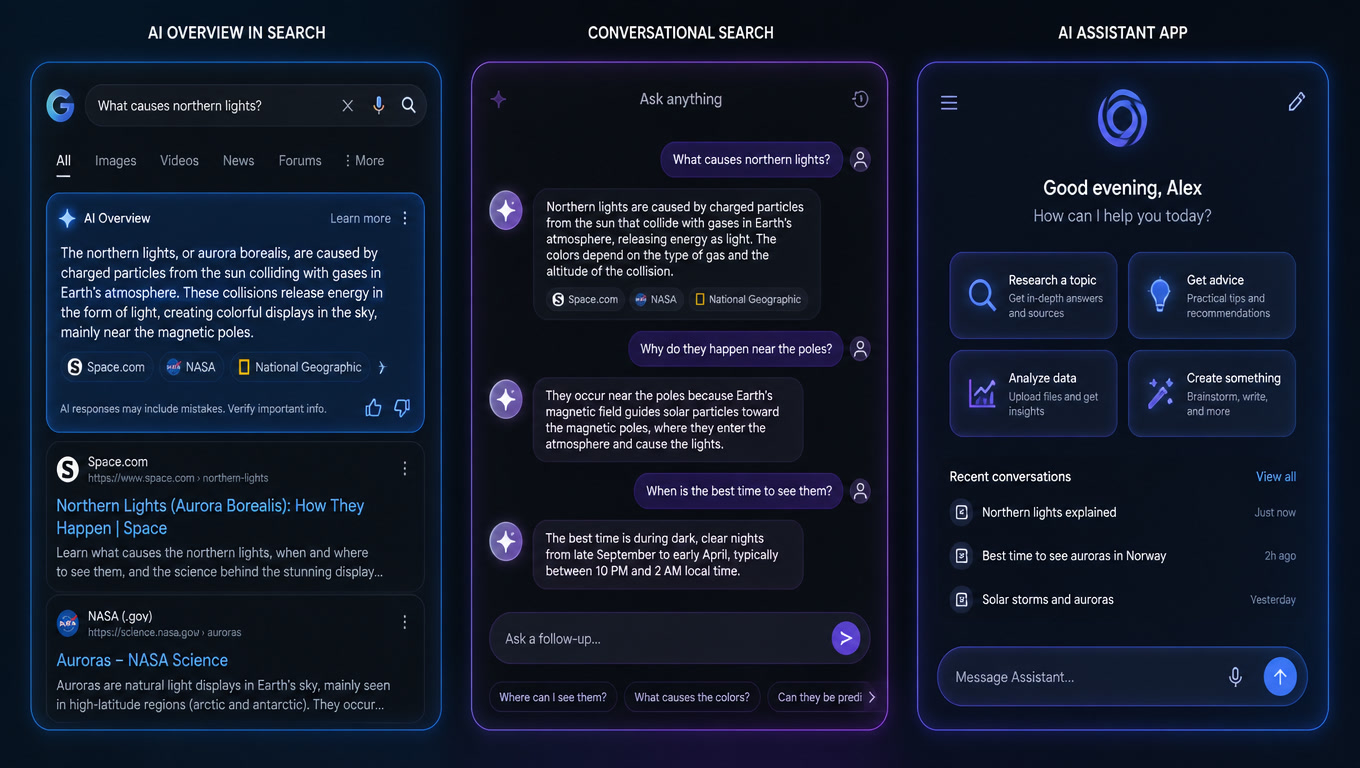
AI Overviews now appear on 48% of Google searches. That's up 58% year over year. When an AI Overview shows up, organic click-through rate drops by anywhere from 34% to 61%. Zero-click searches on triggered queries jumped from 54% to 72%.
If you only read those numbers, you'd think SEO is dying.
Then you read the other side of the data. Brands cited inside AI Overviews get 35% more organic clicks and 91% more paid clicks than non-cited brands on the same queries. Their referral traffic from other channels goes up 28%. Their total traffic — organic, paid, referral, the whole picture — increases.
Same query. Same audience. Polar opposite outcomes.
That's not SEO dying. That's SEO splitting into two separate games: ranking and citability. And they're not the same thing anymore.
Where These Numbers Come From
Let me be specific about sources, because vague attributions are worse than no citations.
The 48% AI Overviews prevalence figure comes from multiple tracking tools — theStacc, Heroic Rankings, and QuickSEO all converged on similar numbers by mid-2026. A year ago it was around 25%.
The 34-61% CTR drop range comes from controlled studies. Launchcodex reported a 38% reduction on triggered queries in an A/B study where users were randomly assigned to see or hide AI Overviews. Memeburn's analysis found drops exceeding 60% in some verticals, with healthcare and B2B tech hit hardest.
The 35% organic and 91% paid click lift for cited brands comes from ALM Corp's 2026 field study, cited by Authority Tech and multiple industry analysts. Seer Interactive's 2025 data told the same story — a single AI citation can outperform a traditional #3 ranking.
These numbers hold across different methodologies. The direction is consistent. The magnitude varies by vertical, but the asymmetry — cited brands win, everyone else loses — is stable.
The Paradox in Plain Language
The best way I can explain this is:
AI Overviews answer the query directly, so most people don't click anything. That's the CTR drop. But the people who do click — the ones looking for details, verification, or next steps — overwhelmingly click cited sources.
Why? Because the AI just told them those sources are authoritative.
Google is effectively pre-qualifying traffic. If you're cited, you get fewer but better visitors. If you're not cited, you get neither — no pre-qualification, no traffic, no visibility.
This changes the ROI calculation completely. Traditional SEO focused on getting enough position-1 traffic to cover the investment needed to get there. Now position 1 doesn't guarantee AI citation — only 33% of #1 ranked pages appear in AI Overviews, according to BrightEdge data.
You can rank first and still lose. You can rank fifth but get cited and win.
The Framework: Rankability vs. Citability
After working through this with several clients, we've developed a simple way to think about content investment decisions.
Rankable content answers a search query. It has keyword-optimized headers, decent internal linking, and standard on-page SEO. It plays the old game.
Citable content answers a question so clearly and authoritatively that Google's AI pulls it into a synthesized answer. It has:
- Direct, self-contained answers that don't require clicking through to understand
- Structured data that maps to entities (not just keywords)
- Independent authority signals (cited by other sources, not just linking to them)
- Clear attribution (named authors, sources, dates)
- FAQ or Q&A format for question-type queries
The distinction matters because the optimization targets are different. Rankable content needs keyword density and backlinks. Citable content needs entity clarity and citation signals.
What Makes the Difference in Practice
I've been tracking which of our pages get AI cited and which don't, using the new Search Console AI Performance Reports we wrote about a few days ago.
Early pattern: pages with a clear question-answer structure, named sources with dates, and at least one external citation consistently outperform keyword-optimized pages in AI citations — even when the keyword pages rank higher.
Pages that are purely informational summaries without original framing? Google's AI cites the original source instead. Pages that add analysis, opinion, or synthesis on top of facts? Those get cited.
The editorial judgment matters. Google's AI has gotten better at distinguishing "this page says what others say" from "this page has a perspective worth referencing."
What This Means for Your SEO Investment
I'm not going to tell you to abandon keyword research or stop building backlinks. That would be bad advice.
What I will tell you: if you're measuring SEO ROI the same way you did in 2024 — organic traffic, keyword rankings, bounce rate — you're flying blind. You need to track AI impressions separately, measure citation rates, and calculate the value of being the source the AI cites, not just the result it ranks.
The shift from "ranking" to "citing" is structural. Google's May 2026 update that added inline links to AI Overviews and the June 2026 launch of AI Performance Reports in Search Console are both moves toward making AI citations the primary visibility channel. Preferred Sources in AI Mode, which launched May 27, adds user preference on top of algorithmic signals.
The SEO industry is slowly waking up to this. I've seen the headlines: "AI Overviews Killed SEO" in one tab, "Cited Brands See 91% More Paid Clicks" in another. Both are true. The relevant question is which side of that divide your content lands on.
The Short Version
- AI Overviews are here on nearly half of all searches
- They cut organic CTR dramatically
- But they reward cited brands with better, more valuable traffic
- The gap between cited and non-cited brands is widening
- You need to build content for citability, not just rankability
We've been running our internal audit framework combining the GEO Guide and GSC AI reports — what we published as a 4-step process — and the pages that score highest on citability consistently outperform their ranking position would suggest.
The math doesn't change. The game does.
Frequently Asked Questions
What is the real impact of AI Overviews on organic traffic in 2026?
AI Overviews appear on 48% of Google searches and reduce organic CTR by 34-61% on triggered queries. But brands cited inside AI Overviews earn 35% more organic clicks and 91% more paid clicks than non-cited brands. The overall click pie shrinks, but cited brands eat a bigger slice.
Does SEO still work when AI Overviews answer user questions directly?
Yes, but the strategy shifts from ranking pages to getting cited by AI. Only 33% of #1 ranked pages appear in AI Overviews. SEO still drives traffic — but being cited in AI answers now drives more traffic than being the top organic result for the same query. The ROI equation has changed, not disappeared.
How do I measure SEO ROI with AI Overviews in 2026?
Use Google Search Console's AI Performance Reports (launched June 3, 2026) to track AI impressions separately from traditional organic impressions. Measure two ROIs: traditional organic CTR (benchmark is declining industry-wide) and AI citation value (cited brands see +35% clicks). If you're not tracking AI citation performance separately, you're measuring the wrong thing.