Google Search now generates the image instead of finding it: what's left for your image traffic
Nano Banana 2.1 landed in AI Mode on October 6, and AI Overviews has generated images since July. Which visual queries still send traffic, which never will, and the three changes we make when the answer manufactures the picture itself.
Google Search now generates the image instead of finding it: what's left for your image traffic
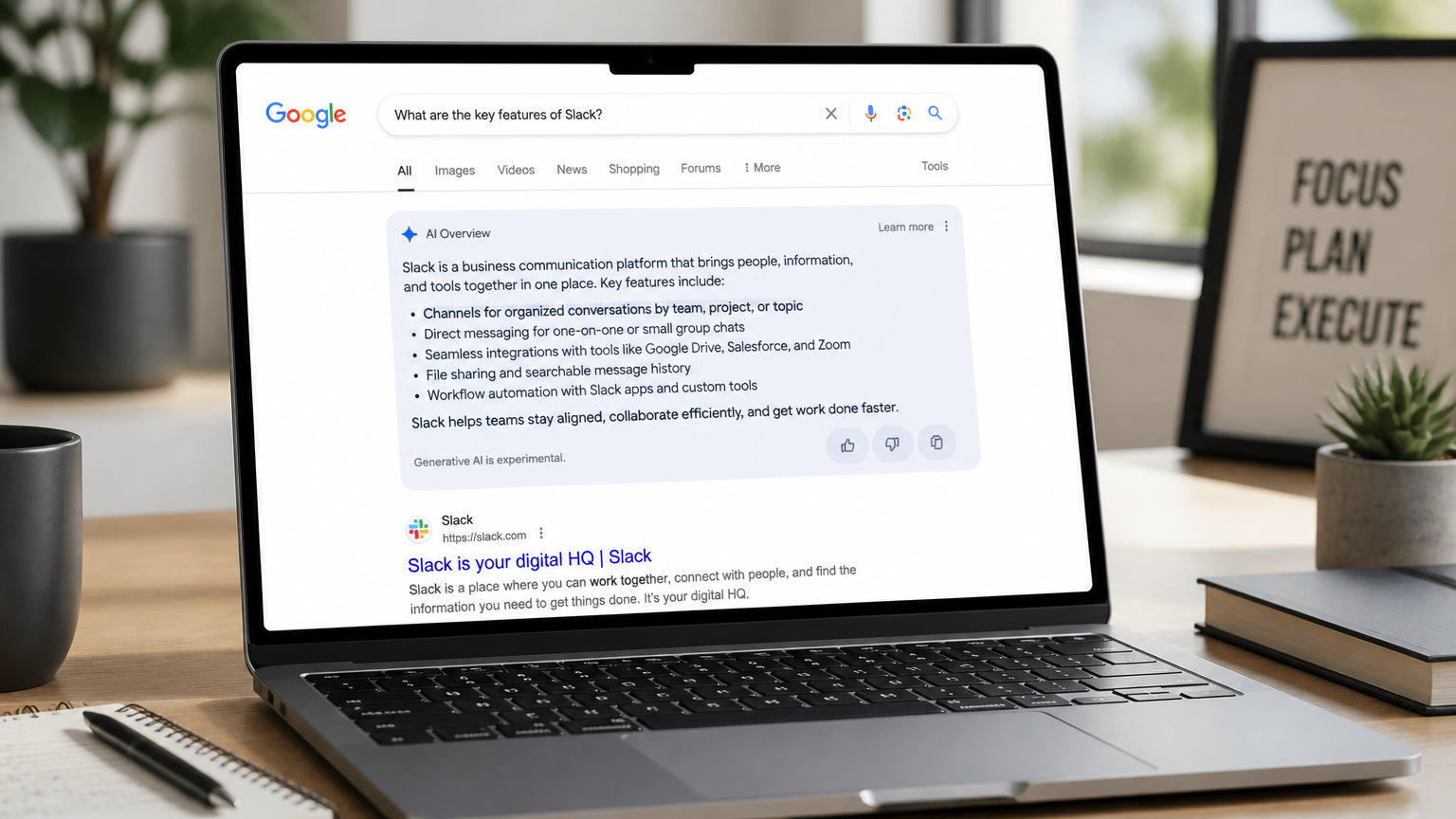
Google published the Nano Banana 2.1 model card on October 6, 2026, and Google Search AI Mode is listed as a distribution channel. The same day, Robby Stein, VP of Product for Search, wrote that the model is already rolling out inside AI Mode. Since July 14, AI Overviews also generates images from a prompt. Yes: Search can manufacture the image for you instead of showing you a list of other people's images. What Google has not explained is when one replaces the other, and that is exactly where your traffic from visual queries gets decided.
That is the short answer. Below is what is confirmed, what is my reading, and what we are changing ourselves.
The timeline, with sources
- December 2025. Google expanded Nano Banana image creation inside AI Mode, as Search Engine Roundtable covered at the time.
- July 14, 2026. For the 25th anniversary of Google Images, Google announced image generation inside AI Overviews plus a Google Images homepage rebuilt as a browsable gallery. The rollout started in English, "for all regions that currently support image creation in AI Mode."
- October 6, 2026. Nano Banana 2.1 ships as a public model, based on Gemini 3.6 Flash. The Google DeepMind model card lists Google Search AI Mode among its distribution channels, and Stein confirmed the AI Mode rollout the same day. Version 2.1 brings gains in visual design, mask-based editing and subject consistency, which is precisely the part that made a generated image look generated.
- The fine print. Google's official help page restricts creating and editing images in Search to a personal Google account, users 18 or older, specific countries and languages, and daily usage limits, with higher quotas if you pay for AI Plus, Pro or Ultra.
What has not changed
Google Images is still there. Image queries still return photographs from the web, visual search still brings people to sites through more than one door, and generation is something the user triggers: a prompt, or the button under the search box. It is not an automatic replacement of the results list. Nobody has published how many image queries end in generation, and we do not have that number either.
Where things do change is inside the long answer. When an AI Overview auto-expands into AI Mode format, which is what we described in our post on auto-expansion, the manufactured image sits inside the block itself, with the question box underneath. The user has no reason to leave. Your image, if it appears, appears as cited material inside a response that no longer needs to open your page to be complete.
Three kinds of visual query
The useful question is not "does image SEO die," which tells you nothing, but which kind of query you are defending. We work with three categories:
| Query type | Typical example | What happens now | What to do |
|---|---|---|---|
| Existence | photo of the real product, app screenshot, the actual location, before and after | a manufactured image does not work: the user wants the thing, not a version of it | your own recent photo, high resolution, filename and alt that say what it is, a sentence next to it that explains it |
| Concept | wallpaper, generic illustration, mockup, "image about X for my blog" | generation resolves it inside the answer | stop expecting traffic from those queries and stop spending on stock illustration for them |
| Proof | step-by-step recipe, client result, comparison, testimonial | the image still comes from the web, but the answer embeds it and the click depends on the text around it | the text next to the image must answer the full question; the image is the evidence, the text is what gets cited |
The concept category will make the most noise, because it is the one Google can demo on a keynote stage. It is also the one that hurt least: almost nobody received steady visits from a wallpaper.
How it looks from here
We publish daily articles in two languages, and each one carries its own hero image, generated with an image model (GPT Image 2, low tier, one cent per image). Months of that, and the observation is stable: models are very good at concept, scene and composition, and very bad at specifics, which is exactly where your brand lives: logos, text inside the image, the actual interface of your product, the exact thing your client sells.
Nano Banana 2.1 attacks exactly that, with better editing and subject consistency, so the bar comes down. What does not come down is veracity: a generated image of "our dashboard" is not our dashboard, and the user looking for proof does not want a plausible version.
That gives us the line we draw: the generic gets manufactured, the specific gets demonstrated. If your visual advantage is your own photo, your own screenshot, a number only you hold, generation does not replace it. If your visual advantage was a library of illustrative stock, it already did.
There is a second effect we do see in our data. In the LLM traffic report we run every week, the sessions arriving from ChatGPT, Claude and Gemini all land on text pages with a full answer inside them. A standalone image receives none, because the visit is always to the page that explains it. Generation does not change that; it changes which part of your page competes. No longer just the image competes, the explanation around it competes.
What to do this week
- Sort your image queries. Pull the top image impressions from Search Console and run them through the table: existence, concept or proof. Mark the concept ones as lost traffic and let them go. That alone orders a quarter of work.
- Fix the existence and proof ones. Descriptive filename, an alt that says what the image shows, and a sentence next to it declaring what it is and what it is for. The text around the image is what a model can extract and cite; nobody reads the image itself.
- Test it before you have an opinion. In a market where AI Mode is available, type the prompt for your own product or category and see whether a manufactured image comes back or a list of the web. After that answer, you stop speculating about whether it applies to you.
- Measure what exists. Search Console's generative AI performance report tells you which generative surfaces your site appears on. There is no report for "your image was used in an answer," so do not pretend you have that number: write down what you see by hand and date the observations.
What we do not know
- How many image queries end in generation. Google has not published it and no independent dataset measures it yet.
- Availability in Spanish. The July rollout started in English and image creation is still limited by country and language. It may not be live in your market today, and your audience will not see it the same way.
- Whether a generated image can carry a source or link. So far generation returns a file inside the answer; we have not seen citation anchored to the image. If that changes, the math on the concept category changes with it.
- The business model. Who gets paid when the image comes from nothing published remains unanswered, and that question decides whether this ends in a publisher deal or in one more feature that sends nobody anywhere.
The opinion
This update does not kill image SEO, it changes the job. For fifteen years the image was the hook that brought the click from Google Images. Now the image can be the answer itself, and what is left for your site is the context: what it explains, what it proves, what stays true only because you published it.
What I would do is stop treating images as traffic and start treating them as evidence. Let the model manufacture the generic ones. Yours should be described well enough that any answer using them has to name you for them to make sense. That work was already on the list in the GEO audit we run with clients; what changed is that it now has a shorter expiry date.
And one open question, because it is the one that actually moves money: if the generated answer satisfies the visual query with nobody on the other end, what is left for a business whose acquisition depended on someone arriving to see their photo? The honest answer is that we do not know yet, and anyone telling you they do is selling you a tool.
Frequently Asked Questions
Does AI Mode generate images instead of showing web results?
Yes, when the user asks for it. The Nano Banana 2.1 model card, published on October 6, 2026, lists Google Search AI Mode as a distribution channel, and image creation has been inside AI Mode since December 2025. AI Overviews has generated images since July 2026. What has not been replaced is the normal result: Google Images still returns photographs from the web, and generation is a user action, not an automatic swap of the image grid.
Does image SEO die now that Search generates images?
It dies for concept queries: generic illustrations, wallpapers and mockups. The model resolves those inside the answer, and they rarely sent real traffic anyway. It stays alive for existence and proof queries, where the user wants the real thing: your product, your screenshot, your before-and-after. A generated image does not replace yours there, and what decides whether you get cited is the text sitting next to it.
Is Google Search image creation available in my country?
It depends on country and language. The July 2026 rollout started in English, and Google's help pages limit image creation to specific countries, territories and languages, with a personal Google account, users 18 or older, and daily usage caps. Check the official help page before assuming your audience sees the feature.