Google Is Auto-Expanding AI Overviews. Winning the Citation Now Beats Ranking First
Google now auto-expands some AI Overviews into full AI Mode-style answers, pushing blue links down. How to audit your keywords and win the citation.
Google Is Auto-Expanding AI Overviews. Winning the Citation Now Beats Ranking First
On August 27, 2026, a screenshot from Chris Long made a lot of SEOs nervous. For some searches, Google was showing the AI Overview fully expanded, in the complete AI Mode response format, with no "Show more" click required. Search Engine Land and Search Engine Roundtable confirmed the pattern the same day: for a set of queries, Google now delivers a much longer answer, similar to what you'd get in AI Mode, and loads the "Ask anything" follow-up box by default. The blue links sit far below.
This is a test on some searches, not a confirmed rollout. Google has not announced it. But it shows where search is heading, and it changes what you should optimize if your keywords are affected.
What actually changed
The classic AI Overview was a short answer box with a "Show more" toggle and the organic results underneath.
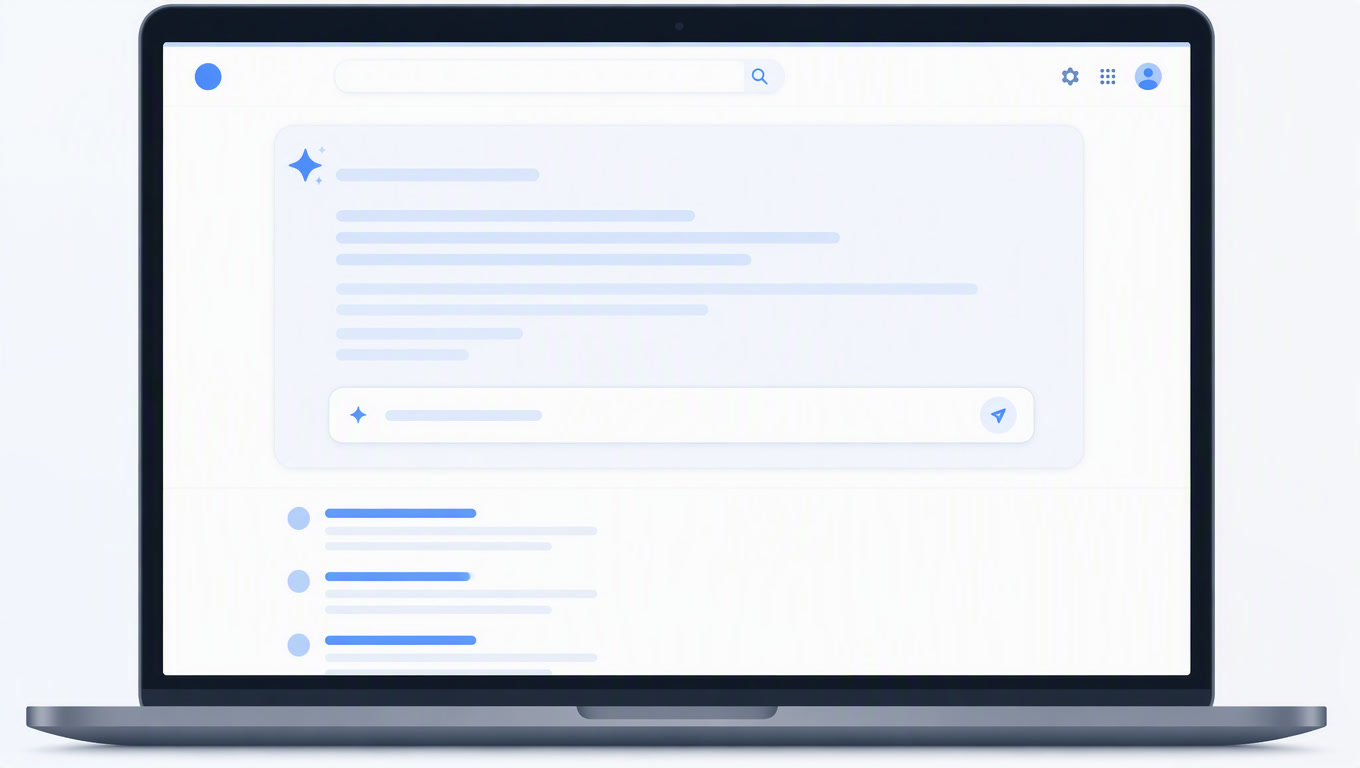
What some users now see is different: a long, multi-paragraph answer, source cards, an "Ask anything" input ready to use, and the traditional results pushed way down, sometimes off the first screen.
| Element | Classic AI Overview | Auto-expanded AI Overview |
|---|---|---|
| Answer | Short, 1-2 paragraphs, behind "Show more" | Full AI Mode-style answer, visible immediately |
| Prompt box | Only after expanding | "Ask anything" visible by default |
| Link position | Below the box, still visible | Pushed far down, sometimes below the fold |
| Format | Summary with sources | Ongoing conversation |
The mechanism is the same as always, but the footprint is much bigger. The AI Overview was already an answer engine with links attached. For affected searches, it now behaves like AI Mode, Google's dedicated generative search experience.
Chris Long put it bluntly on X: "Google is now revealing the AI Mode prompt box BY DEFAULT for some queries." That's the telling part. The prompt box is the entry point to a fully conversational search, and Google is testing making it a default part of the results page.
Why this matters more than previous AI Overview updates
For the first couple of years, you could reasonably argue that AI Overviews mostly redistributed clicks. If you ranked in the top three, you usually still got traffic.
Auto-expansion breaks that logic. When the answer is long, self-contained, and ends with a prompt box instead of links, the click happens inside the answer, not on your page. For those queries, your rank position stops being the main event. What matters is whether the answer cites you.
We have seen this pattern in our own GEO work at Mintec. Clients cited inside the answer keep getting visits, even when their classic position slides. Clients who rank well but never get cited see sessions drop as the answer box grows. Citation is becoming the new position one.
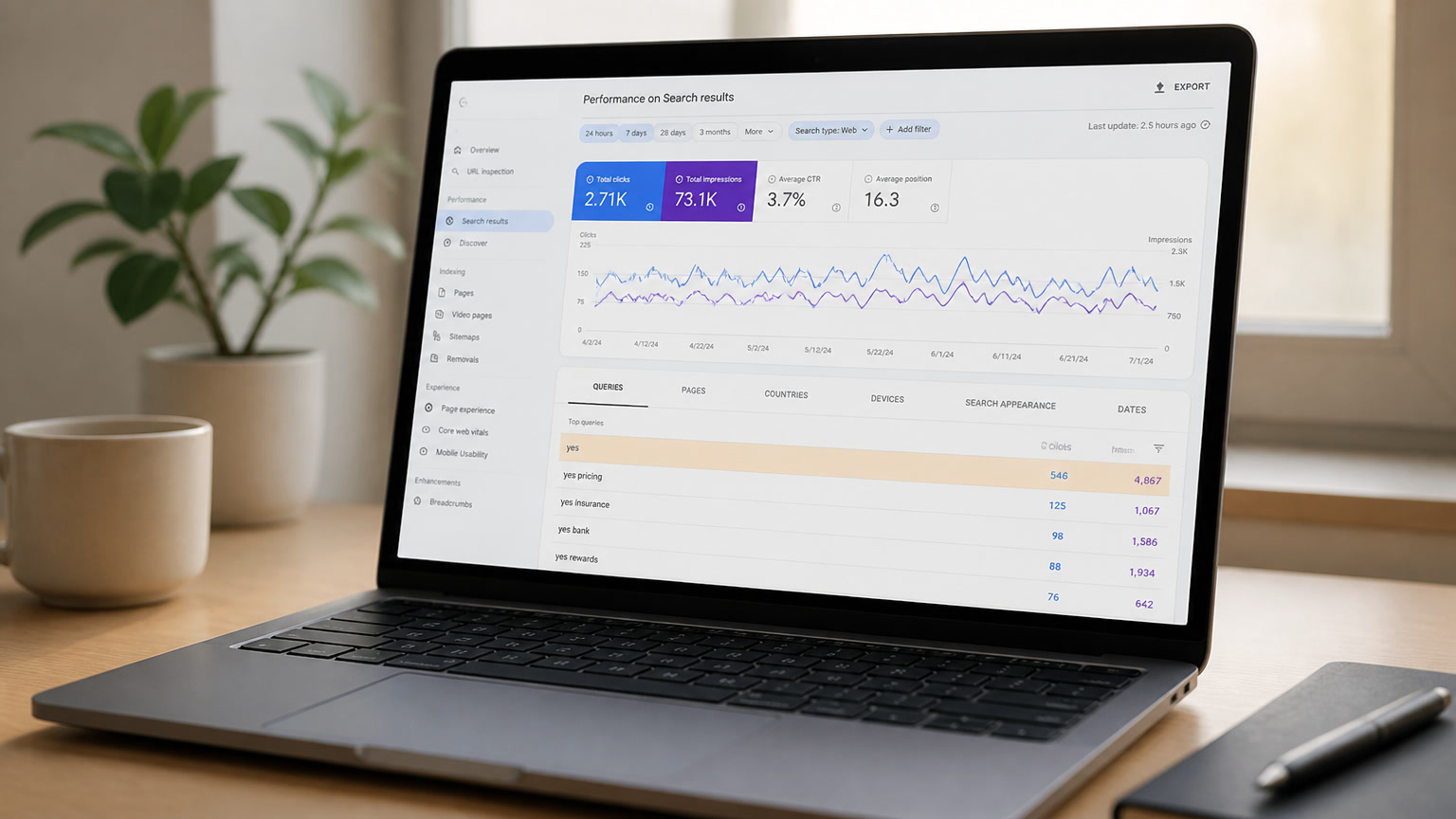
And here is the part most coverage misses: this is now measurable. Search Console shows AI Mode queries as their own line, even though they do not appear in the generative AI reports yet. You can see which of your keywords generate AI Mode impressions and check whether expanded answers show up for them.
The 5-keyword audit
If you are worried your market is affected, run this. It takes 15 minutes.
- Pick five queries that actually drive revenue: your main product keyword, one "best X" query, one "how to" query, one comparison query, one niche or local query.
- Open each in an incognito window on desktop, then on mobile. Logged-out profiles only.
- Screenshot each one and ask three questions: does the answer expand on its own? Is the "Ask anything" box visible without scrolling? Where does the first blue link start, above or below the fold?
- Check whether your brand appears inside the answer text, not just in the link list. Screenshots will not show you this reliably, so read the answer.
- Log everything in a spreadsheet and repeat weekly. Note the date, because Google is clearly iterating on which searches get the treatment.
For the affected queries, also open Search Console and filter by AI Mode queries. If impressions exist but clicks are flat, that is the signature of an answer that satisfies people without sending them anywhere.
The traffic math when answers auto-expand
When a search gets an expanded answer, most users never scroll to the links. In client audits we see affected queries where impressions hold steady but CTR drops by half or more within a week of the expanded layout appearing. The visits that survive go to brands cited inside the answer. That is the shift in one sentence: impressions stay, clicks move, and citations decide who gets them.
Search Console's AI Mode query line is the only clean way to watch this in your own account, and it is worth checking weekly while the test spreads. Very few people are doing this yet, which is exactly why it still gives you an edge.
That also makes the old reflex of "I need to rank top three" incomplete. Top three still matters for every other kind of search. For the affected queries, being cited inside the answer is the equivalent of being top three, and the two are not the same thing.
What to change in your content
If your keywords are not affected, do not refactor anything. If they are, the work is about becoming the source the answer assembles.
Answer the full conversational query in the first 100 words. The expanded answer pulls from sources that state the answer directly, not from pages that bury it in section six. Direct answer first, reasoning after.
One claim per section, with a source. Answers get assembled from sources that are clear about what they claim. Name the data and say where it comes from.
Write the "how to" steps in order. AI Mode answers love numbered processes. If your page has the process, you are a citation candidate.
Keep comparisons in tables. Comparison queries are the most common trigger for expanded answers. A table with price, limits, and one decisive difference is the most citable format we have tested.
Refresh dates for real. Generative answers favor recent sources, and a page that says "updated" without visible changes performs worse than one with genuinely new data. We measured citation decay on old posts: without updates, citations disappear within months.
What we are NOT doing
We are not chasing "AI Mode optimization" services that promise guaranteed placement. Nobody can guarantee that. Answer assembly is opaque, tests change weekly, and anyone selling a fixed playbook is selling you last month's guess.
We are also not telling clients to panic. The test affects some searches, not all. What we do is document which keywords auto-expand, check citations inside the answers, and use Search Console's AI Mode data to see what is real.
That is the honest playbook: measure first, change only what you can measure, and keep writing pages that answer questions directly. If Google turns AI Overviews into full answers, being the cited source inside the answer is the only position that survives.
If you want to see how we run this audit on real projects, we have a 30-minute GEO audit guide and the CTR data for cited brands behind this strategy. You can also check how we measure citation volatility and what to do when AI Mode becomes the default search. And if you have not looked at AI Mode queries in Search Console yet, start there: it is the only official metric you have for measuring this test.
Frequently Asked Questions
What is an auto-expanded AI Overview?
It is a Google test where, for some searches, the AI Overview shows fully expanded from the start, in AI Mode response format: several paragraphs, source cards, and the 'Ask anything' prompt box visible by default, with no 'Show more' click required. The organic results end up much further down the page.
Is the expanded AI Overview an official rollout?
No. Google has not announced anything. It is a test observed on a set of searches in late August 2026 and documented by Search Engine Land and Search Engine Roundtable. It could expand, roll back, or change criteria, so audit weekly rather than redesigning your whole strategy around a test.
How do I know if my keywords are affected by expanded AI Overviews?
Open each keyword in incognito on desktop and mobile and ask three questions: does the answer expand on its own, is the 'Ask anything' box visible without scrolling, and where does the first blue link start? In Search Console, AI Mode queries already appear as their own line, so you can see which keywords generate AI Mode impressions.