
Your Google Traffic Collapsed Overnight: How to Diagnose It in the AI Search Era
A 90% overnight drop no longer means a penalty or a technical error. If impressions hold while clicks collapse, that's zero-click: AI Overviews are eating your clicks. A 5-step diagnosis, in the right order.
Your Google Traffic Collapsed Overnight: How to Diagnose It in the AI Search Era
If your Google traffic dropped by more than half overnight and you didn't touch anything, there are four suspects in 2026 and only one of them is technical. Before you open the robots.txt, check one thing first: if impressions hold while clicks collapse, that is the signature of zero-click and AI Overviews, not a penalty. The full diagnosis is five steps, in this order: split channels in GA4, compare impressions against clicks in Search Console, check the AI performance reports, measure LLM referral traffic, and only at the end audit indexing and coverage.
Almost every week someone lands in our chat with the same story. "Traffic dropped 90% between Friday and Monday. We changed nothing. What did we do wrong?" Short answer: probably nothing. The long answer is the one that matters, because the diagnosis changed over the last two years and most of the guides you'll find on Google still explain the world of 2022.
Two real cases from this year
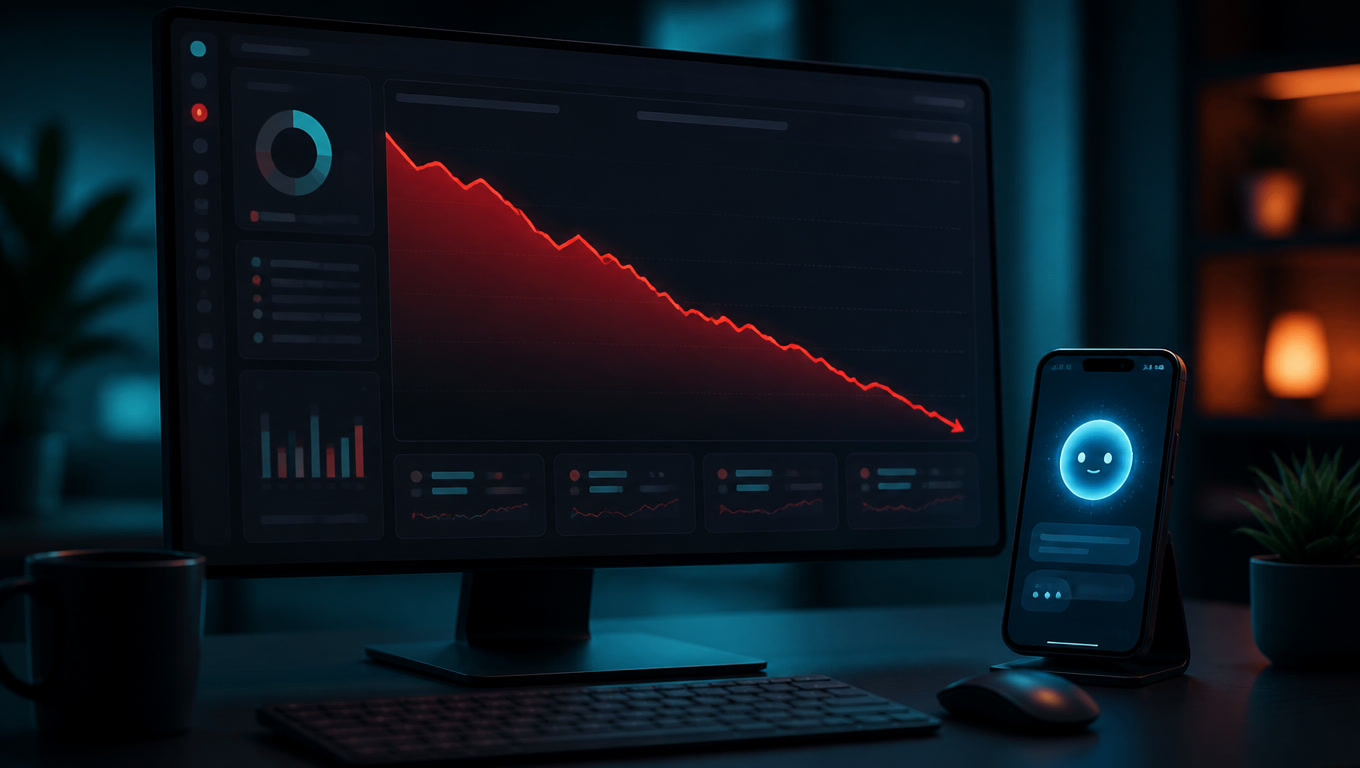
On June 13, a site in r/SEO lost 91.8% of its traffic overnight. The owner hadn't touched anything, no pages were deindexed, and the comments filled up with the classic checklist: check manual actions, check coverage, compare channels in GA4. All correct, none sufficient, because the conversation no longer ends in Search Console.
The second case is bigger and less anonymous. A Growtika analysis shared on r/Journalism measured the organic traffic of ten tech publications, including CNET, Wired and The Verge. Combined, they lost 58% of their Google traffic since 2024, about 65 million monthly visits. NerdWallet went from 25 million to 6.8 million (-73%). Healthline, from 111 million to 56 million (-50%). The most telling detail: the steepest declines started in mid-2025, right when Google expanded AI Overviews.
None of those sites broke anything. The traffic pie got redistributed.
Why "no technical cause" is no longer a conclusion
The first reaction to a drop is to look for an error. Sometimes there is one: a broken redirect, a template change, a blocked section. But in 2026 most big drops have no technical cause because they don't need one.
Google answers more and more queries without sending anyone to your site. Over half of searches end without a click, and AI Mode has passed a billion monthly users. Add the decoupling between rankings and citations: the overlap between Google's top results and the sources AI engines cite fell from 70% to under 20% in two years, which we broke down in the citation gap post. You can rank first and ChatGPT cites your competitor. You can rank first and nobody clicks.
That's why the most expensive mistake in a traffic crisis is diagnosing with the metrics of 2022.
The five-step diagnosis
Step 1: split the channels in GA4
Open your analytics and compare traffic by channel before and after the drop date. Did only Google organic fall? Did direct and referral fall too? In the r/SEO case from June, everything fell together, which points to a general visibility loss rather than a problem with one search engine. If only Google fell and the rest held, you already have your first clue: the problem is specific to that channel.
Step 2: compare impressions against clicks in Search Console
This is the step that separates people who diagnose well from people who panic. Pull the performance report for the affected period and look at both curves.
- Impressions stable, clicks collapsed: your pages are still visible, but nobody clicks. That's zero-click. AI Overviews or AI Mode are answering above your results. Not a penalty, a surface change.
- Impressions and clicks falling together: that is a real algorithm or relevance signal. Compare the dates against known updates and check exactly which queries lost position.
The divergence between the two curves is your best indicator of whether AI is eating your clicks. And you don't have to guess: Search Console's AI performance reports tell you how much of your visibility moved into AI Overviews and AI Mode.
Step 3: check whether AI answers still cite you
Ask ChatGPT, Gemini and Perplexity about your main queries and see if you show up. Do it by hand, no fancy tools. If Google shows you but the AI engines don't cite you, you have a citation gap, and you know exactly where the traffic will go: not into your SERP listing, into the answers.
Step 4: measure LLM referral traffic
In GA4 or PostHog, filter sessions coming from chatgpt.com, gemini.google.com, perplexity.ai and claude.ai. On mintec.co we run a weekly LLM traffic report and that share grows every week, still small but real, as we showed in our analysis of whether AI will replace SEO. If your Google traffic drops while AI referral rises, your visibility didn't die. It moved channels, and that is something you manage, not something you mourn.
Step 5: audit the technical stuff, last
When the four steps above don't explain the drop, do the classic audit: manual actions, index coverage, rendering changes, robots.txt, Core Web Vitals. The order matters. Start here and you'll "fix" things that aren't broken and burn weeks doing it.
The decision matrix
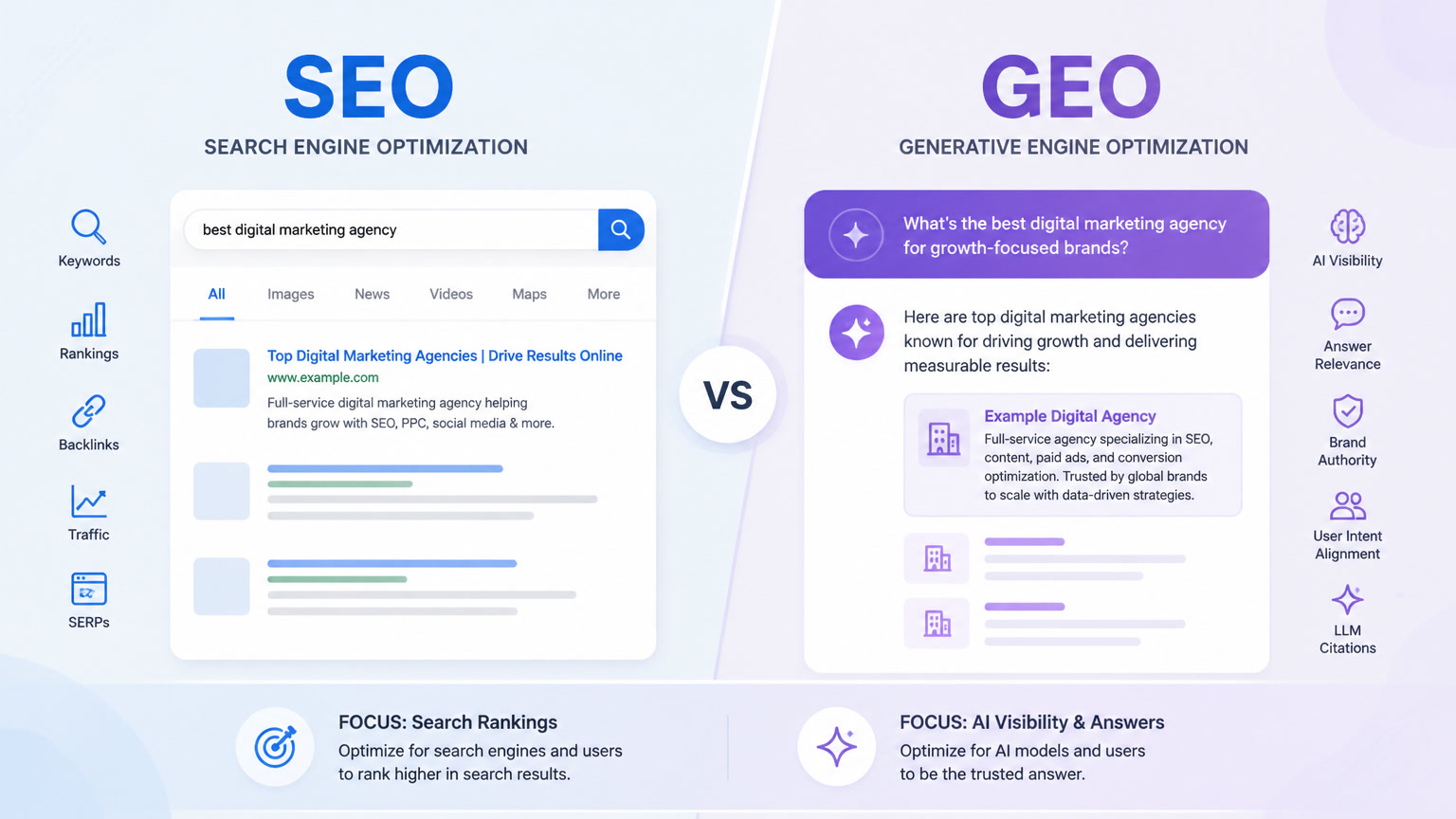
- Impressions stable + clicks down: zero-click from AI. Action: optimize for citation. Direct answer up top, FAQ schema, self-contained blocks with data. That's GEO work, not classic SEO.
- Impressions and clicks down + date matches a known update: algorithm change. Action: don't touch everything. Find the queries that lost, strengthen first-hand experience and original data, wait for stabilization.
- Only one section of pages affected: indexing or cannibalization. Action: coverage audit plus search intent review.
- Google healthy, AI won't cite you: citation gap. Action: read the citation gap post and close the gap with entity pages and attributed claims.
What not to do when traffic drops
We see it every week in the forums: someone loses traffic and, in the panic, rebuilds the site, changes URLs, publishes fifty new articles or switches platforms. It almost never works, because it attacks the wrong symptom. A redesign doesn't bring back clicks that moved into an AI answer. Arguing with rank trackers doesn't help either: a stable average position tells you little when half of searches produce no clicks, which is exactly the problem we covered in vanity metrics in GEO. And the most important rule: don't make any big decision in the first 72 hours. A week of data is noise. A month is a signal.
The uncomfortable part
Google is still the biggest channel and we're not telling you to abandon it. But if your only dashboard is Google traffic, you're measuring a fraction of your search visibility, and that fraction shrinks on its own, without anyone doing anything wrong.
In how to measure GEO ROI we laid out the full framework with the four metrics that matter: citation rate, citation accuracy, assisted traffic, and post-citation conversion. The operational summary: define your total visibility baseline (Google + AI) before the next drop. If you don't know how much traffic ChatGPT and AI Overviews bring you today, when Google dips you won't know whether you lost traffic or whether it moved.
The good news of the zero-click era is that the clicks that remain are worth more. Someone arriving from an AI answer already comes with the decision half made: ChatGPT referral converts at 7% versus 5% for organic and stays longer on the site, according to Similarweb, as we broke down in the AI Overviews post. The sites that survive the next drop won't be the ones that recover their 2024 Google traffic. They'll be the ones that know exactly where their traffic is today.
Frequently Asked Questions
Why does Google traffic drop when I haven't made any technical changes?
Because most big drops in 2026 have no technical cause. Google answers more and more queries without a click (zero-click), AI Overviews and AI Mode absorb the clicks, and AI engine citations no longer align with Google rankings. The typical signal: impressions stay flat while clicks collapse in Search Console.
How do I know if my traffic drop is from AI Overviews or an algorithm update?
Compare impressions against clicks in Search Console. If impressions hold and only clicks fall, it's zero-click from AI answers. If impressions and clicks fall together and the date matches a known update, it's an algorithm or relevance change. Search Console's AI performance reports confirm the first scenario.
What do I do if my rankings stay but traffic drops?
Measure total visibility, not just Google: check referral traffic from ChatGPT, Gemini and Perplexity in your analytics, and see whether AI answers cite you for your main queries. If they cite you but nobody visits, optimize for post-citation conversion. If they don't cite you, you have a citation gap you close with self-contained content blocks and attributed claims.