The GEO Citation Gap: Why Your Top-3 Google Rankings Mean Nothing to ChatGPT
You rank #1 on Google. AI engines don't cite you. The overlap between top Google rankings and AI-cited sources collapsed from 70% to under 20%. Here's a 5-step audit to close the gap.
The GEO Citation Gap: Why Your Top-3 Google Rankings Mean Nothing to ChatGPT
I have been watching this unfold for about a year, and I still find the numbers jarring.
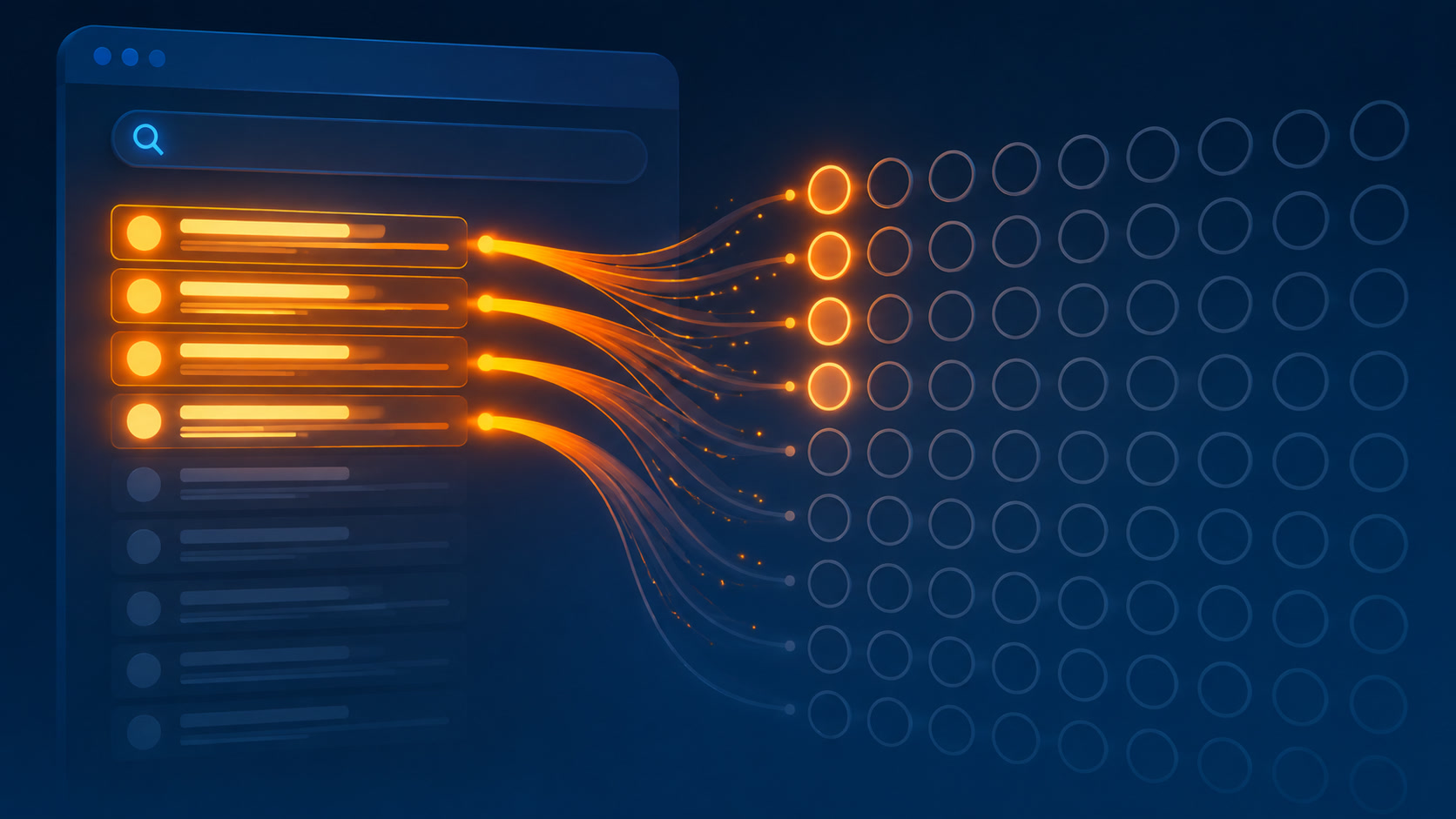
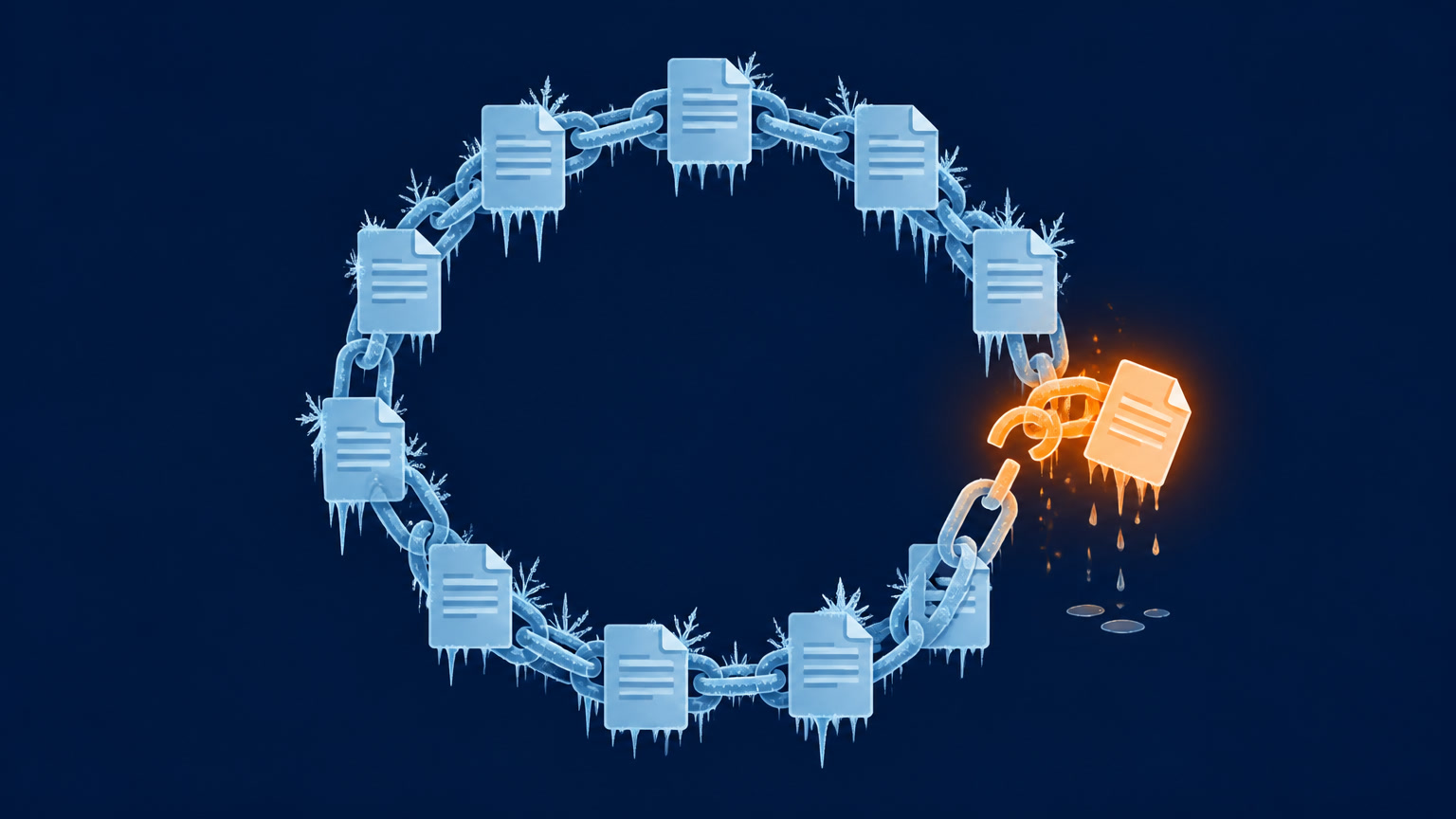
According to research published by 5WPR and BrandCited on May 4, 2026, the overlap between Google's top-10 organic results and the sources cited by major AI engines has collapsed from roughly 70% in early 2024 to under 20% today. That is not a gradual drift. That is a structural break.
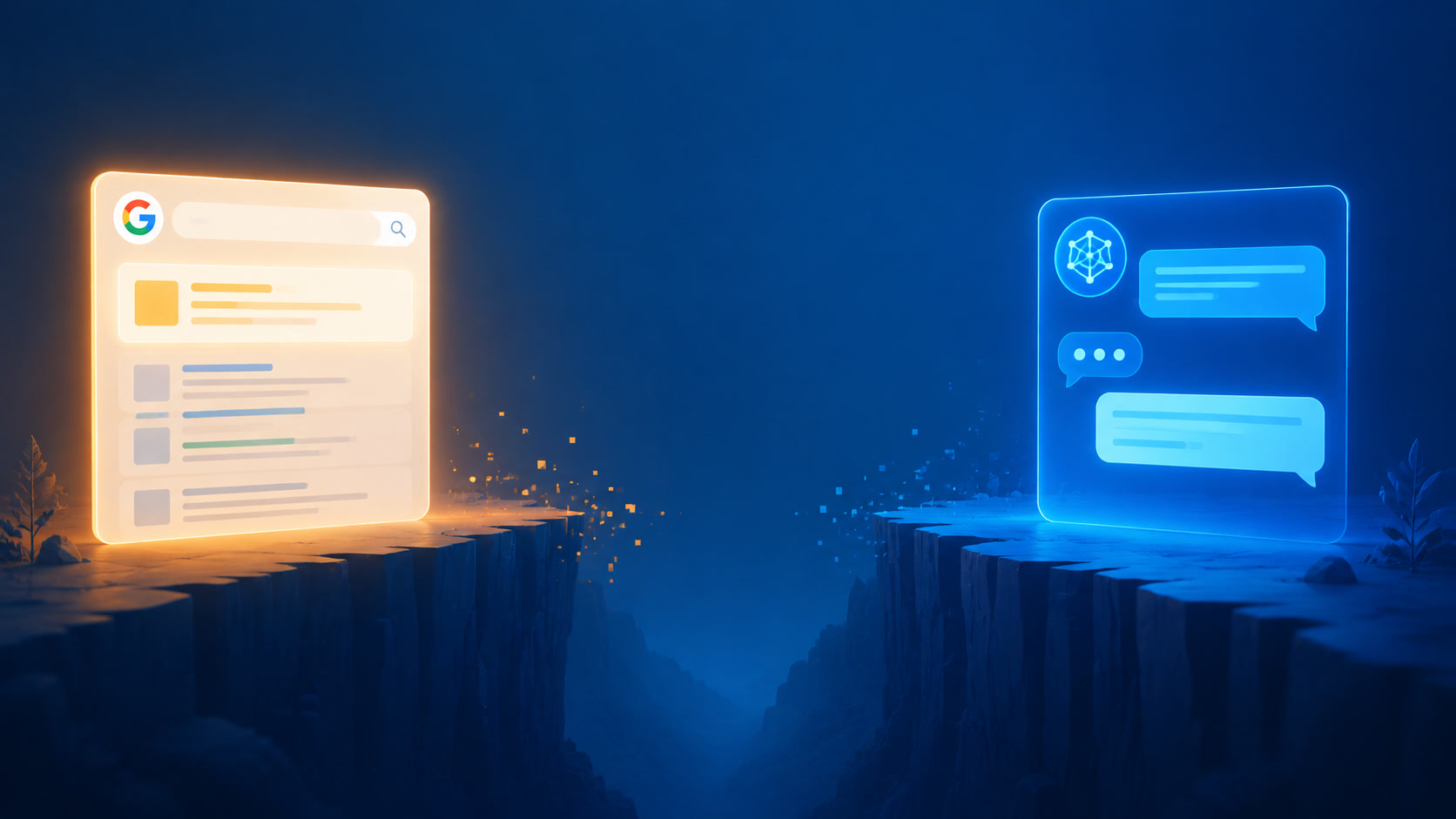
A brand ranking first on Google can no longer assume it appears inside ChatGPT, Claude, Gemini, or Perplexity. The two discovery systems are diverging. And most SEO strategies I see have not caught up yet.
Here is what that gap looks like in practice, how to check whether you have one, and what actually closes it.
The 70% to 20% Collapse Is Not a Bug
The first time I read the BrandCited report, I checked it against our own client data at Mintec. The pattern holds across verticals. A client that dominates Google for "enterprise data backup solutions" — first position, featured snippet, the works — shows up in exactly zero ChatGPT responses for the same query. Meanwhile, a medium-size competitor ranking at position 12 gets cited by both ChatGPT and Perplexity.
Why? Because Google and AI engines optimize for fundamentally different things.
Google's algorithm is still anchored in link authority and domain-level signals. AI engines evaluate source trustworthiness differently — they weigh clarity, structure, citability, and how directly a source answers a question. A page that ranks well on Google because it has 50 referring domains but buries its answer in fluff will not get cited by an AI engine. A concise, well-structured page from a smaller domain that states the answer in the first paragraph and backs it with a specific data point? That page gets cited.
This is the core tension. Traditional SEO optimizes for algorithms that scan and rank entire pages. GEO requires optimizing for extractors that look for atomic answers.
Step 1: Diagnose Your Citation Gap
Do not guess. Run the audit.
Pick three core queries your business should own. For each query:
- Search Google. Note the top 10 organic results. Record the featured snippet source, if any.
- Ask ChatGPT, Gemini, and Perplexity the same question. Use the conversational phrasing a real user would use, not keyword fragments.
- Cross-reference. Which sources appear in AI answers that do not appear in Google's top 10? Which Google top-10 results are absent from AI responses?
Every source that shows up in AI but not Google, or in Google but not AI, is a signal. The type of mismatch tells you what is broken.
Google ranks you but AI ignores you → Your page lacks extractable structure. Your answer is buried under narrative. AI engines could not find a clear, self-contained response.
AI cites you but Google barely ranks you → You have strong entity clarity but weak link authority or topical depth. You are GEO-ready but SEO-invisible. This is the easier fix of the two.
We ran this on ten Mintec clients in May 2026. Seven had a citation gap of 60% or higher. Two had zero overlap between their top Google positions and AI citations.
Step 2: Prioritize by Query Type
Not all citation gaps matter equally. Prioritize by AI engine behavior.
Informational queries ("what is X," "how does X work," "X vs Y comparison") have the highest AI citation rates. These are where the gap hurts most — your competitor shows up in every ChatGPT answer while you are invisible even though you outrank them on Google.
Commercial queries ("best X for Y," "X pricing") have lower AI citation rates because AI engines tend to defer to comparison sites and aggregators. The gap matters less here, though it is still worth closing.
Transactional queries ("buy X," "X sign up") are rarely answered by AI engines at all. Focus elsewhere.
Start with informational. Those are where AI engines are building their answer databases.
Step 3: Fix the Extractability Problem
If Google ranks you but AI ignores you, the problem is almost always structure.
Here is what I have seen work across the clients we have helped:
Lead with the answer. Your first paragraph must contain a direct, self-contained response to the query. Not context. Not framing. The answer. AI engines extract from the top of the page. If you bury the answer below two paragraphs of setup, you lose.
Use explicit claim structures. "Google's AI Mode generates answers from multiple sources simultaneously" is extractable. "It is worth noting that AI Mode represents a significant evolution in how information is gathered and presented to users" is not. The first sentence has a subject, verb, and specific claim. The second is noise.
Publish named data points. "In 2025, 37% of ChatGPT responses cited Wikipedia, 21% cited Reddit, and 12% cited YouTube, according to a BrandCited analysis of 10,000 queries" is quotable. "AI engines cite a variety of sources" is not. AI engines love specific numbers attached to named sources.
Build entity pages, not keyword pages. An entity page focuses on a single concept, defines it clearly, and structures supporting information around it. A keyword page targets a phrase and attempts to cover every loosely related subtopic. Entity pages get cited. Keyword pages get ranked (sometimes) and ignored by AI.
We published a deeper breakdown of entity-driven GEO in our earlier post on GEO for local businesses. The structural principles apply at any scale.
Step 4: Strengthen the Signals AI Engines Actually Use
BrandCited's analysis identified four factors that correlate most strongly with AI citations:
- Entity clarity. Can an AI engine determine, within seconds, what this page is about, who wrote it, and whether the author has standing?
- Claim density. How many specific, verifiable claims exist per 100 words? Pages with 3+ specific claims per 100 words are cited at 4x the rate of pages averaging 1 or fewer.
- Source transparency. Are claims attributed to named sources (studies, reports, named individuals) or to vague references ("experts say," "industry reports")?
- Structural consistency. Do headings, paragraphs, and lists follow a predictable pattern that an extractor can parse?
These four factors matter more than domain authority, page rank, or backlink count for AI citation.
Compare that to what most SEO audits measure — keyword density, meta tag completeness, internal link distribution — and you start to see why the gap exists. Most SEO practice optimizes for a system that is increasingly different from the one that drives AI citations.
Our post on Google's AI optimization guide covers how Google itself recommends preparing for AI-driven search. The signals overlap partially but not completely.
Step 5: Monitor and Iterate
The citation gap is not static. AI engines update their training data and retrieval mechanisms continuously.
Set a monthly check: re-run the three-question audit, compare your citation presence against the previous month, and track whether your fixes moved the needle.
In our experience at Mintec, closing a citation gap takes 6-12 weeks of focused work. The first two weeks are diagnosis. Weeks 3-6 are structural fixes. Weeks 7-12 are content development and signal strengthening.
The brands that started this process in Q1 2026 are already seeing AI citation rates 3-5x higher than their competitors who are still optimizing for 2023 search behavior.
This Is Not Another SEO Fad
I have seen enough Google updates to be skeptical of any "this changes everything" narrative. But the citation gap is different. It is not Google changing its algorithm. It is a parallel discovery system developing its own criteria for what counts as authoritative — and those criteria increasingly diverge from Google's.
The 70% overlap in 2024 meant you could optimize for Google and get AI visibility as a side effect. That side effect is gone. If you have not checked whether your brand has a citation gap yet, there is a decent chance it does.
The Google May 2026 core update that just finished rolling out appears to have widened the gap further — early analysis from PikaSEO and others suggests the update deepened the divergence between ranking signals and citation signals. That means the window to close the gap is narrowing, not expanding.
The question is not whether the citation gap affects your brand. It almost certainly does. The question is whether you know where and how wide it is.
We help clients diagnose and close this gap at Mintec. Our SEO and GEO practice is built around the reality that visibility in 2026 means showing up in both systems — not choosing one over the other.
Frequently Asked Questions
What is the GEO citation gap?
The GEO citation gap is the growing disconnect between websites that rank at the top of Google search results and those that are cited by AI engines like ChatGPT, Gemini, Claude, and Perplexity. Research from 5WPR found the overlap collapsed from ~70% in early 2024 to under 20% by April 2026.
How do I check if my site has a citation gap?
Run the same query across Google and 3-4 AI engines (ChatGPT, Gemini, Perplexity). Note which sources each AI cites, then cross-reference against your Google rankings. If AI engines consistently cite competitors you outrank on Google, you have a citation gap.
What fixes a citation gap fastest?
The highest-leverage fixes are: (1) structured entity pages with clear claims and named authors, (2) comparison tables and definition blocks AI engines extract easily, and (3) quotable data points with explicit sources. FAQ schema helps but is secondary to having extractable answers.