
AI Overviews lost their label. Measure query-level CTR decay instead
Google is testing AI Overviews without the label and a preferred-sources control readers own. Neither guarantees a citation. What to measure instead.
AI Overviews lost their label. Measure query-level CTR decay instead
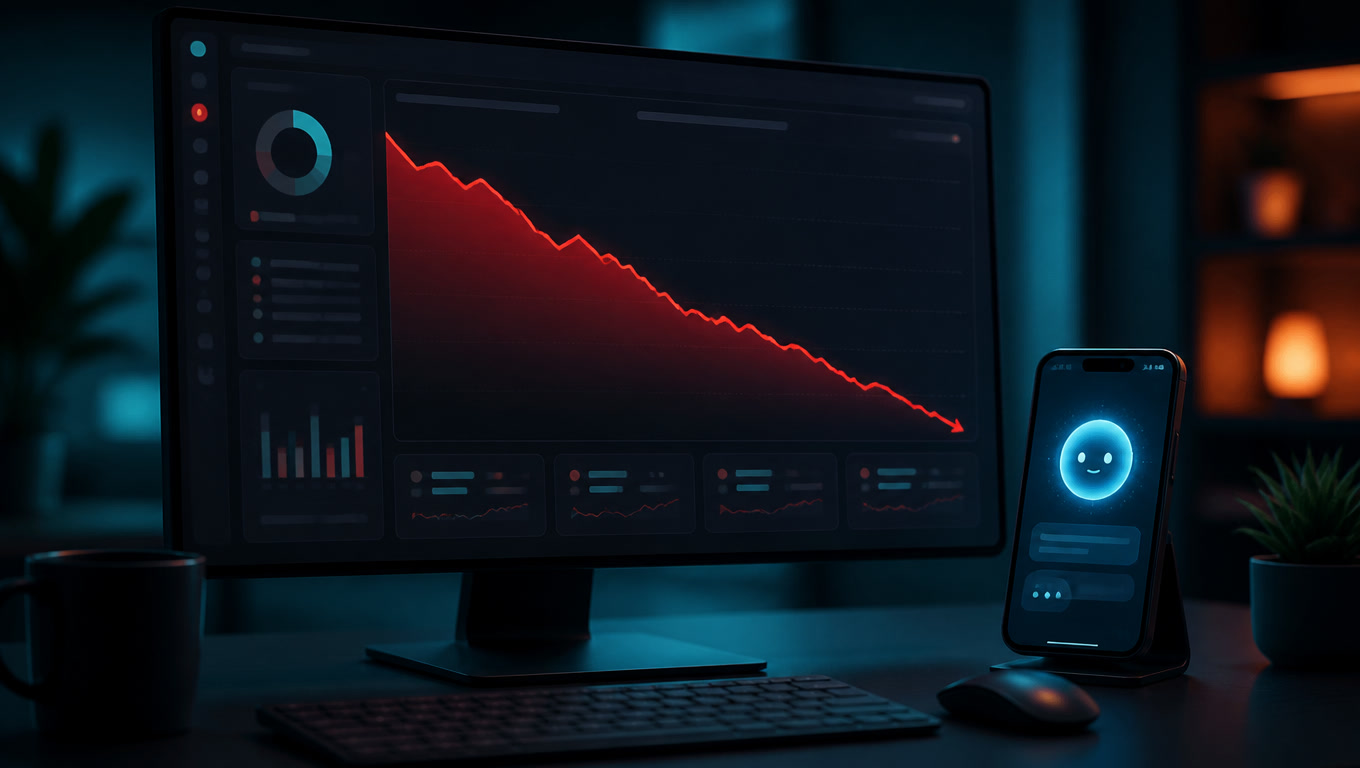
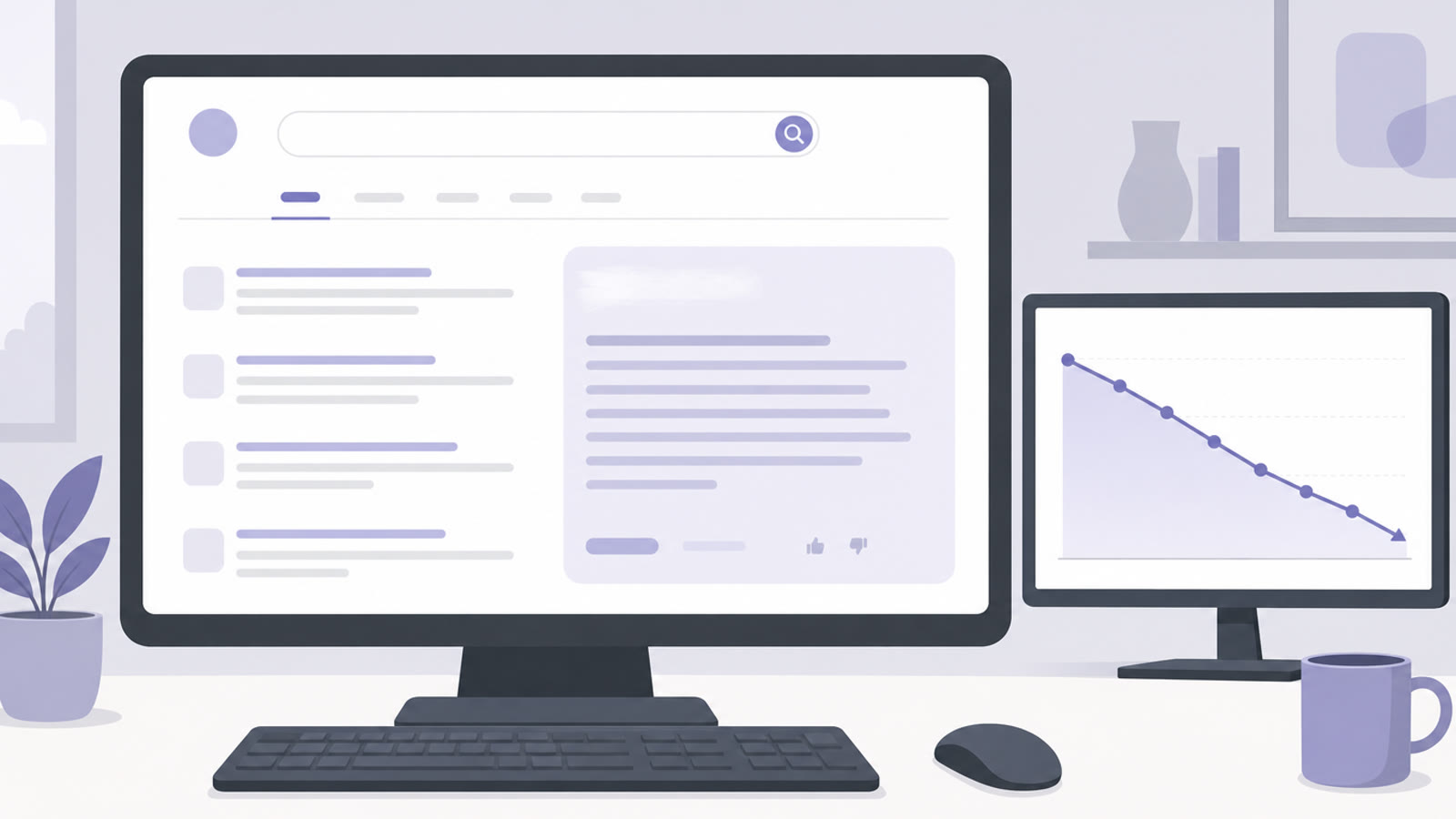
The "AI Overviews" label disappeared from some desktop results on October 20, 2026, and Google has not said whether that is a bug or a decision. Once the label is gone, the one signal left that an AI answer is absorbing your clicks is query-level CTR decay: the position and the impressions hold steady while the click-through rate slides.
Two changes landed within 48 hours of each other, and they pull in opposite directions. Search Engine Roundtable reported on October 19 that Google is testing a "Source preferences" button inside the AI Mode citations sidebar, where a signed-in reader can add or remove sites from their own preferred-sources list. On October 20, the same site reported that the AI Overviews label is missing from some desktop results while mobile still shows it. Barry Schwartz suspects a bug and has asked Google; an earlier missing-label episode was in fact a bug.
We do not care much which it turns out to be, and neither should you, because the measurement problem is identical either way. Any signal that can flicker on and off at Google's discretion is not a signal you can build a report on.
Three things that are not the same thing
A preferred source is a per-reader setting: one person telling Google they want more of you, which moves their results and nobody else's. A ranking is where Google puts your page for everyone who asks. A citation is a link inside one generated answer, for one query, at one moment. Google's publisher documentation on preferred sources is careful with this language: selected content "can be highlighted" with a preferred badge in AI Mode and AI Overviews, and is "more likely" to appear in Top Stories. Nothing in there promises a citation.
You cannot optimize for this at scale, because being added happens after the reader already knows you. It also does not compound: twenty readers who pinned you shape twenty SERPs, not one market-wide ranking. And eligibility has a technical floor anyway, since Google requires the site to be included in Search generative AI features in Search Console before any of this renders.
We wrote up the embeddable Preferred Sources button when Google shipped it in August, and covered the May rollout of preferences into AI Mode. The October test matters for one reason only: it moves preference management from a settings page into the answer surface itself, which makes "are we a preferred source?" an easier question to ask and just as easy to answer wrong.
What the label removal actually breaks
Before October 20, you could open a query, see the AI Overview sitting at the top, and know one thing for certain: this query's clicks are being split with a generated answer. That eyeball check was always informal, but it existed.
Now run the same check on desktop and you can no longer tell the difference between a query where no AI Overview appeared and one where it appeared unlabelled. Semrush already reported a drop in detected AI Overviews around the same date, which may be detection breakage rather than a real decline, and that is exactly the point. When the label and the detection tool both wobble, the SERP stops being evidence.
What survives is behavior recorded on your side of the wire. Search Console still reports impressions, position, and CTR per query; it just never tells you whether an AI answer was present for those impressions. That gap is where the decay reading comes in.
Our own numbers: position did not predict CTR
We pulled 28 days from our Search Console property (September 20 to October 18) to check how much a stable position tells you. Three queries sitting in the same position band:
| Query | Impressions | CTR | Position |
|---|---|---|---|
redes sociales mas usadas | 5,416 | 1.5% | 4.9 |
redes sociales mas utilizadas | 1,133 | 0.5% | 5.6 |
drupal canvas headless | 54 | 11.1% | 5.9 |
Position 5.9 converted at eleven percent. Position 5.6 converted at half a percent. At the page level the same inversion shows up larger: two of our listicle pages pulled 73,124 impressions and 553 clicks combined, a 0.76% CTR while holding positions 5.4 and 8.3.
Being honest about what this proves: almost nothing on its own. These are different queries with different intents, and a head term about social networks was never going to convert like a specific product query. The useful conclusion is narrower. Position alone did not tell us anything about where the clicks went, and Search Console cannot close that gap because it does not flag which impressions came with an AI answer attached. If you want to know whether AI answers are costing you clicks, you have to assemble both readings yourself.
The four changes and the check that catches each one
| Change | What it breaks in your reporting | The check that catches it |
|---|---|---|
| AI Overviews label missing on desktop (Oct 20) | You can no longer confirm from the SERP that an AI answer ran for your query | Log answer-present per priority query, weekly, on desktop and mobile |
| "Source preferences" inside the citations sidebar (Oct 19) | Preference starts to look like a ranking you can win | Track badge presence as its own column; selection is not a citation |
| Every AI Overview link reports the block's position | Position looks stable while clicks quietly move | Compare CTR against position on a 28-day window, not week to week |
| Cited sources rotate between runs of the same prompt | One screenshot of an answer reads like a trend | Three runs per query per cycle, reported as "2 of 3" |
The last row is why single checks mislead. Roughly half of cited sources rotate between runs of the same prompt in SISTRIX's crawl of 82,619 prompts, which we broke down in the prompt-set piece. A one-off look at your own brand in AI Mode is a photograph of a coin in the air.
The log we actually run
Six columns, one sheet, no tooling required:
- Query, frozen wording.
- Date and engine surface (AI Overviews, AI Mode, ChatGPT, Gemini).
- Answer present: yes or no.
- Brand cited: yes or no, and which URL.
- Click path: did the answer link to us, link to a competitor, or link nowhere.
- Position and CTR pulled from Search Console for the same query, 28-day window.
Run it every two to four weeks against ten to fifteen queries that carry real business intent, in fresh logged-out sessions. Two readings moving together is a finding: CTR decaying while the answer log shows presence rising is the pattern worth acting on, and either signal alone is a story you are telling yourself.
This is also where the other AI-mode stories on this site connect: AI Mode and AI Overviews are not the same surface, so the log needs both columns; and Search Console gives every AI Overview link the same position, which is why position is the weakest column in the sheet. If your first reaction to all of this is to hide from AI answers entirely, turning them off is the wrong bet.
What is still worth doing
Nothing in the October changes rewrites the fundamentals: consistent entity facts across your site, schema, and third-party profiles, plus corroboration from sources that answer engines already trust. That work was defensible before preferred sources existed and it is defensible now, because it does not depend on any label. A recent paper found AI search tools citing a fabricated concept within a week of it being posted, which is a reminder that the citation layer is not self-correcting and vendor dashboards are not a substitute for checking yourself.
If you want this measured against your property rather than argued about, it is the SEO & GEO engagement, and the fastest way in is a call.
A label Google can remove overnight is not a measurement plan. A dated log you run yourself is, and once it exists, the label stops mattering.
Frequently Asked Questions
Does being a preferred source guarantee a citation in AI Overviews?
No. Google's own publisher documentation says your content "can be highlighted" with a preferred badge for readers who selected your site, and that selected content is "more likely" to appear in Top Stories. Preference changes what one reader sees after they chose you. It is not a ranking, and no given answer is required to cite you.
How do you tell that an AI answer took one of your clicks?
Not from Search Console alone: it reports the query and your click-through rate but never tells you an AI answer was present. The working method is two signals side by side: query-level CTR decay at a stable position over a 28-day window, plus a dated log where you check your priority queries and record whether an AI answer appeared and whether you were cited.