
The GEO Tools We Actually Use at Mintec (and the One We Stopped Paying For)
Mintec's real GEO tool stack: what we use every week, what we tested and canceled, and why most citation trackers measure noise. Includes the three-layer framework for deciding when a GEO tool pays for itself and when it doesn't.
The GEO Tools We Actually Use at Mintec (and the One We Stopped Paying For)
At Mintec we run GEO on three layers: free Search Console and GA4, the AI modules of the SEO suite we already paid for, and zero dedicated citation trackers. We tested an expensive one, canceled it after three months, and here's why, plus the framework we use to decide what's worth paying for.
The GEO tools category exploded in 2025 and 2026. Today there are more than fifteen serious options, and a new one shows up every month promising to tell you "your citation share in AI." The problem: most of them measure something real, but on a sample so small the number moves around more than the price. This post covers what we actually use, what we dropped, and how to decide without burning budget.
What a GEO tool does (and what it doesn't)
GEO tools split into four groups: citation trackers (how often an AI mentions you), prompt research (what people ask), content optimization (rewriting to be citable), and unlinked mention monitoring. Semrush's roundup of the best GEO tools of 2026 (semrush.com/blog/best-generative-engine-optimization-tools) groups the top nine, and Profound keeps a list of eighteen on its own blog (tryprofound.com/blog/best-generative-engine-optimization-tools). Almost all of them launched after 2024. That alone tells you something: the category is young, methodologies aren't standardized, and everyone measures differently.
What none of them do is win you the citation. Tools measure, monitor, and suggest. Citations come from content AIs can extract, verify, and reference. If that work isn't done, the tracker shows you an ugly number and can't fix it for you.
Layer 1: the free stuff we use every week
Our weekly GEO flow starts without spending a cent:
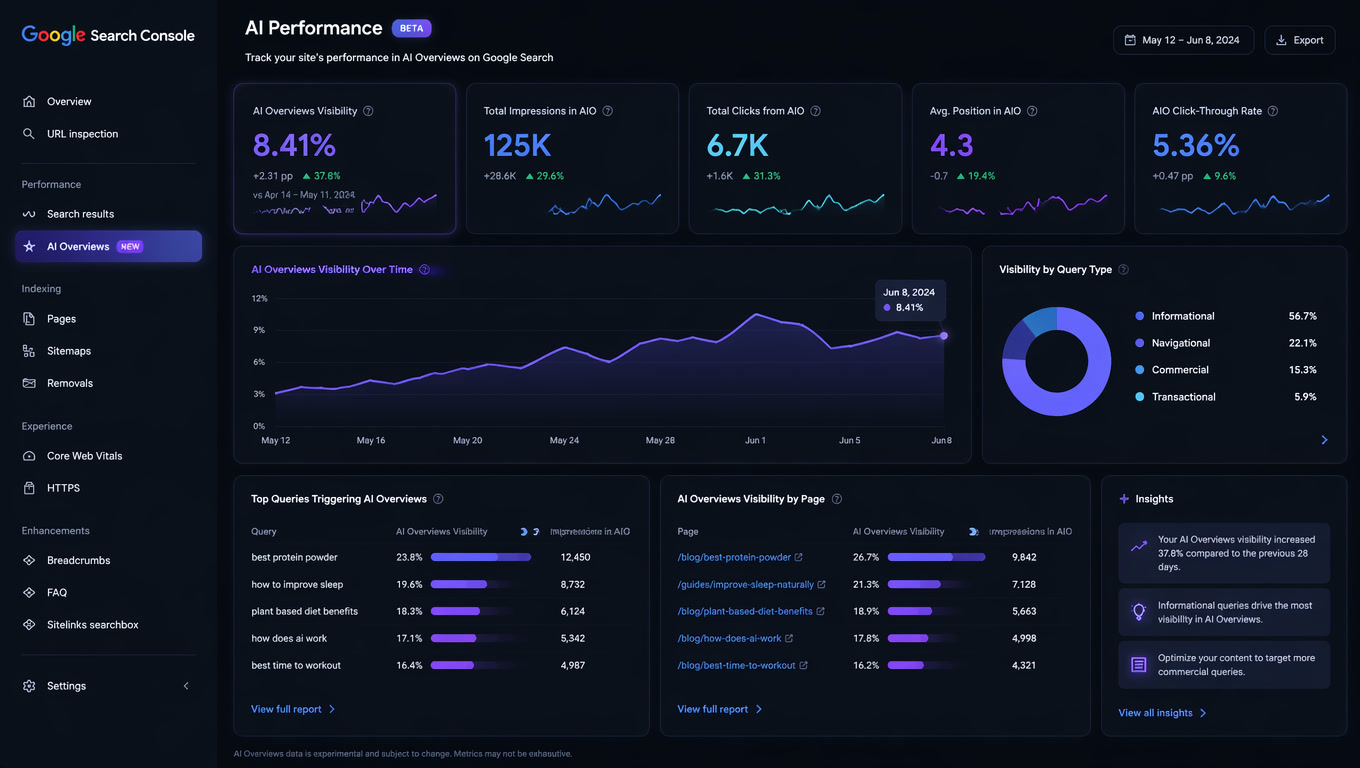
Search Console. The generative AI performance report shows impressions in AI Overviews and AI Mode, and you can now see AI Mode queries directly in Search Console (how to find them here). They're impressions, not clicks, and that's fine: for GEO the impression is the currency, because clicks inside an AI answer are rare by design.
Google Analytics 4. A segment for LLM referral traffic: chatgpt.com, perplexity.ai, gemini.google.com, claude.ai, and the rest. In our weekly report, ChatGPT sends us about 18 sessions a week. Claude sends zero. That zero is information: if a model doesn't send you a single visitor, it probably isn't citing you either.
Manual citation checks. Three searches a week in ChatGPT Search, Perplexity, and Gemini using our main cluster queries, checking the sources button. Ten minutes, and it tells you more than any paid dashboard, because you see the exact context where you get cited (or don't).
For the detail on what to check in each pass, the audit framework we published last week walks through it step by step (the 30-minute GEO audit).
Layer 2: the modules we added to what we already paid for
The second layer wasn't a purchase. It was turning on what we already had.
Semrush AI Toolkit. We already paid for Semrush for SEO. The AI toolkit adds two things we do use: AI Visibility (citation tracking across AI Overviews, ChatGPT, and Perplexity) and Prompt Volume, which estimates how often an idea gets searched as a prompt rather than a keyword. Prompt volume is the interesting one. Yotpo's breakdown of these tools (yotpo.com/blog/generative-engine-optimization-tools) notes that comparative prompts like "brand A vs brand B" drive more commercial action than high-volume informational ones. That matches what we see in LLM traffic reports: people don't ask ChatGPT "what is SEO," they ask "which agency should I pick."
Ahrefs Brand Radar. For clients already on Ahrefs, the unlinked mentions module helps spot where the brand gets discussed without a link. Useful, but it's a complement, not a GEO tool on its own. We use it in brand audits, not in the weekly flow.
The rule for this layer: adding an AI module costs a fraction of a new tool and reuses data you already trust. If you pay for an SEO suite, that's the first place to look for GEO functionality. If you don't pay for one, start with layer 1, not with a new tool.
Layer 3: the dedicated trackers (and the one we canceled)
Dedicated trackers, Profound at the top (G2 named it the leader in its AEO category for Winter 2026, with AthenaHQ and Otterly.ai close behind), do what the free layer can't: systematic historical citation tracking, client reporting, and, in Profound's case, governance and compliance for large companies. That has real value in two scenarios: agencies reporting to multiple clients, and enterprises that need auditable AI visibility.
What it doesn't have value for is measuring a single site, and we learned that the hard way.
Early this year we signed up for a dedicated AI visibility tracker. Several hundred dollars a month. The pitch: "your citation share in AI answers." The reality: the dashboard was based on about 200 AI answers per week. Think about that: 200 answers out of a universe of billions of possible prompts is like measuring the ocean's temperature with one finger. One week we'd show 12% share, the next 4%, without touching anything. The noise was so loud the number was useless for reporting and for decisions alike.
We canceled it after three months. The comparison was brutal: the free Search Console report, the GA4 segment, and the manual checks gave us the same directional signal, with no monthly bill. The tracker only added a number that looked precise without being accurate.
The framework for deciding
When clients ask us which GEO tools to buy, we answer with three questions:
How many brands do you manage? One: layer 1 plus layer 2, done. Several: a dedicated tracker starts paying for itself, because per-client citation reporting is work you'd otherwise do by hand.
What's your budget? If it's less than a dedicated tracker (several hundred dollars a month) and you run one site, don't buy one. Spend that money on content and schema instead, which is what actually moves citations.
Do you need governance or compliance? Large, regulated companies, or brands that need audit trails: Profound and its enterprise-level peers justify their price with control and accountability. For everyone else, it's a luxury.
Our complete weekly stack takes about 30 minutes: Search Console, the GA4 segment, three manual searches, and a look at the Semrush panel. That's enough to decide what to optimize, what content works in AI, and what's failing. GEO measurement tools are improving fast, and a year from now this answer will probably be different. But today, most of the value still lives in the content work, not in the dashboard that measures it.
If you're building your stack and want a wider base, our guide to measuring GEO performance with four metrics covers what to watch before buying anything (measuring GEO with four metrics). And if you're wondering whether any of this replaces traditional SEO, we answered that already (will AI replace SEO): no, but the question itself is starting to become the wrong one.
Frequently Asked Questions
What tools do you need for GEO?
To start, you only need Search Console, Google Analytics 4, and manual citation checks in ChatGPT Search, Perplexity, and Gemini. Paid tools add convenience and extra data, but the basic GEO framework works with the free layer.
Is a dedicated GEO tool worth paying for?
It depends on how many brands you manage. For a single site, the free layer covers most of the work, and dedicated trackers usually sample too few AI answers to be reliable. For agencies and multi-brand companies, a dedicated tracker pays for itself through reporting and historical tracking.
Do GEO tools replace SEO tools?
Not yet. GEO tools measure visibility in AI answers, but they don't cover keywords, links, or technical audits. In practice, add the AI modules to the SEO suite you already pay for before buying a new tool.