What Is MCP and Why Your AI Agents Need to Connect to Your CRM, WhatsApp, and Processes
MCP is the open standard that connects AI agents to your systems. 2026 adoption data, three ways to use it with n8n, and the security rules to apply before giving an agent access.
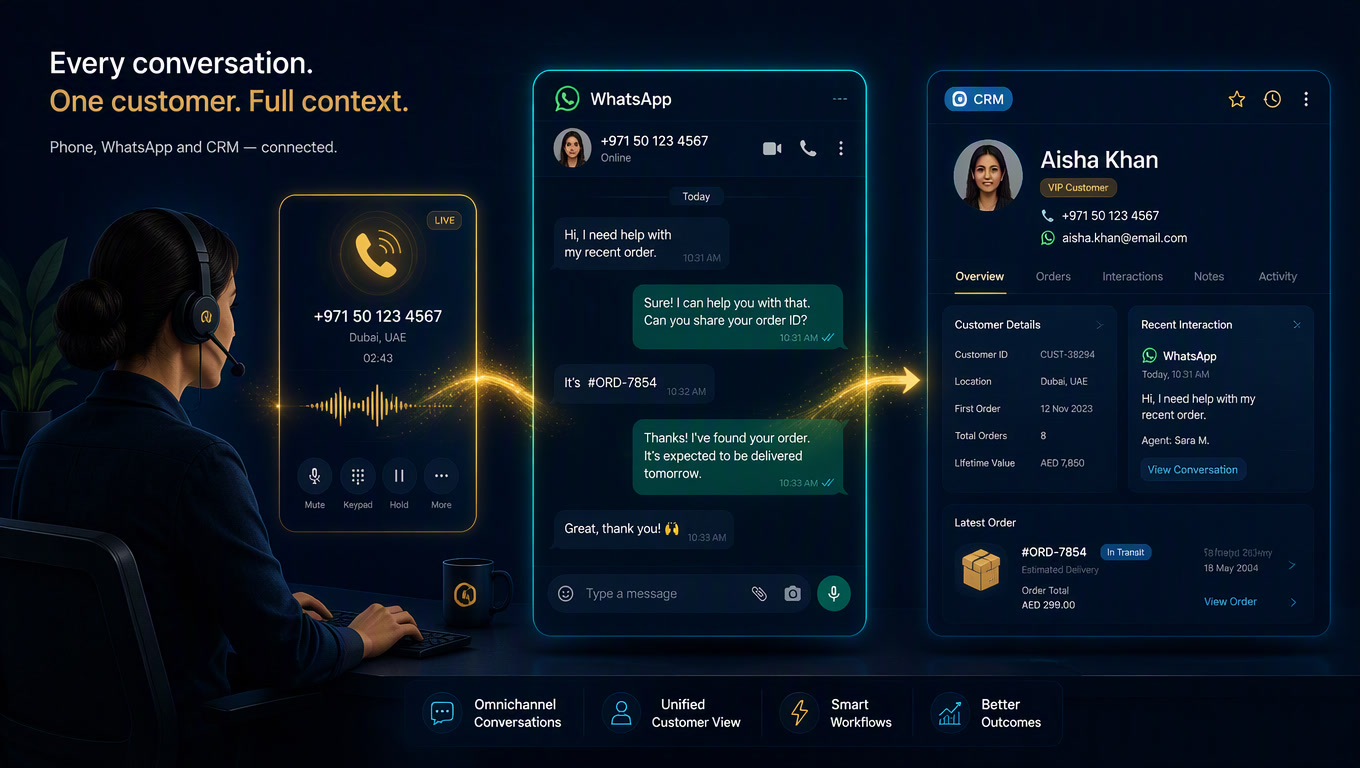
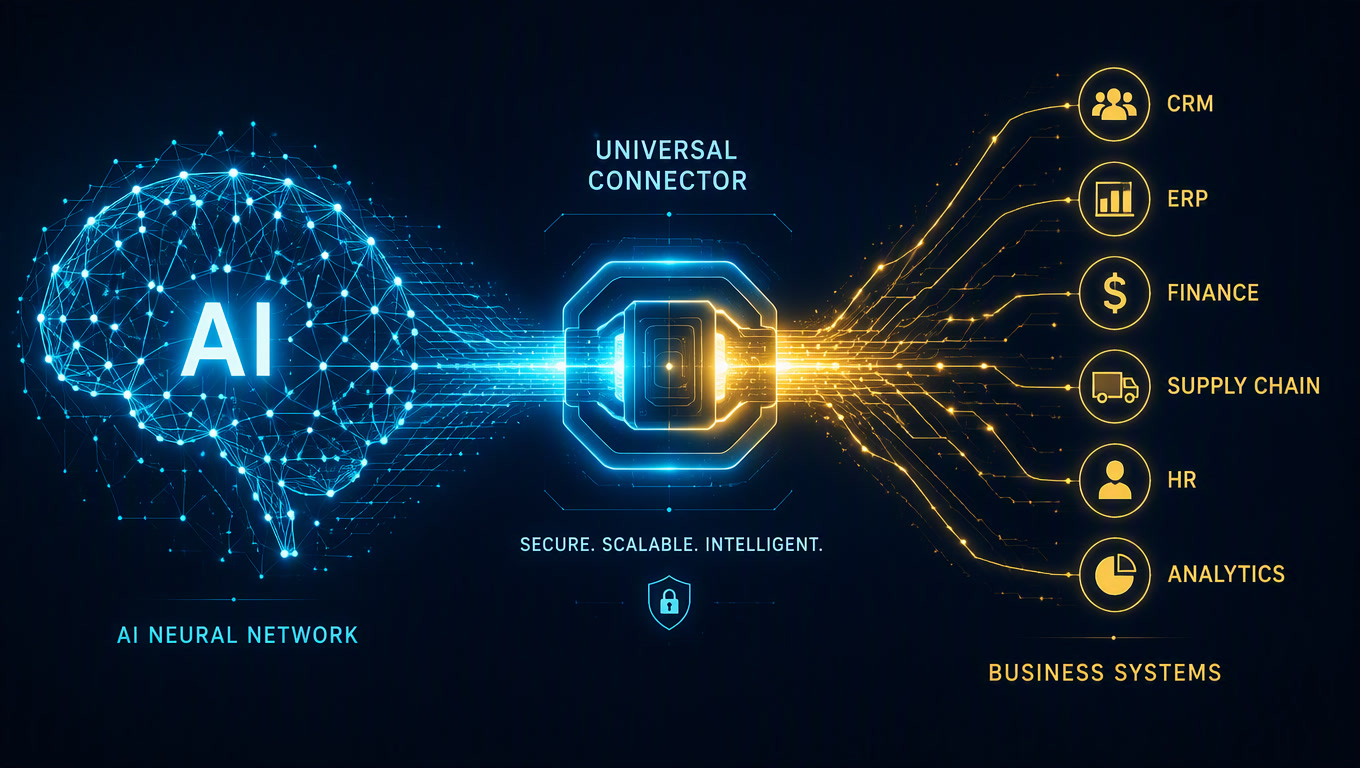
MCP (Model Context Protocol) is the open standard that lets an AI agent connect to your CRM, your WhatsApp, your invoicing, or your spreadsheets without building a custom integration for every system. It is the USB-C port of AI: one connector so your agents can read and write where your business actually works. In 2026 it stopped being a technical curiosity — 97 million monthly SDK downloads and 10,000+ public servers make it the dominant way to put agents into production.
At Mintec we've spent years wiring AI agents into client systems: first with bespoke integrations, then with n8n, and increasingly with MCP. The shift feels exactly like the one from proprietary phone chargers to USB-C: you stop depending on one vendor and one fragile connector for every pair of systems.
The problem MCP solves: the integration tangle
Before MCP, connecting AI to your business was a multiplication problem. If you used two AI models (ChatGPT for support, Claude for analysis) and three systems (CRM, WhatsApp, invoicing), you needed up to six custom integrations, each with its own maintenance, its own token, and its own point of failure. The industry calls it the N×M problem, and it's why so many agent projects die in pilot: 80% of the effort goes into plumbing, not into the agent itself.
MCP collapses that problem to N+M: you build one server per system — one for your CRM, one for your WhatsApp, one for your sheets — and any compatible client (ChatGPT, Claude, Gemini, your n8n agents) can use them all. Anthropic created it in November 2024 and donated it to the Linux Foundation in December 2025, making it vendor-neutral: OpenAI, Google, Microsoft, Salesforce, and Snowflake all support it today. It's the same pattern we covered in our article on CRM automation flows with n8n: get the plumbing right first, then build the intelligence on top.
Adoption is past the niche phase: the 2026 numbers
| Metric | Figure | Source |
|---|---|---|
| Active public MCP servers | 10,000+ | Anthropic, Dec 2025 |
| Monthly SDK downloads (Python + TypeScript) | 97M+ | Anthropic, Q1 2026 |
| Server records in the official registry | 9,652 | Registry API pull, May 24 2026 |
| Software orgs running MCP in production | 41% | Stacklok 2026 report |
| Fortune 500 companies running MCP servers | ~28% | Enterprise surveys, early 2026 |
| Enterprise apps with task-specific AI agents by EOY 2026 | 40% (forecast) | Gartner |
The Stacklok figure is the one we like to cite: 41% of software organizations already run MCP in limited or broad production. A protocol under two years old with that penetration isn't a trend — it's infrastructure. The same report names security as the number one adoption blocker, which we'll get to below and which we covered in depth in our article on AI chatbot security.
Three ways to use MCP in your automation stack
You don't need to become a protocol engineer. Across our implementations we see three practical patterns:
| Pattern | What you do | Who it's for | Real example |
|---|---|---|---|
| A. External agent → MCP server | Connect an assistant (ChatGPT, Claude) to an MCP server for your CRM or WhatsApp | Businesses with a chatbot or support agent | The chatbot checks inventory and books appointments straight into the CRM, no human copy-paste |
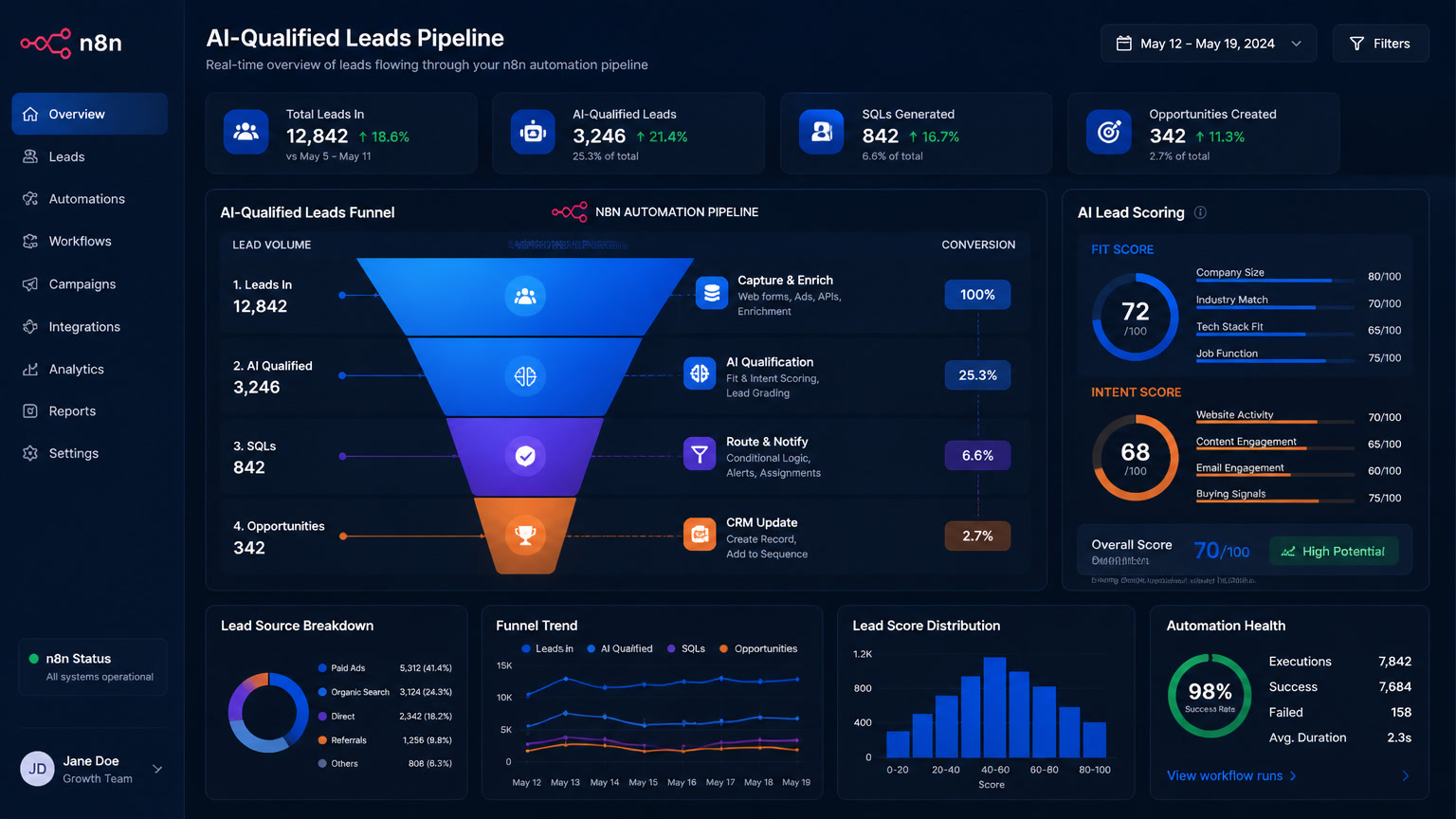
| B. n8n as the bridge | Use the MCP Client and MCP Server Trigger nodes: your workflows become tools agents can call | Teams already automating with n8n | A sales agent invokes your lead-qualification workflow as if it were an internal app |
| C. Agent-to-agent | One agent orchestrates other agents over MCP | Complex multi-step operations | The sales agent hands collections off to the finance agent, both connected via MCP |
Pattern B has delivered the most value for our clients. n8n ships the MCP Client node (to use MCP tools as regular workflow steps) and the MCP Client Tool node (to hand those tools to an AI agent), and it can also act as a server: you expose whole workflows as tools with centralized authentication and control over which workflows are enabled. It's the same n8n agent architecture we documented for lead generation, but now agents don't just call APIs — they call complete processes you've already validated.
If you're not on n8n, Zapier ships ready-made MCP servers for WhatsApp Business plus an MCP client that connects assistants to its 30,000+ apps. The logic is identical: the agent doesn't need to understand how each system works, it just needs the connector.
Before giving an agent the keys: the 4 golden rules
Here's our unvarnished take: an agent connected via MCP is an employee with keys. The most common mistake isn't using MCP — it's granting access without permissions. So in every implementation we apply four rules:
| Rule | What it means in practice |
|---|---|
| 1. Read-only first | For the first weeks the agent only reads: queries the CRM, reviews history, analyzes. No writes until it proves it understands context |
| 2. Human approval for writes | Changing CRM stages, sending customer messages, modifying prices: all behind an approval gate. The agent prepares, the human executes |
| 3. Isolated credentials | One MCP server never shares keys with another. Least privilege per server: the WhatsApp one doesn't touch billing |
| 4. Audit every call | Log which agent called which tool, when, and what changed. An MCP without logs is an invisible agent |
Enterprise-grade authorization — OAuth, roles, audit logging — landed in the standard in 2026, and that's exactly what unblocked the big deployments. For an SMB, the practical version of that layer is these four rules plus the five defense layers from our chatbot security article: the protocol doesn't replace access control, it makes it easier to audit.
When MCP simplifies your life — and when it doesn't
MCP isn't the answer to everything. This is the matrix we use to decide:
| Situation | MCP? | Why |
|---|---|---|
| You switch AI providers often or use several | Yes | You don't rewrite integrations when you change models |
| One agent needs to touch 3+ systems | Yes | N+M instead of N×M |
| Simple workflow between 2 apps with a native connector | No | Your platform's connector is enough; MCP adds complexity |
| Regulated data with no permission or audit layer | Not yet | Governance first, access second |
| Nobody on the team maintains the technical side | Partial | Use existing servers; don't build your own |
It's the same logic as our framework on when NOT to use AI in automation: the right tool for the right problem. MCP solves the multi-integration problem; it doesn't fix badly designed processes, and it doesn't replace the build-vs-buy decision we covered in AI automation vs custom app vs SaaS.
The Mintec read: MCP and the Latin American modular stack
Here's the part nobody else will tell you. For an SMB or agency in Latin America, MCP isn't an engineer's technology — it's a cost lever. The modular stack we recommend — self-hosted n8n as MCP server and client, public servers for CRM and WhatsApp, a CRM like Clientify as the source of truth — runs on $6–20/month of infrastructure. The "enterprise" alternative of premium per-system connectors costs tens of times more and locks you into one vendor. It's the same dollar-sensitivity argument we made in our no-code automation article for LatAm SMBs and the RevOps modular stack.
There's a second benefit that weighs even more in the region: data sovereignty. If your MCP server runs on your own infrastructure, customer data doesn't travel through third-party platforms for an agent to process it. In regulated industries that's no longer a luxury — it's a requirement, as we covered in WhatsApp automation for regulated industries.
Mintec already runs MCP servers in production — the most visible one is the MCP server we published for Meta Ads, connecting agents to ad management. The same recipe applies to your CRM, your WhatsApp, and your internal processes. If you want to see it applied to your operation, our automation and chatbots service is the entry point — we handle the plumbing so you keep the intelligence.
Frequently Asked Questions
What is MCP in automation?
MCP (Model Context Protocol) is an open standard created by Anthropic in 2024 and donated to the Linux Foundation that standardizes how AI agents connect to tools and data: CRMs, WhatsApp, spreadsheets, internal APIs. Instead of building a custom integration for every system and every AI model, you build one MCP server per system and any compatible client can use it.
Do I need to know how to code to use MCP?
To consume MCP, no: platforms like n8n and Zapier already ship MCP clients that connect agents to existing servers. To expose your own systems as an MCP server you need technical setup, but ready-made servers for CRM, WhatsApp, and spreadsheets are increasingly available.
Is it safe to connect my CRM and WhatsApp to an agent over MCP?
It can be, if you apply four rules: start read-only, require human approval for writes, isolate credentials per server, and keep an audit log of every call. Security is the number one blocker for MCP adoption according to Stacklok's 2026 report: the risk isn't the protocol, it's granting access without permissions.