
My New Coworker Is an AI Agent: How We Manage Meta Ads Alongside Manus in Ads Manager
Since February 2026, Meta's AI agents have been working inside Ads Manager — generating creative, analyzing performance, and suggesting optimizations. After four months running real client campaigns alongside these tools at Mintec, here's what works, what doesn't, the new workflow we had to build, and the framework we use to decide when to delegate to AI and when to keep human control.
My New Coworker Is an AI Agent: How We Manage Meta Ads Alongside Manus in Ads Manager
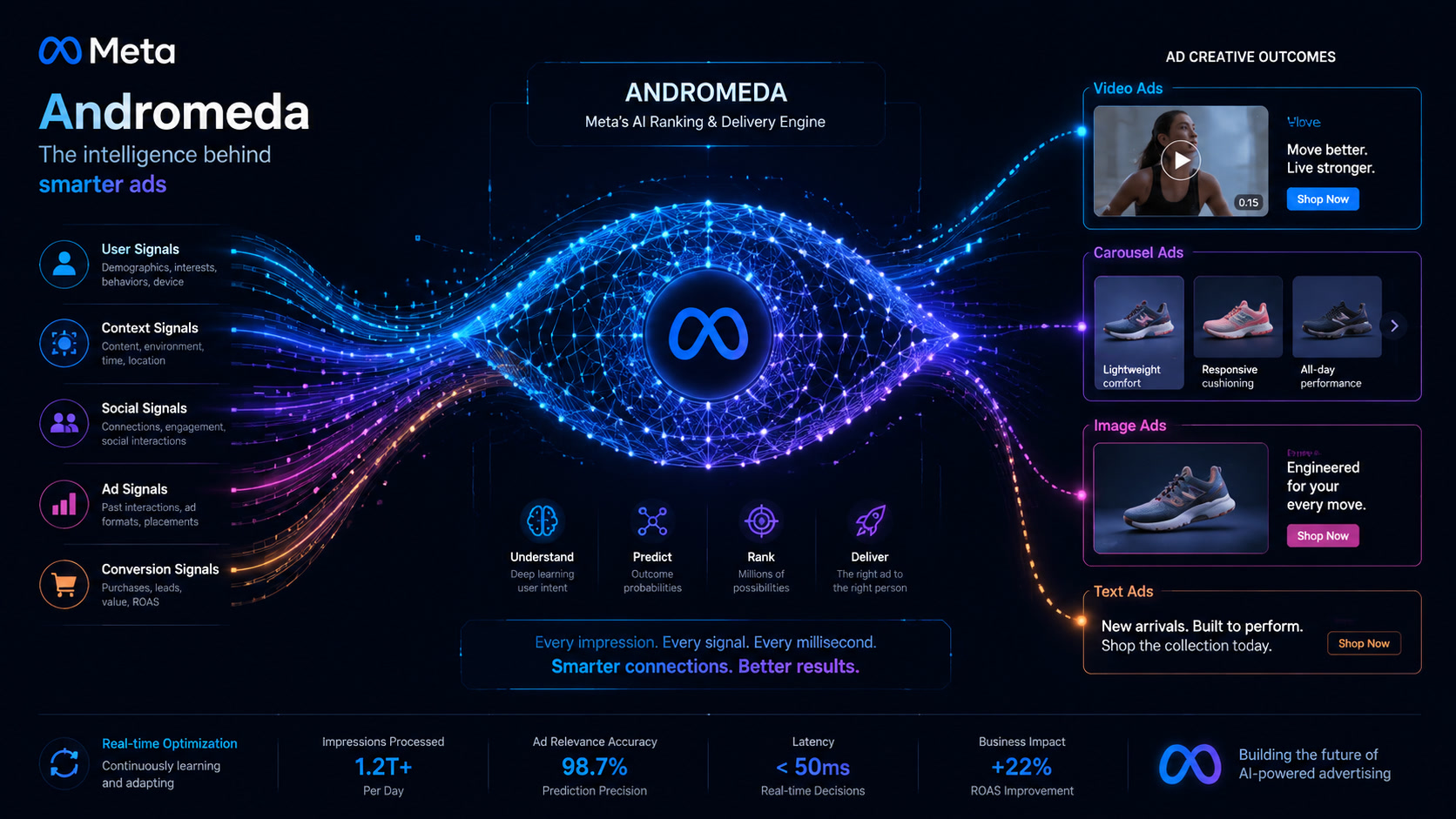
In February 2026, Meta integrated Manus AI into Ads Manager. In March, AI agents started generating creative, managing bids, and reporting performance with minimal human input. And in April, Meta began using anonymized signals from Meta AI conversations to inform ad targeting.
Three moves in three months. These aren't isolated features — they're the roadmap toward an Ads Manager where humans set objectives and AI executes.
At Mintec, we manage Meta Ads campaigns for clients across e-commerce, professional services, and education in LATAM and the US. Since these tools started rolling out, we've adopted them across real client accounts. This isn't a product review — it's an operations diary from an agency learning to work with AI agents as team members.
What AI Agents Actually Do Inside Ads Manager
When people talk about "AI agents" in Meta, it's easy to get vague. Here's what they actually do today:
Manus AI in the Tools Tab
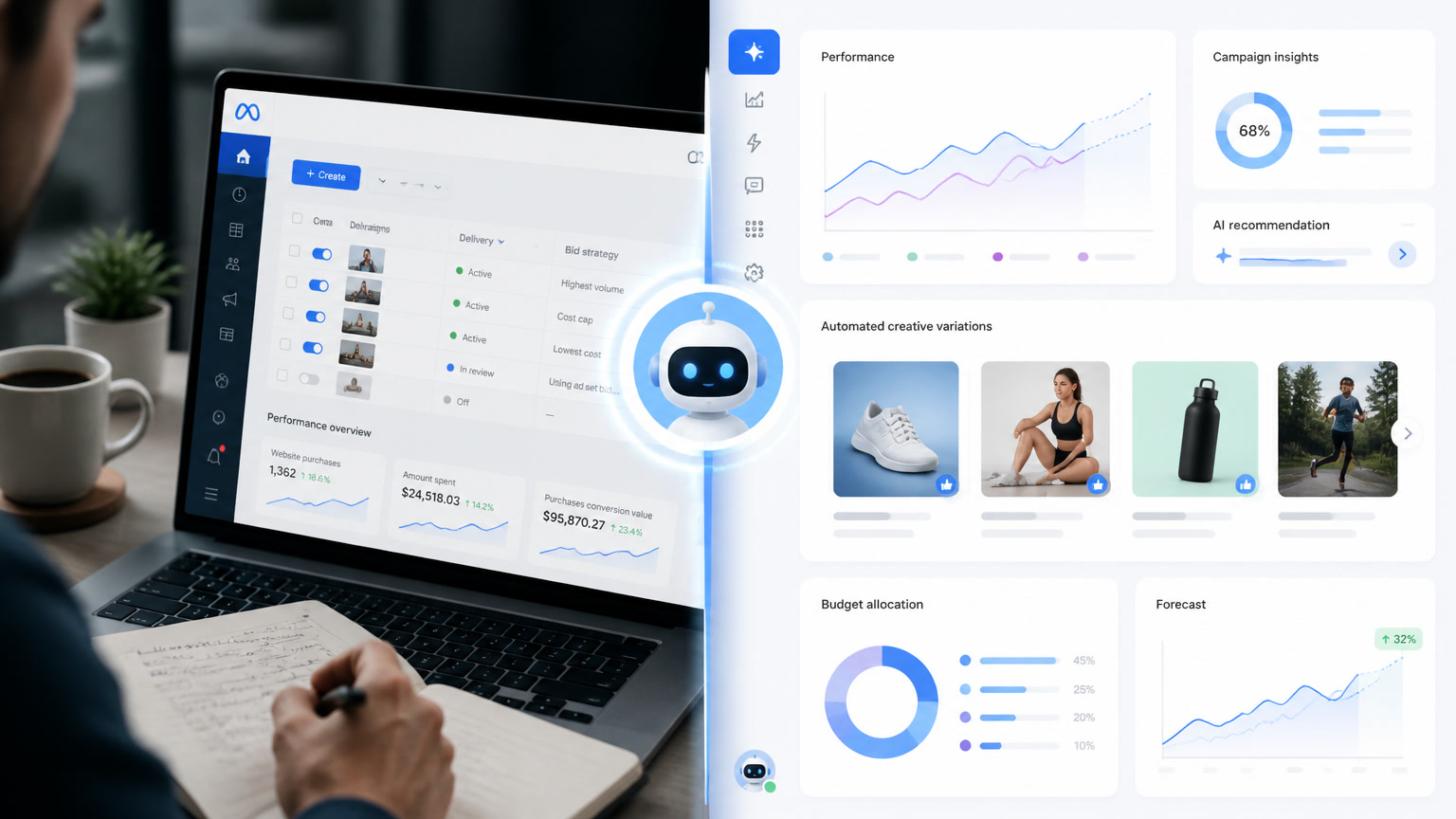
Manus appeared in Ads Manager as a conversational assistant inside the Tools tab. Its current capabilities:
- Report generation: "Show me last week's campaign performance compared to the previous month" — Manus builds the report in seconds, with breakdowns by device, placement, and creative.
- Audience research: Suggests segments based on conversion history and detected purchase patterns, without manual audience building.
- Creative variations: Generates up to 10 variations of an ad from a one-line brief — different hooks, formats (image, short video, carousel), and CTAs.
- Content planning: Proposes 30-day calendars based on historical performance and key business dates.
We've been using Manus on 8 client accounts since March. Team reactions were mixed at first — some found it useful, others a distraction. After three months, clear patterns emerged.
Generative AI Creative Agents
Meta has gone far beyond basic background generation. Its agents now produce:
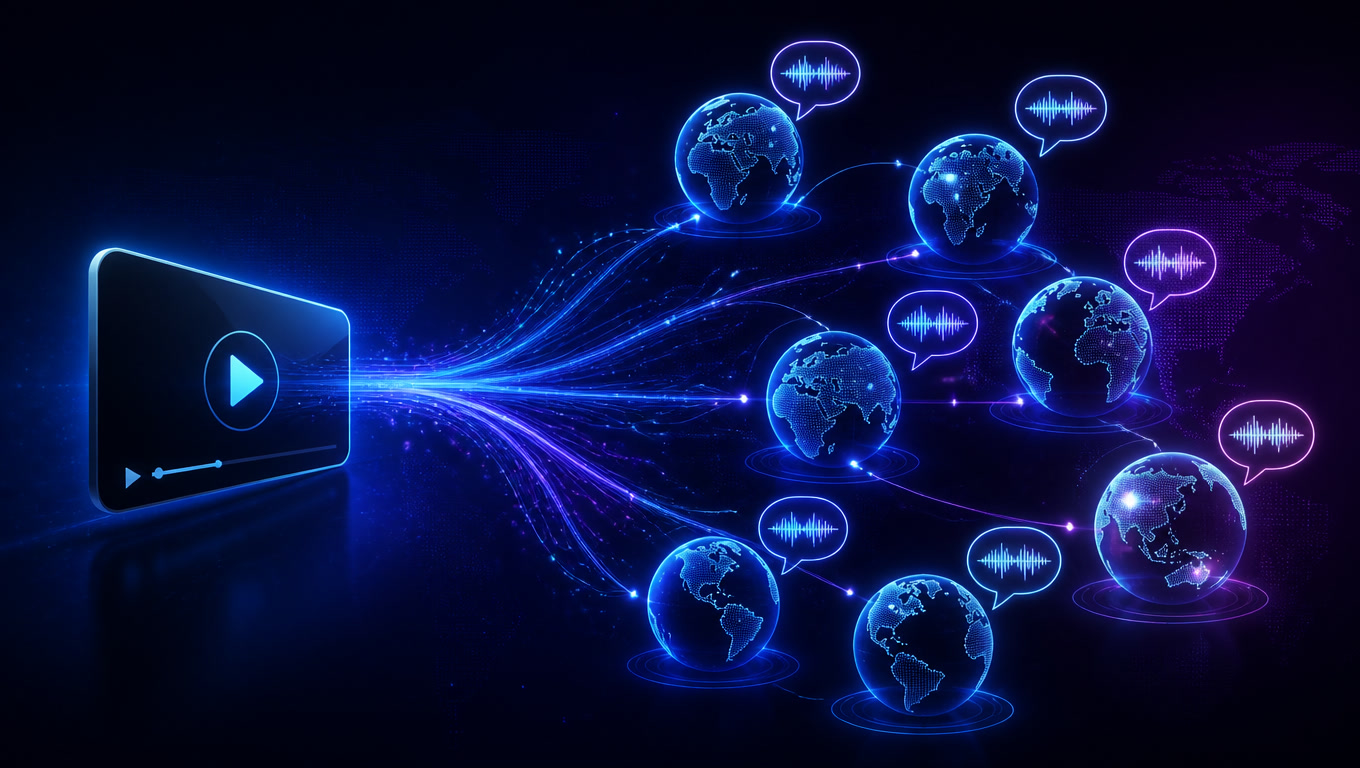
- Full videos with AI-generated voiceover from a script
- Persona-based ad variations (formal tone for LinkedIn, casual for Reels)
- Automatic format adaptation (horizontal video re-framed for Reels, Stories, Feed, and Search)
The key stat: according to Marketing Brew (April 2026), over 4 million advertisers are using Meta's generative AI tools, producing more than 15 million AI-enhanced ads every month.
Chat-Signal Targeting (the Most Controversial Move)
In March 2026, Meta quietly activated a feature where Advantage+ uses anonymized signals from Meta AI conversations to inform ad delivery. Concretely: if a user asks Meta AI "what refrigerator should I buy?", that intent signal (anonymized and aggregated) can influence which appliance ads they see afterward.
This sparked immediate controversy. In June 2026, privacy organizations filed complaints with the Irish Data Protection Commission, arguing the practice violates GDPR's purpose limitation principle. The outcome of this dispute could reshape how Meta targeting works in Europe, and potentially beyond.
From our agency perspective: this signal is potentially the most valuable Meta has introduced in years — conversational intent is far stronger than declared interest on a profile — but the regulatory risk is real, and advertisers must be ready for it to disappear as fast as it arrived.
How Our Workflow Changed
After four months operating with these tools, here's what we had to rethink:
What We Fully Delegated to AI Agents
| Task | Before | Now | Result |
|---|---|---|---|
| Weekly performance reports | 2-3 hours per account | 5 minutes (review only) | 85% less time |
| A/B creative variations | Designer + copywriter 4h/batch | Manus generates 10 variations in 2 min | 90% less time, same CTR |
| Creative fatigue monitoring | Manual weekly review | Agent alerts when CPA rises >15% | Detection 3 days earlier |
| Competitor audience research | 2-3 hours of searching | Manus produces analysis in seconds | 80% faster |
What We DON'T Delegate (and Why)
Campaign strategy. Which products to promote, in what sequence, with which channel mix — AI agents lack business context. They optimize within an objective, but can't choose the right objective.
Original creative brief. AI agents generate competent variations, but none are truly original. When a category-breaking concept is needed, the human brief is irreplaceable. AI produces good variations of an idea; great ideas are still human.
Cross-channel decisions. Meta's agents only see Meta. Allocating budget across Meta, TikTok, Google, and LinkedIn based on ecosystem ROAS is still our job. This connects directly with what we covered in our Meta + TikTok funnel architecture guide.
Anomaly interpretation. When a campaign spikes unexpectedly (up or down), agents report the what but not the why. Detecting whether it's seasonal shift, tracking error, competitor move, or false signal requires human judgment.
The New Daily Workflow
① Human briefs strategy + creative concept → ② Manus generates 10-15 variations → ③ Human review selects top 5 → ④ Agent optimizes bids + placements → ⑤ Agent monitors and alerts → ⑥ Human reviews alert and decides course → back to ①
It's not human vs machine. It's human directing and machine executing and monitoring. The campaign manager shifts from being the doer to being the supervisor and decision-maker.
The Framework: When to Delegate vs When to Keep Control
The most valuable thing we learned wasn't how to use the tools — it was when to trust them. Here's the framework we apply:
| Signal | Delegate to AI Agent | Keep Human Control |
|---|---|---|
| Conversion volume | 50+/week | <25/week |
| Account maturity | 3+ months of data | New account (<30 days) |
| Product complexity | Low/medium (impulse, commodity) | High (consulting, B2B, high ticket) |
| Regulatory risk | Low | High (health, finance, sensitive data) |
| Creative needed | Variation of an existing concept | Original concept from scratch |
| Decision urgency | Low (can iterate) | High (little margin for error) |
| Channel scope | Single (Meta only) | Multi-channel (Meta + others) |
When at least 4 of 7 signals point to "delegate," we let AI agents operate with light supervision. When 3 or more point to "human control," we maintain manual management and use agents for informational support only.
What's Next (and How to Prepare)
Meta has made its direction clear. By late 2026, the company has suggested advertisers may only need a goal, a budget, and one product image — AI builds everything else.
Three things we're doing to prepare:
Investing in creative briefing capability. If AI executes production, the quality of the human brief becomes the most important differentiator. We're training our team on brief structure, angle taxonomy, and tone specification.
Hardening measurement. As agents make more decisions, the black box gets darker. We maintain an independent measurement layer (GA4, multi-touch attribution, holdout tests) that doesn't depend on Meta's reporting. This connects to the hybrid campaign architecture we recently documented — the same principle of knowing when to automate and when to keep control.
Monitoring regulatory risk. Chat data targeting is under scrutiny in Europe. If complaints succeed, it could mean a significant drop in targeting effectiveness — and advertisers who depend exclusively on Meta will need alternatives.
The bottom line: AI agents in Ads Manager aren't the future, they're the present. The question isn't whether to work with them, but how to do it well. In our experience, the answer is a workflow where human judgment sets the direction and AI handles the execution — and where supervision and critical thinking are never automated away.
Frequently Asked Questions
What is Manus AI in Meta Ads Manager and what does it actually do?
Manus AI is an intelligent assistant that Meta integrated into Ads Manager starting February 2026. It appears as a tool inside the dashboard and can generate performance reports, research audiences, create ad variations (images, video, copy), plan 30-day content calendars, and recommend campaign optimizations. It doesn't replace the campaign manager, but it automates tasks that used to take hours.
Is Meta using Meta AI chat conversations to target ads?
Yes. Since March 2026, Advantage+ uses anonymized signals from users' conversations with Meta AI across Messenger, WhatsApp, and Instagram to inform ad delivery. No human reads individual chats — instead, the algorithm identifies purchase-intent patterns from aggregated conversational signals. The practice has drawn GDPR complaints in the EU, filed with the Irish Data Protection Commission in June 2026.
Will Meta's AI agents replace campaign managers?
Not in the short term, but the role is changing fast. In our experience, AI agents are excellent at repetitive tasks: generating reports, creating creative variations, monitoring performance. Where they fall short is high-level strategy, cross-channel orchestration, business-context interpretation, and creative decisions that require human judgment. The campaign manager of the future shifts from platform operator to AI agent supervisor.