

Google opens Search to apps: who benefits
Google's Connected Apps Platform lets developers run app actions inside Search and Gemini. The test for deciding whether your business belongs there.
On October 28 Google opened a preview of its Connected Apps Platform: one place for developers to build an app whose functions run inside Google Search and the Gemini app, rather than behind a website. The preview is US-only, it runs through a waitlist, and it draws a line that most of the GEO conversation has blurred. A citation gets your business mentioned. A connected app gets the job done.
That difference matters more than the launch itself. For twenty-five years the deal was simple: Google sent a person to your page, and your page converted them. A connected app removes the page from that sequence. The answer completes the task, and your brand may never appear as a line of text anyone reads.
What Google actually shipped
Google's own description is modest: "a single place to build and manage apps for Search and the Gemini app." The mechanics are less modest.
A developer integrates a cloud-hosted MCP server, or Android's AppFunctions APIs if the work should happen locally on a phone. Then they register the app in the Google Connected Console, test it, and pick the surface: Search, Gemini, or both. Once live, the console reports traffic, latency and error rates, and the developer keeps control of verified logos and authenticated accounts.
Connected apps are not new. Google put them into Gemini and Search earlier in 2026 for a chosen set of partners. What is new is that anyone can submit one and that submission goes through review instead of a partnership negotiation. Google says more than 50 are live in Gemini, including Adobe, Experian, Localiza, Peloton and Calm. Search has a much shorter list today: Instacart, Canva, YouTube Music, Yahoo Fantasy Football, and the Gemini set arriving "over the coming weeks." Access opens in phases, with more developers, markets and products added over the coming months. Google did not say when.
Two kinds of MCP, and why the difference decides your budget
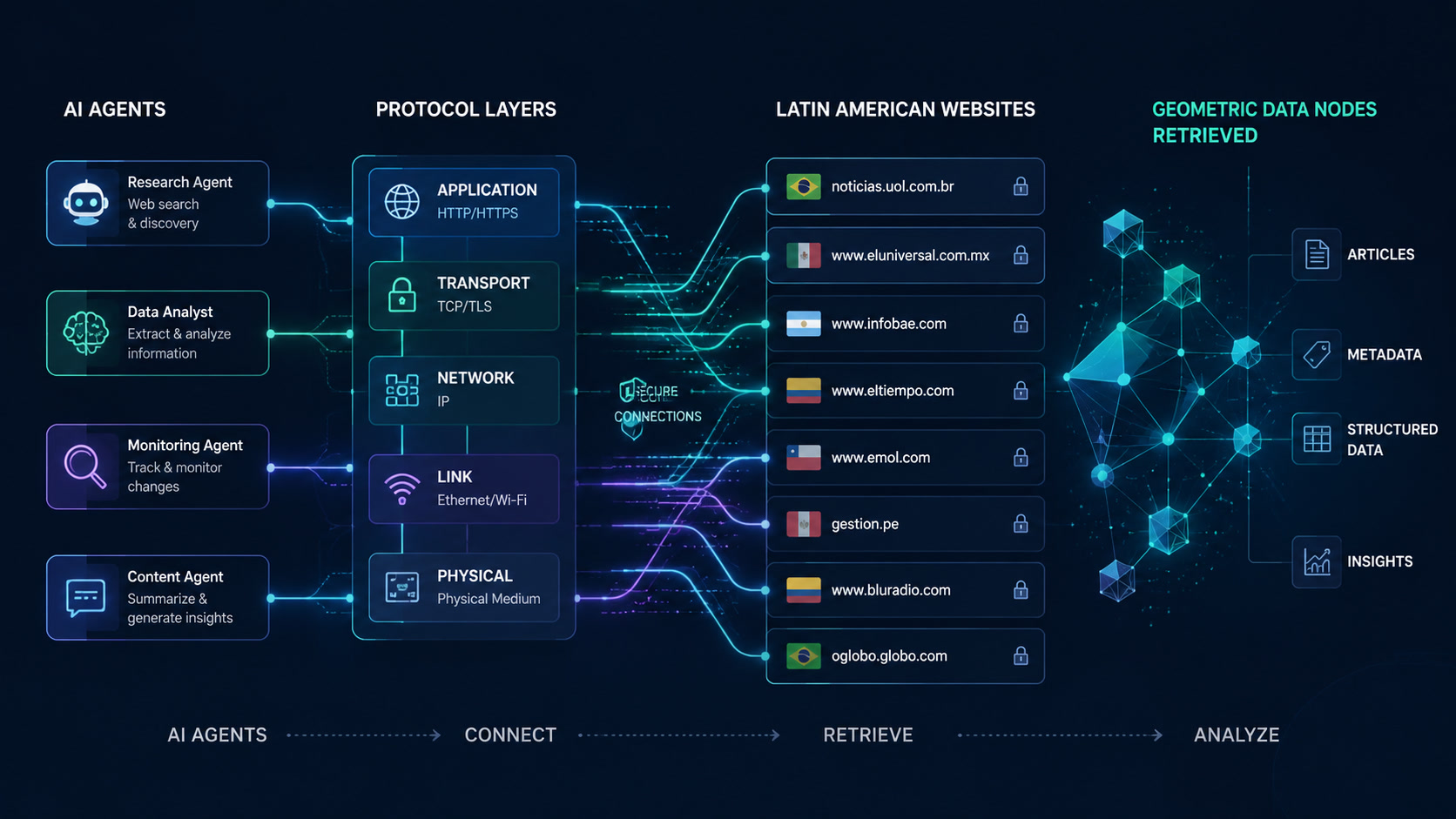
Most writing about MCP and search treats the protocol as a single thing. It is two things, and they are optimized in opposite directions.
Retrieval MCP is an agent reading your content. Your job is the one GEO has described all along: leave a passage that answers a specific question, with a date, a number, a named source and an actual conclusion.
Action MCP is an agent doing something inside your system: holding a slot, placing an order, rescheduling a delivery. Here the copy barely matters. What matters is whether the action exists, whether it is authorized (the remote path requires OAuth 2.1), and whether it returns a result a model can trust at 2am with nobody watching.
An agency can help you with the first. The second is a product decision, and it usually belongs to whoever owns the backend.
The three surfaces a buyer can now land on
| Surface | What the buyer gets | What you control | How it fails |
|---|---|---|---|
| A result page | A link and a reason to click | Copy, structure, markup, internal links | The answer gets lifted and the click never happens |
| A page cited inside an AI answer | A mention, sometimes with a source link | Answer shape, specificity, dates, named sources | Invisible. You cannot see the citations that produced no visit |
| A connected app action | The task completed inside the answer | Scope, data access, error handling, brand assets | Silently. A latency spike or a failed auth handshake reads as you not existing |
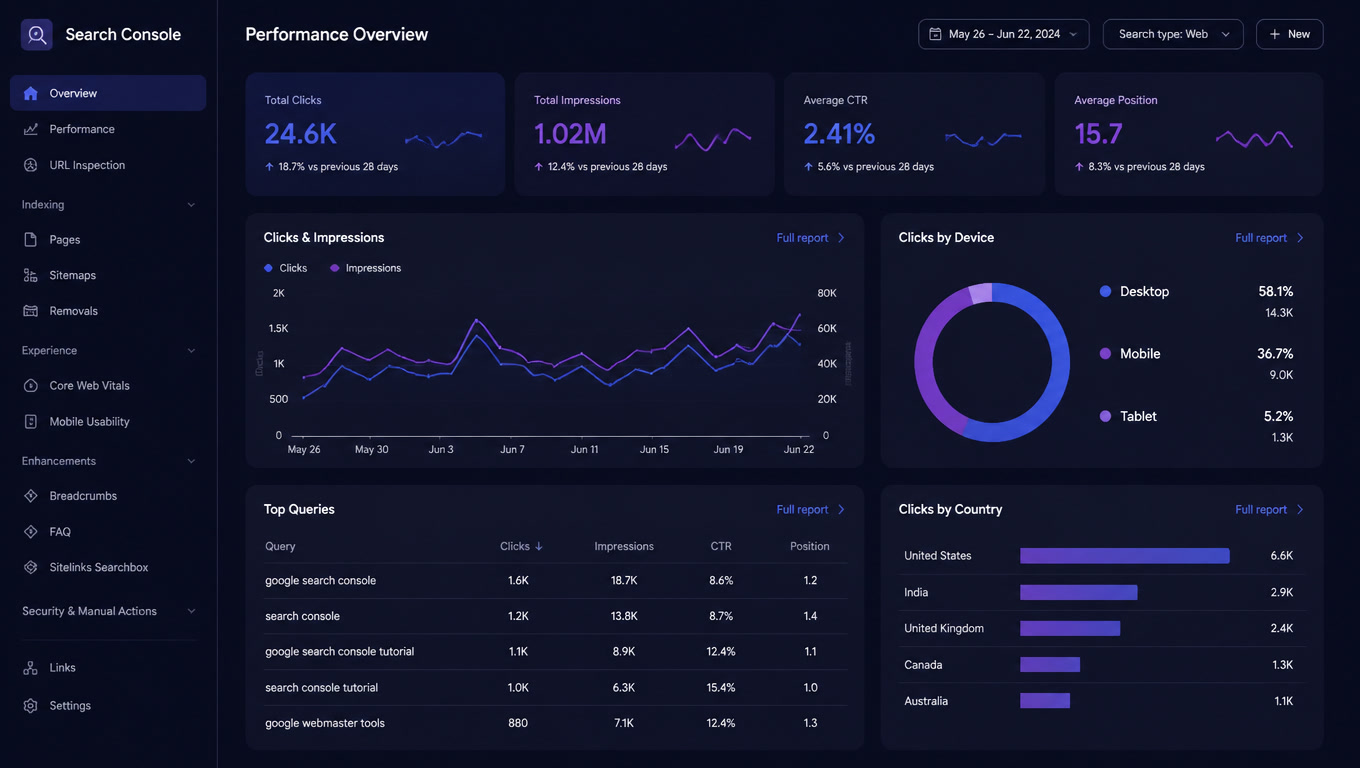
The third row is new and it has the weakest reporting of the three. Search Console tells you nothing about it. The developer console tells the developer about uptime, not about demand.
Read the partner list before the launch post
The list is the most honest part of the announcement.
Gemini's 50-plus apps are productivity, travel, health, finance and creative tools. Adobe for design, Experian for credit, Localiza for car rental, Peloton for training, Calm for meditation, plus Google's own Workplace, Photos, YouTube Music and Home. Search's short list is grocery, design, music, fantasy sports and meditation.
Every one of those resolves a transaction against inventory or an account. Order it, book it, edit it, play it, track it, practice it. Not one is a professional service, a local trade, or an agency engagement. That follows from what an action can be. A plumber cannot expose "fix my boiler" as a tool call. A law firm cannot expose "review my contract" as a parameterized action with a price attached.
So the question is not whether you should build a connected app. It is whether your offer can finish without a conversation. For most B2B services, it cannot, and that is the useful part of this week's news.
Marie Haynes read the launch as the moment Search stops being a place where people connect with websites: "it's functionality that matters," she wrote, arguing that a business will be found if it helps people and their agents get things done. John Mueller, who was careful to say he does not work on connected apps, called the mix of a standard interface and Search "a lot of possibilities" and admitted it is early. Both are right, and both are describing a surface that currently holds a very specific kind of business.
The four-question test
Answer these for the revenue line you actually want, not for the company as a whole.
- Can the job finish without a human on your side? A fixed-price booking, a quoted job from a published rate card, a renewal, a reschedule. If somebody has to scope it first, the action does not exist yet.
- Is there a system of record with an API you would let Google call? The platform expects a remote MCP server or AppFunctions, not a contact form with a thank-you page.
- Can a new customer authorize in one step? OAuth against an account that already exists, or one they can create inside the flow without leaving it.
- If the answer arrives with no click and no session, do you still get paid? If revenue depends on a conversation that starts after the click, the app deletes the step that pays you.
Three yes answers is a build. Two or fewer is a page problem, and the page is cheaper and measurable.
What it costs to be early
The build itself is the small part. A remote MCP server needs OAuth 2.1, a scope model that does not leak customer data, and an error contract that behaves when a model sends a malformed call. Then there is review, and then maintenance of a surface with no search-side analytics.
Early access also means early exposure. A failed handshake in a connected app does not look like a slow website. It looks like your business is not available, in the one place a buyer stopped looking at alternatives.
For a company with a real transaction and a real backend, that trade is usually worth it. For a company without one, the same engineering hours buy a better landing page, and the landing page has a scoreboard.
If you failed the test
The launch still tells you something. Google is moving work into the answer, and an answer still needs a source. That layer is a page-level problem, and it is winnable without a developer platform.
Three moves survive every update in this category. Put the answer in the first two sentences under the heading, with no throat-clearing and no restating of the heading, because if the paragraph cannot be lifted out of context it will not be. Give the specifics you have been holding back: a range instead of "it depends", a date, a named source, and the case where your offer is the wrong choice. Then pick the ten pages that carry commercial intent and fix those before the fifty that carry traffic.
That is the same argument we made in how to rank in Google AI Overviews, and nothing in this launch changes it. If you want the comparison of how each AI surface treats a page differently, that breakdown is here, and the measurement problem behind it is unchanged: a citation you cannot count still moves a buyer. The protocol layer, the part that decides whether an agent can read you at all, is covered in MCP and generative engine optimization.
What would change this read
Two signals would change this read, and neither has been announced.
Connected apps for categories without inventory. The day an appointments, quotes or home-services app shows up in Google's Search help-center list, the four-question test gets easier for a lot of businesses, and the page-first advice gets weaker. Watch that list, not the launch blog. It updates without a press release.
Search-side reporting. The connected console measures uptime. Until search-side performance sits next to queries, a connected app is a bet with no scoreboard, which is a hard sell to anyone who has to defend a budget.
Until one of those lands, treat the platform as what Google called it: a preview for US developers who sell a transaction. If you sell judgment, your buyer still arrives through a page. That page still has to answer the question better than the competitor's, and that work does not need a waitlist.
If you want that mapped against your own pages rather than argued in the abstract, it is the work inside our SEO and GEO service.
Frequently Asked Questions
What is the Google Connected Apps Platform?
A developer preview Google opened on October 28, 2026. It gives developers one place to build and submit apps that run inside Google Search and the Gemini app. Developers integrate a cloud-hosted MCP server or Android AppFunctions, register the app in the Google Connected Console, and choose whether it appears in Search, in Gemini, or in both.
Do connected apps replace SEO?
No. They replace one specific step: the click needed to finish a task. A connected app can complete an order or a booking inside the answer. It cannot argue for your business in a comparison, and today it exists only for categories Google has admitted to the programme.
Can a service business use a connected app?
Only where the job can finish without a conversation: a fixed-price booking, a quoted job from a published rate card, an appointment slot. Advisory and custom work still depends on a page that earns the click, because a person has to scope the work before there is anything to transact.