
How Generative Engine Optimization Uses MCP (Model Context Protocol)
MCP is the protocol that powers how AI search engines access, retrieve, and cite your content. Here is what GEO looks like at the infrastructure layer, and what it means for your content strategy.
How Generative Engine Optimization Uses MCP (Model Context Protocol)
Most GEO advice focuses on what you can see: structured data, FAQ schema, clear headings. That is the visible layer. But underneath it, a protocol called MCP (Model Context Protocol) determines how AI search engines actually find, retrieve, and cite your content.
Matters more than most of the surface stuff.
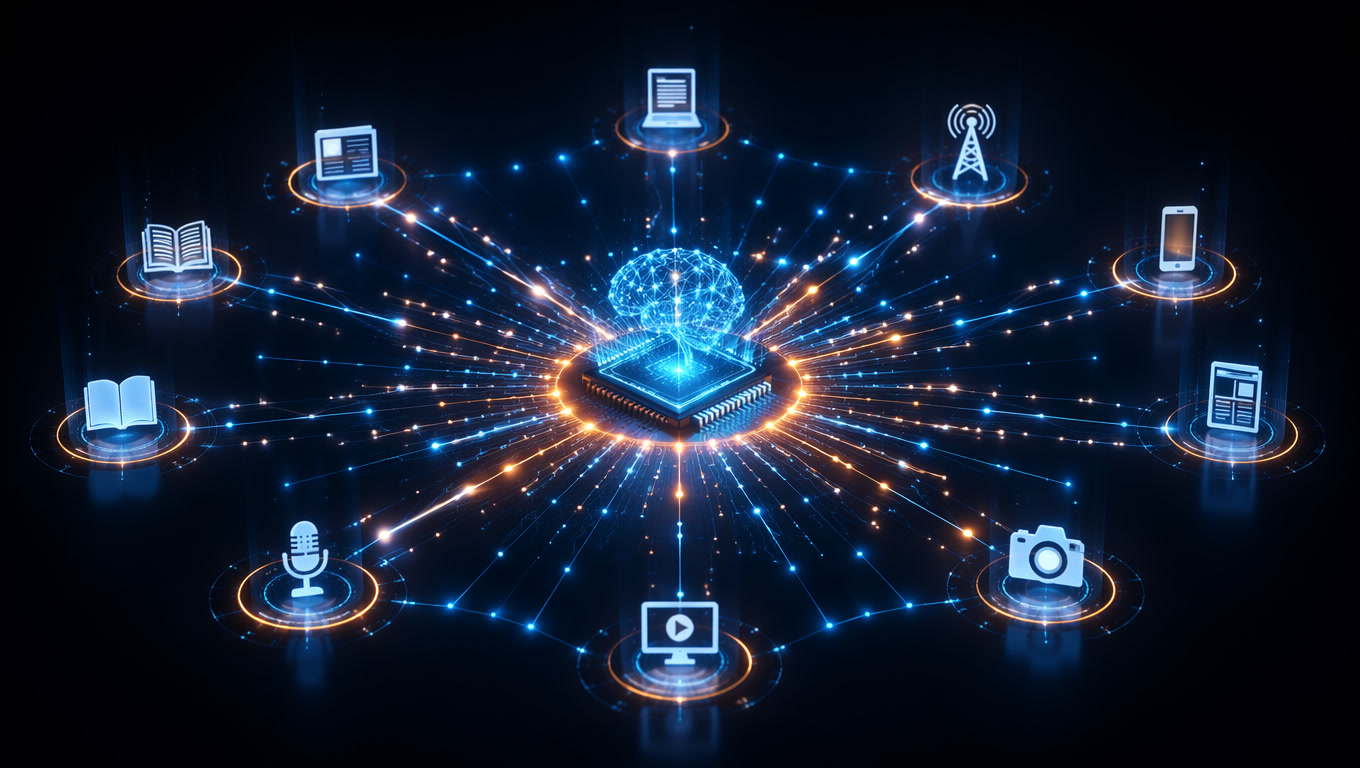
MCP is the infrastructure layer of AI search. It is the protocol that connects generative engines to external data — your website, your databases, your APIs. When ChatGPT Search cites a page, when Google AI Mode generates an answer, when Claude browses the web for a response, MCP-like architectures are handling the retrieval.
Here is how it works, what it changes for GEO, and what to do about it.
What MCP Actually Does
Anthropic introduced MCP in November 2024 as an open standard for connecting LLMs to external systems. Before MCP, every AI tool had its own integration pattern. Plugins, custom APIs, browser tools — each required a separate implementation. MCP standardized the connection layer.
Think of it as USB-C for AI. One protocol, multiple connections.
When an AI search engine gets a query, it uses a retrieval-augmented generation (RAG) pipeline. RAG has two steps: first, retrieve relevant content from external sources; second, feed that content to the generative model to produce an answer. MCP sits in the first step, acting as the bridge between the AI and your content.
Google's own AI optimization guide, published in May 2026, confirms this architecture. RAG is "a technique used to improve the quality, accuracy, and freshness of AI responses by relying on our core Search ranking systems to retrieve relevant, up-to-date web pages." MCP is one of the protocols making that retrieval layer more dynamic.
The MCP-GEO Connection: 4 Ways the Protocol Changes AI Search Visibility
1. Content Becomes a Real-Time Data Source
Traditional SEO treats content as static — you publish a page, Google indexes it, and it ranks until the next update. MCP changes this by letting AI systems query your content in real time. An AI agent using MCP can:
- Check for updated information dynamically
- Pull specific data points instead of whole pages
- Combine content from multiple sources into a single response
- Verify facts against your live content before citing them
The implication for GEO is that freshness matters differently. It is not just about when you last updated the page. It is about whether your content is structured so an AI agent can extract a single data point without needing the whole page.
2. Structured Data Becomes the API Layer
Structured data was already important for rich results. Under MCP-driven AI search, it becomes the primary interface. When an MCP-enabled agent accesses your site, it reads the structured data layer to understand entities, relationships, and attributes before it even looks at the prose.
Think of schema.org markup as your content's API response. The cleaner your structured data, the more accurately an AI agent can extract and cite your information.
Google's guide explicitly says structured data "isn't required for generative AI search" — which is technically true because Google's own systems do not need it to understand content. But MCP-driven third-party AI search tools like ChatGPT and Perplexity rely heavily on well-structured content for accurate retrieval. If you are optimizing for AI search beyond Google, structured data is table stakes.
3. Agentic Retrieval Changes How Content Is Cited
Here is where it gets interesting. Google's AI optimization guide has a section called "Explore agentic experiences" — the first time Google has officially acknowledged AI agents as consumers of web content. The guide mentions "browser agents may access your website to gather the data they need," including "analyzing visual renderings, inspecting the DOM structure, and interpreting the accessibility tree."
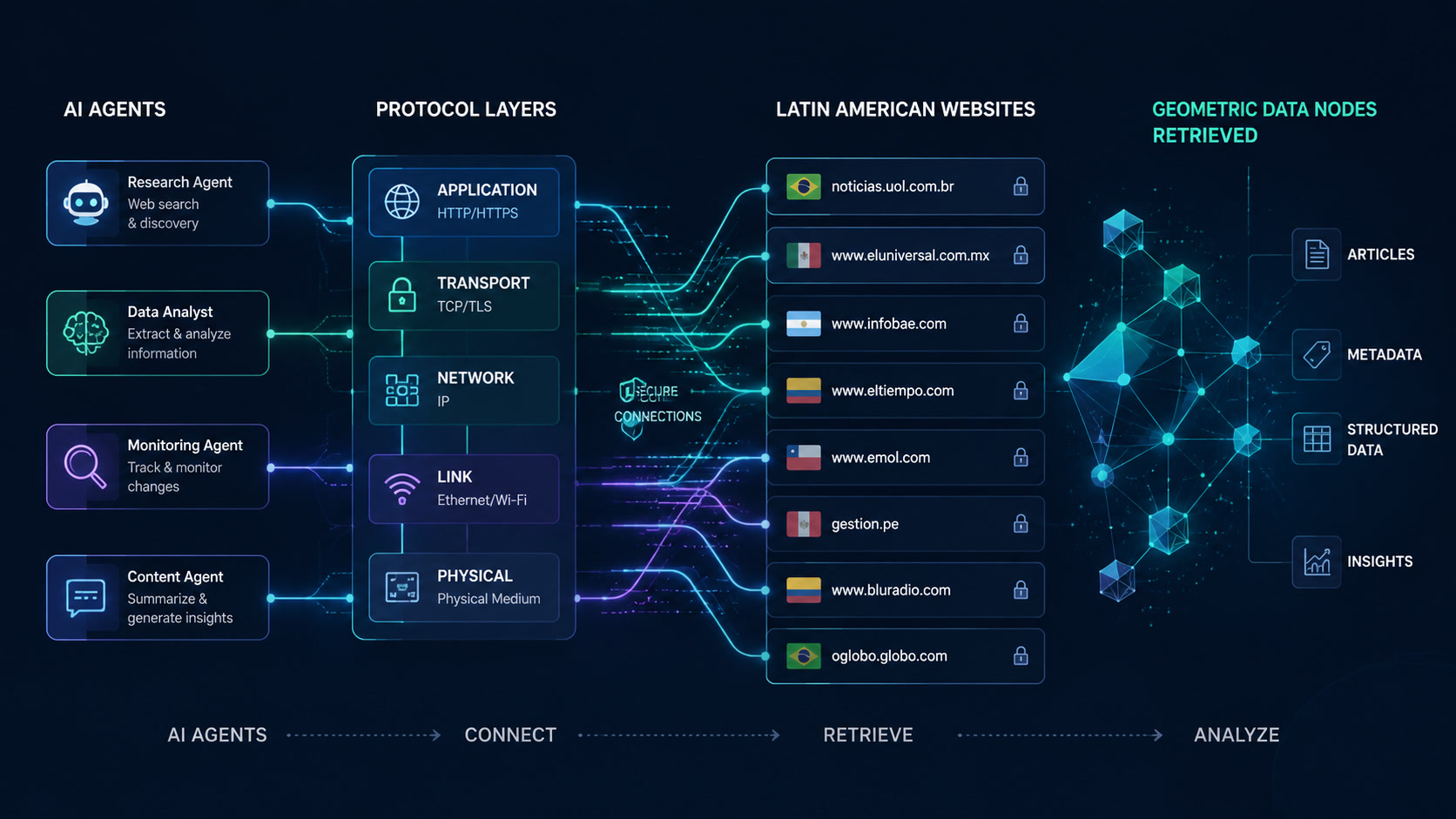
MCP enables multi-agent search. Instead of one AI retrieving one answer, you get a network of specialized agents working in parallel. One agent pulls your structured data, another reads your prose, a third checks your citations, a fourth compares your offering against competitors. Each agent decides independently whether your content is citable.
This changes the optimization target. You are not optimizing for a single SERP algorithm. You are optimizing for multiple AI agents that each evaluate your content differently.
4. Multi-Agent Search Changes Optimization Targets
The iPullRank team has documented this in their AI Search Manual. When an AI agent network analyzes a traffic drop, it might spawn ten agents: one checks AI Overviews presence, one pulls Search Console data, one simulates AI Mode queries, one reviews content structure, and so on. Each agent is a potential consumer of your content.
For GEO, this means you need content that works across agents, not just for a single retrieval query. Your FAQ schema needs to answer questions an agent looking for competitive analysis would ask. Your image alt text needs to carry semantic weight for agents that process visual content. Your internal links need to build context that multiple agents can traverse independently.
What This Means for Your GEO Strategy
Most of what passes for GEO advice right now is repackaged SEO with a new label. "Add FAQ schema." "Use clear headings." "Write direct answers." All of that is fine. It is also table stakes.
Understanding MCP lets you go deeper. Here is what actually changes when you optimize for protocol-level AI search:
Optimize for retrieval, not ranking. Traditional SEO optimizes for position on a SERP. GEO driven by MCP optimizes for how accurately an AI system retrieves and cites your content. These are fundamentally different metrics. A page that ranks #1 in Google might not be citable by an AI agent because its structured data is weak or its semantic clarity is muddled.
Build for parallel consumption. A human reader consumes content linearly. An AI agent network consumes it in parallel — structured data, prose, images, metadata, all at the same time. Your content needs to work at every layer independently.
Treat citations as the conversion. In traditional SEO, the conversion is a click. In AI search, the conversion is a citation. If an AI agent cites your content in its response, you won the query even if the user never clicks. That citation builds the authority that leads to future citations.
How to Start Today
First, audit your structured data. Run your top pages through Schema.org validation. If your FAQ markup is incomplete or your organization schema is missing, fix that before you do anything else.
Second, audit your content for semantic clarity. Can an AI agent extract a single data point from your page without reading the whole thing? Short paragraphs, clear definitions, topic sentences that introduce what follows. These are not just good writing practices. They are GEO requirements.
Third, check your multimodal readiness. Are your images carrying semantic weight? Do your tables have proper headers and captions? If your visual content is invisible to AI agents, you are leaving citations on the table.
Fourth, run a citation audit. Which of your pages are being cited by AI search engines? Use Google Search Console's generative AI performance report. The pages getting citations are your signal for what is working. The pages getting impressions without citations are your optimization opportunities.
The Bigger Picture
Google's official guide treats AI agents as an emerging consideration. That is the cautious, corporate version. The practical reality is that MCP-driven AI search is already changing how content gets discovered, retrieved, and cited. The protocol layer matters because it determines what AI systems can see and use.
None of this replaces good content. No protocol can make weak content citable. But for content that is already strong, understanding MCP turns guesswork into engineering. You are not hoping AI search engines find your content. You are structuring it so they cannot miss it.
Frequently Asked Questions
What is MCP and how does it relate to GEO?
MCP (Model Context Protocol) is an open standard introduced by Anthropic that allows AI systems to connect with external data sources and tools. In GEO, MCP matters because it defines how AI search engines access, retrieve, and cite web content during the RAG (retrieval-augmented generation) process. Understanding MCP helps content strategists optimize for how AI systems actually fetch and use their data.
Do I need to implement MCP to rank in AI search?
No. MCP is used by AI search engines internally — you do not need to implement it on your site. But understanding how it works helps you structure content so AI retrieval systems find, extract, and cite it correctly. Think of it as understanding how Google's crawlers work to do better SEO, not as something you install.
How does MCP change GEO strategy compared to traditional SEO?
Traditional SEO optimizes for keyword matching and ranking signals. MCP-driven GEO requires optimizing for the retrieval layer: structured data, semantic clarity, multimodal content (images, tables, video), and authority signals that make your content citable across multiple AI agents operating in parallel.