

Google Opened AI Mode Monitoring to Everyone. The Announcement Left Out One Line.
On September 28 Google moved AI Mode's information monitoring out of the Ultra and Pro plans and made it available to every user. June's announcement promised updates with links to the web. September's does not mention links. What changed, what did not, and what to do with your content this week.
On September 28, 2026, Robby Stein, Google's VP of Product for Search, announced on X that information monitoring in AI Mode is moving from Ultra and Pro subscribers to every user, in every market. You tell AI Mode what to watch, and Search keeps checking sites, forums, social posts, real-time data sources and a Shopping Graph of more than 60 billion products. What the September announcement no longer says, and the June one did, is that updates arrive with links to the web. Until Google clarifies, this is a visibility surface you cannot attribute, not a new traffic source.
In July we wrote that Information Agents were the third AI search surface and that the window was open only for people paying for Ultra. The window opened for everyone. That changes who is competing, and it changes what is worth checking.
What exactly shipped
The mechanics, from Stein's announcement and Search Engine Journal's coverage:
- The user asks AI Mode to watch something specific and Search holds the task. Search also suggests monitoring tasks while people search, so nothing has to be set up by hand to get started.
- The check covers websites, forums, social posts, Google's real-time data sources and the Shopping Graph of more than 60 billion products.
- When a change shows up, a notification arrives in the Google app with the update. According to Lifehacker, the update also appears as a new entry inside the original AI Mode conversation: delete the chat and you stop getting updates.
- The notification only fires when something changes, and opening it expands into a full search result. It is not an email with a summary: Search hands the answer back to you with the new part inside it.
Every example in the announcement was local or shopping: new restaurants and pop-ups nearby, local holiday activities with kids, back-in-stock and price-drop alerts. Stein's demo video was about vintage markets and garage sales in Austin. Nothing about serious research, news, or B2B content.
The three surfaces, in one table
With monitoring open to everyone, it pays to keep the differences clear before splitting budget across them:
| Surface | When it triggers | What wins there | How you measure it today |
|---|---|---|---|
| AI Overviews | When someone types a query | The best answer, whenever it was written | Search Console AI report (impressions only) |
| AI Mode | When someone holds a conversation | Authority with concrete data and a defensible position | AI report (impressions) + performance report (mixed clicks) |
| Monitoring | No query: Google checks the topic on its own | Content that shows real change | No report. Manual testing only |
The third row is the new one, and it is the only one without instruments. Any dashboard that folds the three into a single number is making the third one up.
The line missing from the announcement
On June 12, when the feature reached Ultra subscribers, Stein said the agent works around the clock to send "detailed updates and links to the web the moment new info is available." Links were part of the promise.
The September 28 post, the one covering the rollout to everyone, does not mention links. It does not list languages either, and it does not explain how Google chooses the sources behind an update. Search Engine Journal flagged the omission and Relevant Audience repeated it: what Google did not say matters as much as what it said.
There are two ways to read it. Either links are still there and Google simply did not repeat them this time, or notifications are turning into answers people read inside Google without leaving. Both fit the product. Google has not said which one it is.
Do not put monitoring into a traffic projection. It is a visibility surface with no attribution today.
What measurement will show you, and what it will not
If you open Search Console today looking for this, three things are worth knowing before you blame your content.
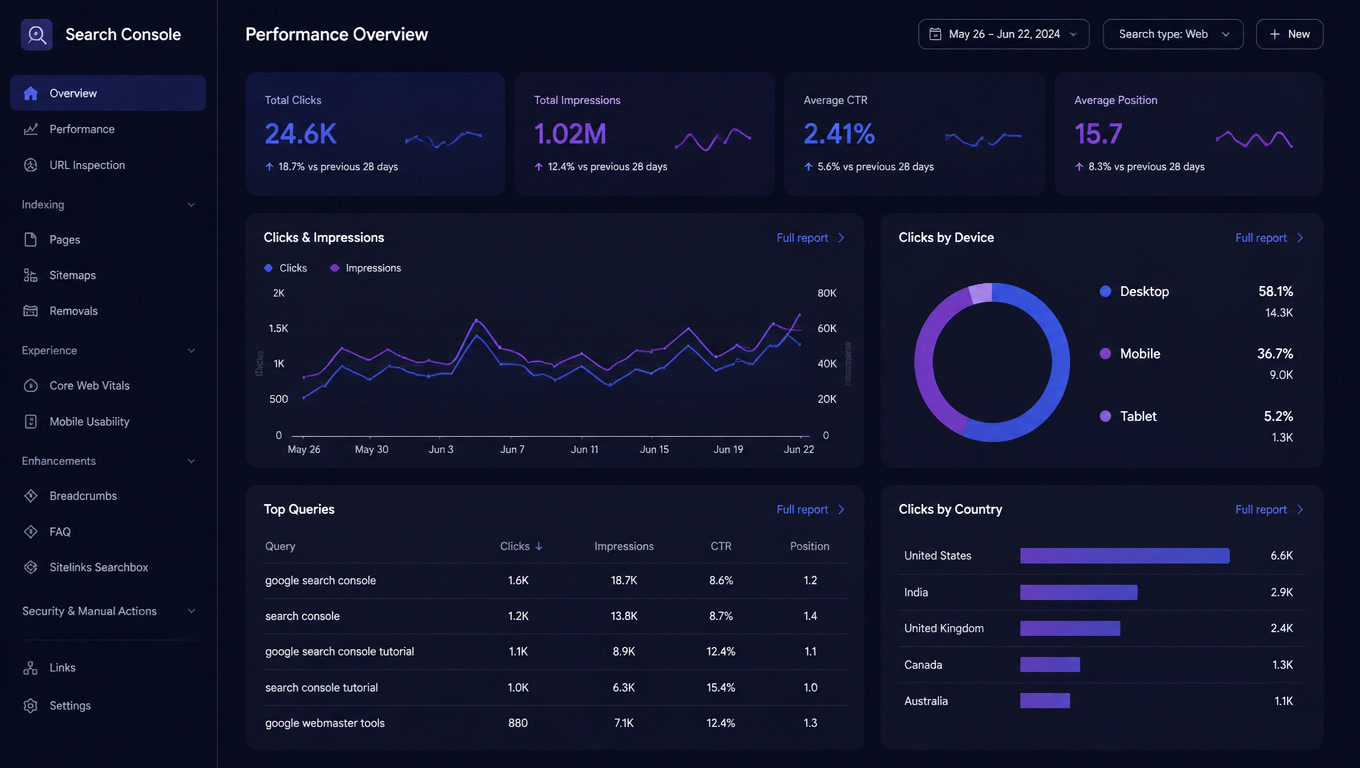
The generative AI performance report, available to all sites since August 31, counts AI Overviews and AI Mode impressions as one number. It does not separate them, gives no queries, no clicks and no position. Clicks arriving from AI Mode land in the main performance report, mixed in with the rest of web search.
For monitoring tasks there is nothing. No report, no impressions row, no query dimension. Any number a vendor sells you about "monitoring visibility" is an estimate.
Our own numbers for the last seven days on mintec.co: 64 sessions and 87 pageviews from ChatGPT, Gemini and Claude, with /solutions/insurance/ as the top page. Not one of those sessions is attributable to a monitoring task, because that attribution does not exist yet. It is still referred AI assistant traffic, with all the imprecision that carries.
What to do this week
Create the tasks yourself first. Pick your three core topics and set up a monitoring task in the Google app for each. Give it two weeks and write down which domains appear in each update, whether they carry links, and how often the check repeats. That notebook is worth more than anything published on this topic this month.
Write content that changes. Monitoring only goes back to things that show change: dates, prices, stock, versions, numbers that get updated. A static explainer never triggers an update. The freshness, update velocity and temporal authority signals we detailed in our Information Agents framework are still the lever, and they now have a mass audience.
Tend the data Google already reads. If your business is local or retail, the Shopping Graph and listings were reading you before this shipped: hours, inventory, feeds, reviews. If you are B2B, publish the numbers that move: pricing tables that get updated, benchmarks with a date, version histories. Google does not monitor your opinion; it monitors your data.
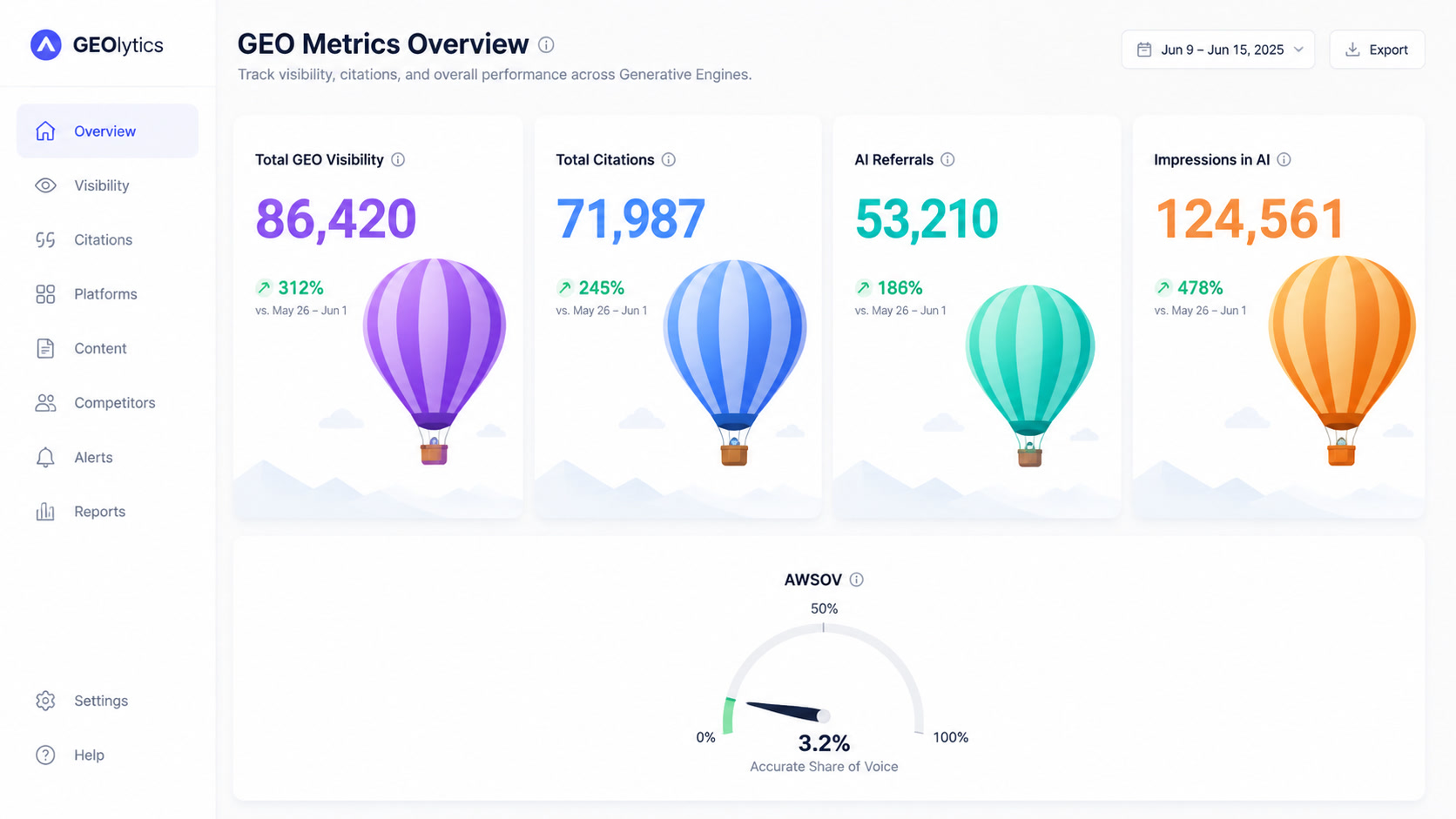
Measure in layers and say so in reports. Visibility, citation and click are three different meters reading the same page, and monitoring adds a fourth layer that cannot be measured today. Blend them into one number and you are repeating the mistake of GEO vanity metrics.
What does not change
Eligibility is the same as before: an indexed page, snippet-eligible, with the site included in Search Console's generative AI control. No new markup to add, no file to upload. The rules for measuring AI search visibility have not moved either: Search Console's AI report is still the only official source, and it still does not cover this surface.
What changes is the competition. When monitoring was Ultra-only, a handful of subscribers fought over each update. Now anyone can create the task on your topic. The window did not close. It filled up.
Sources
- Search Engine Journal: Google Rolls Out AI Mode Info Monitoring To All Users Globally (September 28, 2026)
- Search Engine Roundtable: Google Globally Rolls Out Monitoring Capabilities In AI Mode (September 28, 2026)
- Search Engine Journal: Google Expands AI Mode With Information Agents: Ultra Only (June 12, 2026)
- Google Blog: Google Search's I/O 2026 updates (May 19, 2026)
- Relevant Audience: AI Mode info monitoring rolls out to all users (October 2026)
- Lifehacker: Google's New AI 'Information Agents' Can Send You Alerts (June 17, 2026)
Frequently Asked Questions
What is information monitoring in AI Mode?
It is the ability to tell AI Mode to watch a specific topic and have Search keep checking websites, forums, social posts, real-time data sources and a Shopping Graph of more than 60 billion products for changes. When something relevant changes, a notification arrives with the update. Google announced it at I/O on May 19, 2026, shipped it to AI Ultra subscribers on June 12, and opened it to all users on September 28, 2026.
Do AI Mode monitoring notifications include links to websites?
It is not confirmed. The June announcement said agents send detailed updates with links to the web. The September announcement, the one covering the global rollout, does not mention links, does not list languages, and does not explain how Google picks sources. Until Google clarifies, this should not be counted as a traffic source.
How do you measure visibility in AI Mode monitoring?
Right now you cannot measure it directly. Search Console's generative AI performance report combines AI Overviews and AI Mode impressions with no queries and no clicks, and it has no section for monitoring tasks. The practical method is manual: create monitoring tasks on your topics, note which domains appear in each update, and track whether they carry links.