
Information Agents: The Third AI Search Surface Nobody Is Optimizing For
Google's Information Agents went live June 12, 2026 for AI Ultra subscribers. They create a third AI search surface — distinct from AI Overviews and AI Mode — with different optimization rules. Here's the framework you need.
Information Agents: The Third AI Search Surface Nobody Is Optimizing For
I keep seeing the same framework everywhere. "Optimize for AI Overviews. Optimize for AI Mode. That's GEO." Two surfaces. Two strategies. It's neat, it's tidy, and it's already incomplete.
Google's Information Agents went live for AI Ultra subscribers on June 12, 2026. Most of the coverage I've seen is either a summary of the I/O announcement or a generic "freshness matters more now" nod. What I haven't seen is someone actually treating Information Agents as what they are: a third optimization surface with its own signals, citation behavior, and strategic implications.
This is the framework we're using at Mintec. It's provisional: Google hasn't disclosed agent citation logic, but it's grounded in what we know about how agents work and the data we're gathering from live deployments.
The Three AI Search Surfaces in July 2026
Most content about GEO still treats AI search as one thing. It's not. There are three surfaces now, and each one favors different content properties.
Surface 1: AI Overviews
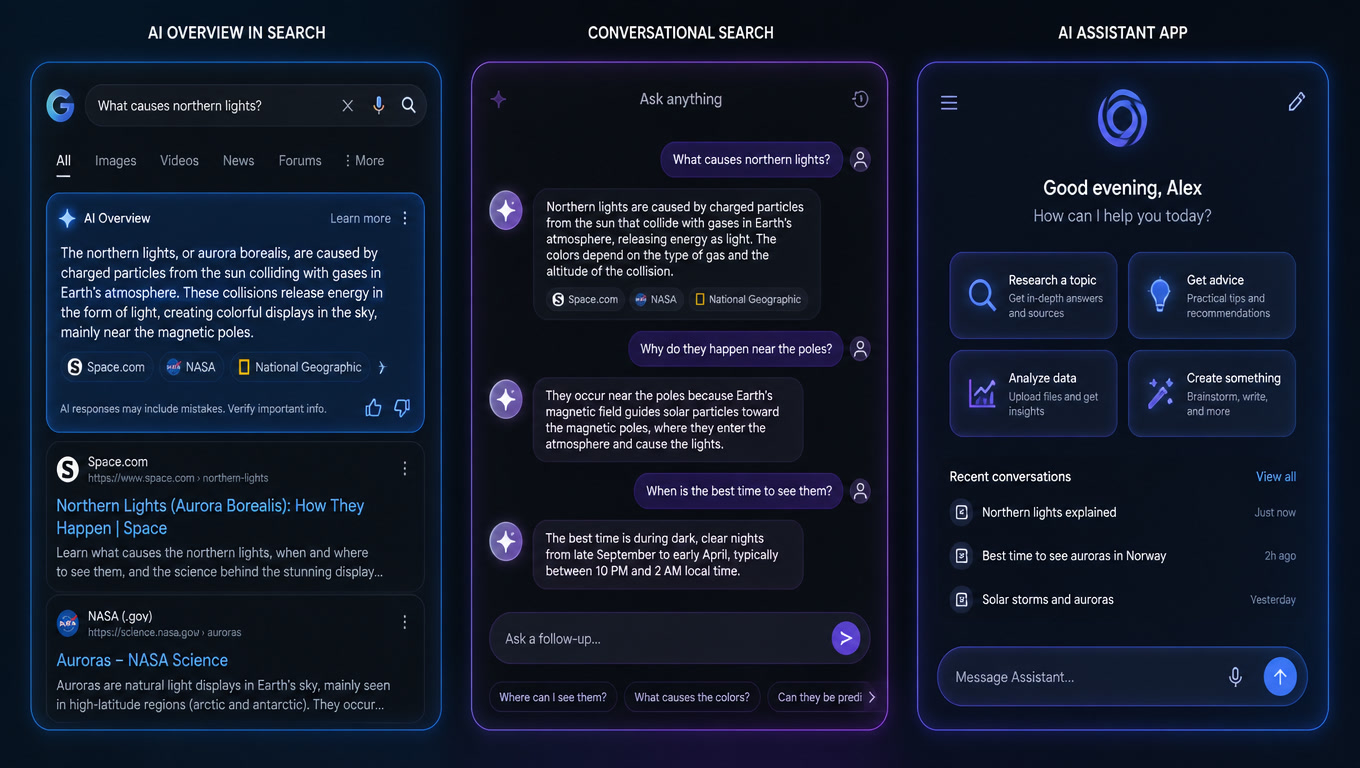
Behavior: Reactive. User types a query, Google generates an inline summary from indexed content. Citation style: Extractive. Pulls specific sentences, lists, and data points from existing pages. Content that wins: Comprehensive, well-structured, high entity clarity. Static evergreen content performs fine. Optimization lever: Claim density, structured data, answer-first formatting. Recency sensitivity: Low. A well-written 2024 article can still get cited in July 2026 if it's the best answer.
Surface 2: AI Mode
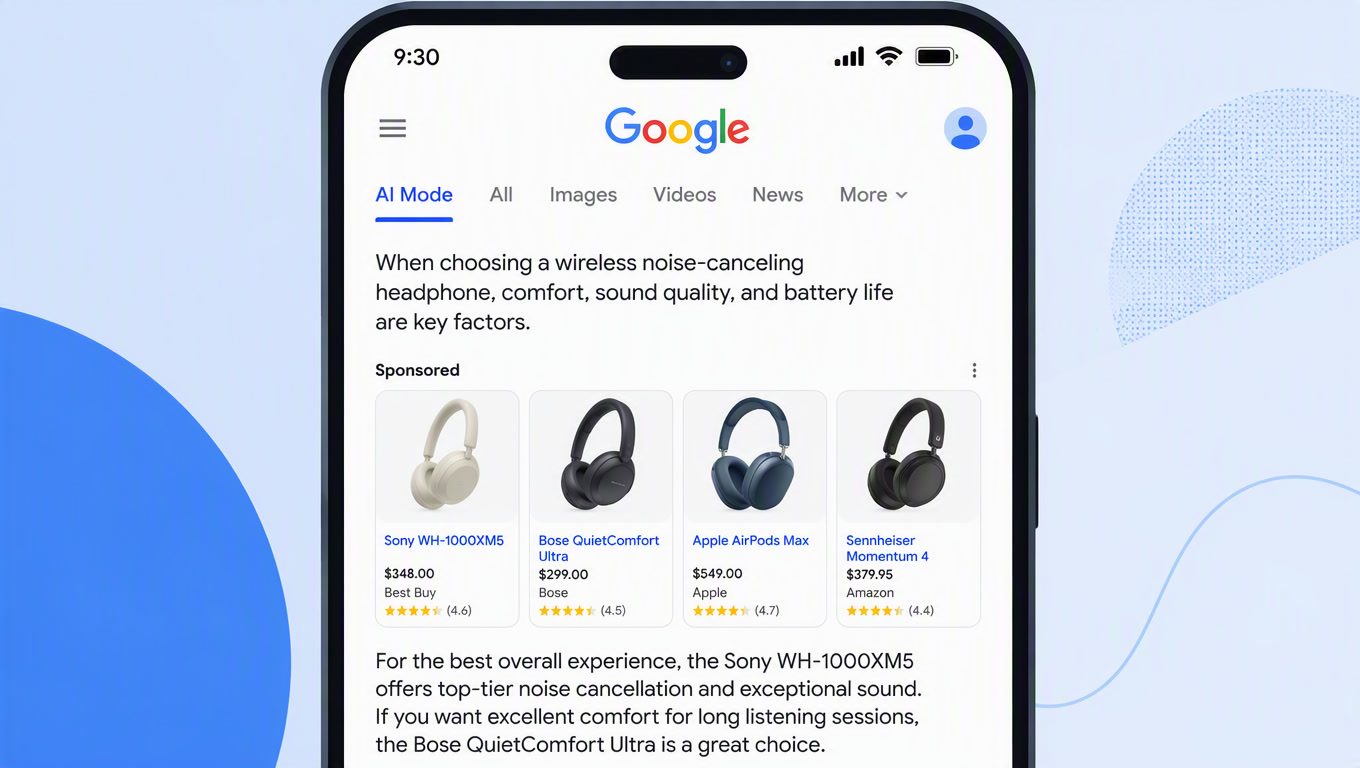
Behavior: Conversational. User interacts with a Gemini-powered chat interface. Answers are synthesized from multiple sources, with citations. Citation style: Conversational synthesis. Pulls from multiple pages, compares perspectives, summarizes. Content that wins: Authoritative, opinionated, comparatively framed. Pages that state "X is better than Y because [data point]" get cited heavily. Optimization lever: Comparison frameworks, named sources, explicit stances, topical depth. Recency sensitivity: Medium. AI Mode can cite older content but prefers recent when discussing current topics.
Surface 3: Information Agents
Behavior: Proactive. Agent monitors the web 24/7 for changes related to a standing query. Pushes synthesized updates with links. Citation style: Change-detection. The agent doesn't just evaluate a page once — it re-evaluates when content changes. Pages that demonstrate ongoing currency get cited; static pages get dropped from agent rotations. Content that wins: Frequently updated, time-stamped, densely factual. Pages with visible changelogs and regular refresh cycles. Optimization lever: Content freshness, update velocity, temporal authority. Recency sensitivity: High. The whole point of an agent is to detect what's new. Stale content is invisible.
This distinction matters for anyone doing GEO in the second half of 2026, and I haven't seen it laid out clearly anywhere else.
Why Information Agents Break the Old GEO Playbook
Most GEO advice misses a key point: AI Overviews and AI Mode are reactive surfaces. Information Agents are proactive. That changes which optimization levers actually move the needle.
When you optimize for AI Overviews, you optimize for a snapshot. Google retrieves your page, evaluates it against the query, and either cites it or doesn't. The evaluation happens once per query. Your page's age matters only insofar as it affects relevance.
When you optimize for Information Agents, you optimize for a process. The agent does not evaluate your page once. It monitors your page and your entire domain for changes. It tracks whether your content is getting better, staying the same, or getting stale. It pays attention to cadence — do you publish updates monthly? Quarterly? Never?
This is the difference between being a good source and being a living source. Living sources are what agents need.
The Three Signals That Matter for Information Agents
1. Content Freshness
Not "when was the page published." The freshness of the specific information on the page. A page published last week that cites data from 2023 is less fresh than a page published in 2023 that was updated last week with 2026 data.
How to measure it: Audit your top 20 traffic-driving pages. For each one, note the date of the most recent factual update — not the date on the byline. If the most recent update is more than 90 days old, the page is stale by agent standards.
How to fix it: Build a refresh schedule. Every 90 days, every page gets a pass. Not a cosmetic "updated date" bump — a genuine review of every factual claim, statistic, and reference. Pages with data tables get quarterly updates. Pages with opinions get biannual reviews.
2. Update Velocity
This is the signal I think almost nobody is optimizing for yet. Update velocity is the rate at which your domain publishes substantively new or updated information on a given topic cluster. It is not about publishing volume. It is about meaningfully maintaining your presence on a topic.
Why it matters: Information Agents are designed to detect change. A domain that updates its AI-policy page every time a new regulation drops signals to the agent that it is a reliable source for "what is the current state of AI policy." A domain that published one definitive page in 2024 and never touched it again gets dropped.
How to measure it: Track the median days-between-updates for your topic cluster pages over a rolling 12-month window. If the median exceeds 90 days, you have a velocity problem.
How to fix it: Stop treating content as "publish and forget." Every important topic your site covers needs a maintenance cadence. Pick 3-5 core topic clusters and commit to updating each one at least once per quarter. This is not about producing more content. It is about keeping the content you already have current.
3. Temporal Authority
This is the hardest signal to build and the most defensible once you have it. Temporal authority is the degree to which your content demonstrates awareness of the current state of its subject.
A page with high temporal authority does not just state facts. It contextualizes them against what's happening right now. It says "since the March 2026 regulation update..." or "as of the Q2 earnings reports published last week..." It references recent developments and connects them to the core topic.
Why it matters: Agents synthesize information from multiple sources. When an agent picks a source for a standing query like "track developments in AI video generation regulation," it will prioritize sources that demonstrate ongoing engagement with the topic over sources that just happen to have a page about it.
How to fix it: Add a "recent developments" or "what changed this quarter" section to your core entity pages. Do not write it once. Update it every time something relevant happens. This is the highest-leverage action you can take for agent visibility.
What This Means for Your Content Operation
If you read the existing I/O 2026 coverage (including our own), you got the high-level message: freshness matters more for agents. That was true in May. In July, with Information Agents live, we can be more specific.
AI Overview optimization still rewards the page that has the best answer, regardless of when it was written. A 2023 definition page that is still the clearest explanation of a concept will keep getting cited.
Information Agent optimization rewards the page that has the best current answer. The same 2023 page will lose agent citations to a 2026 page that says "as of July 2026, the landscape has shifted in three ways..." even if the 2026 page is less comprehensive.
This is not a judgment about which surface matters more. It is a statement about how optimization priorities diverge.
The Five-Point Agent Optimization Checklist
Here is the checklist we are using at Mintec for clients who want to be visible in Information Agent responses.
Audit every page for recency. Go page by page through your top 30. For each one, record: when was it last factually updated, not just cosmetic-updated? Any page with no meaningful update in 90+ days goes on a refresh list.
Build a refresh cadence, not a content calendar. A content calendar schedules new publications. A refresh cadence schedules updates to existing pages. You need both. Start with the pages that already get the most organic traffic — those have the highest chance of being added to an agent's standing query.
Add visible timestamps that track real updates. "Last updated: July 2026" means something. "Updated 3 months ago" means nothing. Be specific. And update the timestamp only when you actually change the content — agents can detect cosmetic updates.
Create "the current state of X" sections on your core pages. Pick the 5-10 topics most important to your business. Add a section that explicitly tracks what is happening right now. Update it when something changes. This single section transforms a static page into a living source.
Monitor your agent visibility separately from your SEO. Search Console's AI performance report is useful for AI Overviews but doesn't tell you anything about agent citations. Run manual audits: set up a standing query on a topic you cover, wait for agent updates, and check whether your content is cited. There is no automated tool for this yet.
The Bottom Line
Information Agents are not a future development. They are live, they are indexing content differently than other AI surfaces, and they will only grow as Google expands access beyond the Ultra tier (which is almost certainly coming).
Most of what you read about GEO in 2026 still treats AI search as a single surface with a single optimization playbook. That was already oversimplified when we had two surfaces (AI Overviews and AI Mode). With Information Agents creating a third surface where freshness, velocity, and temporal authority are the primary signals, the single-playbook approach is actively misleading.
You need three optimization strategies now. This one — for Information Agents — is the one almost nobody has started building yet.
If you start now, you have a window. Once Google expands Information Agents beyond Ultra subscribers and more publishers wake up to the freshness signal, that window closes.
At Mintec, we are building agent optimization strategies alongside traditional GEO and SEO work. The three are converging, but they are not the same thing, and treating them as interchangeable costs you visibility in the surface that is growing fastest.
Sources:
- Google Blog, "Google Search's I/O 2026 Updates: AI Agents and More" (May 19, 2026)
- DigitalApplied, "Google AI Mode Information Agents: A New Referral Surface" (Jun 14, 2026)
- Paralax AI, "Google Information Agents Turn Search Into Standing Queries" (May 20, 2026)
- PixelMojo, "Google Information Agents Skip Stale Sites" (Jun 2026)
- Mintec, "Google I/O 2026 Turned Search Into an AI Agent Platform" (Jun 11, 2026)
Frequently Asked Questions
What are Google Information Agents?
Google Information Agents are persistent AI agents that run in the background 24/7 inside Google AI Mode. They monitor the web for changes related to a user's query, synthesize updates from multiple sources, and send push notifications with links when new relevant information appears. They launched June 12, 2026 for Google AI Ultra subscribers.
How do Information Agents differ from AI Overviews?
AI Overviews are passive — they generate inline answers when a user types a query. Information Agents are proactive — they monitor the web continuously, track changes over time, and push synthesized updates to users. This means content freshness and update velocity matter far more for agent citations than for AI Overviews.
What should I optimize for Information Agents?
Three signals matter most: Content Freshness (how current each page's information is), Update Velocity (how frequently your domain publishes new content on a topic), and Temporal Authority (whether your content explicitly references and contextualizes current developments). Pages that rank #1 on Google can still be invisible to agents if they're stale.