
MCP and GEO: How the Model Context Protocol Is Changing AI Search Optimization
The Model Context Protocol (MCP) is becoming the infrastructure layer AI agents use to discover content. It changes how you should think about Generative Engine Optimization — and most marketers haven't noticed yet.
MCP and GEO: How the Model Context Protocol Is Changing AI Search Optimization
There's an invisible layer in the AI search stack most marketers aren't thinking about.
It's called the Model Context Protocol (MCP). It started at Anthropic and is now governed by the Linux Foundation. As of April 2026, MCP runs on over 10,000 enterprise servers with more than 97 million SDK downloads. And it's changing how AI agents discover, consume, and cite content.
That's not hyperbole. MCP could fundamentally redefine what "optimizing for AI search" means. Here's what you need to know — and what you can do about it.
What MCP Is and Why It Matters for Your Content
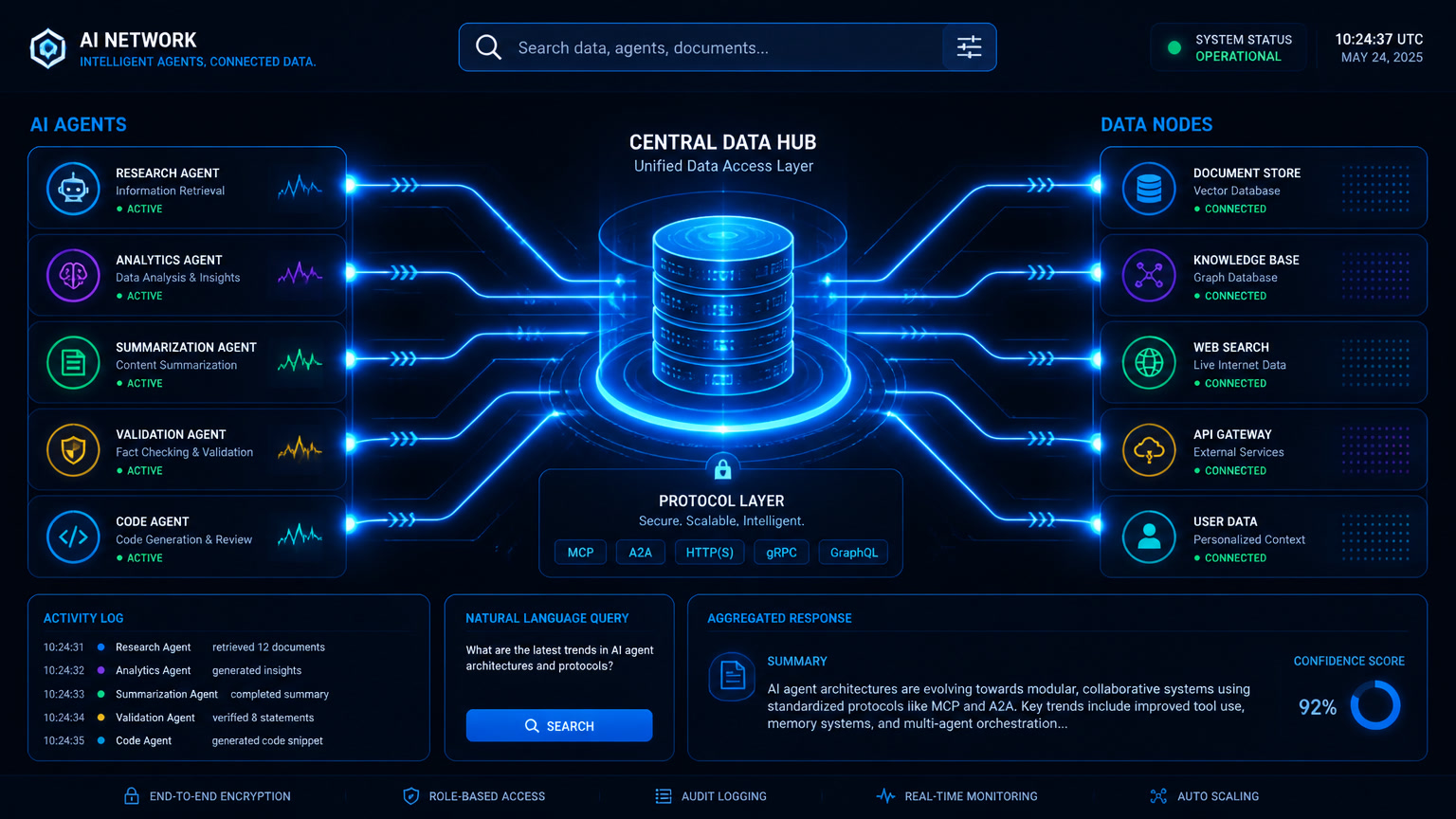
MCP is, in plain terms, a protocol that lets AI agents connect to external data sources. The same way HTTP standardized how web browsers talk to servers, MCP standardizes how AI agents connect to tools, databases, APIs, and files.
Before MCP, every integration between an AI agent and a data source required custom code. With MCP, any compatible agent can connect to any MCP server and pull relevant context.
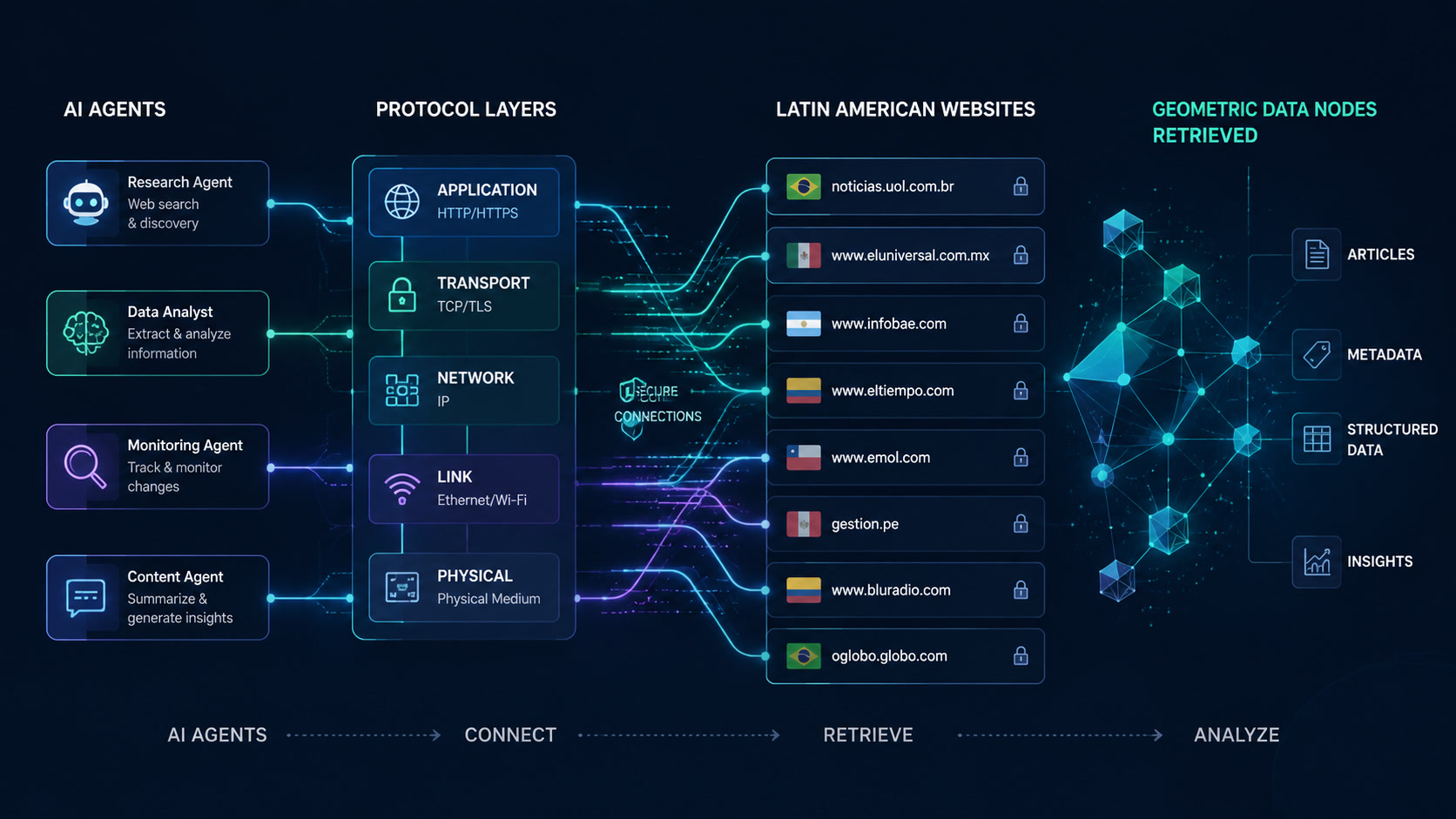
Why this matters for GEO: When an AI agent uses MCP to get information, it's not crawling your website the traditional way. It's querying an MCP server that delivers structured, real-time data. If your content isn't accessible through that channel, the agent can't see it.
The Problem MCP Solves (And Creates) for Content
Traditional search works like this: Googlebot crawls your site, indexes your pages, shows them in search results. Optimizing for AI Overviews follows a similar logic: Google extracts snippets from your content to show in generative responses.
MCP flips that paradigm. Instead of waiting to be crawled, you can publish an MCP server that agents query directly. Companies that already run MCP servers are being systematically preferred by AI agents as data sources, according to data from Sanbi.ai and Otterly.
The problem for marketers: Most web content is not structured for MCP consumption. It's in HTML, buried under navigation, ads, and layouts an agent has to parse. An MCP server delivers clean, structured data ready to consume.
This creates two categories of content:
- Crawlable content — the kind we know, optimized for Googlebot and AI Overviews.
- Queryable content — content an agent can get directly via MCP. This segment is growing much faster.
What This Actually Means for Your Content Strategy
You don't need to become an MCP developer to make your content queryable. But you do need to understand that how you structure your information determines whether an AI agent can use it easily.
1. Structured data is the floor, not the ceiling
MCP servers preferentially consume JSON-LD with Schema.org schemas. If your site already has well-implemented structured data — Organization, Product, Article, FAQPage, HowTo — you're ahead of most sites.
Here's the catch: most sites have incomplete or broken structured data. A 2026 Schema.org study found less than 30% of sites with JSON-LD have complete, valid implementations. Fixing this is the single highest-impact action you can take today.
2. llms.txt is not optional anymore
The llms.txt file — proposed by Jeremy Howard of Answer.AI — is a plain text file at your site root that maps the most important resources for language models. While no major AI engine has officially committed to reading it as a first-class input, dev tools (Cursor, Continue, Aider) already do, and OpenAI and Anthropic's retrieval pipelines can fetch it on demand.
Publishing a well-structured llms.txt is a clear signal to any agent that your site is designed for AI consumption.
3. Entity optimization as an MCP asset
MCP works best when data is organized around entities: people, organizations, products, places, events. The more clearly you define these entities in your content — with IDs, relationships, properties — the easier it is for an MCP server to expose your information to agents.
This goes beyond traditional entity SEO. It's not just about Google understanding what you're talking about. It's about an AI agent being able to query your MCP server and instantly get your company info, products, and services — without crawling and parsing HTML.
The MCP Readiness Framework for Marketers
Based on what we're seeing in real implementations, here's a simple framework to assess how ready your content is for the MCP world:
Level 1 — Crawlable (baseline)
- Your site is accessible to AI crawlers
- You have JSON-LD structured data (even if incomplete)
- Pages load fast and are readable
Level 2 — Extractable (intermediate)
- Complete, valid structured data (Organization, Product, Article, FAQ)
- Content with descriptive headers, tables, lists, and definitions
- Formats generative models can easily cite
- llms.txt implemented
Level 3 — Queryable (advanced)
- Well-defined entities with explicit relationships
- Content served as Markdown or JSON for agents (user-agent detection)
- Public API or MCP server exposing your content
- Real-time data that updates when an agent queries it
Most sites are at Level 1 today. The ones that reach Level 3 in 2026-2027 will have a significant visibility advantage in AI search.
MCP Doesn't Replace SEO — It Extends It
Let me be clear: MCP isn't going to replace traditional web crawling. Google still crawls and indexes web pages. AI Overviews and AI Mode still extract content from HTML pages.
But MCP is creating a parallel content discovery channel with different rules. AI agents using MCP can access information not available on the open web — internal API data, real-time dashboards, dynamic content a crawler can't see.
For brands that want to be cited by AI agents in contexts where up-to-date information matters (pricing, availability, events, financial data), MCP isn't optional. It's the channel agents will use to consume your content.
Where to Start Today
If you haven't done any of this, start with the easiest thing:
Audit your structured data. Use Google's Rich Results Test or any Schema.org validator. Fix the errors. Fill in required fields.
Create an llms.txt file. It's a text file. Put it at the root of your site. Link your most important pages with short descriptions. You don't need anyone's permission.
Define your core entities. List the key entities for your business: your company, your products/services, your location, your key people. Make sure each has a dedicated page with complete structured data.
Watch this space. MCP is evolving fast. The official 2026 roadmap includes transport scalability, agent-to-agent communication, and governance maturation. What's an early advantage today could be a standard requirement in 12 months.
AI search isn't just about having good content anymore. It's about having content that AI agents can consume without friction. MCP is the protocol defining what that zero-friction consumption looks like.
And most marketers don't even know it exists yet.
Frequently Asked Questions
What is the Model Context Protocol (MCP)?
It's an open standard (originated by Anthropic, now governed by the Linux Foundation) that lets AI agents connect to external data sources. Think of MCP as 'USB-C for AI' — a universal protocol any compatible agent can use to pull context from servers, APIs, databases, and files.
How does MCP relate to Generative Engine Optimization (GEO)?
When AI agents use MCP to fetch real-time information from MCP servers, they bypass traditional crawling. If your content is accessible through an MCP server — or structured so an agent can consume it directly (JSON-LD, entity-relationship data, llms.txt) — you're more likely to get cited in AI responses.
What should a marketer do to prepare for MCP?
Three concrete steps: (1) Make sure your site has complete, valid JSON-LD structured data (Schema.org). (2) Implement an llms.txt file at your site root to map your most important content for AI agents. (3) Optimize your entity presence — name, address, social profiles, products, services — in formats MCP servers can consume.