
Google added more links to AI Mode. ChatGPT stopped counting yours.
On October 15, 2026 Google announced more inline links in AI Mode and AI Overviews, placed higher in responses. The same week, ChatGPT-attributed sessions in GA4 fell 22-57% because GPT-6 stopped sending utm_source. What changed, what it means for your traffic, and how to read your data without fooling yourself.
Google added more links to AI Mode. ChatGPT stopped counting yours.
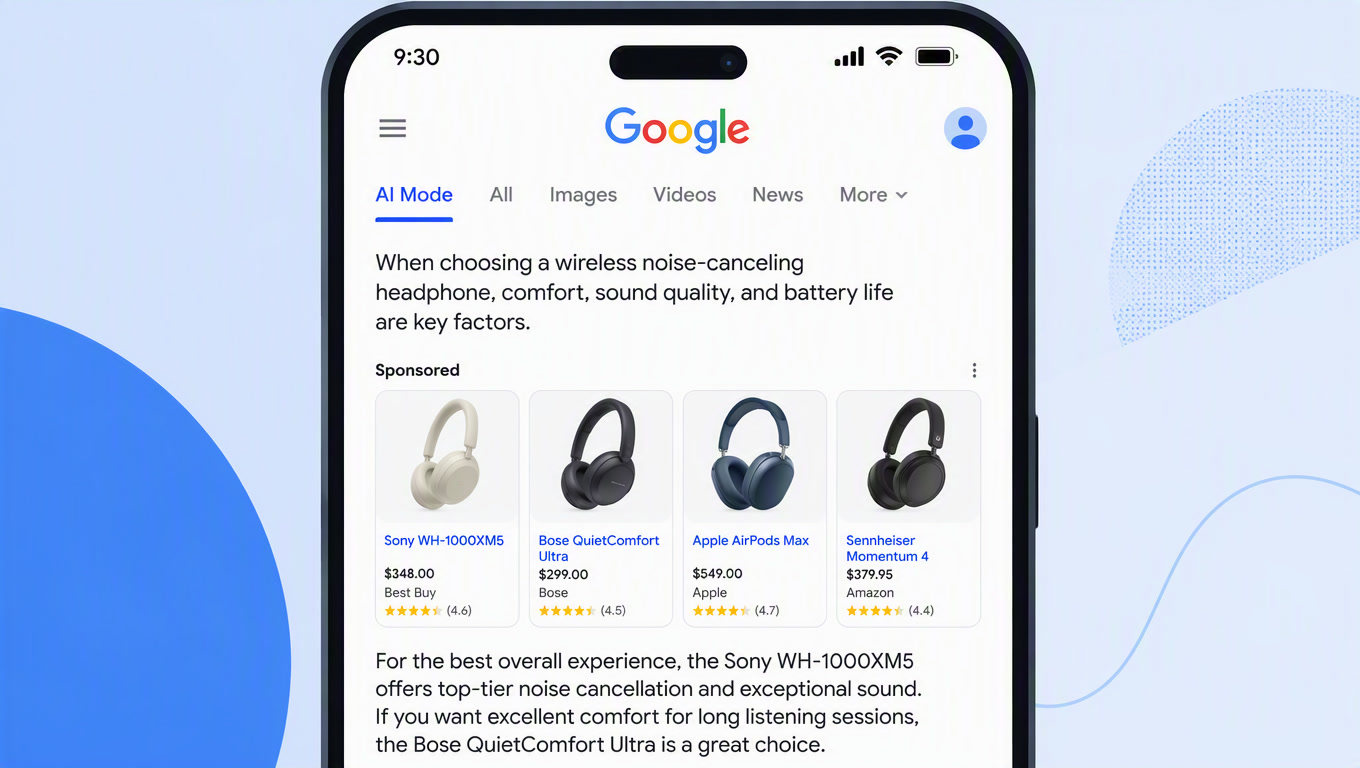
On October 15, Google said its AI responses now carry "continued and substantial increases" to inline links, shown higher up in the response more often. The same week, ChatGPT-attributed sessions in GA4 collapsed between 22% and 57% across industry dashboards — and everything points to people not stopping their visits, but the visits stopping to arrive counted. Two changes in seven days, in opposite directions: one tries to give you back the clicks, the other hides them from your dashboard.
If your ChatGPT chart halved this week, do not rewrite your GEO strategy yet. Here is what was announced, what broke, and how to read all of it with real numbers — including ours at mintec.co, which this week coincided suspiciously with the failure window.
What Google announced on October 15
Google's official post ("More ways to connect with the web from Search", signed by Hema Budaraju, VP of Product Management) lists five changes:
- More inline links, higher up. Links embedded in words or phrases of the answer itself, with "continued and substantial increases" per Google, now appearing higher in the response more often.
- Test: official pages at the top. For queries where there are "one or two official places on the web to complete a specific task or get the exact info you need", Google is testing a section above the response with those pages and context on why each link is useful.
- News carousels in more countries. Carousels of timely articles expand to more locations and languages and highlight your Preferred Sources. Google says Preferred Sources usage grew 7x since the start of the year.
- "Dive Deeper" with thumbnails. Links to related articles at the end of some responses now carry images and a more clickable design.
- Test: clickable creators on videos. Creator and publisher names on video results inside AI Mode now link to their Google Search profile — a Google page, not their site.
Two of the five are tests, the carousel expansion lists no countries or dates, and Google published no click data for any of them. Barry Schwartz put it plainly: this is the umpteenth time Google updates AI Mode links to encourage clicks, and the feeling is that those efforts keep failing. Google's play here is transparent, though: publisher pressure for traffic is not letting up, and Preferred Sources growing 7x is the first decent signal that someone is actually marking sources.
What this does not change: the mechanics of which page makes it into the answer. That is still structure, not link tuning — the citation order inside an AI Overview is won with the answer up top, named entities and dated data, not by waiting for Google to move hyperlinks.
The other half of the week: ChatGPT lost your tags
While Google polished its links, something less publicized happened. GPT-6 began rolling out on October 7 to paid plans and October 8 to Free and Go. From then on, according to four independent analyses converging, links inside ChatGPT answer text began opening without the utm_source=chatgpt.com parameter and without a referrer. In GA4, those sessions land in the Direct channel.
The numbers:
- LLM Pulse: about 46% fewer ChatGPT-attributed sessions between October 9 and 11, against the same days in the previous two weeks. Total traffic on those sites held steady, and Claude and Perplexity referrals did not move.
- Graphite (Ethan Smith): drops of 22% to 57% in ChatGPT-attributed organic sessions in GA4 starting October 9, which he estimates at about 45% against the previous baseline. Links in the Sources panel and shopping links kept the tag; inline links did not. 95% of mobile ChatGPT visits relied on the tag alone.
- Adobe (Cedric Huesler): across about 500 pages where ChatGPT drove at least 5% of visits, ChatGPT visits fell by roughly 31,000 a day between October 9 and 13 while Direct rose by about 26,000 a day. On two of every three pages that lost ChatGPT traffic, Direct rose. And the new Direct visitors behave like ChatGPT visitors: on mobile, the share seeing the consent banner (a first-visit marker) went from 36% to 44%, approaching the 55% Huesler sees for ChatGPT.
- Profound: the share of ChatGPT answers with at least one tagged source link fell from about 98% on October 8 to 66% by October 14. Over the same days, the Intelligent UI format (charts, comparisons, small tools) went from 2% to about 35% of collected answers.
- Tomek Rudzki: ChatGPT now puts a direct URL in 42% of responses, against 8-10% before. 54% of those URLs point to home pages. No tags, no referrers.
OpenAI's release notes from October 1 to 15 do not mention tracking. There is no official word on a fix.
What our own numbers say
We published our GEO measurement stack promising to report with our feet on the ground, so here are our own. Last 30 days at mintec.co: 164 sessions from LLM referrals — ChatGPT 119, Gemini 37, Claude 5, Perplexity 3. Last 7 days: 26 sessions — ChatGPT 13, Gemini 11.
The daily trend this week: 1 session on October 10, 0 on October 11, and between 2 and 8 per day since the 12th. At that volume the October 9-11 drop shows up — but with one and two sessions a day I prove nothing, and I would rather say that before you read it in a headline. What I can say: sessions came back after the 12th. And one more thing: ChatGPT still sends half the sessions (13 of 26 this week), but its share fell from 73% (the 30-day window) to 50%, while Gemini rose from 23% to 42%. That is the same cross-platform redistribution other panels reported.
And here is the data that does hold. Among the most visited pages from ChatGPT in 30 days, after the homepage, there are two contact pages: /es/contacto/ with 9 sessions and /contact/ with 7. ChatGPT does not send us readers skimming the blog: it sends people who asked about something and ended up looking for how to reach us — in Spanish or in English, depending on how they asked. That is the traffic hiding in your Direct this week — and the one that hurts most to lose track of, because it is the only one that pays bills. We had seen it before: real GEO traffic numbers show this channel's conversions look nothing like standard organic.
What to do this week, in order
- Annotate October 8 in GA4. Before anyone reads the ChatGPT drop as an audience loss, the annotation prevents the wrong conversation. Smith and Huesler explicitly recommend it.
- Read ChatGPT and Direct side by side, not separately. Filter the pages you used to receive from chatgpt.com and check whether Direct rose on those same pages and on your homepage. If they rose together, your traffic did not leave: it changed tags. (Rudzki measured that more than half of direct links now point to home pages — if your homepage shows up in Direct this week, suspect in good faith.)
- Treat the "official pages" test for what it is: your service page. If your business has a clear page with what you do, where you do it, how to contact you and how to book, that page is a candidate for the new section on task queries. Google is testing it for people who already want to act. Of the five changes, this one can send the most business, and the only one where you are not competing against a summary: you are competing to be the official place.
- Install the Preferred Sources button if you have not. With Preferred Sources growing 7x this year and now highlighted in news carousels, installation is still two lines of code.
- Do not make content decisions on broken data. Until tracking is fixed — or until your own numbers confirm the drop was real — Search Console's AI reports and manual citation checks remain your reliable signal, because they do not depend on the utm. AI Mode queries show up in the regular performance report, not the AI report, and that did not change.
What none of this changes
That the size of the prize stays small. More inline links do not grow the click pie: they distribute it better inside a panel where most visits do not end in a click. What does grow the pie is being the source the AI cites when someone asks — and that is still won with answer structure, not interface updates.
And an uncomfortable lesson for everyone measuring this: we depend on labels a third party can remove on a Tuesday. AI search attribution is fragile by design, and this week proved it. Whoever hangs their measurement off a single utm will repeat this scare every time a model updates.
Where the numbers come from
Google's announcement: blog.google, "More ways to connect with the web from Search", October 15, 2026, Hema Budaraju. Editorial coverage: Search Engine Land and 9to5Google (October 15), and Search Engine Roundtable (Barry Schwartz) for the detail that Google publishes no click data. The attribution drop: LLM Pulse (October 9-11 analysis), Graphite via Search Engine Journal, Adobe via LinkedIn, and the Profound and Rudzki figures compiled by SEJ. The mintec.co numbers come from our weekly LLM traffic report on GA4, run on October 17, 2026.
Frequently Asked Questions
What changed in AI Mode and AI Overviews on October 15, 2026?
Google announced more inline links inside responses, placed higher up more often; a test showing one or two official pages in a dedicated section at the top; news carousels expanding to more locations and languages that highlight Preferred Sources; related-article links with thumbnails; and a test making creator and publisher names on videos clickable, linking to their Google Search profile. Most changes have no published dates or country list, and two of the five are tests.
Why did ChatGPT traffic drop in GA4 in October 2026?
It is not a confirmed traffic drop: it is a measurement problem. After the GPT-6 rollout on October 7 and 8, links inside answer text began opening without utm_source and without a referrer, so those sessions land in GA4's Direct channel. LLM Pulse measured about 46% fewer ChatGPT-attributed sessions between October 9 and 11 while total traffic held steady, and Adobe measured Direct rising by almost as much as ChatGPT fell.
How do I track ChatGPT traffic now that the tags are gone?
Read ChatGPT and Direct side by side: annotate October 8 in GA4, compare the pages ChatGPT used to send against the rise in Direct on those same pages and on your homepage, where more than half of direct links now point. Search Console's AI reports and manual citation checks still work because they do not depend on the utm.