Zero-Click Search Hit 68%. Here's the Framework Your Content Team Needs Now
SparkToro's June 2026 study confirms 68% of Google searches end without a click. Stop optimizing everything for traffic — here's the click vs. citation content framework.
Zero-Click Search Hit 68%. Here's the Framework Your Content Team Needs Now
68% of Google searches now end without a click. That's not a prediction for 2030. It's the real number from the first four months of 2026, published by SparkToro using Similarweb clickstream data. The fastest acceleration of zero-click behavior in a decade.
If your team still measures everything in clicks and organic traffic, your metrics are explaining less and less of what actually matters.
This isn't another "zero-click is killing SEO" hot take. It's a practical framework for deciding which content to optimize for clicks and which to optimize for AI citations — because not everything deserves the same strategy.
The SparkToro study, beyond the headline
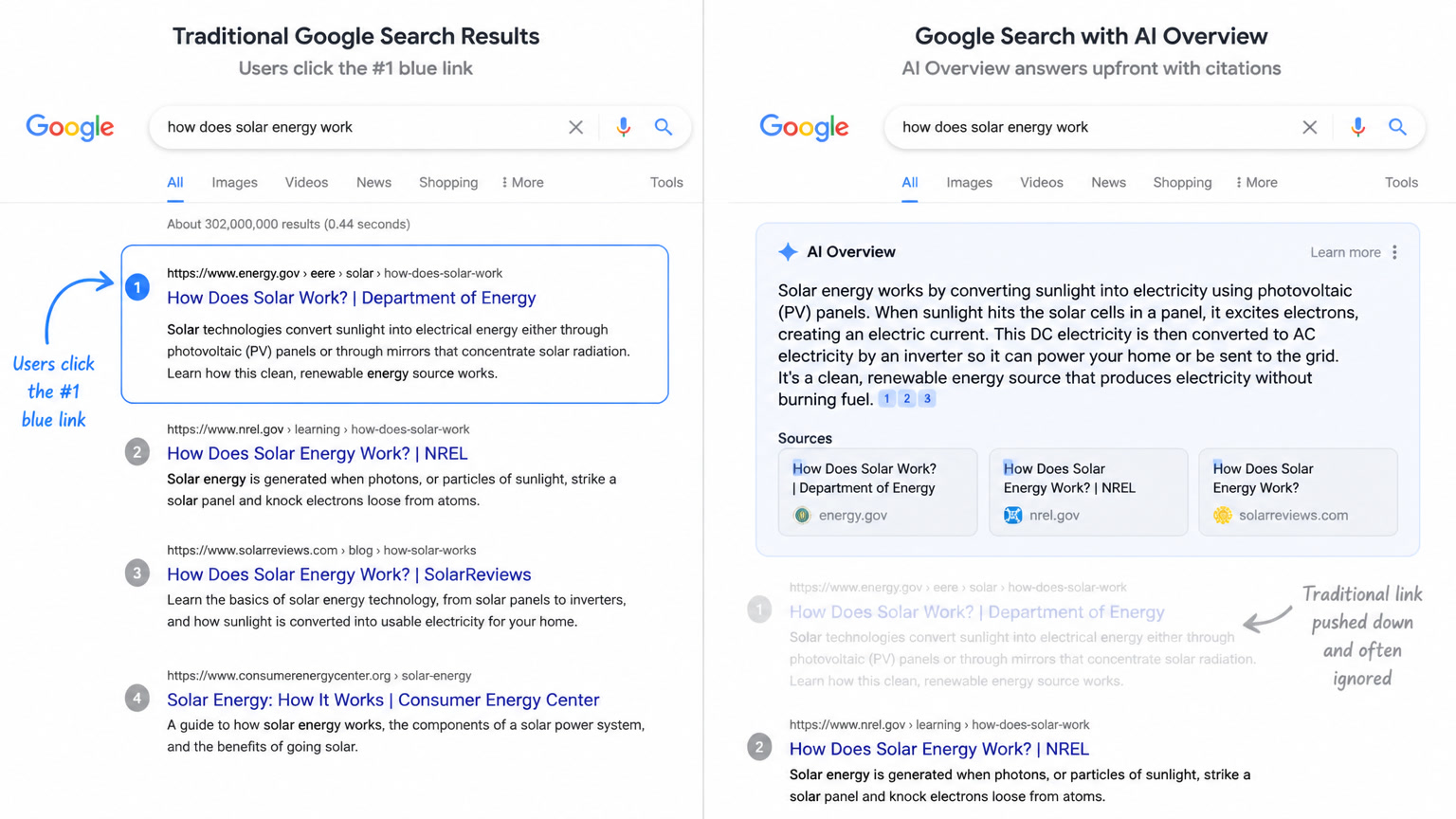
The headline number is jarring enough: 68.01% of US Google searches ended without a click in Q1 2026. That's up from 60.45% in 2024 and roughly 55% in 2023. The acceleration is driven by AI Overviews expanding, instant answers getting more comprehensive, and AI Mode rolling out globally as the default search experience in May 2026.
But the aggregate number hides the real story. Zero-click rates vary massively by search intent:
| Query Type | % Zero-Click | Still Worth Pursuing? |
|---|---|---|
| Informational | 74% | Rarely generates clicks |
| Local | 72% | Depends on format |
| Navigational | 68% | Only if you're the destination |
| Commercial investigation | 46% | Yes, high potential |
| Transactional | 31% | Yes, top priority |
The uncomfortable truth: if you're writing informational content and measuring success by organic traffic, you're fighting a current that gets stronger every month. That doesn't mean stop creating educational content. It means you need to measure its success differently.
The framework: Click content vs. Citation content
Here's how we classify every piece of content before we write it.
Click content
Goal: Get the user to leave Google and land on your site.
Use when:
- The intent is transactional or commercial investigation
- You have a unique value proposition that can't be replicated in a snippet
- You offer a tool, calculator, demo, or comparison engine
- The content requires interaction (subscribe, download, configure)
What to optimize:
- Meta descriptions that create unsatisfied curiosity ("the full framework includes 3 steps that don't fit in this preview")
- Product, FAQ, and HowTo schema for rich result eligibility
- Page speed and Core Web Vitals — if you win the click, don't lose it to load time
- Clear calls-to-action within the first few paragraphs
Citation content
Goal: Get Google AI Overviews, AI Mode, ChatGPT, Gemini, Claude, and Perplexity to cite your content as a trusted source.
Use when:
- The intent is informational or educational
- You're answering a direct factual question ("what is X?", "how does Y work?")
- The content is comparative or definitional
- You're building topical authority, not expecting direct clicks
What to optimize:
- Direct answers within the first 60 characters after each heading
- Question-and-answer structure with FAQ schema (it's the #1 signal LLMs use for citations)
- Sourced claims with links to authoritative data
- Tables and lists with concrete numbers, not generic opinions
- Visible publication date with periodic freshness updates
Why separating these two strategies matters
The most common mistake we see: treating every piece of content like it's supposed to generate clicks. The team writes an informational article, measures it by organic traffic, sees zero visits, and concludes "content doesn't work."
No — informational content works, just not in click metrics.
An article cited by AI Overviews across 20 different queries might drive zero direct clicks while positioning your brand as the authoritative source Google recommends. That authority carries commercial value even though it never shows up in Google Analytics. When a prospect searches "digital agency" after reading three AI Overviews that cited your content, that eventual click wouldn't exist without the citation work that preceded it.
How to measure each type
Click content metrics
- Clicks from Google Search Console
- CTR by position
- Organic traffic conversion rate
- Time on page and bounce rate
Citation content metrics
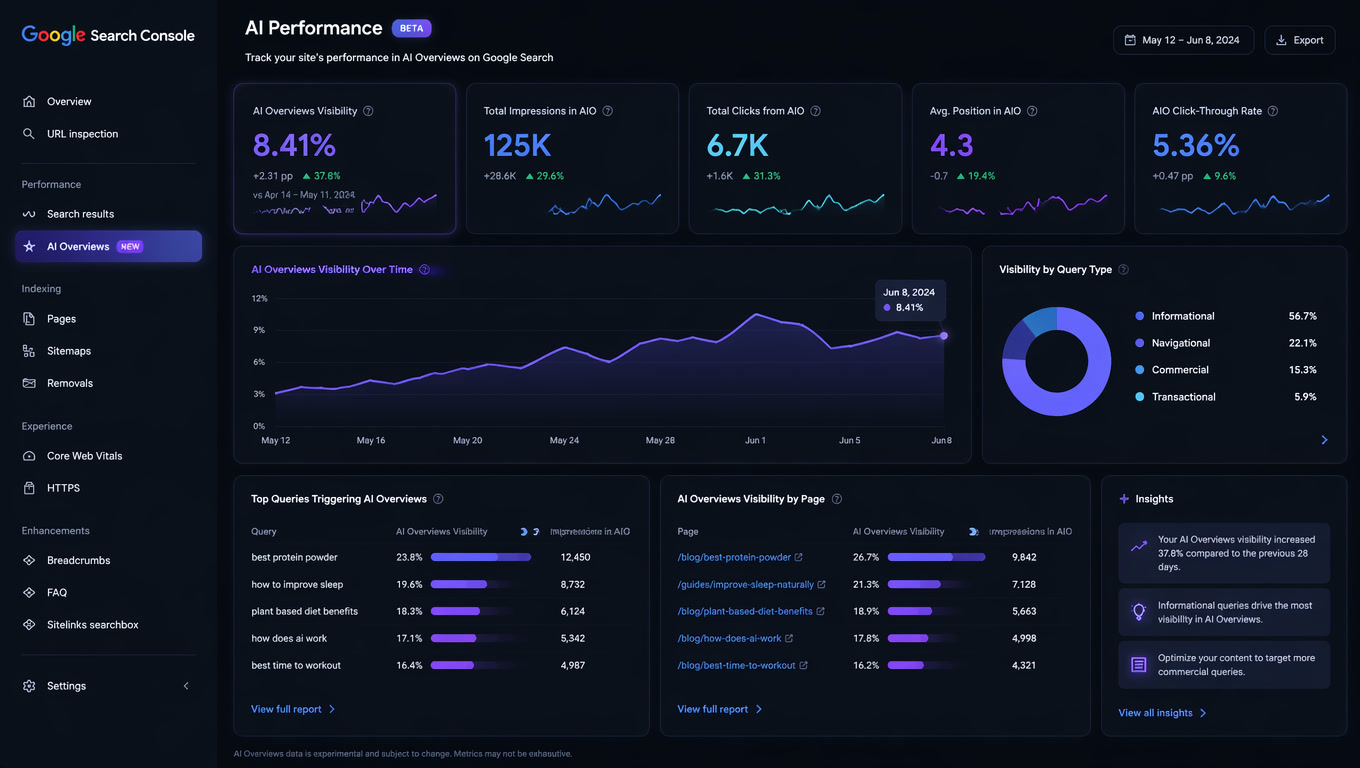
- AI Overviews and AI Mode impressions (GSC reports, launched June 2026)
- Citation frequency in ChatGPT, Gemini, Claude, and Perplexity responses
- AI-assisted search share of voice
- Queries where your content appears without generating a click
Google Search Console's June 2026 update added dedicated AI performance reports showing impressions, pages, countries, and devices for URLs appearing in AI Overviews, AI Mode, and Discover AI. It's the first real step toward measuring what was previously invisible. It still doesn't show clicks or specific queries, but it's a significant improvement over the data vacuum we had before.
What this means for your content plan
If you're planning content for the next quarter, here's the filter:
- Classify every topic by dominant search intent. Are people searching this to buy, compare, or learn?
- Define the piece's goal before you write it. If it's informational, your KPI isn't clicks — it's AI citation rate.
- Structure the content for its goal. Citation pieces need direct answers, FAQ schema, and concrete data. Click pieces need persuasive meta descriptions and clear CTAs.
- Review metrics every 30 days. If an informational piece generates zero clicks but appears in AI Overviews, don't kill it — it's working as brand authority. If a commercial piece generates zero clicks, that's a real problem to fix.
"SEO is dead" is lazy. The real story is that SEO in 2026 has two faces: one competing for clicks on commercial queries, and one competing for visibility inside AI-generated responses. Most teams only know how to play the first one.
Brands that learn both will have a head start their competition won't see coming.
Frequently Asked Questions
What percentage of Google searches ended without a click in 2026?
According to SparkToro's June 2026 study using Similarweb clickstream data, 68.01% of Google searches in the US ended without a click during the first four months of 2026. That's a 7.56 percentage point jump from 2024, making it the fastest two-year acceleration on record.
Which query types still drive clicks?
Transactional queries (31% zero-click) and commercial investigation queries (46% zero-click) still generate meaningful click-throughs. Informational queries (74% zero-click) and local queries (72% zero-click) are the most affected by zero-click search. Content strategy must adapt based on search intent.
How do you measure AI visibility if there are no clicks?
Google Search Console launched dedicated AI performance reports in June 2026 showing impressions from AI Overviews and AI Mode. You can also track citations in ChatGPT, Gemini, Claude, and Perplexity responses using monitoring tools. The goal shifts from 'traffic' to 'authority signals.'