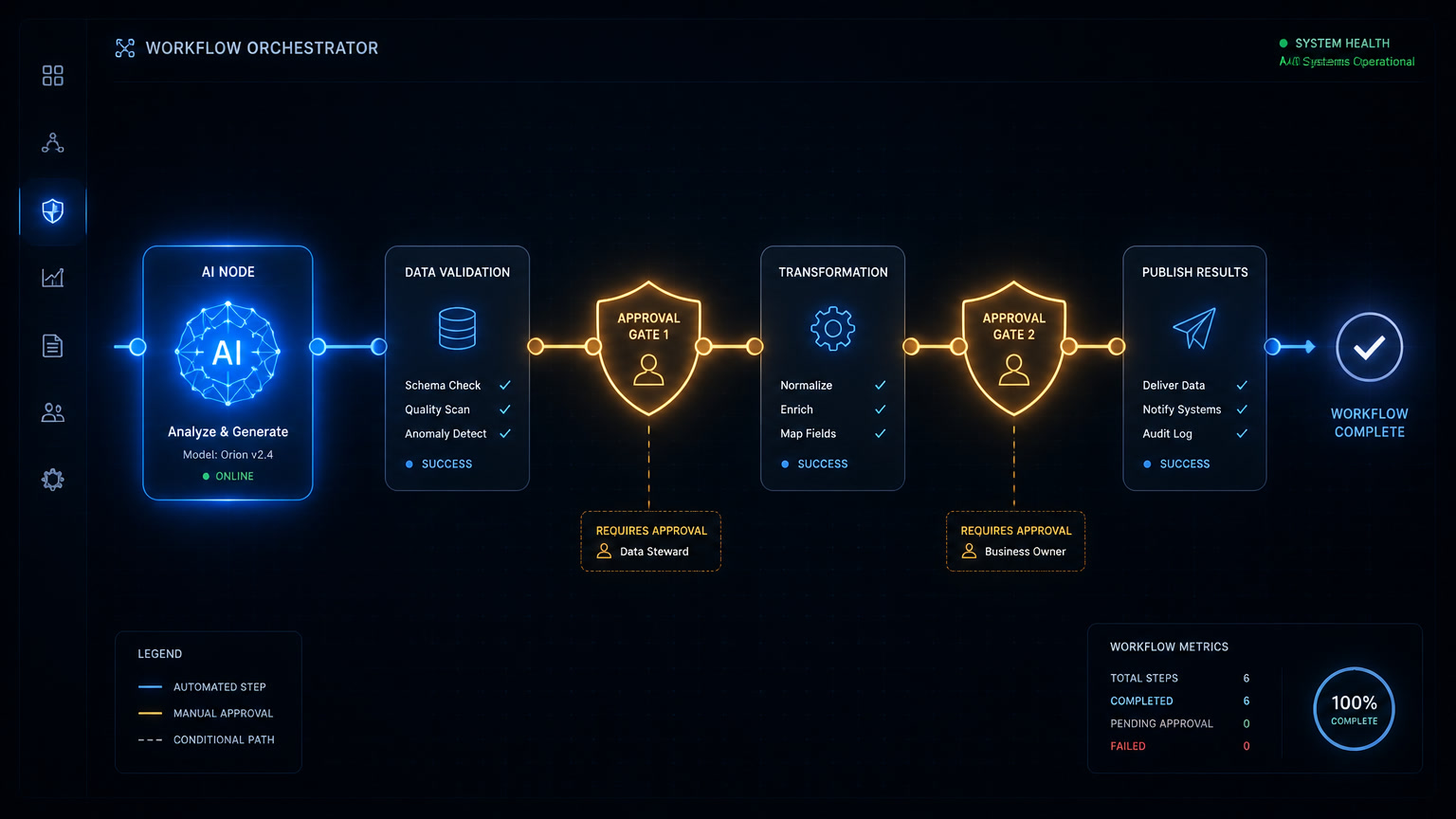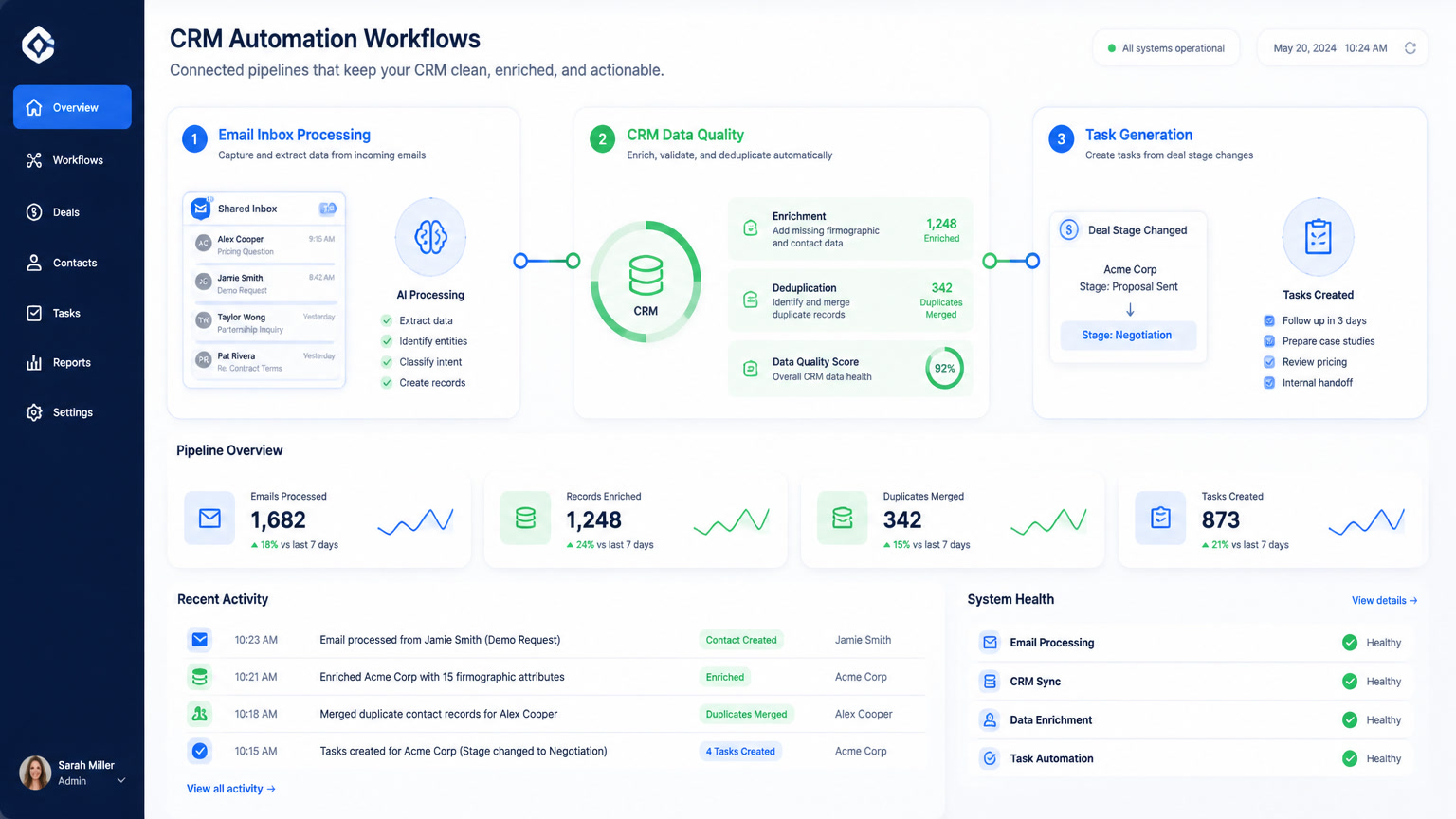


What actually drives the cost of a sales pipeline
Pipeline quotes rarely hinge on stages or seats. What moves the number is the billing unit, the steps each lead touches, and who owns data hygiene after launch.
Short answer: almost nothing in a sales pipeline quote is decided by the number of stages on the diagram. The number is decided by what the platform bills for, how many actions a single lead touches, how the workflow is triggered, and who owns the data after launch. Stages and seats are the parts that are easy to show in a proposal and the parts that move the price least.
That mismatch is not an accident. A stage diagram is legible to a buyer, so it becomes the unit of negotiation. The variables that actually set the invoice are invisible in a deck, so they go unexamined until renewal. If you are comparing quotes — especially across two agencies on different stacks — you are probably comparing the wrong column.
The five things that move the number
Every quote you receive is a sum of these five. Only one of them is usually written down.
| Cost driver | What it actually changes | The question that settles it |
|---|---|---|
| Billing unit | Whether a more complex workflow costs more per run | Does this platform bill per step, per task, or per workflow execution? |
| Actions per lead | The recurring multiplier on every run | How many actions does one lead trigger, end to end? |
| Trigger architecture | Cost per empty event, plus idempotency work | Is this started by a poll, a schedule, or an inbound request? |
| Model calls inline | The unit rate applied to a step | Where does an AI step sit in the path, and at which model tier? |
| Data hygiene ownership | The largest line nobody quotes | Who merges duplicates and fixes field drift in month six? |
Setup cost sits outside that table and behaves differently. It tracks integration surface — how many separate systems produce a lead, and whether they agree on field names — plus the number of exception branches someone has to build and maintain. That is the number that decides whether a fixed-price build is profitable or a loss. It is also the number a buyer is least equipped to estimate, which is why it is the one worth interrogating.
Billing unit is the whole argument
Two platforms, same workflow, very different invoice. The difference is documented by the vendors themselves.
Zapier counts a task for every successful action step. Its own documentation is explicit that triggers, filters and Paths do not count, and that failed actions are not billed. Its rate card sets a standard step at one task, an AI step at one, three or five tasks depending on model tier, and a Lead Router route at five tasks per lead. Read those numbers as design instructions: one AI classification step on a premium tier costs the same as five ordinary steps.
n8n bills per execution, and an execution is one full run of the workflow no matter how many nodes it contains. The n8n pricing page states the trade plainly — unlimited steps, and the count does not change with complexity.
Put the two in one line:
- Step-billed: monthly cost ≈ runs × actions per lead × unit rate.
- Execution-billed: monthly cost ≈ runs × unit rate.
Same lead, same outcome, different exponent. Eight actions per lead is eight units on one platform and one unit on the other. That single difference explains most of the gap between two quotes that both claim to automate the same pipeline — and neither quote will say so.
The nuance worth keeping: on a step-billed platform, a failing integration is cheap in tasks and expensive in trust, because the failure is free. On an execution-billed platform, the same failure is free too, but a workflow that half-runs still counts. Neither billing model charges you for being broken. Both charge you for being busy.
The cost that grows when marketing succeeds
Lead volume is the only variable in the equation that your business controls from the outside. Seats are fixed, stages are free, integrations are one-off — but every additional lead is another run.
This is where pipeline projects quietly fail commercially. A retainer scoped against last quarter's inbound looks fine until the campaign that was supposed to feed it actually works, and the automation's run-rate doubles while the fee does not. The agency absorbs it, or the client gets a mid-cycle conversation about volume, or — most commonly — the workflow gets trimmed until it stops breaking. The trimming is invisible. It shows up months later as leads that stopped being routed.
If you are buying this work, ask for the volume assumption in writing. If you are selling it, put it in the scope. A pipeline priced without a volume clause is priced on a guess that one of you will pay for.
Polling, schedules and webhooks are not free in the same way
Triggers look interchangeable and are not. Zapier does not charge for polling at all; its docs note that a Zap checking an app every two minutes completes over twenty thousand polls a month at no cost. n8n counts differently: its execution documentation says a schedule trigger counts one execution every time it fires, a polling trigger counts only when it finds new data, and a webhook trigger counts every inbound request that reaches it — including a request with an empty body.
That last clause matters operationally. A webhook that absorbs bot traffic, retries and malformed pings bills you for each one, while a poll over the same source bills for none of them. The cheaper choice therefore depends on which platform you picked, and on whether the source system can be trusted to fire only when something real happened.
The real cost of the trigger choice is not the billing, though. It is idempotency. Polling hands you the same record more than once and makes your workflow responsible for not acting twice. A webhook hands you events you have to authenticate. Either way, someone has to decide what "already processed" means — and that decision is a build task that rarely appears on a stage diagram.
Where the model sits in the path
An AI step is priced like a step and behaves like a decision. Placement is therefore a cost decision, not just a quality one.
Put a model at lead intake and every inbound record pays the rate, including the obvious spam. Put it after the deterministic filters — has a work email, has a budget band, matches a target segment — and the same model only sees the leads that survived, at a fraction of the run-rate for identical output quality. The workflow gets one more branch and a materially smaller bill.
The inverse is what tends to get sold: an agent at the front of the pipeline because it demos well, with rules behind it doing the actual routing. That inverts the cost curve and the reliability curve at the same time. In our experience scoping these builds, the placements that survive contact with a real lead flow are the boring ones — deterministic first, probabilistic second.
The line item nobody quotes
Data hygiene is the largest unbudgeted cost in almost every pipeline project, and it is not a technical problem.
Three things break after launch, in this order. Records duplicate because two sources describe the same person with different capitalisation. Fields drift because a form changed upstream and nobody updated the mapping. And ownership evaporates because the person who built the workflow changed roles.
None of those are automation failures. They are the reason a pipeline that worked in month one reports nonsense in month six, and no vendor prices them because they are not part of a build. The cost lands as internal labour, absorbed silently, until someone commissions a cleanup and discovers the real number.
The cheapest structural fix is to assign it before launch — one named owner, a cadence, and a rule for what counts as a duplicate. If a proposal has no line for this, it is not that the cost is zero. It is that the cost moved to you. The same dynamic, one layer down, is why dirty data quietly disables CRM automation long before anyone blames the tool.
What to ask before you sign
Six questions, all answerable in the first call by anyone who has actually built one:
- Which billing unit applies, and what is the cost per 1,000 leads at this step count? Normalise before you compare.
- How many actions does one lead trigger end to end? The multiplier, stated as a number.
- How is this triggered, and what happens on a duplicate event? Idempotency has an owner.
- Where does a model call sit, and at what tier? Placement is a cost decision.
- What is the volume assumption, and what happens at double it? The clause that protects both sides.
- Who owns data hygiene in month six? A name, not a role.
A quote that answers all six is comparable to another quote that answers all six. A quote that answers none of them is a number with a diagram attached.
The rule
Judge a pipeline proposal on the billing unit and the actions per lead, not on the stage count. Then judge it on whether anyone has been named to own the data afterwards. Those three answers predict the invoice far better than the drawing, and they are the only parts of the proposal that will still be true in a year.
Two related failure modes are worth reading next: why disconnected automation costs more than the licence, and what response-time SLAs actually change once the routing works.
If you want the scoping conversation that produces those six answers — which drivers apply to your stack, what the volume assumption should be, and where the model belongs in the path — that is the work described on our sales pipelines service page. Bring your current lead sources and a month of routing history. The numbers come out of those, not out of a stage diagram.
Frequently Asked Questions
Does a longer sales pipeline cost more to automate?
No, not by itself. Stages are metadata on a record; an automation bills per action executed, not per stage defined. What a longer pipeline does add is exception branches — every stage transition that can stall needs a rule, and eventually a human. A long linear pipeline is cheap to run. A short pipeline where every stage has a conditional exit is not, because each branch is a separate path to build, test and monitor.
How do I compare two pipeline automation quotes built on different platforms?
Normalise both to the same unit: cost per 1,000 leads at an identical step count. That means platform fee plus (leads × actions per lead × unit rate). Ask each vendor to price the exact same workflow at 1,000 leads a month. A quote that cannot be expressed that way is an estimate, not a comparison.
Why does an automated pipeline get more expensive as lead volume grows?
Because the billing unit on every major automation platform is tied to how often the workflow runs — a task or an execution — and lead volume is what makes it run. Seats are fixed. Runs are not. A retainer signed without a volume clause either erodes the agency margin or quietly throttles the automation.