The invisible AI search loop: breaking the cold start for a new product
New product, no traffic, no AI citations: the loop breaks with entity groundwork and third-party mentions, not more content. The citation bootstrap ladder we use at Mintec.
The invisible AI search loop: breaking the cold start for a new product
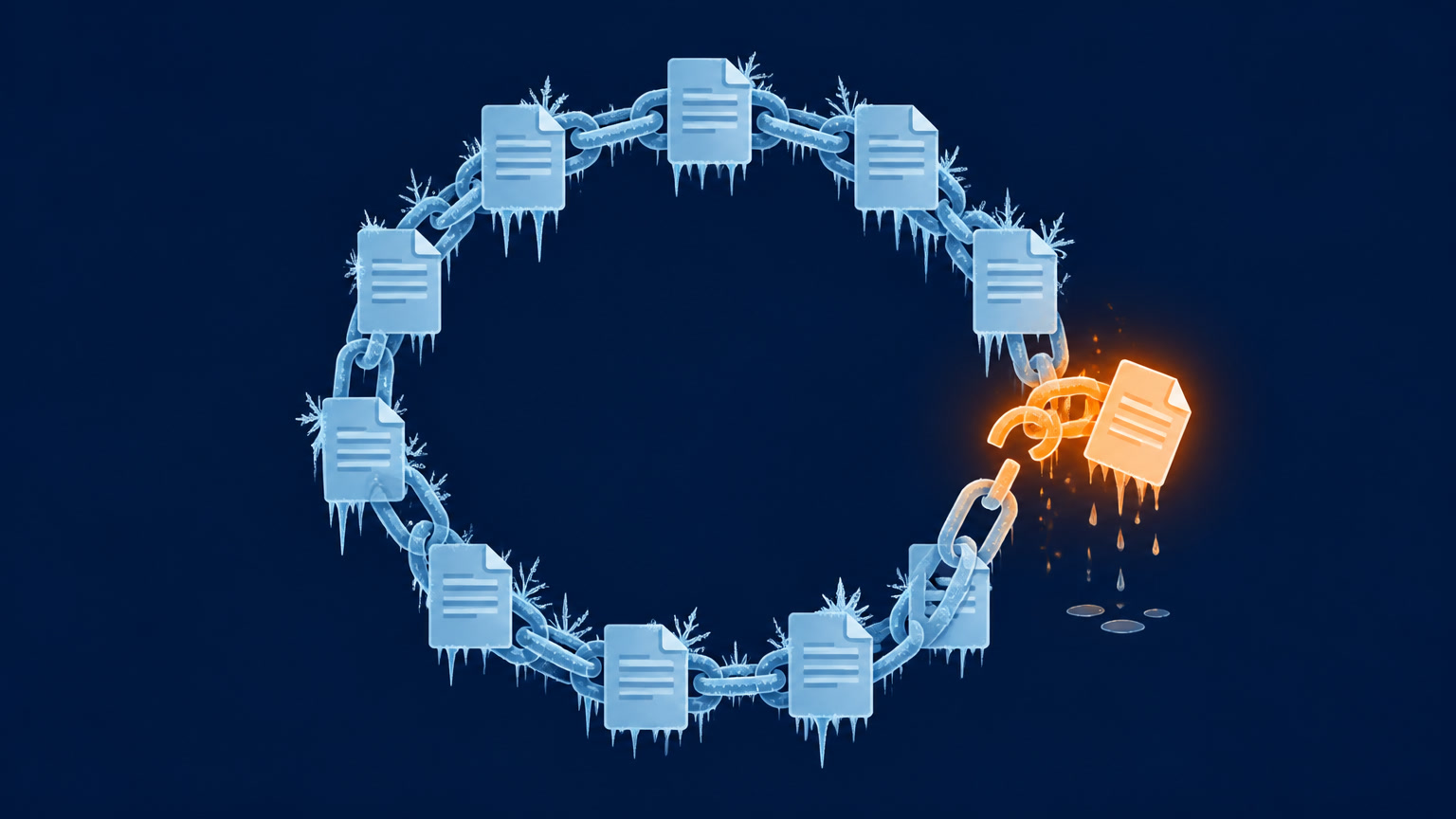
A brand-new product can break out of the AI search loop, but not by publishing more content on your own site. The loop breaks when third parties start mentioning you in places AI engines actually read: structured directories, listicles that are already cited, Reddit, GitHub, niche forums. Content is still necessary. It just stopped being the cause.
The r/SEO thread "How to break the AI search / GEO loop for your new product?", posted in August 2026 with 37 comments, describes the cycle exactly. The team has a brand-new enterprise software product, a bootstrap budget, a semantic, crawlable website, and a consistent social posting routine. Still: "because the AI won't recommend us, we don't get organic traffic; because we don't get traffic, there's no online buzz; and because there's no buzz, the AI continues to ignore us." And they ask whether paying more is the only way out.
It is not. But the way out is also not what most GEO guides are selling.
Traffic is a lagging indicator, not the raw material
The most useful answer in the thread comes from someone who has done GEO in fintech for years, and it flips the framing. Traffic is not the input models use. What AI engines cite are third-party surfaces: review platforms, "best of" listicles, community threads, structured directories. Traffic is the outcome, not the raw material. If that holds for your category, the cold start breaks without being popular first.
It is the same reading as Google's official guide to optimizing for generative AI features (Search Central, May 2026): optimizing for AI search is an extension of SEO fundamentals, not a separate discipline with its own tricks. It also lines up with the 5WPR and BrandCited research we covered in the citation gap post: the overlap between Google's top 10 organic results and the sources AI engines cite collapsed from roughly 70% in 2024 to under 20% by April 2026. The two discovery systems no longer resemble each other.
For a new product that is an uncomfortable conclusion: your flawless website will not get you out of the loop. It is necessary, but models will not cite it on its own. It needs external corroboration.
What teams optimize vs. what models cite
Most cold-start teams repeat the usual checklist and wonder why nothing moves. The problem is they optimize where models are not looking.
| What teams optimize | What AI engines cite |
|---|---|
| Their own site, blog, semantic content | Structured directories, already-cited listicles, community threads |
| Presence on LinkedIn and Instagram | Reddit, GitHub, niche forums, YouTube |
| Share of voice in GEO tools | Third-party mentions + presence on target prompts |
| Schema and FAQ on their own site | Corroboration: other people talking about you |
The practical consequence: content effort goes to the wrong places. Consistent social posting is probably the lowest-yield channel here, because LinkedIn and Instagram mostly do not sit inside the retrieval corpus. Reddit, GitHub, Stack Overflow, and review sites do.
The citation bootstrap ladder
At Mintec we split the cold start into four rungs, in strict order. Each one unlocks the next.
1. Resolve the entity before writing content. A model has to know what you are before it can recommend you. That means Organization schema with sameAs pointing to every profile you own, identical naming and description everywhere, and Wikidata if you qualify. It sounds administrative. It is the rung most products skip, which is why they stay stuck without realizing it.
2. List the product where models actually read. G2, Capterra, Software Advice, AlternativeTo, Product Hunt, Crunchbase, plus whatever directories your industry runs. This is structured data with high crawl rates, and it is often the direct source behind AI answers in software categories. Simple exercise: run your category's queries in ChatGPT and Perplexity and write down which sources the answers come from. That list is your signup checklist.
3. Get third-party mentions on surfaces that are already cited. Email the authors of the listicles AI engines already cite. Offer free access, a demo, and a quote with a real number. Show up where retrieval lives: Reddit, GitHub, niche forums. Models are obsessed with Reddit and GitHub right now, and a genuine discussion on those platforms enters the corpus far faster than any page of yours. The thread itself backs this: real conversations there get picked up by crawlers quicker than anything you post on your own blog.
4. Publish data only you can produce. Proprietary benchmarks, transparent pricing, survey results from your design partners. It is the highest citation-rate tactic we have seen, because it gives models specific numbers they cannot source anywhere else. One table of your own data beats ten articles repeating someone else's.
The right metric when you are cold
A GEO tool showing 0% share of voice is not a failure signal. It is the starting point. Share of voice is the wrong metric for a product with no mentions, because it measures the outcome when there is no input yet. What to track in the cold phase:
- Number of third-party sources mentioning you. Count by hand, a spreadsheet is enough. That number is what moves when the work is working.
- Presence on the prompts that matter. Run your category's five to ten comparative queries in ChatGPT, Gemini, and Perplexity weekly, and log whether you show up as a source. You are not trying to appear everywhere. You are trying to appear where a buyer would decide.
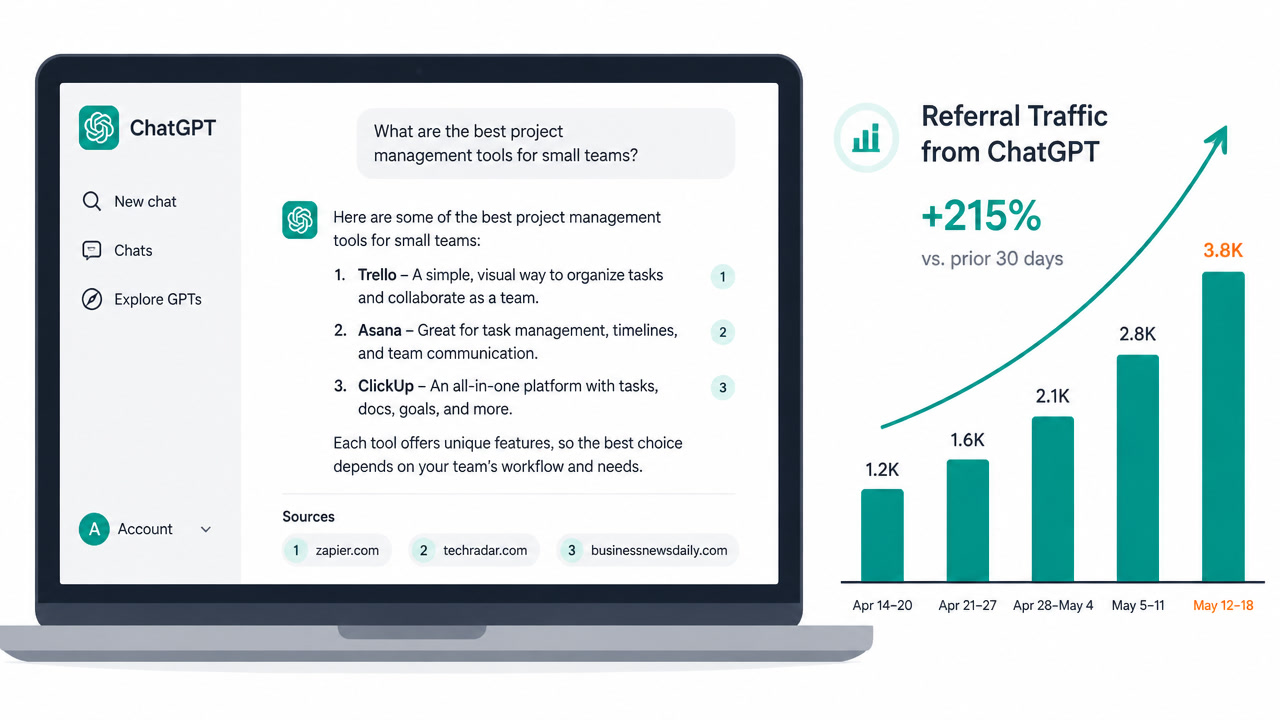
Once visits start arriving, measure with the official tools: the AI performance reports in Search Console and referral traffic from chatgpt.com, claude.ai, and gemini.google.com. We wrote about measuring GEO performance and tracking ChatGPT citations with real data from mintec.co.
Sell first, let GEO follow
The most honest line in the thread comes at the end: the cold start breaks when real people start talking about you in citable places. Ten customers who leave reviews and authorize a case study are worth more than a hundred optimized pages. For new enterprise software, the actual order is sell first, turn those customers into reviews and studies, and let GEO follow.
We agree, with two additions. First, sales do not wait for the entity, but reviews depend on it. If the model cannot resolve who you are, even your G2 reviews will not connect the dots. Rungs 1 and 2 run in parallel with sales, not after them. Second, do not pay to "break the loop". Some paid directories work as a channel, but the loop is not purchased, it is broken with real corroboration. If someone promises ChatGPT citations in 30 days, read how to evaluate a GEO agency before signing anything.
The 12-week plan on a bootstrap budget
If we ran this from zero with little money, the order would be:
- Weeks 1-2: full entity setup and signups on every structured surface from rung 2, with consistent naming across all of them.
- Weeks 3-6: outreach to 20-30 authors of listicles already cited in your category. Offer: free access, a demo, and a quote with a number.
- Weeks 3-12: one proprietary data piece per month: a benchmark, a survey, a pricing analysis. Table format with a direct summary, which is the format AI engines cite most.
- Week 4 onward: presence in two communities where your category's conversation lives. Context, not links.
- Week 6 onward: your first customers leave reviews on G2 or Capterra and authorize a case study. That material is what models cite when they compare.
Before you start, make sure your case actually needs this. For a local business the order is different, as we covered in should a small business optimize for AI searches. For a new product in a category where AI recommends software, this is the sequence.
The loop breaks from the outside, not the inside. Nobody will cite you because your website is perfect. They will cite you because other people started talking about you in places models read. Start there, measure with third-party sources, and traffic arrives later, as the lagging indicator it always was.
If you want to see how this works in real projects, our GEO implementation process starts with the same diagnosis: entity, structured surfaces, mentions. Content comes after, only when there is something to corroborate.
Frequently Asked Questions
What is the AI search loop for a new product?
It is the cycle where a product with no reputation never appears in ChatGPT, Gemini, or Perplexity answers because nobody mentions it; because nobody mentions it, it gets no traffic or buzz; and because there is no buzz, AI engines keep ignoring it. The problem is not the content. It is the absence of third-party signals the models can cite.
How do you break the GEO cold start on a small budget?
In order: (1) resolve the entity: Organization schema, sameAs pointing to every profile you own, identical naming everywhere, Wikidata if you qualify; (2) list the product on the structured surfaces models actually read: G2, Capterra, AlternativeTo, Product Hunt, Crunchbase, and your industry's directories; (3) get third parties to mention you: authors of already-cited listicles, Reddit, GitHub, niche forums; (4) publish data only you can produce: benchmarks, transparent pricing, surveys. The success metric is not share of voice. It is the number of third-party sources mentioning you plus your presence on the prompts that matter.
Why won't AI engines cite a new product even with a flawless website?
Because citation is built on corroboration: models prefer sources that already exist and that others reference. Your own page can describe your product perfectly, but to the model it is an unsupported claim. Third-party mentions, structured directories, and data only you can publish are the missing support.