
How to Learn AI Automation from Scratch: The Order That Actually Works
Learning AI automation isn't about stacking courses — it's process diagnosis first, one platform deep, then the AI layer. The 4-phase plan we use to train automation talent at Mintec.
Learning AI automation isn't about stacking courses — it's about learning to diagnose business processes first, mastering one platform, and only then adding the AI layer. That order —diagnosis, tool, AI, delivery— is what separates people who end up shipping production workflows from people who collect certifications for a year without launching anything. This article is the 4-phase plan we use at Mintec to train automation talent, with real demand data, salary benchmarks, and the exact test we run when hiring.
The demand is real: everyone wants to learn, almost nobody can hire
On August 7, 2026, someone posted in r/automation: "Thinking of creating a WhatsApp group for people who want to learn AI Automation from scratch." The thread pulled 28 upvotes and 50 comments in days. It's not an anecdote: searches for "how to become marketing automation specialist", "crm automation jobs", and "marketing automation specialist salary" have been climbing month over month.
The numbers behind it are structural. ManpowerGroup's 2026 Global Talent Shortage Survey (39,000 employers across 41 countries) found that 72% of employers can't find the skilled talent they need — and Lightcast's February 2026 analysis concluded this labor scarcity is structural, not cyclical.
The market pays for this skill. In the US, a marketing automation specialist earns between $67,000 and $94,000 per year depending on the source (Salary.com: $67,369; ZipRecruiter: $73,351; PayScale: $75,275; Glassdoor: $94,000 — all 2026). Workflow automation specialists average $76,465, with the top 10% above $110,000 (Jobicy). CRM automation listings on ZipRecruiter range from $91,000 to $169,000. For Latin America this is a direct opportunity: the same profile, hired remote for US or European clients, earns 3-5x local rates — and regional agencies (ours included) have spent months hunting for people who can actually build and maintain automations.
The core mistake: learning tools instead of learning processes
Here's our unpopular opinion, aimed squarely at course sellers: about 80% of what's taught as "AI automation" is tool trivia. Knowing which button to click in Make, or memorizing 40 n8n nodes, doesn't make you an automation builder. It makes you someone who knows how to click buttons.
We've interviewed dozens of candidates at Mintec with 8, 10, 12 certifications. The question that kills them isn't technical — it's: "draw the flow of a lead from WhatsApp to payment, and tell me where time gets lost." Most can't. They can't map a process, can't spot friction points, can't tell a deterministic task from one that needs judgment. They know tools; they can't diagnose.
That blind spot is exactly what we documented in how to spot operational bottlenecks: most operational problems aren't tool problems, they're process problems. Learn to see processes first and tools become details. Learn tools first and every new client shows you a different problem you can't solve.
The 4-phase framework for learning from zero
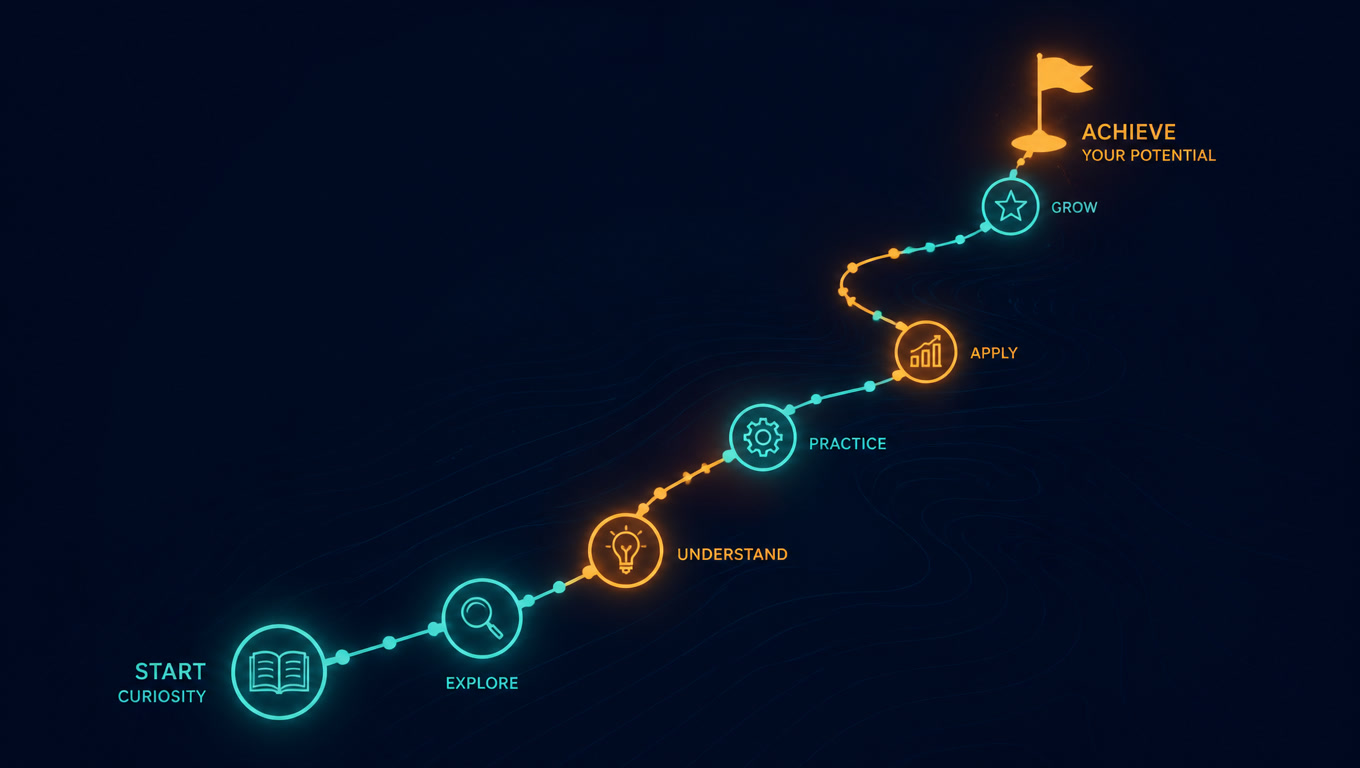
This is the order we use with everyone we train at Mintec. Each phase has a concrete deliverable; you don't move on until it's done.
| Phase | What you learn | Deliverable | Time |
|---|---|---|---|
| 1. Diagnosis | Map processes, spot bottlenecks, separate deterministic tasks from judgment calls | Document 3 real processes (your job, a business you know, or your own) with timings and friction points | Weeks 1-2 |
| 2. One platform, deep | n8n or Make: webhooks, variables, errors, conditional logic, integrations | 10 workflows running in production (even toy ones) | Weeks 3-6 |
| 3. The AI layer | LLM APIs, structured output, classification, extraction, when NOT to use AI | 2 AI workflows: one classifier, one data extractor | Weeks 7-10 |
| 4. Delivery & monetization | Scoping, documentation, handover, pricing, maintenance | One paying client or one internal workflow deployed in your company | Weeks 11-12 |
Phase 1 — Diagnosis (weeks 1-2). Don't open any platform yet. Take a real process: how a restaurant takes orders, how a clinic schedules appointments, how your company follows up on quotes. Draw it, time every step, mark where work repeats and where information gets lost. If you can't explain a process in a diagram, you're not ready to automate it.
Phase 2 — One platform, deep (weeks 3-6). Pick one platform — for Latin America, n8n or Make rather than Zapier as your base, for cost reasons — and don't switch while learning. Build 10 workflows: form to spreadsheet, lead to CRM, reminders, daily reports, auto-replies. Every workflow should run in production and break, because your first 20 errors teach you more than 20 tutorials. If you need help choosing, our Make vs n8n vs Zapier comparison saves you the month we lost testing all three.
Phase 3 — The AI layer (weeks 7-10). Connect an LLM via API: classify inbound messages by intent, extract data from emails or PDFs, summarize conversations, draft replies. The typical mistake in this phase is using AI for everything; learn to recognize when a simple rule wins (spoiler: almost always when the input is predictable). That judgment call is exactly the framework in when NOT to use AI, and our AI agents in Make vs n8n breakdown shows where each agent type lives.
Phase 4 — Delivery & monetization (weeks 11-12). 90% of people learning automation die in phase 3 because they never deliver anything to anyone. Get your first real case: a local business, a friend's company, your own department. Write the scope, build, document, deliver, and charge. The playbook we use for selling AI chatbots to local businesses applies to general automation work — same discovery, same pricing, same recurring-revenue structure.
What to learn and what to skip
| Learn | Skip |
|---|---|
| Process mapping and flow diagrams | "Advanced prompt engineering" courses (they change every 6 months) |
| Webhooks, APIs, variables, error handling | Listicles of "the 50 best AI tools" |
| Structured LLM output (JSON, not prose) | Learning 5 platforms at the same time |
| Data hygiene: dedup, cleaning, formatting | "Automate everything" as a philosophy; automate processes, not chaos |
| Real costs: API credits, tasks, nodes | Perfectionism: 20 mediocre workflows > 1 perfect one |
A note on "automate everything": 90% of automation projects fail, and almost always because they automated processes that weren't ready (we broke that down in why automation projects fail). Learn to say "this shouldn't be automated yet" — it's the sign you actually understand the craft.
What we test when we hire
If your goal is to work in this (agency, in-house, or freelance), here's what actually gets evaluated. Our hiring test has four parts:
- Map this process (30 min): we give you a real client process —quote to approval— and you draw it with timings and friction points. Tool choice doesn't matter.
- Decide what to automate (15 min): from your map, pick the 3 highest-return points and justify why there and not elsewhere.
- Build it (48 h): using any platform, deliver a working workflow that solves one of those points. Working means it runs, not that it's a diagram.
- Explain the failure modes (15 min): what happens if the CRM is down? If a field arrives empty? If the API returns garbage? People who pass this test didn't memorize nodes — they understood the system.
If you're self-taught, run the same test on yourself every month. If you can't explain the failure modes of your own workflows, you haven't finished phase 2.
5 portfolio projects that open doors
Certificates don't open doors; visible projects do. These five cover the patterns every business needs and any interviewer recognizes:
- Multi-channel lead capture — form, WhatsApp, and email → enrichment → CRM → team notification. (Yes, it's the pattern from AI lead generation agents with n8n.)
- Invoice extraction — PDF → OCR/LLM → validated spreadsheet with human review.
- Transactional notifications — payment received, order shipped, appointment booked, via WhatsApp and email.
- Automated weekly report — CRM + sales + hours → summary in Looker Studio or a metrics email.
- Form → ticket → follow-up — capture, assignment, SLA reminders, and escalation.
Publish the workflows (even a 60-second video showing input and output), document each one's monthly cost and the time it saves. That evidence beats any course on your CV — and it's exactly what we look for when hiring for our automation and chatbots service.
The 90-day plan in one table
| Week | Focus | Week's goal |
|---|---|---|
| 1-2 | Diagnosis | 3 processes documented with timings and friction |
| 3 | Platform | First workflow in production (simplest possible) |
| 4 | Platform | 4 workflows total, 2 with errors resolved |
| 5-6 | Platform | 10 workflows total; you can explain failure modes |
| 7-8 | AI | Intent classifier running on an LLM |
| 9-10 | AI | Data extractor (PDF or email) with human review |
| 11 | Delivery | First real case: written scope and built workflow |
| 12 | Delivery | Documented, delivered, paid — or deployed internally |
By day 90 you'll have 10+ workflows running, 2 with AI, one real case delivered, and a demonstrable portfolio. That puts you ahead of 95% of people who've spent a year "studying automation."
Why most people quit halfway
Three patterns, in order of frequency: switching platforms every two weeks (every switch resets the learning curve), skipping diagnosis (they build elegant workflows that solve the wrong problem), and never delivering to anyone (no real case means no feedback, and no feedback means no improvement). All three are prevented by the same mechanism: mandatory deliverables per phase. If after 4 weeks you don't have 10 workflows running, automation isn't hard — you're doing something else, probably watching tutorials. Stop. Open the platform and break something.
Frequently Asked Questions
How long does it take to learn AI automation from scratch?
With the right order, you go from zero to building production workflows in 90 days: 2 weeks of process diagnosis, 4 weeks deep in one platform (n8n or Make), 4 weeks on the AI layer, and 2 weeks of delivery. What stretches the process to a year is learning tools without learning to diagnose processes.
Do I need to know how to code to learn automation?
No. Modern platforms like n8n, Make, or Zapier work with visual nodes, and AI APIs connect without writing code. What you do need: webhooks, variables, error handling, data structures, and conditional logic. Under 10% of the workflows we ship at Mintec require code.
How much does an automation specialist earn?
In the US, marketing automation specialists earn between $67,000 and $94,000 a year depending on the source (Salary.com, Glassdoor, PayScale, 2026); workflow automation specialists average $76,000 with the top 10% above $110,000. CRM automation job listings on ZipRecruiter range from $91,000 to $169,000. Remote for US or European clients, the same profile earns 3-5x local Latin American rates.