
5 Real Marketing Automation Examples with Before-and-After Metrics
Five marketing automations with real before-and-after metrics. Concrete implementation data, costs, and results you can replicate for your business.
Most marketing automation articles promise extraordinary results but don't show real numbers. This article does: five automations with measurable before-and-after metrics, exact costs, and mistakes you won't find in any press release.
This isn't a tool list or a "top 5 platforms" roundup. Each example includes a measurable before state, a concrete automation process, an after state with verified metrics, and the real implementation cost. At the end, a framework for deciding which to automate first based on your situation.
Example 1: Automated lead response — from 6 hours to 90 seconds
The problem
A Mexico City IT consultancy received 15-25 leads per month from its web form. The sales team responded when they could: sometimes in 20 minutes, sometimes the next day. According to Artemis GTM data, leads waiting more than 5 minutes lose 62% of conversion probability compared to an immediate response.
The automation
We built a workflow in n8n connecting the web form to Clientify, following the CRM workflows with n8n we'd already documented. When a lead arrives, the system automatically classifies it (company type, size, stated urgency), assigns a priority score, and sends a personalized WhatsApp or email response in under 90 seconds. If a lead crosses a priority threshold, the responsible rep gets a direct calendar task.
Metrics
| Metric | Before | After | Change |
|---|---|---|---|
| Average response time | 6.2 hours | 90 seconds | -99.8% |
| Lead-to-demo conversion rate | 8% | 22% | +175% |
| Leads responded to in <5 min | 12% | 94% | +683% |
| Team hours/week on manual follow-up | 11h | 3h | -73% |
Cost
Stack: self-hosted n8n ($10/mo) + Clientify ($49/mo) + WhatsApp API (~$30/mo) = $89/mo total.
The consultancy went from closing 1-2 new demos per month to closing 5-7. ROI recovered in the first month.
Example 2: Behavioral email nurturing — 30x more revenue per recipient
The problem
A B2B digital marketing firm sent the same monthly newsletter to 4,200 contacts. Open rate: 18%. Click rate: 2.1%. Email-attributed conversions: 3 per month. Email was a dead channel because it treated every contact identically.
The automation
We implemented three behavioral nurturing sequences with ActiveCampaign + Make, following the dynamic segmentation framework we tested with previous clients:
- Capture Tier — Contact returns to pricing page or downloads a resource → sales task + context email.
- Nurture Tier — Contact attended a webinar or started a trial → 3-5 educational email sequence segmented by industry.
- Cleanse Tier — Contact with no opens in 90 days → re-confirmation email with opt-out option.
Metrics
| Metric | Before | After | Change |
|---|---|---|---|
| Average open rate | 18% | 34% | +89% |
| Click rate | 2.1% | 7.8% | +271% |
| Email-attributed conversions | 3/mo | 14/mo | +367% |
| Revenue per recipient | $0.12 | $3.60 | +30x |
Cost
ActiveCampaign ($29/mo) + Make ($9/mo) + educational content (8 hours of initial work) = $38/mo + one week of setup.
The surprise: the Nurture Tier (the second one) generated 70% of conversions. Capture Tier generated the highest-ticket deals but at lower volume. Cleanse Tier kept the list healthy and reduced bounce rate by 35%.
Example 3: 24/7 support chatbot — from $7.40 to $0.62 per ticket
The problem
A dental clinic in Guadalajara received 40-60 daily WhatsApp inquiries: hours, prices, availability, procedure preparation. Two dedicated assistants responded 8am-6pm. Nighttime and weekend inquiries — representing 28% of total volume — were lost.
The automation
We deployed an AI chatbot (n8n + OpenAI + knowledge base) connected to WhatsApp Business API, applying the chatbot cost framework for local businesses we defined for SMBs. The chatbot answers frequent questions, checks availability against the appointment calendar, and escalates to a human when it detects purchase intent or when the inquiry is clinical.
Metrics
| Metric | Before | After | Change |
|---|---|---|---|
| Inquiries answered during business hours | 72% | 100% | +39% |
| Inquiries answered 24/7 | 0% | 94% | New |
| Average cost per resolved ticket | $7.40 | $0.62 | -92% |
| Appointments booked via WhatsApp | 12/mo | 31/mo | +158% |
Cost
Self-hosted n8n ($10/mo) + OpenAI API (~$25/mo for ~2,000 classifications) + WhatsApp API ($30-50/mo) = $65-85/mo.
The real surprise: 35% of nighttime inquiries ended in booked appointments. That revenue was completely lost before automation.
Example 4: Unified lead capture — eliminating the most expensive manual task
The problem
A Bogotá marketing agency generated 80-120 leads monthly across Meta Ads, web forms, and Instagram DMs. An SDR spent 25 hours monthly copying data between platforms, verifying information, and creating CRM contacts. 30% of leads never made it to the CRM.
The automation
We built a unified capture workflow with Make: each lead source connects via webhook or API to a central node that normalizes data, enriches with Clearbit (company size, role, industry), assigns a qualification score, and writes directly to the CRM with context.
Metrics
| Metric | Before | After | Change |
|---|---|---|---|
| Leads reaching CRM | 70% | 100% | +43% |
| Capture-to-CRM time | 2-24 hours | <30 seconds | -99% |
| SDR hours/month on manual capture | 25h | 2h | -92% |
| Correct lead qualification | 65% | 89% | +37% |
Cost
Make ($29/mo) + Clearbit (free tier for <100 queries/mo) + Clientify ($49/mo) = $78/mo.
The most impactful number: the 30% of leads lost before reaching the CRM represented roughly $4,000 USD/month in ignored pipeline. Just recovering them paid for the automation 50 times over.
Example 5: Automated reporting — from 8 weekly hours to a real-time dashboard
The problem
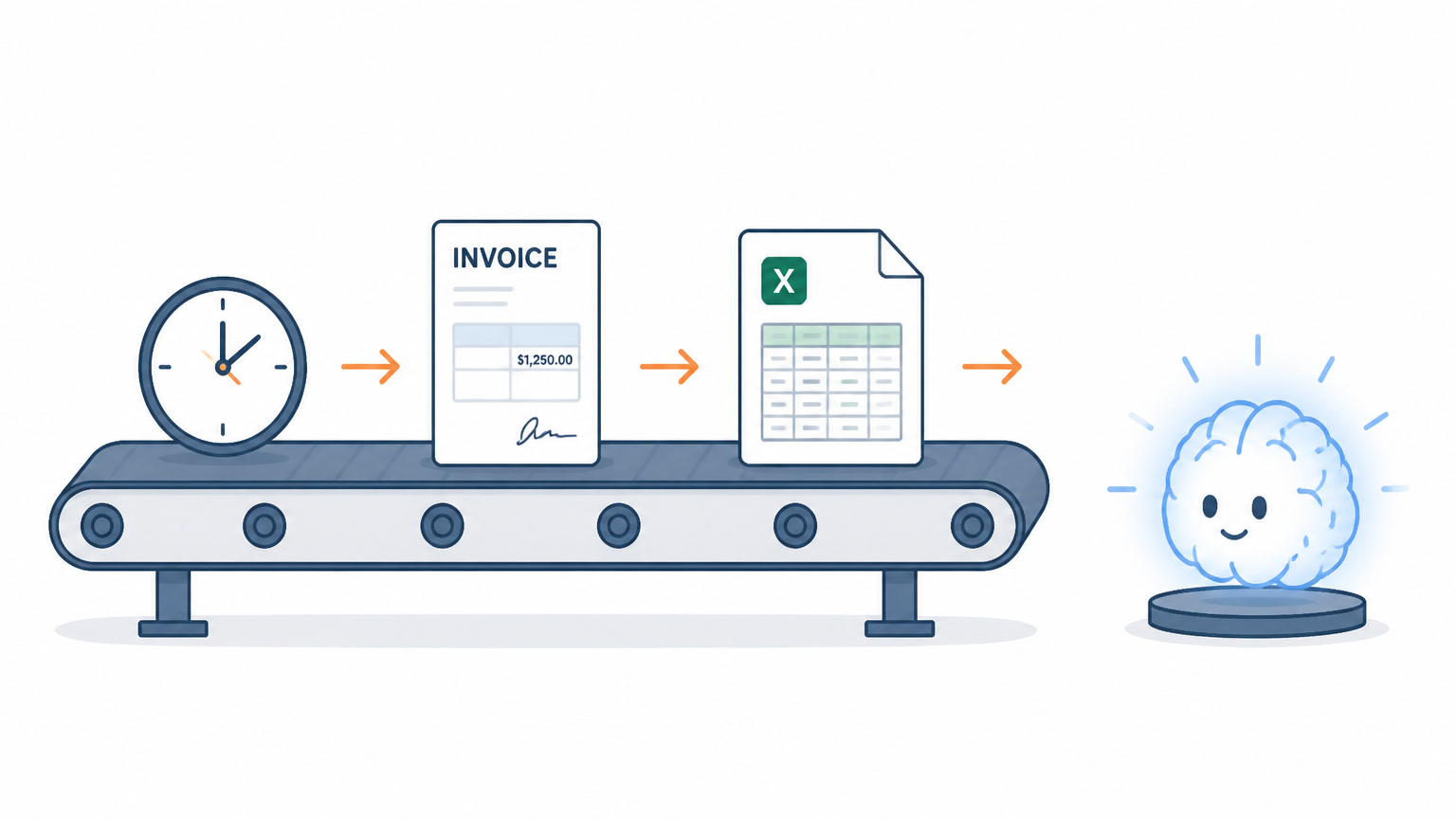
A business consultancy spent 8 hours weekly (one full day of a junior analyst) compiling marketing performance reports for 6 clients. The process: export data from 4 platforms → paste into Excel → format → email. Reports arrived with 5-7 days of lag and contained copy errors.
The automation
We built an automated dashboard with n8n + Google Looker Studio. Every Monday at 7am, n8n extracts data from Google Analytics, Meta Ads, Google Ads, and Clientify, consolidates it into a spreadsheet, and updates a shared dashboard. If a KPI drops more than 15% vs the previous week, the system sends an alert to the team.
Metrics
| Metric | Before | After | Change |
|---|---|---|---|
| Weekly hours on reporting | 8h | 0.5h | -94% |
| Data lag | 5-7 days | <1 hour | -98% |
| Data errors per report | 3-5 | 0 | -100% |
| Decision time post-data | 3-5 days | Same day | -80% |
Cost
Self-hosted n8n ($10/mo) + Looker Studio (free) + API connectors ($0-20/mo depending on volume) = $10-30/mo.
The hidden gain: automated reports didn't replace the analyst. They freed him to do strategic analysis instead of copying data. The client detected a conversion drop the same Monday it happened, not the following Friday. That was worth more than the hours saved.
Framework: what to automate first
Not all examples above apply to your situation. Order matters. We use this framework with every Mintec client:
| Signal | Automate first | Why |
|---|---|---|
| Leads responded to in >1 hour | Automated response (Example 1) | Fastest ROI automation: every minute of delay costs conversion |
| Email marketing without segmentation | Behavioral nurturing (Example 2) | Email already works; it just needs intelligence |
| Repetitive customer support + limited hours | 24/7 chatbot (Example 3) | Lost after-hours inquiries are lost revenue |
| Leads falling between tools | Unified capture (Example 4) | A lead that doesn't reach the CRM doesn't exist |
| Manual reporting eating team time | Automated dashboard (Example 5) | Manual reporting is a symptom of disconnected tools |
The golden rule: automate what you're already doing manually but poorly, not what you haven't done yet. 80% of success is in the process design before opening any builder.
The patterns that repeat
After implementing these five automations (and dozens more), these patterns appear again and again:
1. The real cost isn't in the tools. The total stack for all five examples costs between $38 and $89/month. The real cost is in the 8-20 hours of initial design and the first 2-4 weeks of adjustment with real data.
2. 70% of results come from 20% of the effort. Automated lead response (Example 1) took 6 hours to implement and generated the highest ROI. Automated reporting (Example 5) was cheapest but required more design. Start with impact, not complexity.
3. Measuring before is non-negotiable. Every example includes a "Before" line with real numbers. Without a baseline, you can't prove ROI. Automation without measurement is just spending.
4. First-month errors are normal. None of these automations worked perfectly from day one. The chatbot confused 3 question categories in the first week. Lead scoring needed two adjustments. Automation that doesn't expect errors is destined to fail.
Marketing automation isn't a switch you flip. It's a system you design, launch, measure, and adjust. The five examples above share something: each went through a design → launch → correction → optimization cycle before delivering the results you see above.
Sources
- Artemis GTM (2026): Speed-to-lead benchmark data
- McKinsey (2026): Standard workflow automation ROI benchmarks
- Klaviyo (2026): Automated email flow revenue benchmarks
- Lorikeet CX / Digital Applied (2026): AI-resolved vs human-handled ticket costs
- CUBEevo (2026): AI automation case study methodology
- n8n Community (2026): Production workflow monitoring patterns
- Implementation data: Mintec client experience in CDMX, Guadalajara, Bogotá and other LatAm cities (2026)
Frequently Asked Questions
How long does it take to see results from marketing automation?
The fastest results appear in 2-4 weeks (automatic lead assignment, immediate response). Full ROI results typically take 3-6 months. At Mintec, 80% of our clients measure real impact in the first quarter.
How much does it cost to automate SMB marketing?
A modular stack (CRM + n8n or Make + AI APIs) costs between $50 and $200/month for most SMBs. The real cost isn't in the tools — it's in designing the process before automating. Companies that automate without a prior diagnostic usually spend double redoing.
Which marketing process should I automate first?
Start with the one with the highest revenue impact and lowest risk: responding to new leads. Artemis GTM data shows responding in under 5 minutes multiplies conversion by 4 compared to waiting an hour. It's the automation with the fastest ROI.