

ChatGPT Look-Ups Now Match Writing. Most Pages Aren't Built for It
OpenAI's Signals data shows ChatGPT look-ups now match writing. The same dataset has no citation column, so build pages that answer.
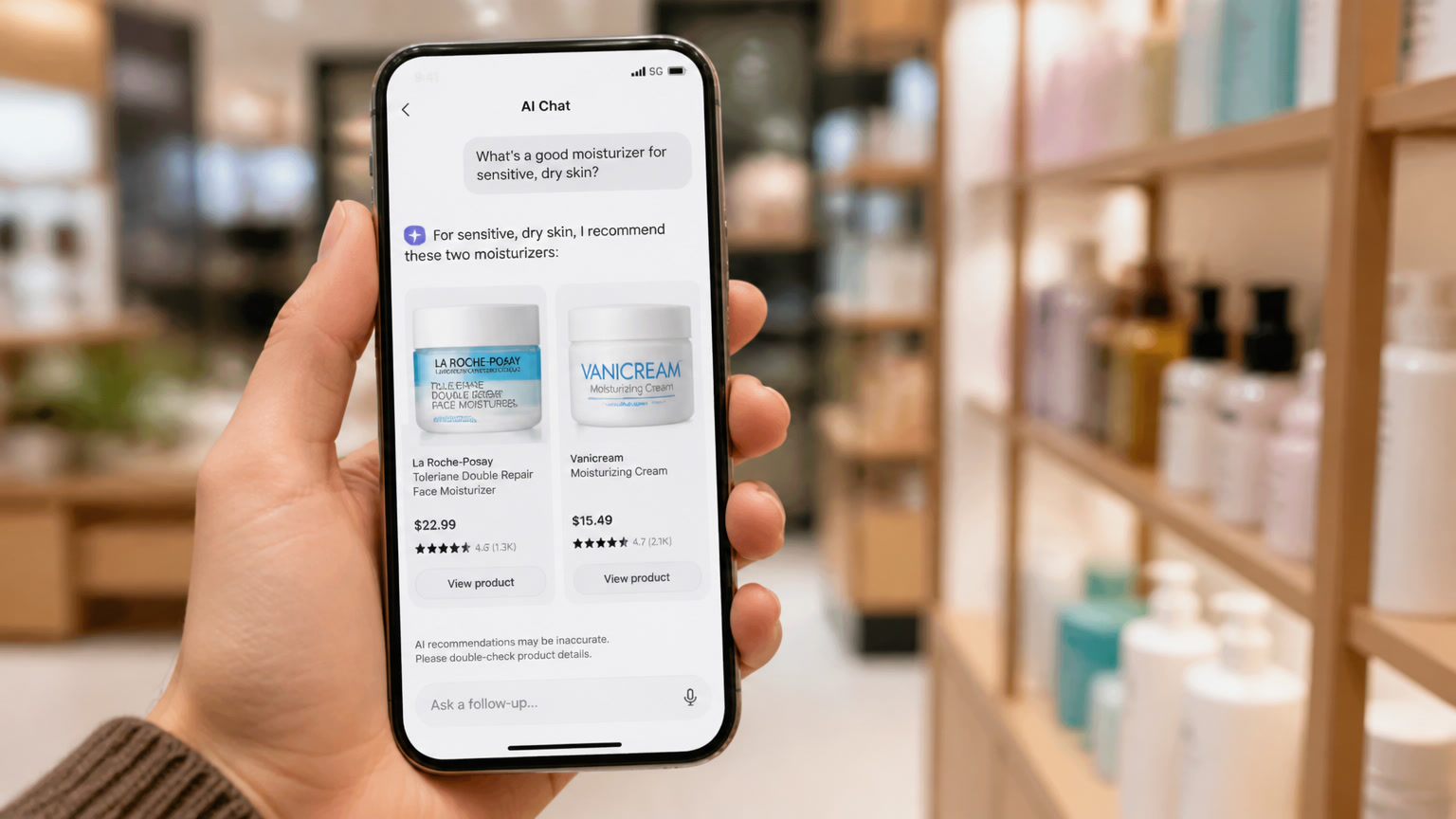
In August 2026, information seeking matched writing in consumer ChatGPT for the first time in OpenAI's own usage series: 20.7% of messages against 20.6%. Writing took the lead back in September, 21.4% to 20.2%, but the two lines now sit on top of each other. On OpenAI's numbers, ChatGPT is a reference tool about as often as it is a text generator.
That shift is worth planning around. It is not worth quoting as proof that AI search works, because the release it comes from cannot see the thing you would be claiming. OpenAI Signals v3.0, published October 26, reports what people ask ChatGPT for. It does not report whether ChatGPT opened a website to answer, or which one it opened.
What the dataset measures
Signals samples one million messages a month from consumer accounts on Free, Go, Plus and Pro plans, from users who declared an age of 18 or over. Enterprise and Codex traffic are excluded, so business and technical use is understated by design. Each message gets a conversation type (asking, doing, expressing) and a topic.
The trajectory across the series is the story:
| Conversation type | July 2024 | September 2026 |
|---|---|---|
| Writing | 34.1% | 21.4% |
| Seeking information | 16.7% | 20.2% |
| Technical help | 13.5% | 4.6% |
Read down the writing column: the "draft this email for me" use case lost a third of its share in twenty-six months. Read across the information row: the "tell me how this works, or what I should buy" use case grew about a fifth in relative terms. Practical guidance, which covers how-to advice and tutoring, has been the largest single category every month in the series.
That is a real change in demand, and it runs against the way most companies still brief content. The brief is usually "write us an article about X". The prompt behind it is now more often "is X any good, what does it cost, and who else does it".
Two official numbers that disagree
Which figure you quote depends on which release you pick. In September 2025, an OpenAI and Harvard paper (NBER working paper 34255) reported that information seeking had grown from 14% to 24% of ChatGPT usage in the year after July 2024. Signals, using the same classifier prompts, puts the same month at 18.3%.
Both come from OpenAI's classifiers. They differ by six points because the sample and the weighting differ, not because behaviour did. If you want a number that survives a client meeting, take the one that updates monthly and can be downloaded and re-run, and say which release you used. The flattering number is the older one, which is usually the wrong reason to prefer it.
The column that isn't there
Signals tracks topics, and at a coarser level whether a message asks, does or expresses. It publishes nothing about external source access or citations per reply. Search Engine Journal's read of the release lands on the same gap: the data shows how often people look things up, not whether ChatGPT consulted a site to answer them.
That gap cuts both ways. Anyone using "one in five messages now seek information" to argue that AI citations are compounding is borrowing credibility from a dataset that cannot see a citation. Anyone using the same gap to argue that AI retrieval doesn't matter is making a different mistake. Demand and delivery are separate questions, and this release answers only the first.
The delivery side is messy in its own right. Citation behaviour varies enough between engines that a single "AI visibility" number is close to meaningless; the 40,000-point comparison of AI Mode, AI Overviews and ChatGPT is where we worked through that. What changed this week is on the demand side.
What a look-up asks for
If people ask more questions and request fewer drafts, the content that earns the retrieval changes shape, not topic. A page that was fine as a read-through becomes a bad lookup source, and the fix is structural.
| Prompt shape | What the person wants | The unit that gets lifted | What fails |
|---|---|---|---|
| "What is X, how does it work" | a definition they can repeat | one plain sentence, then scope, then what it isn't | three paragraphs of context before the answer |
| "X versus Y for a five-person team" | a judgment | a criteria table with a winner named per use case | a balanced essay that ends in "it depends" |
| "Best X for a specific situation" | a shortlist | three to five named options with constraints and a price band | an unbounded listicle ranked by nothing |
| "How much does X cost, is it worth it" | risk reduction | ranges, what moves the price, what's excluded | "contact us for pricing" |
| "Does X support Y" | a yes or no, plus conditions | the yes/no in the first sentence, then the condition | copy that implies and never confirms |
The middle column is the one to argue about. Engines do not retrieve your page and read it the way a person does. They lift passages that answer the sub-question in front of them. If the answer to "how much does it cost" is spread across four sections and a PDF, the passage that gets lifted is the competitor's, written in one line.
Answer first, context second
The working rule is dull and it fixes most pages: the first two sentences under a heading have to survive being copied out with no surrounding text. No "as we saw above", no pronoun that needs an antecedent, no restating the heading in a slightly different way.
The second rule is about specificity. "Pricing depends on scope" gives a model nothing to quote. A range, the list of what moves it, and the exclusions give it a sentence it can attribute. Same for dates, version numbers, and every claim you would otherwise soften. Vague copy is safe for lawyers and useless for retrieval.
That is also where experience signals actually live. E-E-A-T gets discussed as if it were a badge. In practice it looks like a page that states a verifiable fact, with a date and a named source, including the facts that don't flatter you: the limit of your own method, the case where your product is the wrong choice. Nobody cites a page that hedges everything.
A quarter of work, in order
- Pick the ten pages that carry commercial intent, not the fifty posts that carry traffic. Category pages, comparison pages, pricing pages, the two or three service pages that matter.
- Write the questions each page is supposed to answer, in the buyer's words. Your sales inbox and your last twenty calls beat a keyword tool here, because the phrasing people use with an assistant is closer to how they talk than how they search.
- Put the answer in the first two sentences under the matching heading. If there is no matching heading, that's a page-structure problem, not a copy problem.
- Add the specifics you have been holding back: ranges, exclusions, who the offer is wrong for, version and date.
- Set a re-run date ninety days out and keep the raw output. A prompt panel run once is an anecdote; run four times it's a trend. How to build the panel is the protocol we use.
Most teams already own the asset for step two. It lives in a shared doc of questions the sales team answers on calls, which nobody opens because it isn't a spreadsheet.
What this doesn't tell you
The series measures consumer accounts, so it understates B2B and technical use, by OpenAI's own admission. A look-up share of 20% across all consumer messages says nothing about how often your buyer asks an assistant about your category. That number comes from your own data: search demand, sales conversations, and the referrers in your analytics.
Nor does any of this prove that answer-shaped pages get cited. It proves the reason to try got stronger. The measurement problem is unchanged. You can see arrivals from AI surfaces if you segment referrers properly. You cannot see the citations that produced no click, and no dashboard has fixed that yet. That is the argument in the vanity metric problem, and it still holds.
The uncomfortable version
If writing was a third of what people brought to ChatGPT two years ago and is a fifth now, a chunk of the content industry lost its main buyer. The marginal blog post, written to be read top to bottom by a person arriving from a search result, has less work to do.
The marginal page that states a specific, checkable answer to a question someone actually asked has more. That isn't a volume problem, and publishing more posts won't solve it. It's a shape problem, and it's fixable page by page, starting with the ones that pay for themselves.
If you want that mapped against your own pages rather than discussed in the abstract, that's the work inside our SEO and GEO service.
Frequently Asked Questions
What is OpenAI Signals?
OpenAI's monthly dataset on how consumer ChatGPT accounts get used. Version 3.0, released in October 2026, samples one million messages a month from Free, Go, Plus and Pro accounts held by users aged 18 or over, and excludes Enterprise and Codex.
Did looking things up overtake writing in ChatGPT?
It happened once, narrowly, in August 2026: 20.7% of consumer messages against 20.6% for writing. Writing led again in September, 21.4% to 20.2%. Treat it as the two uses converging, not as a permanent crossover.
Can OpenAI's usage data prove that my site gets cited in ChatGPT?
No. Signals reports conversation types and topics. It publishes nothing about whether ChatGPT accessed an external source or which site it used, so it cannot support any claim about your citations.