
Automating Reviews with AI and WhatsApp: The System That Actually Fills Your Google Profile
85% of consumers act on reviews. The WhatsApp + AI flow we built for clients: when to ask, who to ask, and what to automate without breaking Google's rules.
Yes, automating review requests works — and it's one of the highest-return automations we've installed for clients. The recipe isn't asking more: it's asking on the right channel, in the right time window, with a flow that catches complaints before they become one-star reviews. Built well, a small business can go from 14 to 87 reviews in 90 days without spending a manual hour per week.
We saw it over and over in Mintec implementations: the business delivers great service, but its Google profile shows 12 reviews from two years ago. It's not a quality problem; it's a process problem. Nobody asks, or they ask late, or they ask on the wrong channel. This article is the system we use to fix it — and the parts you shouldn't automate if you don't want Google sanctions.
Reviews are no longer an accessory: they're the front door
The 2026 data leaves no room for debate. According to BrightLocal's annual local consumer survey, 85% of consumers are more likely to use a business after reading positive reviews, and 77% are put off by negative ones. The bar also rose: 31% will only consider businesses rated 4.5 stars or higher — nearly double the prior year.
There's a second data point almost nobody acts on: 89% of consumers expect owners to respond to reviews, and 19% now expect a same-day response. Reviews answered within 24 hours generate 33% more positive sentiment than those that wait a week.
In Latin America this weighs more than in other markets: the local decision happens on Google Maps and WhatsApp, not on the business website. A profile with few reviews isn't neutral; it's an active disadvantage against the competitor down the street.
The mistake 95% of businesses make: asking rarely, late, and on the wrong channel
Most businesses that come to us fall into one of three patterns:
- They never ask. The team feels awkward requesting reviews, so the profile freezes.
- They ask at the worst moment. The request arrives in the purchase confirmation email, before the customer has even used the product. To Google that borders on manipulation; to the customer, it's noise.
- They ask by email. A local business sending review requests by email competes against promotions and newsletters. Email response rates sit between 15 and 25%.
The result is always the same: 12 reviews, three years old, and an owner convinced that "people just don't leave reviews anymore." People do leave reviews. They just need to be asked properly.
The 5-stage pipeline we build for clients
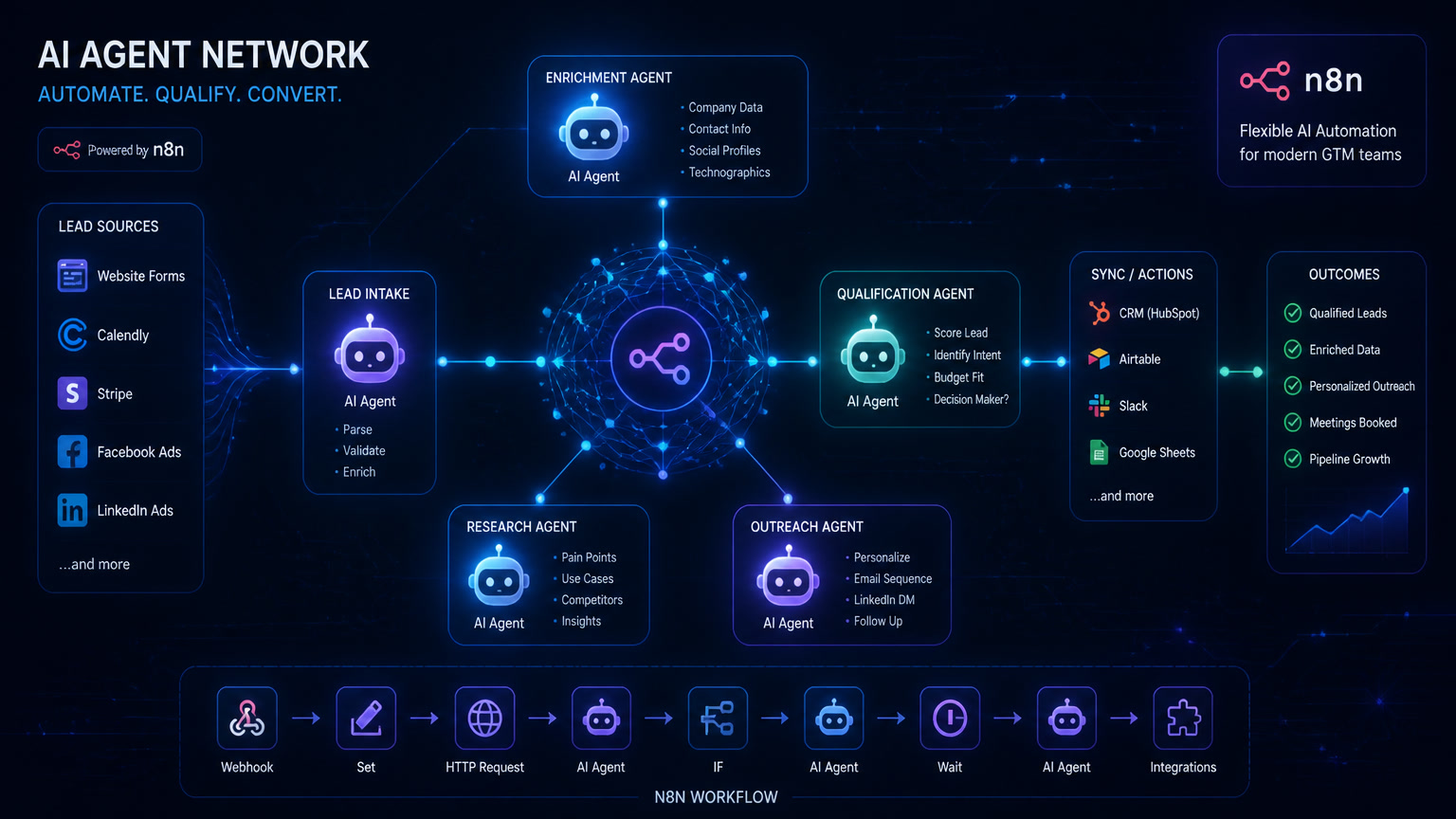
This is the base flow we install, and the architecture matters more than the tool:
| Stage | What it does | Typical tool | Risk if it fails |
|---|---|---|---|
| 1. Detect | Confirms the service or purchase actually completed | CRM (Clientify) with a close event | Asking someone who never bought: kills credibility and policy compliance |
| 2. Wait for the moment | Applies a 24-48 hour window after service, during business hours | n8n (timers and rules) | Asking at checkout feels transactional and brushes against policy |
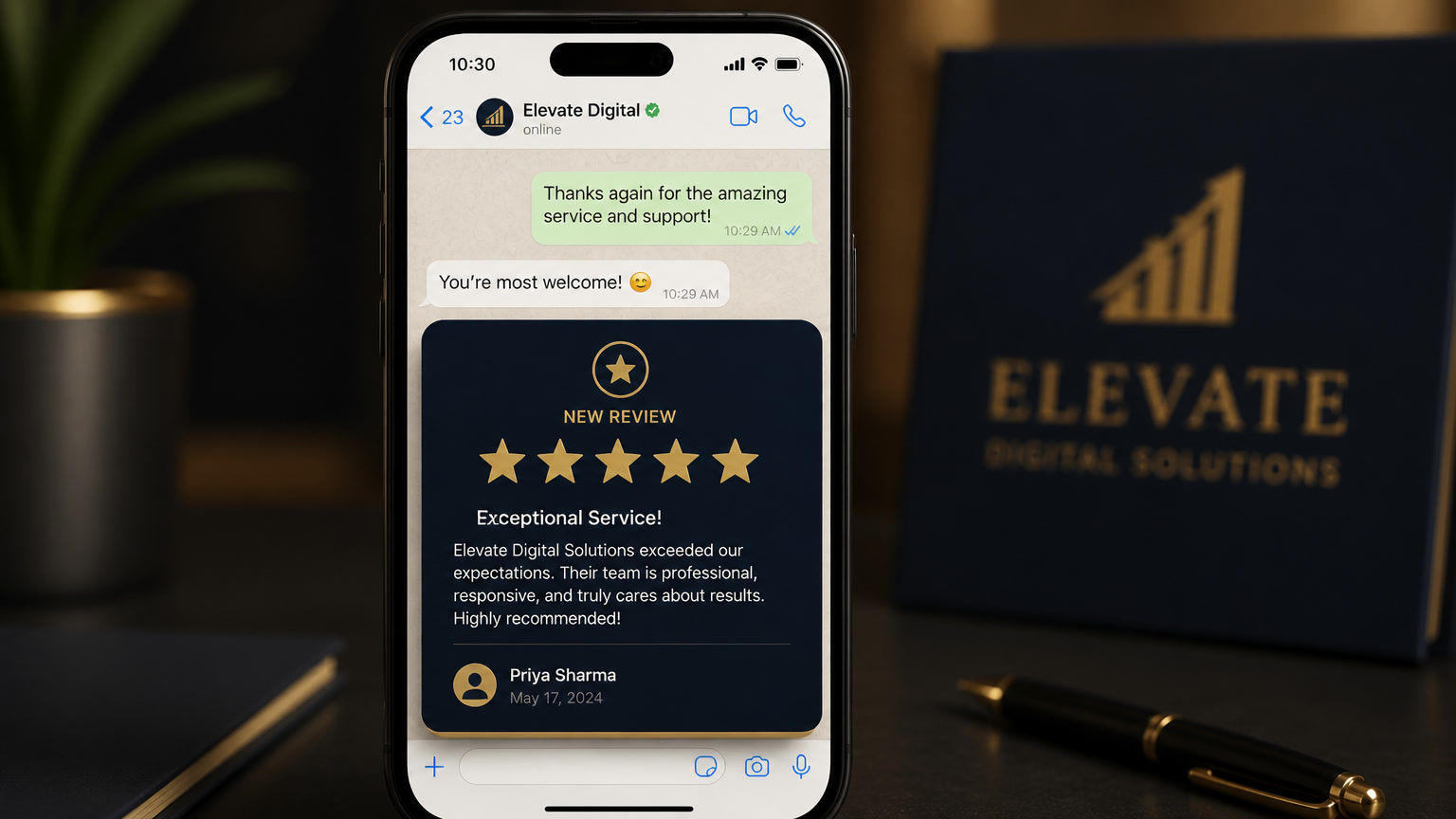
| 3. Ask neutrally | Sends an approved template with a direct link to the Google profile | WhatsApp Business API | Desperate language or incentives = sanction |
| 4. Classify and respond | Detects open complaints, prioritizes replies, drafts for approval | AI (OpenAI) + n8n + assigned human | A negative review sitting unanswered for days |
| 5. Report | Weekly dashboard: requests, response rate, rating, trends | Looker Studio + CRM | Optimizing blind, repeating mistakes |
The case that sums it up: a dental clinic in Mexico City came to us with 14 reviews accumulated over three years and a 4.6 rating. Ninety days after the WhatsApp flow went live, it had 87 reviews and a 4.8 average, with a 55% response rate among contacts. A law firm in Bogotá that had been requesting by email with an 8% response rate hit 41% in its first month on WhatsApp. The difference wasn't the copy: it was the channel and the timing window.
This pattern — detecting the right event and triggering the action inside a window — is the same principle we apply to behavioral email automation, moved to the channel where Latin American customers actually respond.
The channel matters more than the message
Nobody wants to believe it because WhatsApp sounds informal, but the 2026 benchmarks are blunt:
| Channel | Open rate | Typical response | Relative cost |
|---|---|---|---|
| ~98% | 30-55% | Per conversation (API), low at moderate volume | |
| 20-30% | 15-25% | Near zero, but irrelevant if nobody opens it | |
| SMS | 90%+ | 4-20% | Per message; expensive and perceived as spam |
WhatsApp also answers in minutes, not hours. For a business in Mexico, Colombia, or Chile, where the customer already messaged you on WhatsApp to get a quote, asking for the review on the same channel continues the conversation instead of interrupting it.
Timing matters as much as the channel. The 24-48 hour post-service window isn't arbitrary: it's the point where the experience is still memorable and the customer has already validated the result. Asking earlier is pressure; asking a week later is betting on amnesia.
What the AI decides and what stays human
This is where most "automatic reputation" tools get it wrong, and it's worth being direct: Google prohibits buying reviews, offering discounts in exchange for reviews, and review gating — filtering who you ask based on the experience you expect them to report. Several commercial platforms sell exactly that: survey first, then send the Google link only to "promoters." It works until a customer reports it or Google reviews the pattern.
Our system asks everyone, neutrally. What the AI decides is order and context:
- Detects open complaints. If the customer has an unresolved ticket or issue, the review request is postponed until it's resolved. It's not gating: it's not inviting a review from someone mid-complaint. It's common sense and customer care.
- Classifies the incoming reply. If the customer responds upset, the conversation routes to a real person within minutes, not to an automated sequence.
- Drafts the public response. The owner approves and publishes. Generated text is never published without human review.
The classifier also gets maintained: it improves with the same feedback-loop discipline we apply to AI chatbot training — every misclassification gets reviewed, not ignored.
This boundary is the same one we apply to every AI automation decision: the machine interprets, the human decides when the cost of an error is reputational. If you want the full framework for when AI should and shouldn't run a process, we covered it in a separate article.
The response flow is measured too: we answer negative reviews in under 12 hours — publicly, professionally, without arguing — because the data shows a fast response changes the sentiment of everyone who reads it later — the same speed principle we measure in sales response times. 89% of consumers check whether you respond. A well-answered one-star review sells a prospect better than five perfect reviews with no response.
The real cost of the full system
You don't need a reputation platform at $300 to $1,000 per month. The stack we install costs $30 to $140 monthly:
| Component | Monthly cost | Function |
|---|---|---|
| Clientify (CRM) | $0-99 | Event detection and customer base |
| n8n self-hosted | $6-20 | Orchestration, time windows, rules |
| WhatsApp Business API | Variable per conversation | Requests and conversation |
| OpenAI API | $5-20 | Sentiment classification and drafts |
| Total | ~$30-140 | vs. $300-1,000+ for a commercial platform |
Implementation takes a week in this order: day 1, close event in the CRM; day 2, approved template and direct link to the Google profile; day 3, n8n flow with the 24-48 hour window; day 4, AI classification and complaint lane; day 5, public response process with an assigned owner; day 6, dashboard; day 7, pilot launch with the last 20 customers.
Don't start with the dashboard. Start with the detection event: without a reliable trigger, everything else is theater. And don't ask the team to "remember to request reviews": automation exists precisely so the request never depends on anyone's memory.
The review is the last link in the conversation with your customer. Automate the logistics — the when, the where, and the follow-up — and keep human judgment exactly where it belongs: in how you respond when someone wasn't happy.
Want this system for your business? It's exactly the kind of automation we build every day in our automation and chatbots service.
Frequently Asked Questions
Does automating review requests violate Google's policies?
No, if you do it right: ask neutrally, only real customers, no incentives, and no hiding dissatisfied customers. Google prohibits buying reviews, offering discounts in exchange for reviews, and review gating — filtering who you ask based on the experience you expect them to report.
What channel works best for review requests in Latin America?
WhatsApp. It has a ~98% open rate and 30-55% response rates versus 15-25% for email. WhatsApp penetration exceeds 80% in LatAm, and a local business's email usually lands in spam.
How many reviews can I gain with a system like this?
It depends on customer volume and your timing window. At Mintec we saw a dental clinic go from 14 to 87 reviews in 90 days with an automated flow and a 55% WhatsApp response rate. A realistic range is 30-60% response from those contacted.