From Static Drips to Behavioral Triggers: The B2B Email Automation Shift
Behavioral email automation generates up to 30x more revenue per recipient than static drip campaigns. Here's how to implement behavioral triggers in your B2B automation stack, with data, tools, and a proven framework.
From Static Drips to Behavioral Triggers: The B2B Email Automation Shift
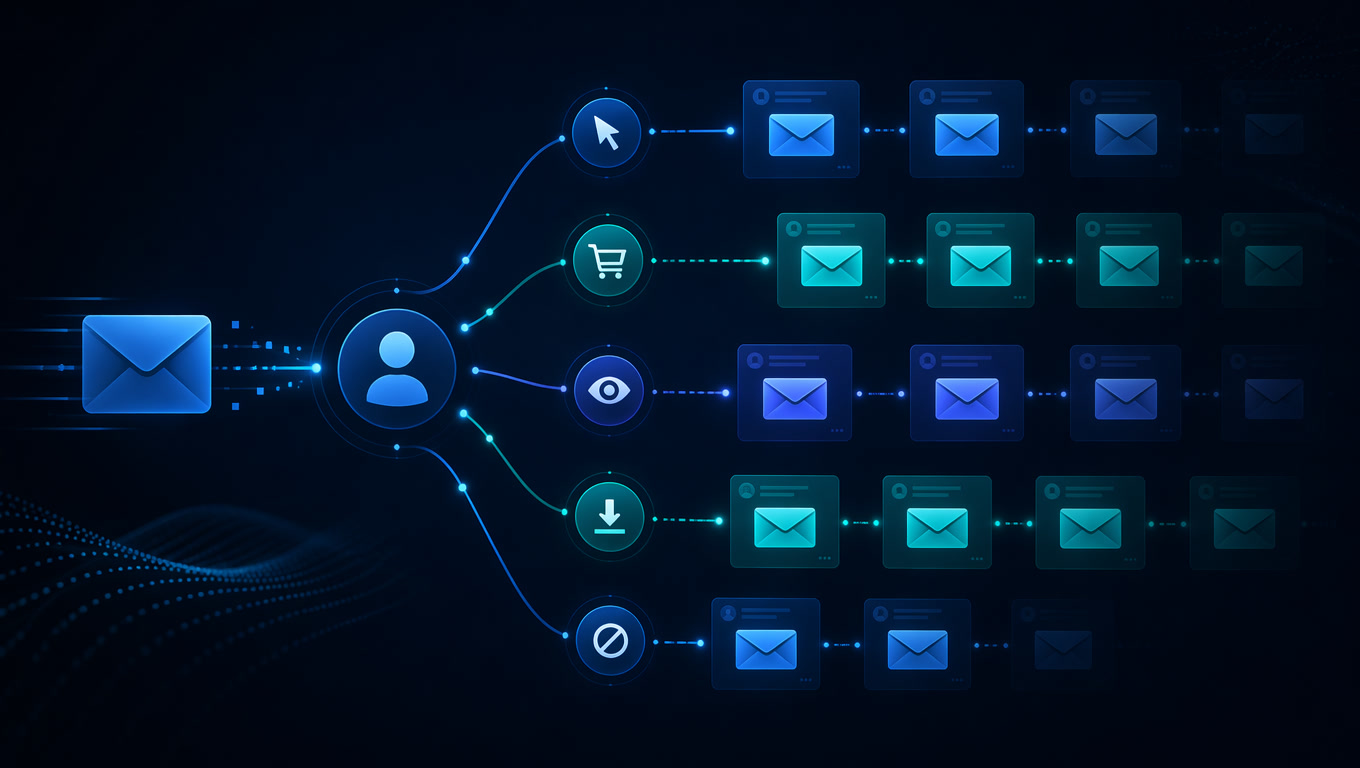
Static drip campaigns — those emails that send every X days regardless of what the recipient does — are no longer enough to compete in B2B. The data is clear: automated behavioral flows generate up to 30x more revenue per recipient than non-segmented batch sends (Klaviyo, 2026 benchmarks), and companies implementing behavioral triggers see conversion lifts of up to 19x compared to static campaigns (Peppereffect, April 2026).
At Mintec, we've implemented this type of automation for clients across consulting, education technology, and professional services. What we've seen is consistent: the shift from time-based sequences to behavior-based flows is the single highest-impact change a B2B team can make to their email strategy. It's not technically harder — but it requires a mindset shift from "when to send" to "what to respond to."
Why Static Drips Are Failing in B2B
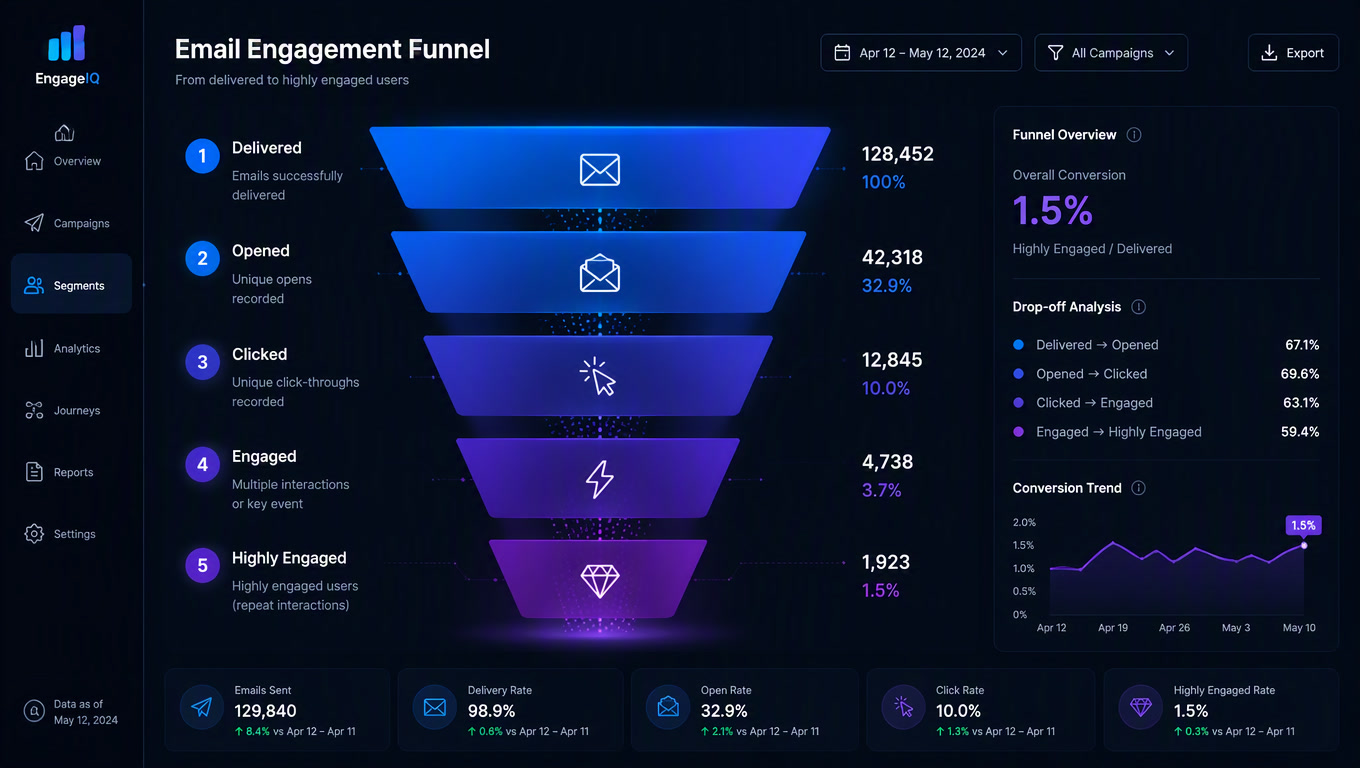
The 2026 data paints an uncomfortable picture: the inbox is more competitive than ever, and B2B buyers have developed high noise tolerance. According to GitNux, the average B2B open rate hovers around 23%, but CTR drops to just 2.4%. That gap between attention and action is exactly where behavioral personalization makes the difference.
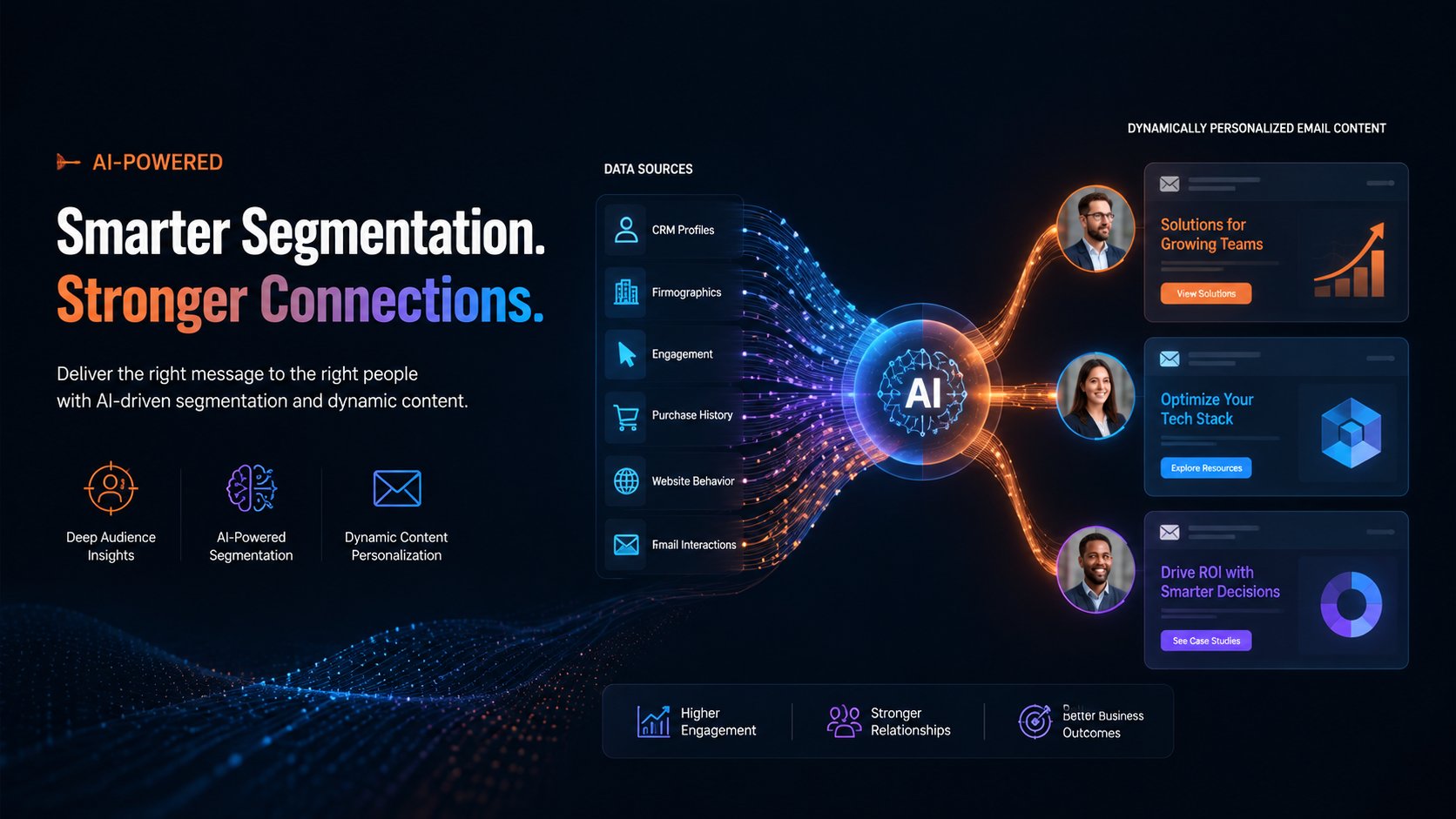
The problem with static drips isn't that they don't work — it's that they treat every contact the same. A lead who just downloaded a whitepaper gets the same email as one who visited the pricing page three times in the last hour. The first needs education; the second needs a sales call. Treating them identically wastes both opportunities.
The numbers back this up: automated sequences account for just 2% of total email sends but generate 37% of email revenue (CodeCrew, December 2025). Smart email — email that responds to what the user does — produces 18x more return per send than batch email.
The Three Types of Behavioral Triggers for B2B
From our client work, we classify behavioral triggers into three categories. Each requires a different technical and content approach.
1. High-Intent Triggers
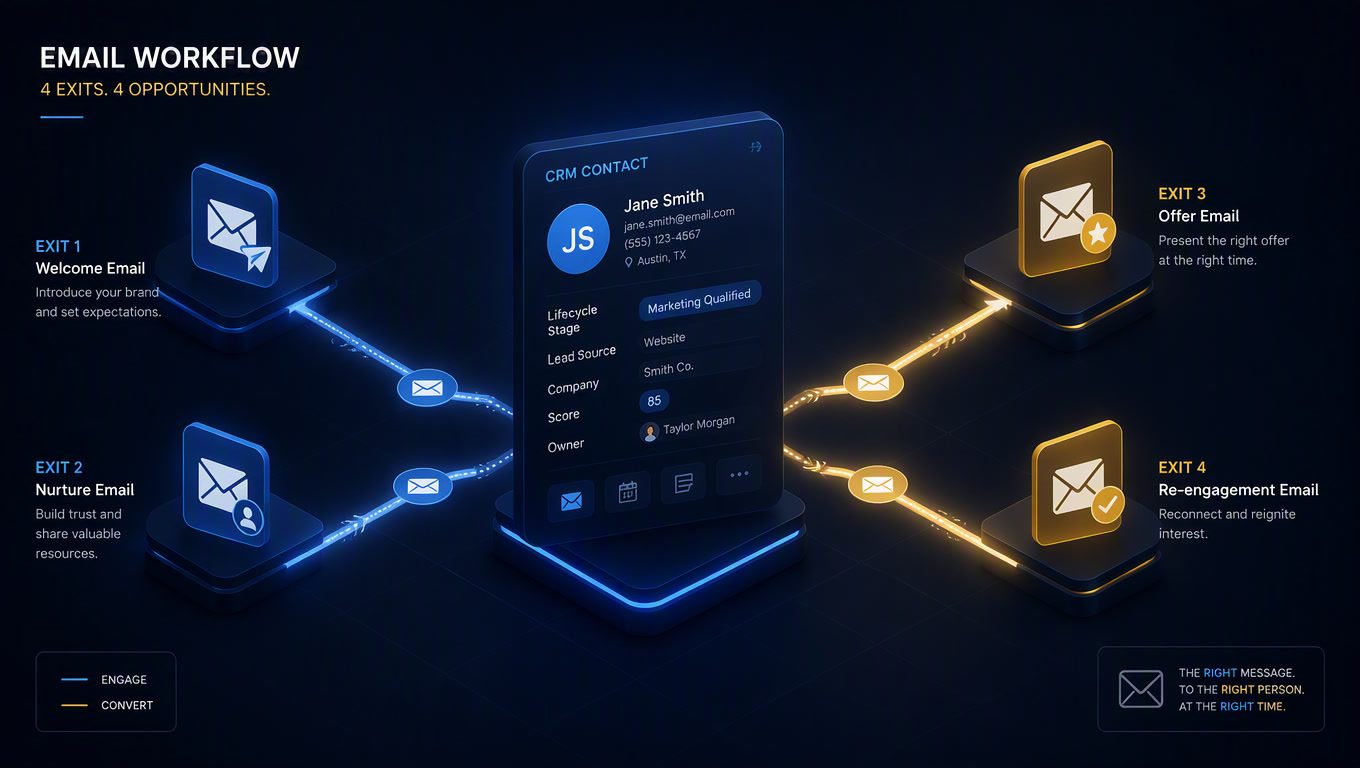
These fire when a contact shows clear buying signals: repeated pricing page visits, demo requests, case study downloads, returning after a week of silence. These triggers should connect directly to the sales team.
What not to do: putting these contacts into a 5-email auto-sequence. If someone hits the pricing page three times, the right trigger is creating a CRM task for a sales rep to call — not sending another automated email. As FUBYTE notes in their behavioral trigger guide (April 2026), the most powerful triggers sometimes shouldn't send an email — they should create a human task.
Real data: leads that wait more than 5 minutes for a response are 10x less likely to qualify (InsideSales). In B2B with long sales cycles, that minute can mean losing an opportunity it'll take months to recover.
2. Lifecycle Triggers
These cover predictable moments in the customer relationship: post-registration welcome, activation after milestone completion, post-purchase follow-up, renewal, satisfaction survey. These are the easiest to implement because the events are known and flows repeat.
The stat that consistently surprises our clients: well-configured welcome sequences see open rates above 50%, and B2B abandonment flows (yes, they exist — webinar registrations, unactivated trials, unconverted quotes) recover between 3% and 5% of lost opportunities. Klaviyo reports that sending three emails in sequence recovers 69% more orders than sending one.
3. Re-engagement Triggers
For cold contacts who haven't interacted in 60, 90, or 120 days. The key here isn't "recover at any cost" — it's identifying which contacts deserve the effort and which are better let go.
Our rule: if a contact hasn't opened any email in 90 days, don't blast them with offers. Send a "still there?" email with a clear unsubscribe option. Contacts that don't respond pollute your metrics, damage your domain, and skew your lead scoring models. A clean list of 500 engaged contacts beats 5,000 ghosts every time.
The 3-Tier Behavioral Email Framework
Based on our implementations, here's the structure we recommend:
| Tier | Trigger Type | Typical Event | Action | Key Metric |
|---|---|---|---|---|
| 1. Capture | High-intent | Pricing visit, demo download | Sales task + context email | Response time (<5 min) |
| 2. Nurture | Lifecycle | Webinar signup, trial started | 3-5 educational email sequence | Activation rate |
| 3. Cleanse | Re-engagement | 90 days no opens | Confirm + opt-out option | Reactivation vs opt-out rate |
Our advice: start with Tier 2. Lifecycle triggers are the most predictable, easiest to configure, and fastest to show results. Once Tier 2 runs consistently, add Tier 1 (requires sales coordination) and finally Tier 3 (requires clear data policies). If you're already using conversational email, behavioral triggers are the natural complement to capture leads that initial outreach didn't convert.
Recommended Tech Stack for 2026
You don't need an enterprise platform to implement behavioral triggers. You need your CRM and automation tool speaking the same language. Here are the combinations that work best by company profile:
| Profile | CRM | Automation | Est. Monthly Cost | |
|---|---|---|---|---|
| B2B SMB (<10 people) | Clientify | Internal flows + Make | Clientify Email | $30-60/mo |
| Growing company (10-50) | HubSpot | HubSpot Workflows + Make | HubSpot + Klaviyo | $100-300/mo |
| Data-sensitive / regulated | Clientify + n8n self-hosted | n8n | SendGrid or AWS SES | $20-80/mo |
Our pick for Latin American clients: Clientify + Make. Clientify has decent built-in automation and Make connects any API without code. Combined cost runs around $40/month — well below enterprise alternatives.
What Nobody Tells You About Behavioral Triggers
There's a technical side that marketing articles don't cover. From FUBYTE's guide and our own experience, here are the real problems:
Event taxonomy matters more than flows. Before building a single trigger, you need to define what events exist, where they come from (web, product, CRM), whether they can double-fire, and how long to retain them. Without this foundation, triggers multiply uncontrollably and start colliding.
Idempotency isn't optional. If your webhook fires twice (it happens more often than you think), the contact receives two identical emails. Solution: deduplication keys per event window, "already enrolled" gates in flows, and status flags in the CRM.
Explicit exclusions save reputations. Every trigger must declare: who's excluded (customers in dispute, active opportunities, unsubscribed contacts), re-entry cooldown windows, and global frequency caps. One misconfigured trigger can send 12 emails to a customer in 24 hours.
Measuring What Matters
Vanity metrics (open rates) won't tell you if your triggers are working. What actually matters:
- Enrollment volume by trigger — are contacts entering the flows you designed?
- Unsubscribe vs spam complaint deltas — if a trigger increases unsubscribes, something is wrong with content or frequency
- SQL and opportunity lift by cohort — the best indicator: do contacts that passed through a behavioral trigger convert at higher rates?
Our warning: if a trigger increases engagement but decreases pipeline quality, it's misaligned. Better to disable and redesign it than leave it running out of inertia.
Where to Start Today
If your company is still running static drip campaigns, you don't need a complete overhaul. The fastest path:
- Audit your current flows — identify which are purely time-based and could become behavioral
- Pick one lifecycle trigger — easiest: post-registration welcome with content based on lead source
- Set up event capture — make sure your CRM records key actions (pricing visits, downloads, opens)
- Implement one behavioral flow — test for 30 days, measure the lift vs the equivalent static flow
- Scale from there — once the first flow works, duplicate the pattern across other lifecycle moments
At Mintec, we help B2B companies migrate from static automation to behavioral flows. If you want to know where to start with your current stack, contact us. You can also read about how we connect email automation with automatic CRM enrichment or how we automate the sales-to-delivery handoff so qualified leads don't get lost in transition.
The shift from "when to send" to "what to respond to" isn't technical — it's strategic. And the teams that make it first in their vertical will have an advantage that static drips simply can't deliver anymore.
Frequently Asked Questions
What is behavioral email automation in B2B?
It's a strategy that sends emails triggered by specific user actions (pricing page visit, content download, cart abandonment) rather than fixed time-based sequences. It responds to what the buyer does, not what day of the month it is.
What's the difference between a static drip campaign and a behavioral trigger?
A static drip sends the same emails at the same intervals to everyone. A behavioral trigger fires only when a specific action occurs, which multiplies relevance and conversion rates. Data shows automated flows generate 30x more revenue per recipient than batch sends.
What tools do I need to implement behavioral email triggers?
You need three layers: a CRM that captures events (Clientify, HubSpot), an automation platform that runs the flows (Make, n8n, Klaviyo), and an email delivery tool that tracks opens and clicks. The right combination depends on your volume and budget.