
AI-Powered Email Segmentation & Dynamic Content for B2B: What We Stopped Doing and What We Replaced It With
We stopped using basic list-based email segmentation and replaced it with AI-driven predictive segmentation and dynamic content for B2B. How we structure it, what tools we use, and the real results from client campaigns.
AI-Powered Email Segmentation & Dynamic Content for B2B: What We Stopped Doing and What We Replaced It With
Basic list-based email segmentation isn't enough for B2B in 2026. We stopped doing it for our clients and replaced it with AI-driven dynamic segmentation: content that changes based on real-time behavior, not list assignment. The results — 3.2x more revenue per recipient, 13%+ click-through rates vs 3% for generic emails — speak for themselves.
This isn't theory. Here's exactly what we stopped doing, what we started doing instead, and the results from real B2B implementations.
What We Stopped Doing: Static List Segmentation
For years, B2B email segmentation worked like this: create lists by industry, job title, or company size, and send the same content to everyone. It worked because it was better than nothing, but the 2026 data shows this approach leaves massive revenue on the table.
The problem: a person isn't their industry. A CTO at a SaaS company in Mexico doesn't respond to content the same way as a CTO at a SaaS company in Colombia, even if they're on the same list. Their buying behaviors, decision timing, and channel preferences are different.
What we stopped doing: segmenting people by fixed demographic attributes and treating an entire segment as homogeneous.
Three concrete reasons we abandoned this approach:
- Static segments go stale fast. A contact changes companies, roles, or interests, and their segment stays the same until someone manually moves them.
- They ignore intent. Two contacts in the same segment can be at opposite ends of the buying cycle — one evaluating, one ready to buy. They get the same email.
- They don't scale. More segments mean more manual work. Most B2B companies maintain 3-5 segments when they could have hundreds of micro-segments if the process were automated.
According to 2026 data, segmented campaigns generate 760% more revenue than non-segmented ones, yet most companies still use basic segmentation because they don't know how to scale it without AI.
What We Implemented: Predictive Segmentation + Dynamic Content
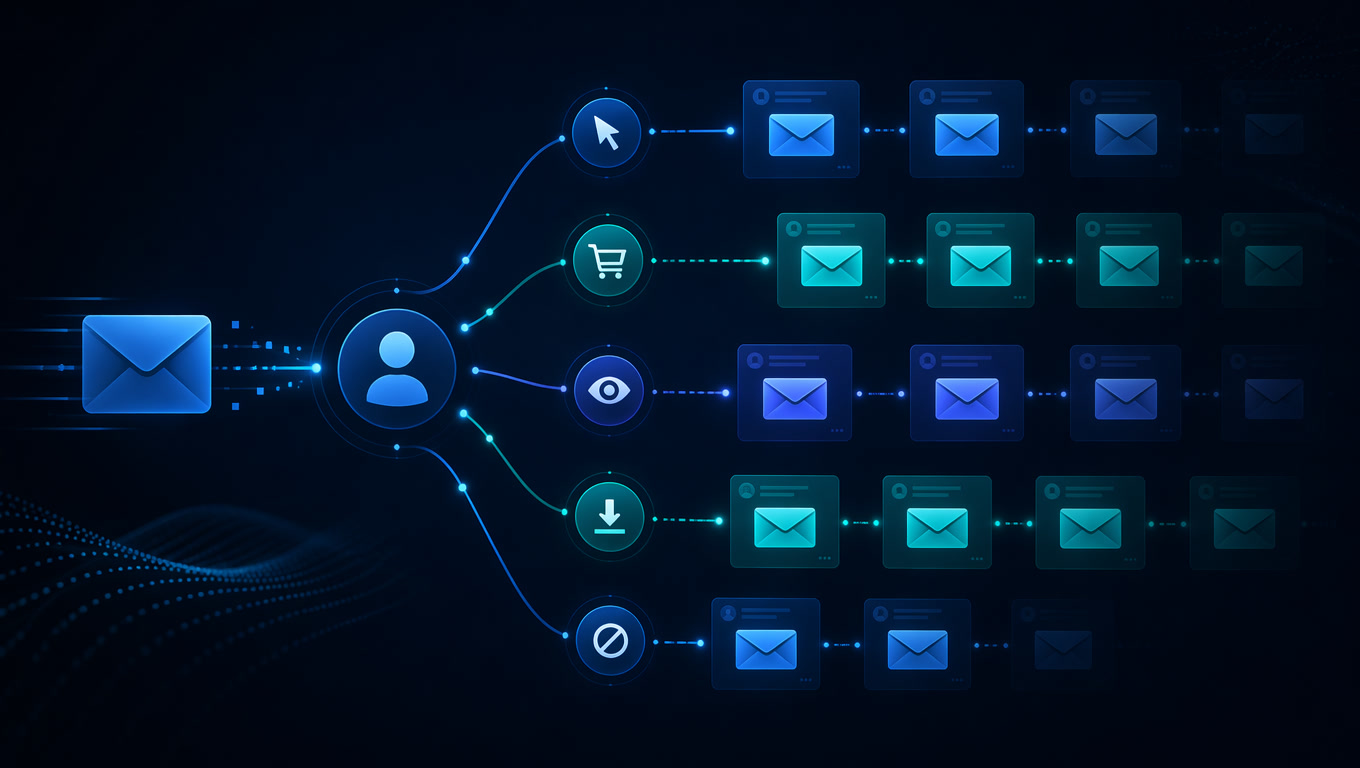
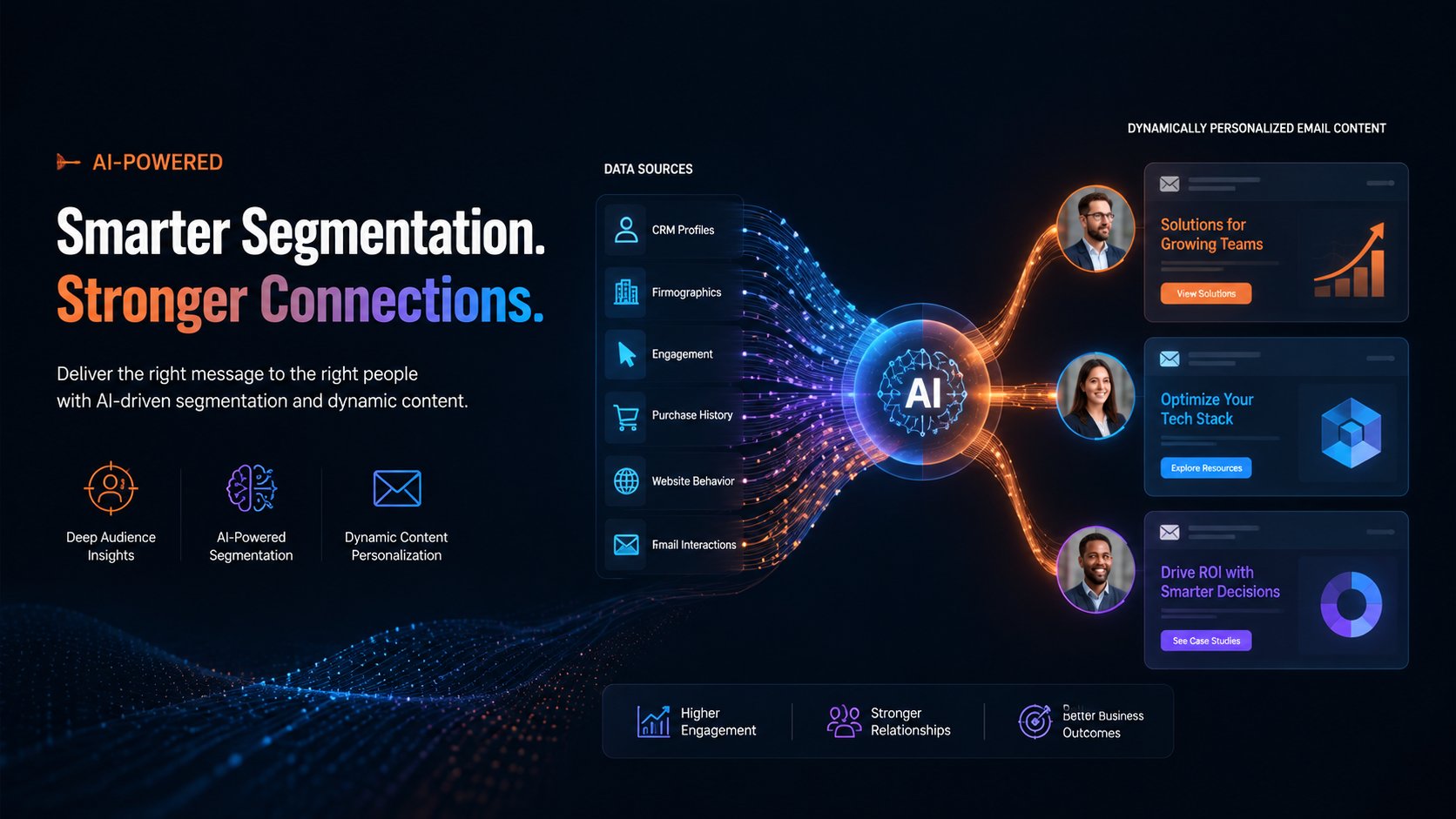
Instead of segmenting by who the contact is, we segment by what the contact does. And instead of sending the same content to an entire group, the content adapts individually.
This shift has two components that work together:
1. Predictive Segmentation (the "when" and "what")
We use machine learning models to group contacts across four dimensions that static segmentation can't capture:
| Segment Type | What It Measures | Automatic Action |
|---|---|---|
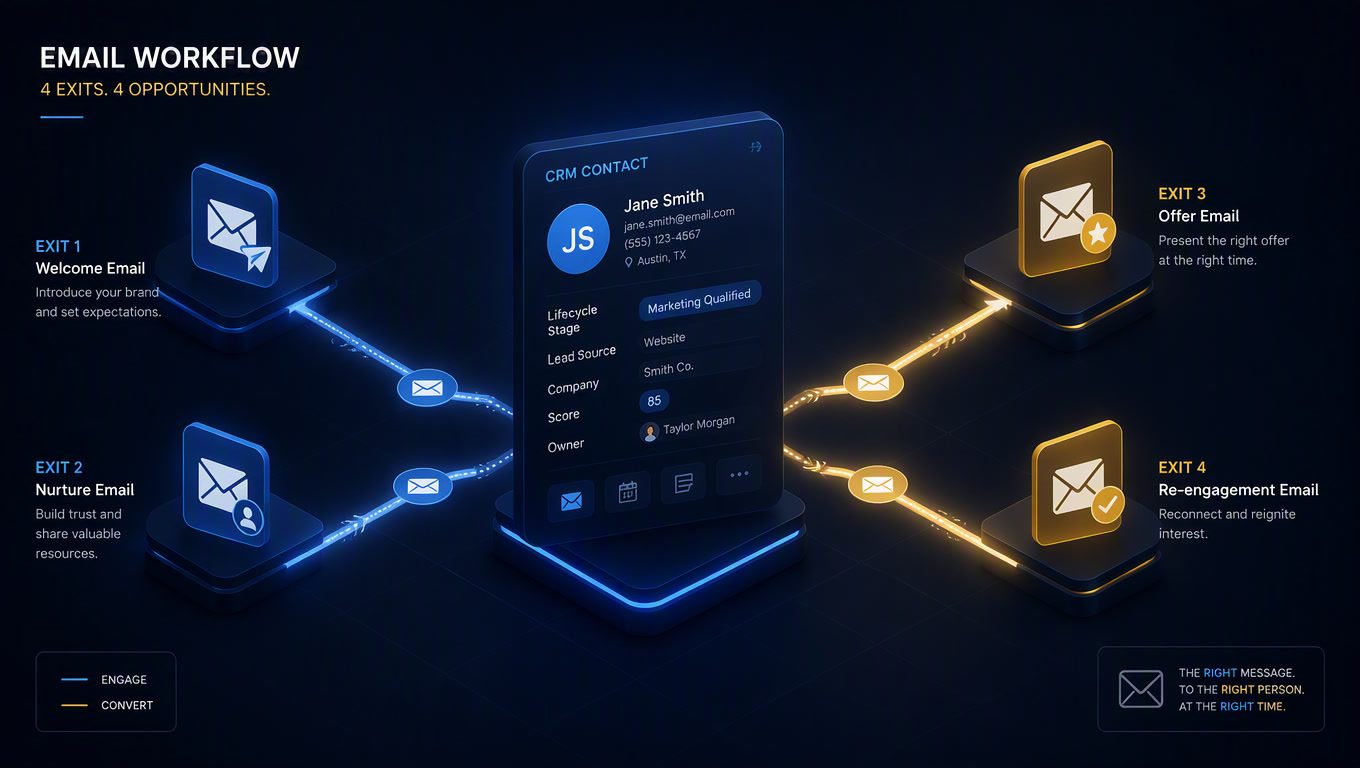
| High Purchase Propensity | Site visits, pricing pages, cart adds | Accelerated offer within 24h |
| Churn Risk | Declining opens, fewer clicks, visit gaps | Preventive re-engagement sequence |
| Predicted Lifetime Value | Purchase frequency, engagement depth | Premium vs standard experience |
| Content Affinity | Type of content consumed (product vs educational vs promotional) | Personalized content mix |
The key difference: these segments update in real time. A contact in "high purchase propensity" today automatically moves to "post-purchase" when they convert, and the content they receive changes without human intervention.
Predictive segments outperform demographic segments by 18-45% in revenue per recipient, based on 2026 benchmarks. We implement this using Make or n8n connected to the CRM (Clientify for our LatAm clients) and AI APIs for the scoring model.
2. Dynamic Content (the "what they see")
Predictive segmentation defines what each person receives, and dynamic content executes that promise. Instead of a static email, each content block renders based on the contact's profile at send time.
The four dynamic blocks we implement most frequently:
- Product/service recommendations — based on browsing history and past purchases. Increases CTR by 30-50% vs generic recommendations.
- Relevant educational content — articles, case studies, or resources selected by industry and content consumption history. Especially effective in B2B nurture.
- Personalized offers — the model decides which offer to show based on profile: discount for price-sensitives, exclusive content for high LTV, retention for at-risk contacts.
- Journey-stage content — content varies by whether the contact is new (educational), active prospect (case studies), or customer (upsell/loyalty).
Dynamic content emails achieve up to 29% higher open rates and 40% more clicks than static emails, according to 2026 benchmarks.
The Segmentation Maturity Framework (From Our Practice)
You don't go from zero to predictive segmentation in a week. Across the implementations we've done, we see four maturity levels:
| Level | Approach | Typical Tools | Results |
|---|---|---|---|
| 1. Basic Lists | Fixed segments by industry/role | Mailchimp, basic CRM | 15-20% open rate, <3% CTR |
| 2. Behavioral Segments | Groups by behavior (frequent openers, inactive) | ActiveCampaign, HubSpot Pro | 25-30% open rate, 4-6% CTR |
| 3. Predictive Segmentation | Clusters by purchase propensity, risk, LTV | Make + n8n + AI APIs | 35-40% open rate, 8-12% CTR |
| 4. Full Dynamic Content | Every email block is unique per contact | Klaviyo + Make/n8n + CRM data | 3.2x RPR lift, 13%+ CTR |
Our recommendation: most B2B companies should be at least at Level 3. The jump from Level 2 to Level 3 costs less than you'd think (a Make/n8n integration with Clientify and AI APIs runs $70-150/month) and the ROI starts showing within the first 2-3 campaigns.
Results We've Seen in Practice
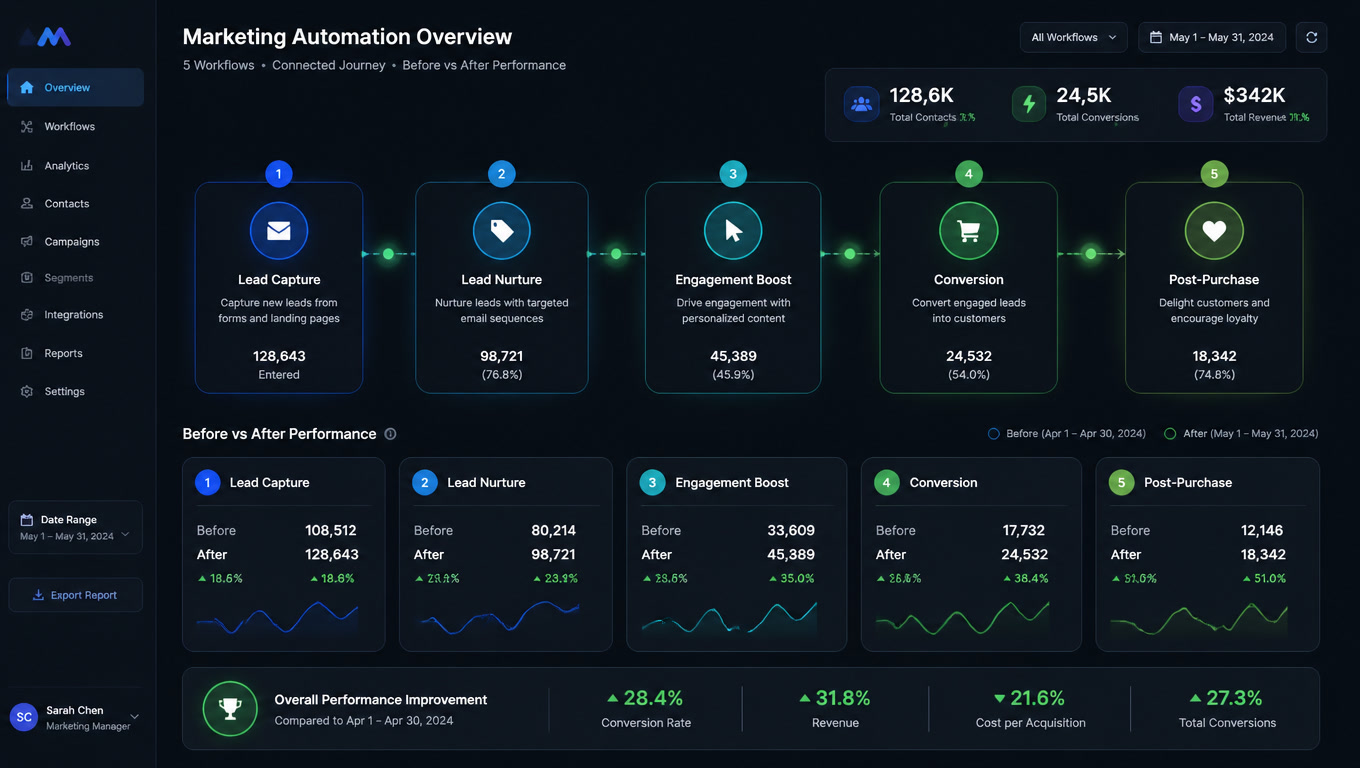
We implemented this stack for a B2B client (construction software company in LatAm). The before-and-after numbers:
- Open rate: went from 22% (industry-based segmentation) to 38% (predictive + dynamic content).
- CTR: jumped from 3.1% to 11.4% on nurture campaigns.
- Revenue per send: multiplied by 2.8x in the first quarter.
- Team time: reduced campaign management from 12 hours/week to 2 hours.
This isn't an exceptional case. Aggregate 2026 data confirms it: email programs integrating AI across the full chain (dynamic content + send-time optimization + predictive segmentation) generate 41% more revenue than manual campaigns, and the compounding effect produces a 3.2x revenue-per-recipient lift compared to batch-and-blast approaches.
Why Most B2B Companies Stay on Basic Segmentation
After implementing this for multiple clients, we've identified three recurring barriers:
1. Fear of complexity. Predictive segmentation sounds like data science, but tools like Make or n8n let you implement basic scoring models by connecting AI APIs without writing code. The technical setup takes 4-8 hours when you already have the data.
2. Lack of behavioral data. For predictive segmentation to work, you need browsing data, email interaction history, and buying cycle signals. If your CRM isn't tracking these, that's where you start. But the first step — implementing tracking — takes a day with tools like Clientify or HubSpot.
3. Perceived cost. Klaviyo Enterprise runs $1,200+/month, but for B2B teams in emerging markets the modular stack (Clientify at $29/month + Make at $9-29/month + self-hosted n8n at $6-20/month server) is a fraction of that cost and reaches Level 3 without issue.
Where to Start (Our Recommended Path)
If you're on basic segmentation today and want to move to AI-driven dynamic content, here's the order we recommend based on our experience:
- Week 1-2: Activate behavior tracking. Make sure your CRM records site visits, page views, and email interactions. No data, no predictive segmentation.
- Week 3-4: Implement behavioral segments. Create automated flows that move contacts between segments based on activity (or inactivity).
- Week 5-6: Connect a simple scoring model. Using Make or n8n, connect an AI API (OpenAI, Claude) and start scoring leads by purchase probability.
- Week 7-8: Add dynamic content. Start with one dynamic block (content recommendation) and A/B test against static emails.
- Week 9-12: Expand to full predictive segmentation. Add churn risk, predicted LTV, and content affinity segments.
Each step generates measurable results before you move to the next. You don't need to deploy the full stack at once.
The Bottom Line
Static list segmentation was a breakthrough ten years ago. Today it's the bare minimum, but it's no longer enough to compete in B2B email. Companies migrating to AI-driven dynamic segmentation are seeing 2-3x more revenue per email they send. The ones staying on basic lists aren't competing in the same channel anymore.
At Mintec, we help B2B companies implement this stack: from tool integration (Clientify + Make + n8n + AI APIs) to configuring the predictive segmentation models. If you'd like to see how it applies to your business, get in touch.
You might also find useful:
Frequently Asked Questions
What's the difference between basic segmentation and AI-driven dynamic segmentation?
Basic segmentation divides contacts into static groups (industry, role, location) and sends the same content to everyone in that group. AI-driven dynamic segmentation creates segments in real time based on actual behavior and personalizes content blocks individually, not at the group level.
How much does engagement improve with dynamic content in B2B email?
Dynamic content emails achieve up to 29% higher open rates and 40% more clicks than static emails. When combined with predictive segmentation, revenue per recipient can increase by 3.2x.
What's the minimum tool stack for AI-driven email segmentation?
For B2B teams on a budget, a modular stack of Make or n8n + Clientify + AI APIs can deliver predictive segmentation for $70-150/month. For larger lists (50,000+), Klaviyo, Braze, or Salesforce Marketing Cloud have native capabilities.