Hotel automation: turning OTA guests into direct bookings via WhatsApp
Hotels pay 15-25% commission on every OTA booking. This automated WhatsApp journey converts those guests into direct bookings and cuts no-shows.
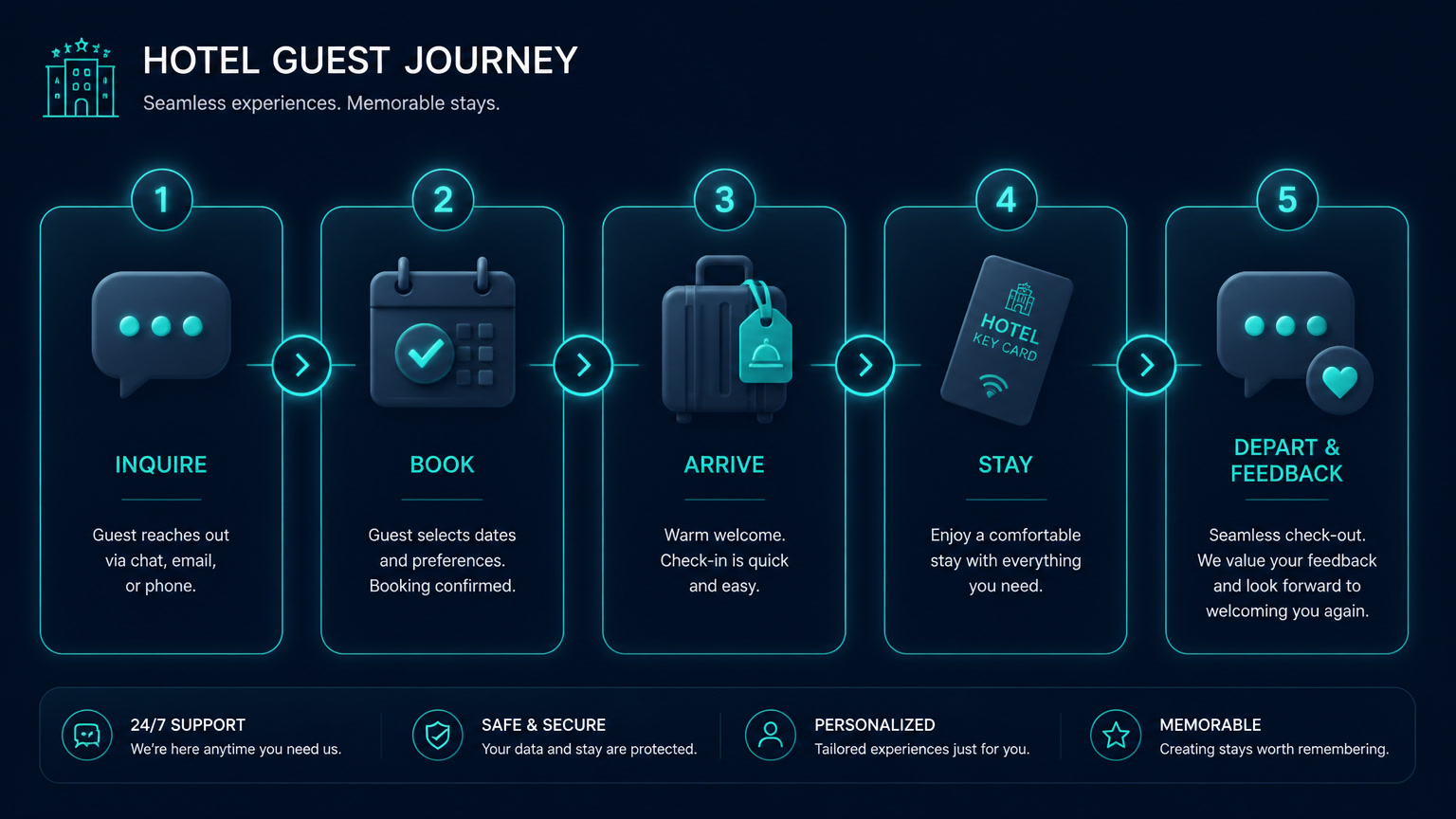
Hotel automation on WhatsApp is a journey that covers the full guest arc — inquiry, direct booking, pre-arrival confirmation, in-stay requests, and return — and its biggest economic effect is not "faster replies": it is moving bookings from the channel that costs 15-25% commission to the direct channel that costs about 4.5%, and killing no-shows with an automated arrival confirmation. If you run a boutique hotel or a small chain in Latin America, this is the article that connects the OTA arithmetic to the concrete route that recovers it.
The math your PMS dashboard doesn't show you
Cloudbeds' State of Independent Hotels 2026 puts OTAs at 63.4% of independent-hotel bookings. A decade ago the average commission sat around 10%; today the real range is 15-30%+: Booking.com averages about 15% (10-25% by market and visibility tier), Expedia runs 18-22%, and preferred-placement programs push the effective rate past 25%. Airbnb's single-fee structure charges most hosts 15.5% — and 16% on listings in Brazil and Mexico.
Against that, a direct booking costs roughly 4.5% all-in (payment processing, booking engine, and share of marketing), per EHL Insights. It is not free, but the gap is the whole argument:
| Factor | OTA channel | Direct channel |
|---|---|---|
| Commission per booking | 15-25%+ | ~4.5% all-in |
| Cancellation rate | 21.8% of OTA bookings (2025) | 10.6% of direct bookings |
| Guest data | Limited or masked | Yours: loyalty and re-marketing |
| Long-term relationship | Weak without follow-up | Direct and repeatable |
Two more numbers close the case. First, Cloudbeds: 21.8% of OTA bookings cancel versus 10.6% of direct ones — the expensive channel not only charges more, it shows up less. Second, the billboard effect: roughly 50% of guests who find you on an OTA then search for you directly on Google before booking. The channel exists to get you discovered; turning that search into a direct booking is your job.
The regional board is growing too: Latin America's online travel booking market was worth USD 40.4 billion in 2025 and is projected at USD 91.4 billion by 2034 (IMARC, 9.22% CAGR). Every commission point you shift to direct weighs more each year.
Our position is blunt: the OTA is not your enemy, it is your most expensive acquisition channel. The goal is not to kill it — it is to convert its guest once and keep them. Fighting the 63% is fantasy; converting the second stay is executable.
Why the bridge is WhatsApp, not email
The guest-messaging data is no longer ambiguous: 73% of travelers prefer messaging over calling a hotel, and they expect a reply within an hour on any channel (Cloudbeds). HiJiffy reports that 80% expect instant responses. And on delivery the asymmetry is brutal: pre-arrival emails open at 20-30%, while WhatsApp sees 95-98% opens within 24 hours.
For a hotel in the region this has a local accent: WhatsApp is the default interface of the Latin American consumer, and the regional traveler lives in that app from the moment the flight is confirmed. Automating there is not a channel upgrade; it is showing up where the guest already is.
The 5-stage route: from inquiry to second stay
This is the architecture we implement, stage by stage. Every stage has a trigger, an action, and an auditable metric:
| Stage | Trigger | Automated action | Metric that matters |
|---|---|---|---|
| 1. Capture | Inquiry via web, Instagram, or WhatsApp | Reply in <2 min with availability and a direct-channel quote | First-response time |
| 2. Close | Interest confirmed | Payment link + confirmation as a service message | Inquiry→booking rate, acquisition cost |
| 3. Pre-arrival | 72h, 24h, and morning of arrival | One-tap reconfirmation (confirm/reschedule/cancel) + upsell | No-show rate, extra revenue per guest |
| 4. In-stay | Guest request | FAQs resolved by AI; housekeeping and maintenance routed to staff | Response time, human-free resolution |
| 5. Return | 24h post-checkout | Survey + direct-booking incentive for the next visit | Direct share of stay #2 |
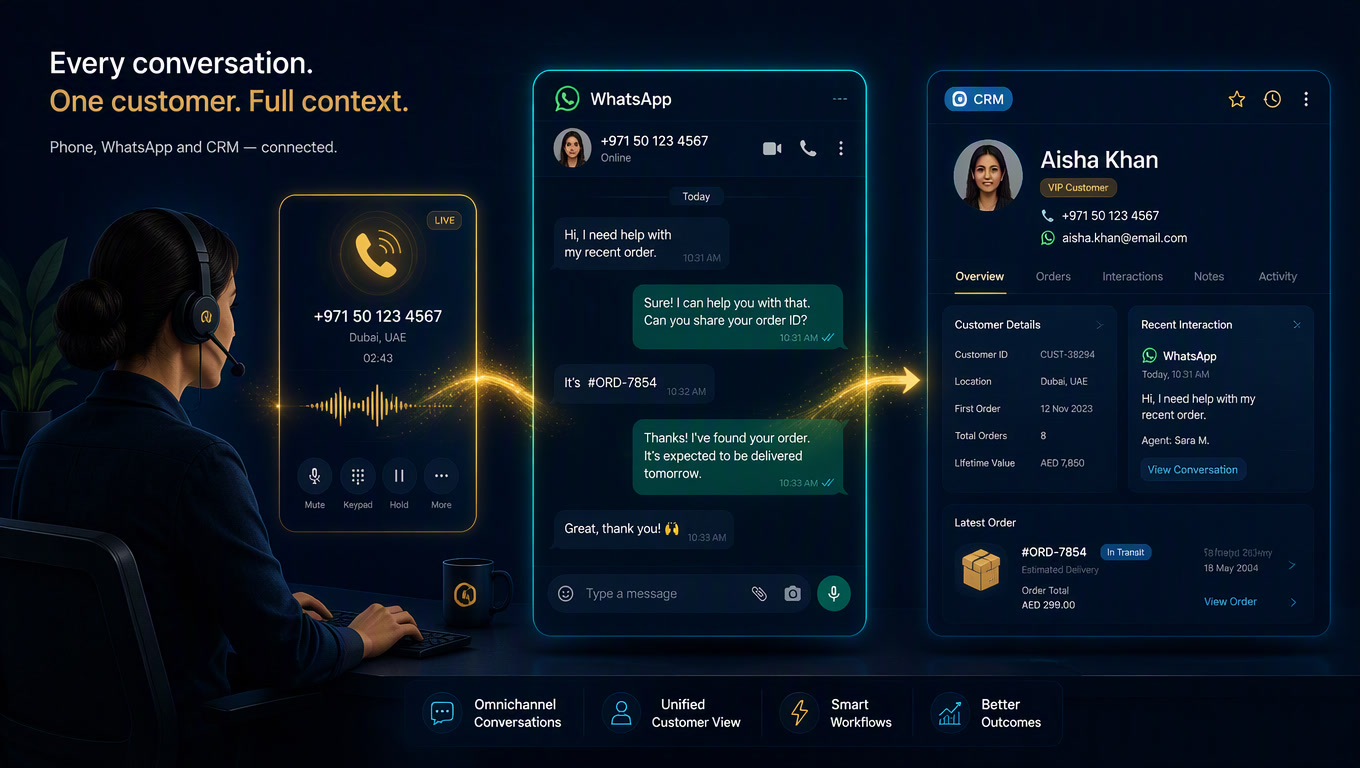
The detail everyone underestimates sits between stages 3 and 5: the OTA gives you just enough to operate the booking, not enough to build a relationship. So capturing the WhatsApp cannot wait for checkout. In practice it happens at booking confirmation, via a QR code in the room or the welcome message: the guest registers on your channel, and from then on stage 5 has someone to write to.
Stage 3's upside is measurable: pre-arrival digital offers convert at 12-22% versus 3-7% for front-desk pitches, and automated pre-arrival messaging produces 20-30% more ancillary revenue per guest than relying on the front desk to remember to offer late checkout (Stayntouch, Akia).
Arrival confirmation is the half that pays
Typical no-shows run 3-8%, and adding last-minute cancellations the combined gap reaches 10-16% at average European properties. The most uncomfortable number: by channel, direct bookings cancel around 11% while Booking.com runs 37-42% (D-EDGE) — the channel that charges you most is the one that dissolves most.
This is where the automated route recovers real money. Pre-arrival reconfirmation sequences — 72 hours, 24 hours, arrival day, each with one-tap response — cut high-risk no-shows by 40-60% in production (Jengu 2026 data). And there is a better side effect: if the guest cancels or reschedules 48 hours ahead, the room returns to inventory with time to resell, feeding an informed overbooking model instead of a silently absorbed empty room.
In our audits of properties that already had chatbots installed, the bottleneck was almost never the AI — it was that nobody sent the arrival confirmation. First the route that recovers money, then the conversational assistant. Order matters.
The stack by property size
| Profile | Recommended stack | Approximate monthly cost |
|---|---|---|
| 1-20 rooms | WhatsApp Business App + booking engine + lightweight Make or n8n | $10-70 |
| 21-80 rooms | WhatsApp API + self-hosted n8n + PMS API + AI layer | $60-250 |
| 80+ / chain | Native guest messaging platform + cross-system orchestration | $300+ |
The rule we apply: native first, orchestrate when crossing systems. In-stay messages live better in the PMS's native tool; n8n enters when PMS + payments + CRM + WhatsApp must cross in one flow — which is exactly what stage 2 does. For CRM options with WhatsApp in the region, see our full comparison.
Billing and compliance: what you can and cannot send
Since October 1, 2026, WhatsApp service messages are billed per number, with 1,000 free per month per business phone number. For a hotel this matters because it classifies every stage of the route:
- Confirmations, reconfirmations, and reservation changes → service messages (keep your reconfirmation volume inside the free tier; details in what a WhatsApp reply costs after October 1).
- Upsell tied to an existing reservation (late checkout, upgrade) → utility message tied to the booking.
- Promoting a next stay with no booking in progress → marketing message: explicit opt-in required.
On guest data the regional rule does not change: data minimization, separation between service and marketing, and consent traceability (LFPDPPP in Mexico, LGPD in Brazil, Ley 1581 in Colombia). We cover the regional compliance layer in WhatsApp automation and compliance in LatAm.
Three mistakes we see at every launch
- Building the chatbot before the arrival reconfirmation. The assistant feels like progress; stage 3 returns money. Start with the 1,000-message service free tier and put the confirmation route to work before training anything.
- Treating every message as marketing. It burns opt-ins, inflates billing, and violates template rules. Service and marketing are separate channels with separate permissions — the same logic applies to human handoff.
- Fighting the OTA instead of converting its guest. Dropping below 63% dependency is a multi-year goal; converting the second stay to direct is a quarter. Automation serves the second.
For the same route logic applied to another sector, clinic automation without spamming patients follows the same five-stage skeleton with different metrics. And if you start requesting reviews at checkout, the AI review pipeline keeps you from asking twice.
Hotel automation is not measured in messages answered, but in commission points shifted and no-shows that never happened. Start with stage 3, measure the direct share of stay #2, and leave the conversational bot for when the route is already paying for itself.
Frequently Asked Questions
How much does hotel guest automation cost?
A boutique property of 1-20 rooms can start with the WhatsApp Business App and a booking engine for under $70 a month. A 21-80 room property running the WhatsApp API, n8n orchestration, and a PMS integration typically lands between $60 and $250 a month — far below corporate guest messaging platforms.
How does WhatsApp integrate with a hotel PMS?
The common path is API orchestration: n8n or Make connects to the PMS (Cloudbeds, Sihot, or others with open APIs), the WhatsApp Business number, and the payment gateway. PMS events (booking created, 72 hours before arrival, checkout) trigger the messages, and guest replies write back to the folio or CRM.
Can I message a guest who booked through an OTA?
Yes for operational traffic: confirmations, reservation changes, and service messages tied to a stay are permitted and billed as service messages. Promotions without opt-in are not allowed. Also, the OTA owns the relationship during booking, so the window to capture the guest's WhatsApp and set up a direct second stay is the stay itself.