AI Video Finally Has a Public Per-Second Price List: The Real Budget, From Render to CDN
Google moved its video generation to general availability with published per-second pricing (from $0.03/s). Here's the tier-selection framework and the true landed cost of a piece — generation, iteration, audio, encoding and delivery — with the math we run at Mintec for clients.
AI Video Finally Has a Public Per-Second Price List: The Real Budget, From Render to CDN
On August 28, 2026, Google moved its video generation model to general availability with a public per-second rate — from $0.03 up to $0.30 per generated second depending on quality — and with that, AI video production stopped being an unquotable expense and became a line item. As of this week we can answer the question every client asks us with actual arithmetic: "how much does an AI video cost?" The short answer: far less than a studio-produced piece. The real answer depends on two decisions almost nobody plans for — which generation tier you use and how you ship the piece to the browser.
At Mintec we produce AI video every day for Virtalio and for agency clients, so this week wasn't just another headline for us. The public per-second price changed how we quote, how we iterate, and what we promise clients before the first frame is generated.
What changed on August 28
Until this week, AI video costs were negotiated in a gray zone: preview pricing, subscription credits, opaque monthly bundles. A marketing team couldn't sit with their CFO and explain what 12 monthly pieces would cost.
That changed with the announcement covered on August 29 in Hiroki Miyano's weekly AI deep dive (source: https://note.com/hirokimiyano/n/n3cc6317dd2c3): Google moved its video generation to general availability with published per-second pricing, ranging from $0.03 to $0.30 per second depending on quality. August 2026 pricing guides (e.g. https://costgoat.com/pricing/google-veo and https://diyai.io/ai-tools/video-generation/google-veo-pricing/) break the tiers down: a draft tier around $0.03–0.05 per second at 720p, a fast production tier at $0.10–0.15, and a quality tier for final pieces at $0.20–0.40. Native audio and higher resolutions add a reported premium of up to 50% on top of the base rate.
Don't marry the exact decimal — video model prices shift every quarter. The structural event is what matters: for the first time there's a public price list per second, with explicit tiers, and that turns AI video production into a solvable budgeting problem.
The tier table we budget with
| Tier | Reported rate (Aug 2026) | Typical resolution | What we use it for |
|---|---|---|---|
| Draft (Lite) | $0.03–0.05/sec | 720p | Iteration, animated storyboards, client references |
| Fast | $0.10–0.15/sec | 720p | Social cuts, feed variants, volume |
| Quality | $0.20–0.40/sec | 720p/1080p | Page heroes, brand pieces, what the CFO sees |
| Premium (4K/audio) | up to ~$0.60–0.75/sec | 4K + native audio | Approved final renders only |
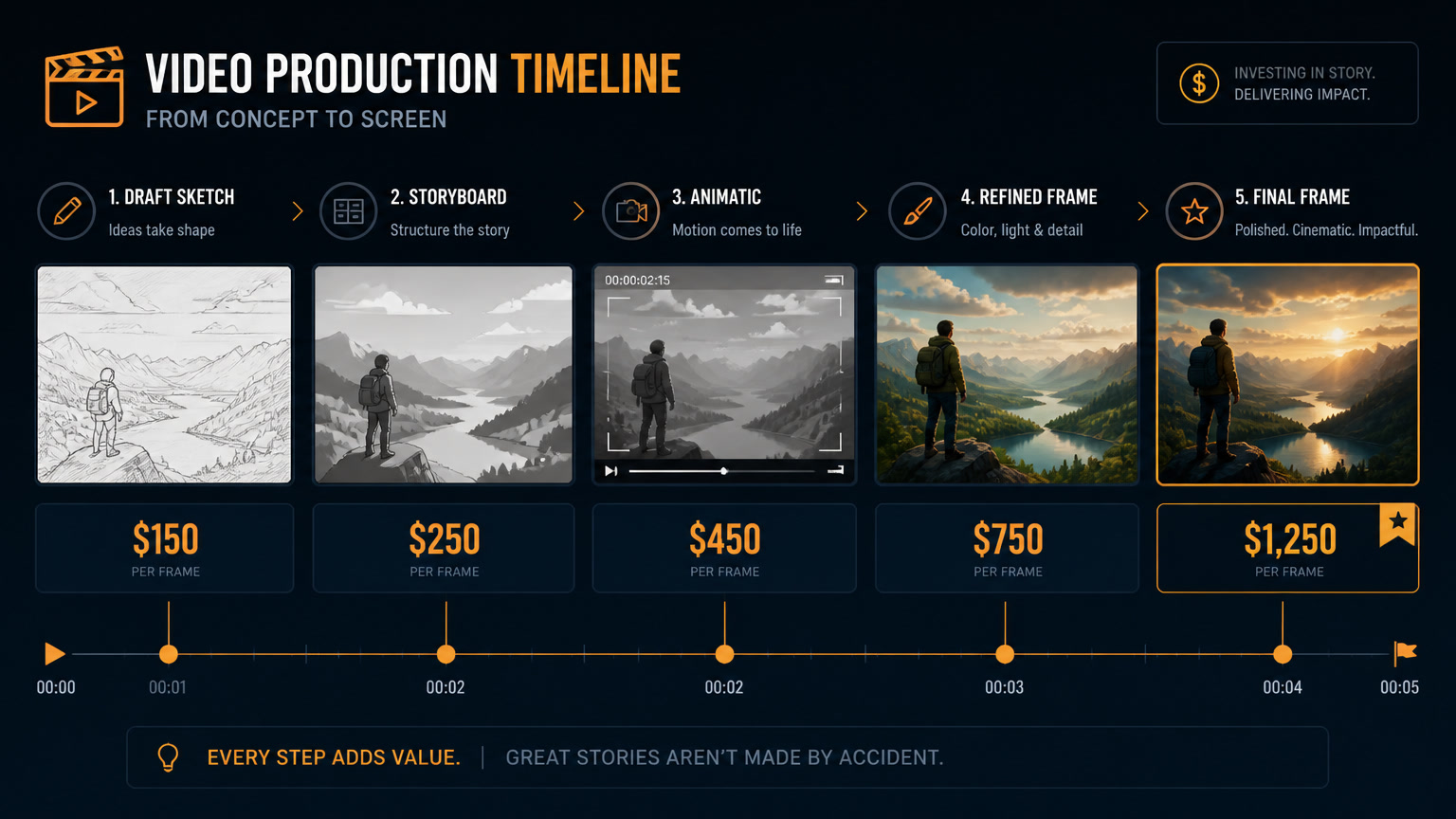
The rule we've applied since this structure existed: the draft tier is for making decisions, the quality tier is for spending the client's money. If a scene doesn't pass approval as a draft, rendering it at quality is burning cash — and that hurts more now that the price is public.
What the per-second rate doesn't include
Here's the mistake we see in almost every budget that comes our way: people multiply seconds × price and think they have the number. The public rate covers only the seconds generated on the API. The real cost of a piece has four layers:
- Iteration. An accepted 30-second piece usually requires 6–10 attempts per scene at draft quality. With the draft-first workflow we documented when Omni 1.1 Flash shipped — iterate cheap, render expensive only on the approved version — iteration lands at $3–5 per piece. Without that discipline, the same piece costs three times more (how the draft-first economy works).
- Audio. Native audio adds up to a 50% premium on the quality tier. If the video plays muted in a feed, don't pay it: adding music or voice in post is cheaper and gives you more control.
- Encoding, storage and CDN. This is where budgets run away if nobody's watching. A 30-second 1080p hero weighs 20–80 MB depending on codec; multiply that by 12 monthly pieces and the audience that plays them, and the delivery bill can exceed generation. Choosing your video platform — Mux, Cloudflare Stream, self-hosted — changes that number by an order of magnitude (video platform comparison).
- The performance tax. The per-second rate doesn't pay for LCP: a badly delivered video hero costs you conversions and rankings. This isn't optional, it's part of the budget (more below).
The real math for a 30-second hero, with our August 2026 numbers:
| Layer | Estimated cost |
|---|---|
| Drafts (~80 effective seconds at $0.04) | ~$3.20 |
| Final 30 s render on quality tier (~$0.30) | ~$9.00 |
| Native audio premium | ~$4.50 |
| Encoding + storage + CDN (first month) | ~$10–20 |
| Total accepted piece | ~$27–37 |
Compare that with the $1,500–5,000 a studio-produced hero runs, and you understand why the brand-video market is shifting. But it's also why "AI video is free" is a lie: the piece costs what the sum of your decisions costs, not what the cheapest tier advertises.
How we pick the tier (and what we promise clients)
Our four-question decision framework:
- What is the piece for? Drafts to approve direction; fast for feed volume; quality for page heroes or campaigns. Never the reverse.
- How much motion is in the scene? Talking heads and simple scenes survive fast tiers; product close-ups, camera moves and complex lighting need quality.
- Where does it play? Muted autoplay in a small feed: fast is enough. A hero above the fold with sound: quality, always.
- Who approves it? If the CFO approves, the final render happens once, on the approved version. If the creative team approves in a loop, everything lives at draft tier until freeze.
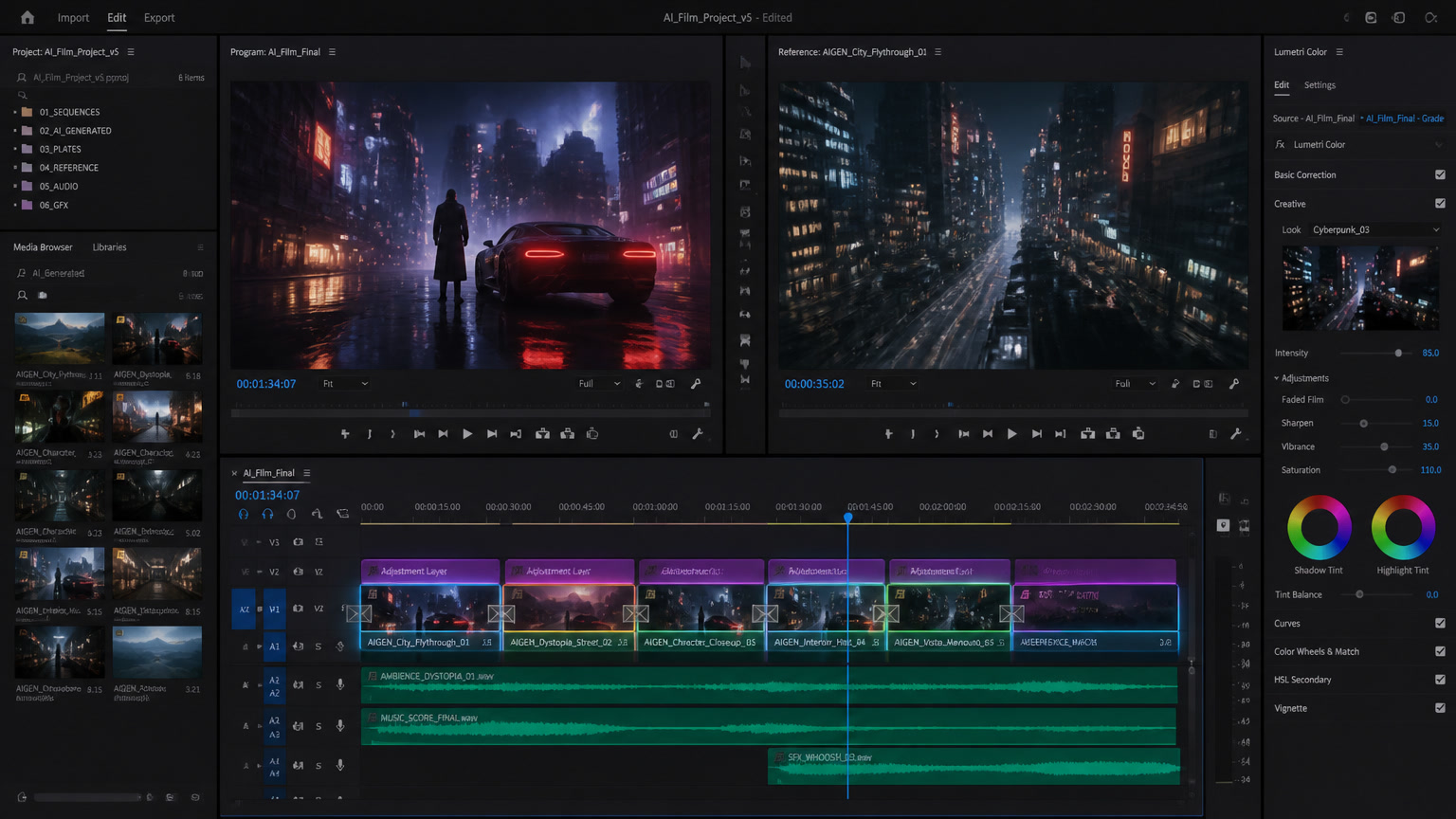
This isn't theory — it's the flow we run for Mintec clients and the one we documented in our multi-model AI video production workflow. The public per-second price gave us a new edge: we now quote per accepted second, with the proposed tier in the proposal and an iteration cap. The client knows before signing what their video costs and what every dollar buys.
The bill you actually pay: your website
Per-second pricing solved the generation mystery but left the more expensive one intact: delivery. An unoptimized 30-second 4K AI video can cost you more in Core Web Vitals than it cost to generate — and the public rate doesn't save you there.
Three delivery decisions we always put in the budget:
- Codec and adaptation. Shipping AV1 with adaptive sources (HLS) instead of one heavy MP4 cuts weight 30–50% and enables quality switching by bandwidth (adaptive video with Astro). Generation cost doesn't change; delivery cost changes a lot.
- Poster first, video second. A video hero doesn't have to be your page's LCP: an optimized poster as the LCP candidate with deferred video turns your most expensive asset into your cheapest one to load (the hero video dilemma).
- A total performance budget. AI video enters your site like any other asset: with a maximum MB allowance per piece and per page, the same way we run performance budgets for synthetic media.
The practical rule
With a public per-second price list, the question is no longer "how much does AI video cost?" but "how much does the piece I'm going to publish cost?". The answer: generation (right tier + disciplined iteration) + audio (only if it earns its keep) + delivery (codec, poster, budget). Do that sum before generating the first second, and AI video stops being an expensive experiment and becomes the most predictable line in your content budget.
At Mintec we run this math every day, from generation to CDN. If you want to know what your next video would cost — before generating it, not after — that's exactly the conversation we're good at.
Frequently Asked Questions
What does it mean that AI video now has public per-second pricing?
It means AI video generation is no longer a black-box cost: Google published per-second rates (from roughly $0.03/s on the draft tier), so teams can budget a piece before producing it and compare quality tiers the way they compare hosting plans.
How much does a 30-second AI video actually cost?
It depends on tier and iteration discipline. With August 2026 pricing: roughly $3–5 for drafts, $9–12 for the final high-quality render, and $4–7 for native audio — about $15–25 in generation per accepted piece. Add encoding, storage and CDN, and a 30-second hero lands under $50 in practice.
Does the per-second price include delivery to the browser?
No. The rate covers only the seconds generated on the API. Delivery (encoding, storage, CDN and the Core Web Vitals impact) is billed separately and can exceed generation cost on large pieces — which is why the real budget for an AI video is generation plus delivery.