
10-minute AI video: when length stops being the bottleneck
Four October launches broke the AI video length ceiling: Higgsfield runs past 10 minutes on GPT-6 Astra and VideoGen Model 1 builds 10 minutes from one prompt. What changes in production, what a real attempt costs, and what breaks first.
AI video broke 10 minutes, and it didn't happen through a beefier render: within 12 days of October, four consecutive announcements showed that the length ceiling stopped being a generation problem and turned into a shot-planning problem — and the real bottleneck moved to quality control and web delivery. Higgsfield now produces videos over 10 minutes long on GPT‑6 Astra (October 13), VideoGen announced Model 1: 10 minutes from a single prompt (October 19), Synthesia put Syren into beta — it writes video as code (October 9) — and Vidu Q4 Preview arrived with 4K, 10-bit and public per-second pricing (October 7). If you produce video for the web, the practical takeaway isn't "generate longer": it's that the unit of work is still the scene, and the long file becomes your master, not your asset.
The 12 days that broke the ceiling
When we covered Seedance 2.5 and the single-take format back in August, the native-pass ceiling was 30 seconds. That ceiling didn't get stretched — it got bypassed. None of October's announcements generates 10 minutes in one continuous render; every one of them plans the video as a shot sequence and carries context from shot to shot.
| Launch | Date | What it announces | Mechanism | Public pricing |
|---|---|---|---|---|
| Vidu Q4 Preview (Shengshu) | Oct 7 | Production-grade output: 4K, 10-bit, reference voice | Up to 15 reference images per scene; consistent character voice | $0.045/s at 540p → $0.39/s at 4K |
| Syren by Synthesia (beta) | Oct 9 | The agent is the editor: describe it and the video builds itself live | Writes the video as code; in-house render engine in the browser; chat-based editing | Credit-based on existing plans |
| Higgsfield + GPT‑6 Astra (OpenAI) | Oct 13 | Videos over 10 minutes long | Creative agents that call external tools (including 3D modeling) to hold consistency | Not published |
| VideoGen Model 1 | Oct 19 | 10 minutes from one prompt, shots carrying context | "AI thinking harness" resolving script, shots and pacing; LLM judges at two speeds | Claims >50% cheaper than Seedance 2.5 and Gemini Omni Flash (no external benchmark yet) |
Two pieces of marketing spin should be discarded up front. First, VideoGen says Model 1 reaches "close to 80%" of Seedance 2.5's quality — with no published benchmark, and AI Affairs, which covered the launch, confirmed it never got access to the model. Second, "10 minutes" isn't "10 usable minutes": what these systems actually promise is character and location continuity across shots, which is what made long AI video unworkable until now.
Length isn't generated: it's planned
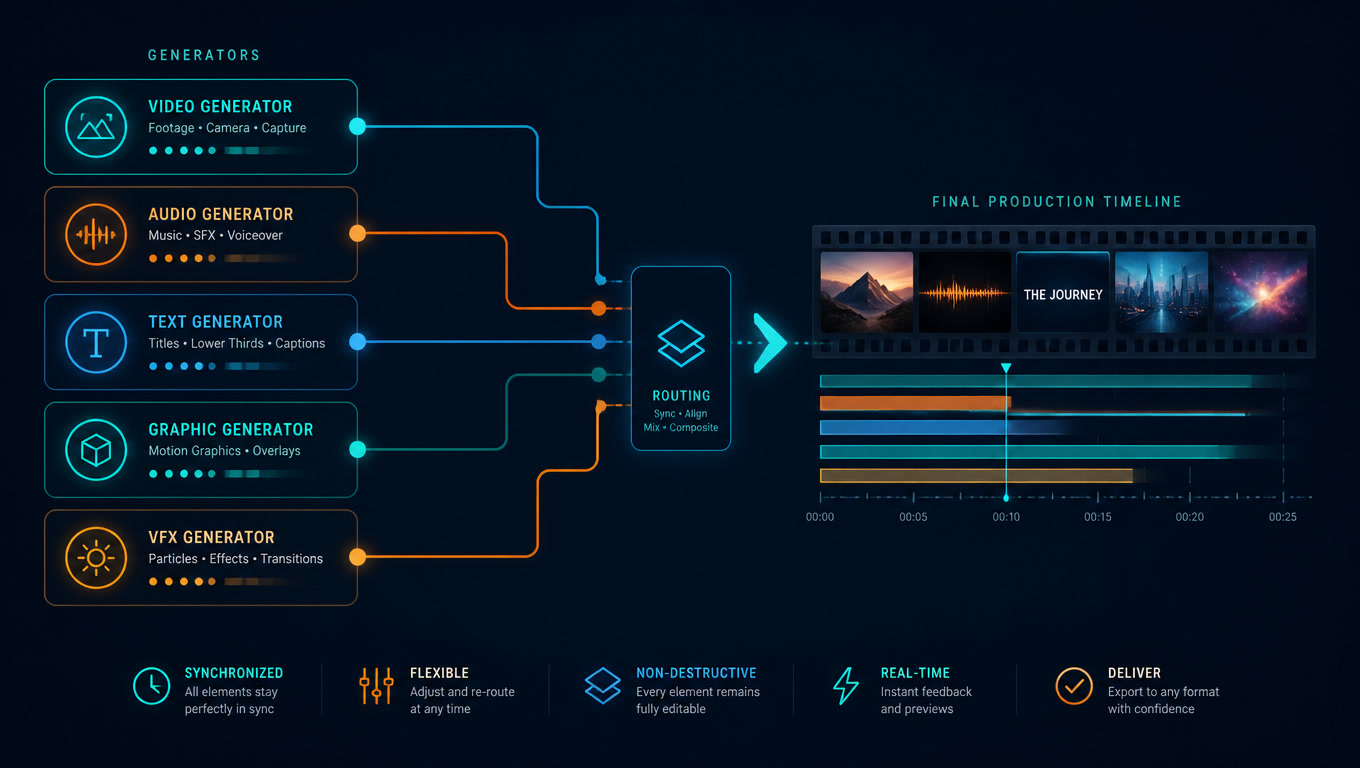
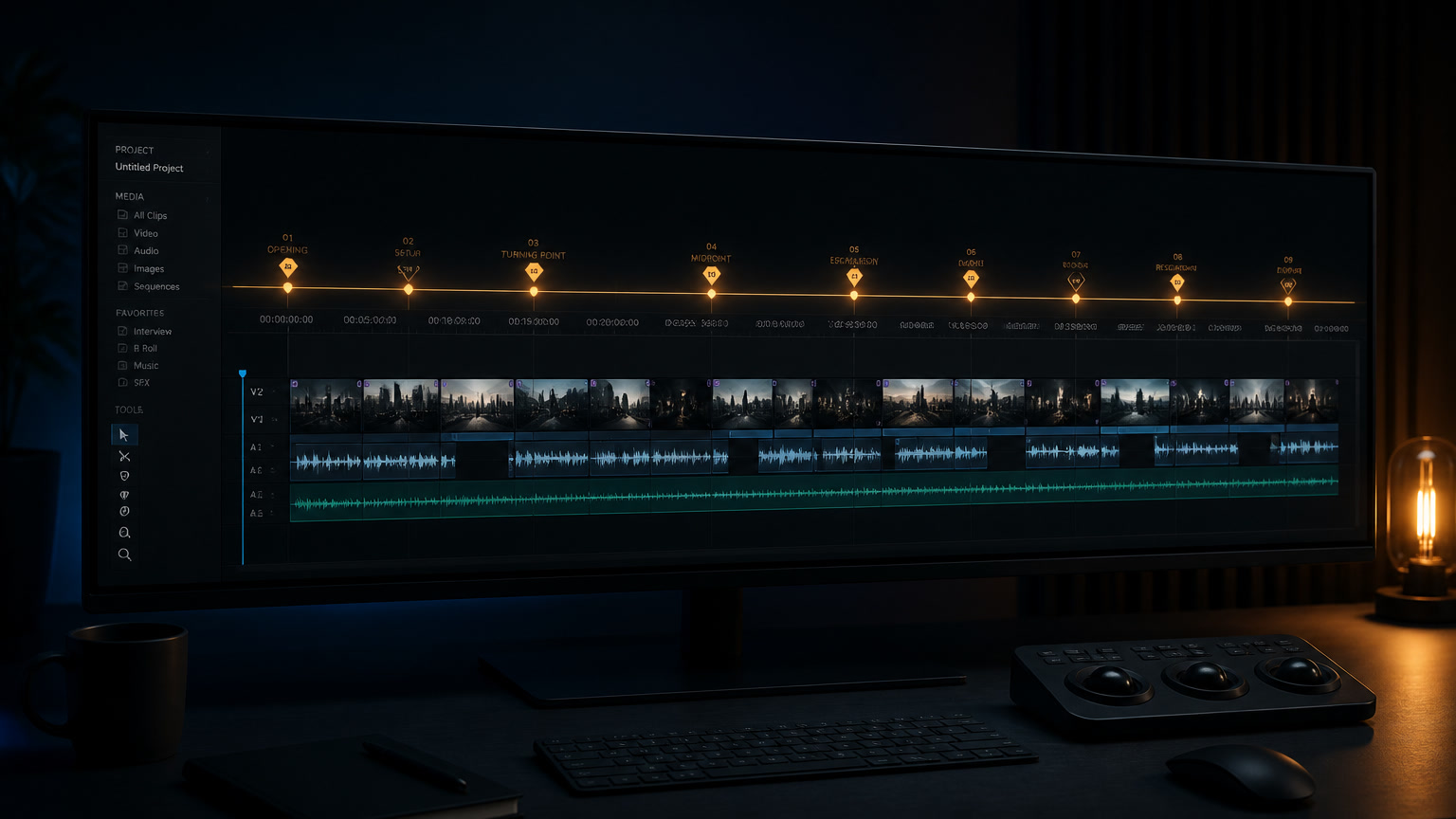
The technical difference between July and October is who decides the cuts. In a native pass like Seedance's, the model decides internally and hands you a closed 30-second shot. In the long-form models, a planning system — VideoGen's "thinking harness," Higgsfield's tool-calling agents — decomposes the prompt into a shot sequence, then generates each shot with the context of the previous ones attached.
For a production team, this changes where risk lives. The shot plan can be read, corrected and re-run in parts: if shot 7 fails, you repeat shot 7, not the ten minutes. That's the practical reason the long format became producible — the unit of failure is the shot, even though the unit of delivery is the file. Our own multi-model AI video production workflow already worked this way — routing each shot to the model that fits it best — and the long models confirm that approach rather than replacing it.
Syren points at a different layer of the same problem: instead of shots, it writes the video as code and renders it live in the browser. If you ship motion graphics and corporate avatars, the "master file" stops being an MP4 and becomes a reproducible document you can regenerate with a copy change. For brand video with frequent updates, that's more interesting than the 10 minutes.
What breaks first: the bottleneck framework
When the length ceiling disappears, five things redistribute. This is the map we use to decide where team hours go on a long video project:
| Layer | Before (~30–60 s ceiling) | Now (10+ minutes) | Where it hurts first |
|---|---|---|---|
| Consistency | Solved within one shot | Decided between shots: wardrobe, lighting, voice, framing | Shot-by-shot visual QC |
| Review surface | 30 s, one pass | 600 s, dozens of shots | Human hours, not minutes |
| Cost per attempt | Dollars per piece | Tens to hundreds per accepted render | Iteration budget |
| Editing | Cut-and-trim timeline | Re-running individual shots + chapters | Version management |
| Web delivery | A feasible video hero | A 450–600 MB file with no strategy | Core Web Vitals and user bandwidth |
The row almost everyone underestimates is the second. Reviewing 600 seconds of generated video — hunting character inconsistencies, drifting lip-sync, hallucinated interface text — takes orders of magnitude longer than reviewing a 30-second clip, and that time doesn't fully automate away: VideoGen's LLM judges help, but today the "this ships" decision is still human.
The number that matters: what an attempt costs
At Vidu Q4 Preview's published rates, one accepted 10-minute render (600 seconds) costs $27 in 540p and up to $234 in 4K. As a budget reference: five iterations of the same script in 4K cross $1,100 in generation before a single delivery file exists. The per-second pricing math we published in August still holds, but long form multiplies error: where a 30-second hero let you be wrong cheaply, a 10-minute master forces you to validate the shot plan in 540p before paying for the fine render. Cheap draft on top, expensive render only once the plan is approved — that's the only combination that adds up.
And yes, Vidu's 30% discount through November 30 on image-to-video and reference-to-video helps the pilot, but it doesn't change the cost structure: the live cost is the review loop.
A 10-minute file is not a web asset
This is where production video and web development cross, and where we see the most mistakes. A 10-minute master in H.264 at 1080p with a standard 6–8 Mbps bitrate weighs between 450 and 600 MB. No landing page survives that loaded directly; the average mobile user won't download it, and your LCP becomes a anecdote. We covered the fundamentals in the native video and audio lazy loading playbook and in how to embed AI-generated video without destroying website performance, and the principle scales to long form unchanged: poster first, real lazy loading, video only after interaction or when the viewport earns it.
The rule we apply: generate long, deliver in chapters. The 10-minute master is archive material and the source of cutdowns; the web gets 40–90 second segments with their own posters, plus a chapter index for anyone who wants the full thing (with <track> captions from day one — it isn't optional, it's part of QC). An AV1 encode of the master cuts weight by 30–50% at the same visual quality, and it earns its place exactly when the full cut will actually be watched on the page.
What we're doing at Mintec
Our current stance, concretely: long-form AI video does enter production for explainers, tutorials, channel content and demos — with a shot plan approved before paying for fine renders, and human review per shot. It does not enter yet as a cinematic piece without QC, nor as a single file embedded in a landing page. And there's a use case we'd rather decline: when the "10-minute video" actually needs strict editorial continuity — interviews, narration with live data — a generated master that you cut down afterward remains cheaper and more controllable than asking the model for 10 uninterrupted minutes.
The length ceiling isn't the question anymore. The question is what reviewing what you generate costs you — and for now, that's still human.
Frequently Asked Questions
How do AI models generate 10 minutes of video if a single pass takes seconds?
They don't do it in one pass. The models that broke October's ceiling plan the video as a shot sequence: a planning system resolves script, dialogue, shots and pacing, and each shot is generated carrying the context of the previous ones — characters, locations, detail. The length comes from planning, not from one longer continuous render.
How much does generating 10 minutes of AI video cost?
At Vidu Q4 Preview's published rates: about $27 in 540p and up to $234 in 4K per accepted 600-second render ($0.045/s and $0.39/s respectively). On top of that cost per attempt sit your QC iterations: in practice the budget for a long AI video is defined by how many times you review and regenerate, not by how long the render takes.
Is 10-minute AI video ready for client production?
Yes, for formats where continuity is controlled per scene — explainers, tutorials, channel content, product demos — with human review shot by shot. Not yet for pieces that demand cinematic continuity without a QC pass: shot-to-shot consistency is the most expensive failure, and it's exactly where long models break.