

AI answers quote your hotel fact sheet, not your blog
Bing's 883,313-citation analysis and Google's new attribution doc point at the same pages: fact sheets, policies and PDFs. How hospitality should split them.
If you run a hotel, a restaurant group or a clinic, the page that gets quoted in an AI answer is almost never the post your marketing team spent a week on. It is the page that states one fact cleanly: the pet policy, the meeting-room capacity, the parking fee, the allergen line. Answer engines quote what they can lift, and marketing pages are usually built to be persuasive rather than liftable.
Two documents that landed within a day of each other make that more than a hunch. One is a citation dataset pulled from inside a search engine. The other is Google's own description of how links get selected for AI Overviews and AI Mode. Read together, they say something uncomfortable for every property that has been treating AI visibility as a content-calendar problem.
What the citation data actually shows
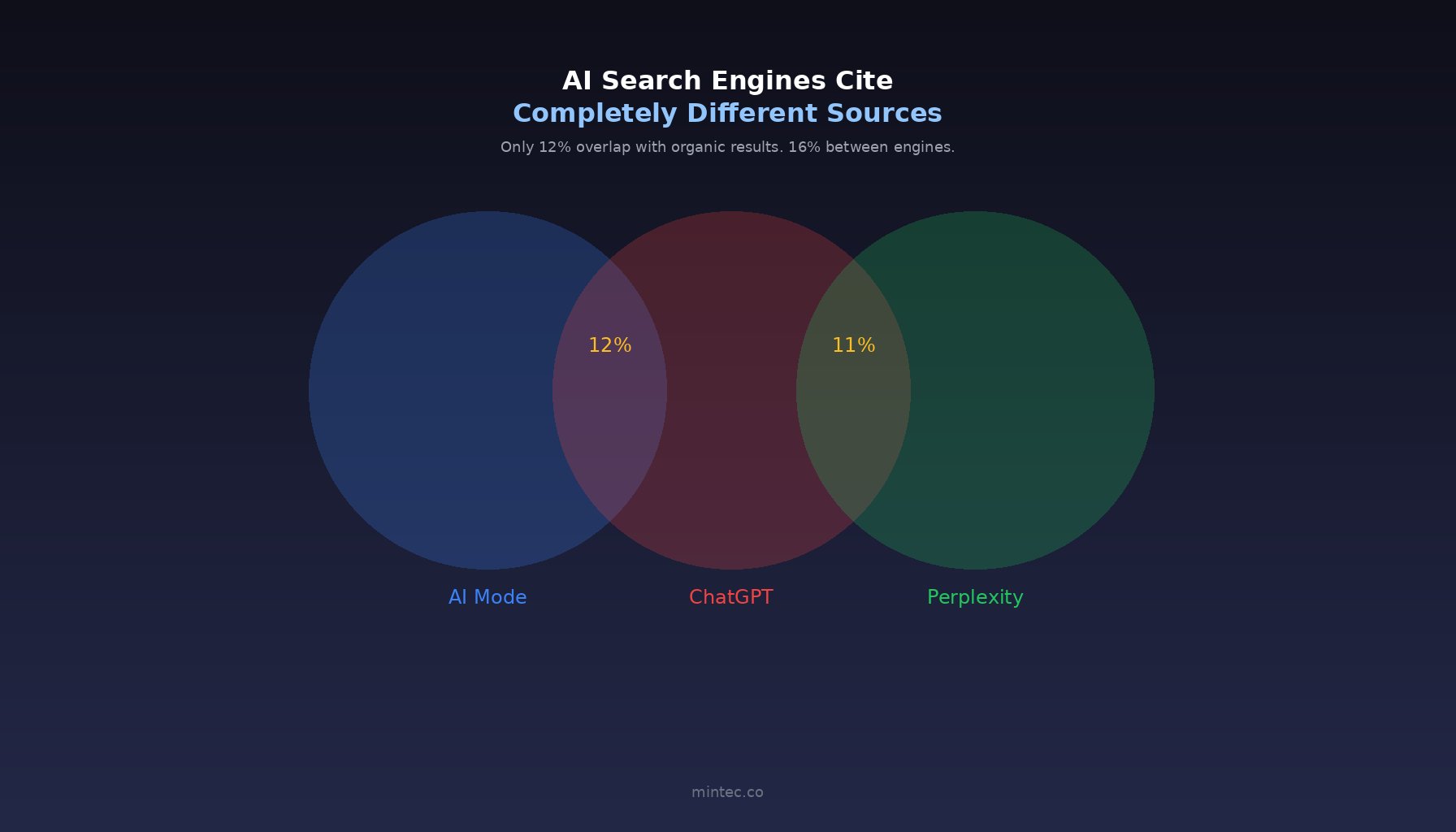
Search Engine Journal published an analysis on November 24 built on Bing Webmaster Tools' AI Performance Reporting: 883,313 page citations across 26 brands, covering 10,861 cited URLs. The headline finding is blunt. Blog posts, product pages and homepages together accounted for 42% of citations. The other 58% was app pages, attractions lists, instruction manuals, course catalogs, key personnel directories and PDFs — the kinds of pages nobody on a content team plans for.
The same dataset has a second number that matters more for hospitality. Bing reports a Citation Share per grounding query: on branded searches, the brand's own site supplied 67% of citations. On non-branded searches, it supplied 25% — three of every four citations went somewhere else. That "somewhere else" is the OTA, the aggregator, the directory and the competitor with a better policy page.
Two honest caveats, because this data gets overstated everywhere it is quoted. It is Bing, not Google, and the two systems retrieve differently. It is also sampled — Microsoft states that grounding-query data represents a sample of citation activity, and the pipeline backfills, so a month-over-month rise can be more data rather than more citations. It is still the only first-party citation export published from inside a search engine.
What Google documented about link selection
Google published a documentation page titled Attribution and factuality in Search generative AI features as part of a wider refresh of its ranking documentation, and Search Engine Roundtable covered it on November 25. The mechanism it describes runs in a specific order:
- Ranked results from the Search index. Google checks the ranked results returned for the query for relevance, and snippets from those pages are provided to the model as the basis for the answer.
- Related searches. The model may run one or more fan-out queries to pull additional supporting pages.
- Grounding and corroboration. Before a response is shown, the system checks the generated claims against the retrieved sources.
- Link display. Links are attached to the claims they support.
Google's framing throughout is that generative AI features are integrated directly with its core Search ranking and quality systems. That single sentence should reframe how you budget the work: citation is downstream of ranking, not a parallel channel you can win with a different playbook.
There is also a gate that most audits skip. Google's guide to optimizing for generative AI features states that to be eligible, a page must be indexed and eligible to be shown with a snippet, and that the site itself must be included in Search generative AI features in Search Console. Snippet eligibility is a hard requirement, not a formatting preference. A page that suppresses its own snippet, or a policy page sitting on a subdomain that is blocked from indexing, cannot be quoted no matter how good the writing is.
The split hospitality properties get wrong
Hotels learned to hide volatile information behind the booking engine, and that instinct is correct for rates. The mistake is applying it to everything. Policies, capacities, distances, inclusions and allergen data get pushed into the same locked drawer, and those are exactly the facts an answer needs.
The test is stability, not sensitivity:
- Changes quarterly or less — publish it as HTML text on a normal page. Pet policy, check-in and check-out, cancellation windows, accessibility features, parking rules and price, meeting-room capacity, distance to the airport, what breakfast includes, fixed resort fees.
- Changes daily or weekly — keep it in the engine, link to it, and publish the rule around it instead of the number. "Rates include breakfast and taxes; a nightly resort fee applies" is citable. "From $189" is a claim you will be correcting forever.
Applied to the assets a property already owns, the map looks like this:
| Asset | Query it answers | Publish as | How it usually fails today |
|---|---|---|---|
| Property fact sheet | Rooms, capacity, distances, check-in | HTML page, one fact per sentence | A PDF the site never renders as text |
| Policy page | Pets, parking, cancellation, access | HTML with a heading per policy | Buried in booking T&Cs on a subdomain |
| Menu and allergens | Dish details, hours, dietary limits | HTML, dish-level lines | Image-only PDF menu |
| Meeting and event specs | Capacity, layouts, AV, catering | Table with numbers and units | A sales PDF behind a form |
| People page | Who runs the property, the kitchen | Short bios with credentials | No owner page exists at all |
The last row is the one properties skip and the Bing dataset keeps surfacing: key personnel pages earn citations because they answer a different class of question — who is behind the place, what they have done, why their judgment is credible. That is the same expertise signal Google's guidance keeps pointing at, and it costs one page.
The extraction test
Before publishing anything, apply one test to the sentence: could someone quote it, alone, and be right?
Weak: "We are proud to be a pet-friendly property with everything your furry friend needs."
Citable: "Dogs up to 15 kg stay for USD 25 per night. Guide dogs stay free. Pets are not permitted in the restaurant or pool area."
The second version carries the fact, the unit, the currency and the exceptions. It survives being lifted out of context, which is all a citation is. The first version is unusable to a model because it asserts nothing checkable, and unusable to a guest because it answers nothing.
This is where hospitality pages lose most often — not at the ranking stage, at the lift stage. In client work the pattern repeats: a property ranks for the query, gets pulled into the retrieval set, and loses the citation to an OTA because the OTA lists the fee and the property writes a paragraph about hospitality.
Fan-out rewards the narrow page
Because the model runs related queries, one page rarely answers the whole question. A guest asking whether a hotel works for a family trip triggers sub-questions about cribs, pool depth, kids' meals, connecting rooms and distance to attractions. Each sub-question needs a page that answers it exactly.
That produces a counterintuitive priority: the twenty-line policy page beats the 2,000-word destination guide, because the guide mentions everything and commits to nothing. It also sets a trap. Google's guide explicitly warns that generating separate pages for every variation of how people might search — including fan-out queries — to manipulate rankings violates its scaled content abuse policy, and does not work long term. One page per real question, not one page per string.
What to skip
Google's own documentation is unusually direct about the things being sold as GEO tactics. It states that Google Search does not use llms.txt or other special AI text files, that there is no special schema.org markup needed for generative AI features, and that seeking inauthentic mentions across the web is not a shortcut.
Blocking AI crawlers is also not the lever people think it is. Robots directives control who may fetch a page, not whether an answer quotes it, and a property that blocks retrieval removes itself from the pool while its OTAs stay in it. If you are weighing that decision, what each robots directive actually changes is the place to start rather than the switch itself.
How to check this in an afternoon
- Pull the cited-URL export, not the query list. In Bing Webmaster Tools' AI Performance reporting, export the pages view, rank cited URLs by citation count, and draw a line at 80% of citations. That cut is your citation inventory.
- Sort each row into an asset class from the table above. Most properties find that the top of the list is policy and fact pages, not posts.
- Run the extraction test on the top ten. Anything that fails gets rewritten to one fact per sentence before anything new is written.
- Find the asset types with citations but no owner. A cited PDF that no team maintains is a liability with a marketing upside: convert it to an HTML page, keep the PDF as the download, and date the page.
For the Google side, the equivalent signal is the generative AI performance report in Search Console — the counting quirks are worth understanding first, because the impressions are not comparable to classic search impressions. If you are still deciding where AI visibility fits against classic ranking work, what actually earns a citation covers the passage-level signals, and the claim-fidelity audit covers what to do when an answer describes you inaccurately.
The part nobody wants to hear
Fixing your fact pages does not win back the citations OTAs own. It improves the share you can realistically take: the branded queries, the specific-fact queries, the ones where a guest already has your name and needs one detail confirmed. On non-branded discovery, a property without a strong direct brand is competing against aggregators that have already published every fact you were hiding.
That is worth saying plainly to whoever signs the invoice. The work is real and it compounds, but it moves the twenty-five percent, not the seventy-five. The seventy-five is a distribution problem — reviews, brand searches, partnerships — not a page-template problem.
What you can do this month is unglamorous and cheap. Publish the fact sheet as an HTML page. Rewrite the policy page to one fact per sentence. Turn the menu PDF into text with allergen lines. Add a page for the people who run the place. Then measure the cited-URL set again in thirty days and compare it to the 80% cut you started with.
If you want that inventory built and the citable layer rewritten rather than another content calendar, our SEO and GEO team does it as a scoped engagement, and you can start a project here with the property list and the pages you already know are messy.
Frequently Asked Questions
Which hotel pages do AI answers actually cite?
Mostly the pages that state one verifiable fact in one place: property fact sheets, policy pages (pets, parking, cancellation, accessibility), menus with allergen data, meeting-room capacity specs and staff bios. In a 883,313-citation analysis of Bing's AI answers, blog posts, product pages and homepages together accounted for only 42% of citations.
Should a hotel publish its rates so AI can cite them?
Publish the rule, not the number. Rules that change quarterly or less (occupancy limits, what the rate includes, fixed resort or parking fees, cancellation windows) belong in HTML where they can be quoted. A nightly price that changes daily belongs in the booking engine, linked from the page, because a stale figure is worse than no figure.
Does an llms.txt file help a hotel show up in AI answers?
Not on Google. Google's documentation for optimizing for generative AI features states that Google Search doesn't use llms.txt or other special machine-readable files, and that there is no special schema.org markup required. What does matter is being indexed, being eligible to show a snippet, and having the fact written somewhere a model can lift it.