
The 7-Eleven Update: When Google Cuts Your Traffic by 73% and Won't Say Why
Google cut some sites' traffic by 73% with no confirmed update. Googlebot still crawls them. Here's our triage when an unconfirmed update hits.
The 7-Eleven Update: When Google Cuts Your Traffic by 73% and Won't Say Why
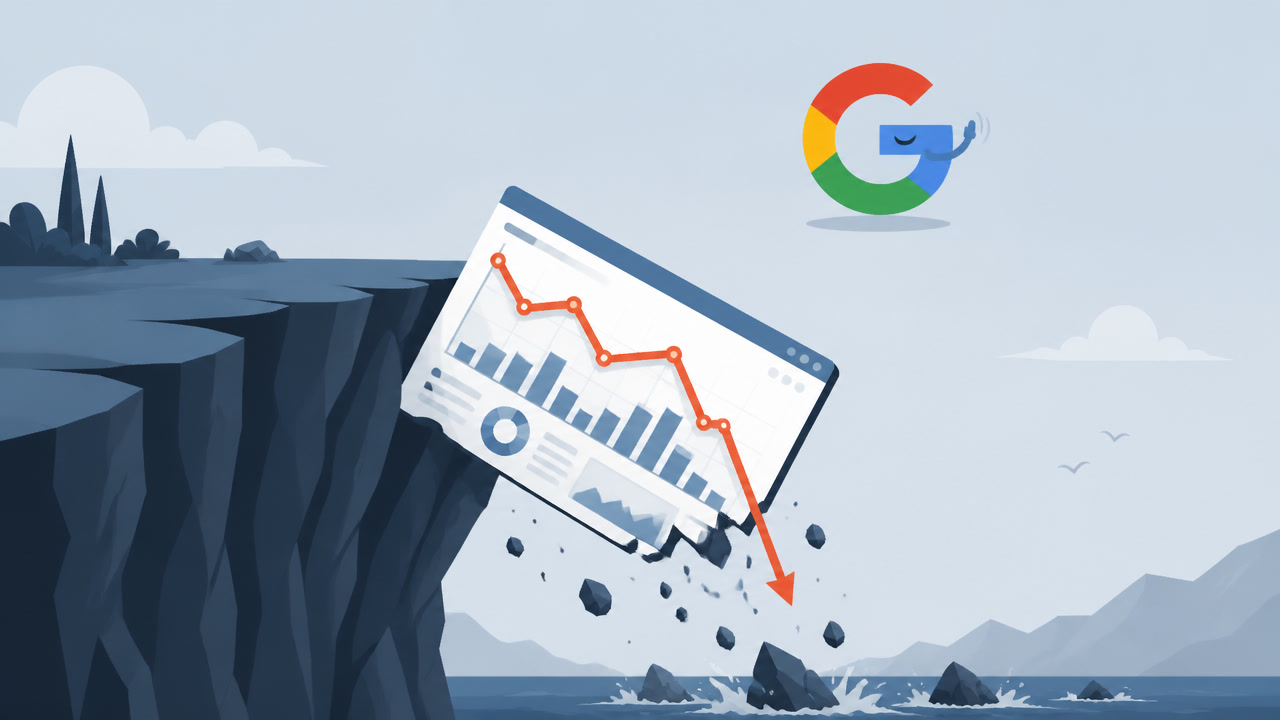
Around July 11, 2026, Google started deranking sites with no confirmed update behind it. One tourism site owner with 5 million annual visits reported losing 73% of organic traffic overnight. Googlebot still crawls the site normally. Google just refuses to serve it. And Google has said nothing about why.
That combination is what makes this one different. It's not a spam penalty, not a technical failure, not a content quality problem you can point at. The crawler shows up, reads everything, and walks away without indexing value.
What actually happened
Search Engine Roundtable named it the "7-Eleven update" on July 11, because that's the date: 7/11. Barry Schwartz flagged sharp ranking movement across trackers like Semrush and Sistrix, then noted something odd: the SEO community barely talked about it. Usually a volatility spike like that comes with hundreds of forum threads within hours. This time, silence.
Google didn't confirm anything. When asked, John Mueller said he had no news. Coverage of the event treated it as unconfirmed volatility, with the community guessing whether it was a quiet core update, a continuation of the June spam update, or something else entirely.
The most useful evidence came from site owners. A thread in Google Search Central describes a major French official website that got massively and unexpectedly deranked. The operator's diagnosis is worth reading twice: no confirmed core or spam update during the period, Googlebot continues to crawl the site normally, and this is not an access or technical blocking issue. Google can see the site. It crawls the site. It just doesn't serve the site.
The pattern that matters
Forget the name of the update. The pattern is the story.
Googlebot crawls normally. Pages stay indexed. Search Console shows no manual action. And yet the site stops ranking for the queries that used to pay the bills.
When that happens, most SEO advice falls apart, because it assumes a cause you can fix. Fix your content, fix your links, fix your Core Web Vitals, and you'll recover. But when there's no confirmed update to blame, the worst thing you can do is start ripping the site apart. Every change you make during an unconfirmed event becomes a variable you can't control, and you lose the ability to measure what actually mattered.
The honest answer, and I know agencies hate hearing it, is that sometimes there is nothing to fix. The traffic was never owned. It was rented, on a lease Google can void without notice.
Our triage when a client gets hit
We've run this enough times to have a checklist. It's deliberately boring.
1. Verify the loss is real. Open Search Console and compare impressions, not clicks. Clicks drop for seasonal reasons. Impressions dropping across the board for your money queries is the signal.
2. Rule out the boring stuff first. Check for a manual action, check indexation coverage, check that the sitemap didn't break in a deploy. 90% of "derankings" we investigate turn out to be a technical change someone made on a Friday.
3. Wait 72 hours before touching anything. Unconfirmed events often roll out over days. If you change title tags on day one, you'll never know what the update did on its own.
4. Document the shape of the damage. Which queries moved? Which countries? Which page clusters? A pattern tells you more than the total. If only money pages dropped while informational pages held, that's a different problem than a sitewide cut.
5. Check your other channels. This is the step almost nobody does, and it's the one that matters for what comes next.
The hedge nobody builds until it's too late
Here's the part of the 7-Eleven update that should change your strategy, not just your week.
Sites that lost Google traffic in July didn't lose Bing traffic. They didn't lose ChatGPT or Perplexity referrals either. The derank was Google-specific. And that's the whole point: ChatGPT Search is already diverting a measurable slice of Google's traffic, and it keeps its own distribution separate from whatever Google's core systems decide.
Our own numbers back this up. Last week our analytics logged 16 sessions from AI engines: 9 from ChatGPT, 5 from Gemini, 2 from Claude. Small numbers, sure. But they showed up consistently, across pages Google wasn't ranking us for, and nothing Google did to the SERPs moved them.
That's the real lesson of the 7-Eleven update. If your business runs on Google organic, you have one landlord. When that landlord goes silent, you don't have a negotiation problem, you have a survival problem. We've written before about why GEO and SEO are different jobs and how citation profiles differ across engines, but the practical takeaway is simpler: get cited where the answers are generated, because those channels don't disappear when Google has a bad month.
What not to do
Don't chase the update. Nobody knows what it targeted, and Google isn't telling. Don't mass-delete content in a panic, because the pages Googlebot still crawls today are assets the AI engines can cite tomorrow. And don't buy the "we fixed 14 sites affected by 7-Eleven" pitch from anyone, because no one has data that specific yet.
Do keep publishing, keep your pages crawlable, and keep your content quotable. The sites that get cited by ChatGPT Search tend to be the ones with direct answers, real data, and a voice. Google's silence doesn't change any of that.
The takeaway
The 7-Eleven update is a reminder that Google organic is a single point of failure, and this time the failure mode came with no explanation attached. The sites that survive events like this are the ones that were already building distribution outside the SERP: AI search citations, brand queries, direct traffic.
We track this stuff weekly. If you want to know where your site actually gets traffic from, including the AI engines Google can't touch, the GEO traffic numbers are real, just small. Small is fine. Small compounds. Google can take away what it gives, but it can't take away what other engines cite.
Frequently Asked Questions
What is the 7-Eleven update?
The 7-Eleven update is the community name for an unconfirmed Google ranking volatility event that started around July 11, 2026. Barry Schwartz of Search Engine Roundtable coined the name because the date is 7/11. Google has never confirmed an update tied to the movement.
Did Google confirm the 7-Eleven update?
No. Google announced nothing, and John Mueller said he had no news when asked. Search trackers showed sharp volatility, but the SEO community stayed unusually quiet, which made the event harder to diagnose.
What should I do if my site lost traffic?
Do nothing structural for 72 hours. Verify the loss is real in Search Console, check that pages are still indexed, and document which queries moved. Most reported cases show Googlebot crawling normally and refusing to serve pages, which no on-page fix addresses.