

AI-powered CRM: the lead score mirrors your stage history
An AI CRM doesn't learn your buyer, it learns your pipeline. A four-tier authority model for what the model writes alone, what it drafts, and what stays human.
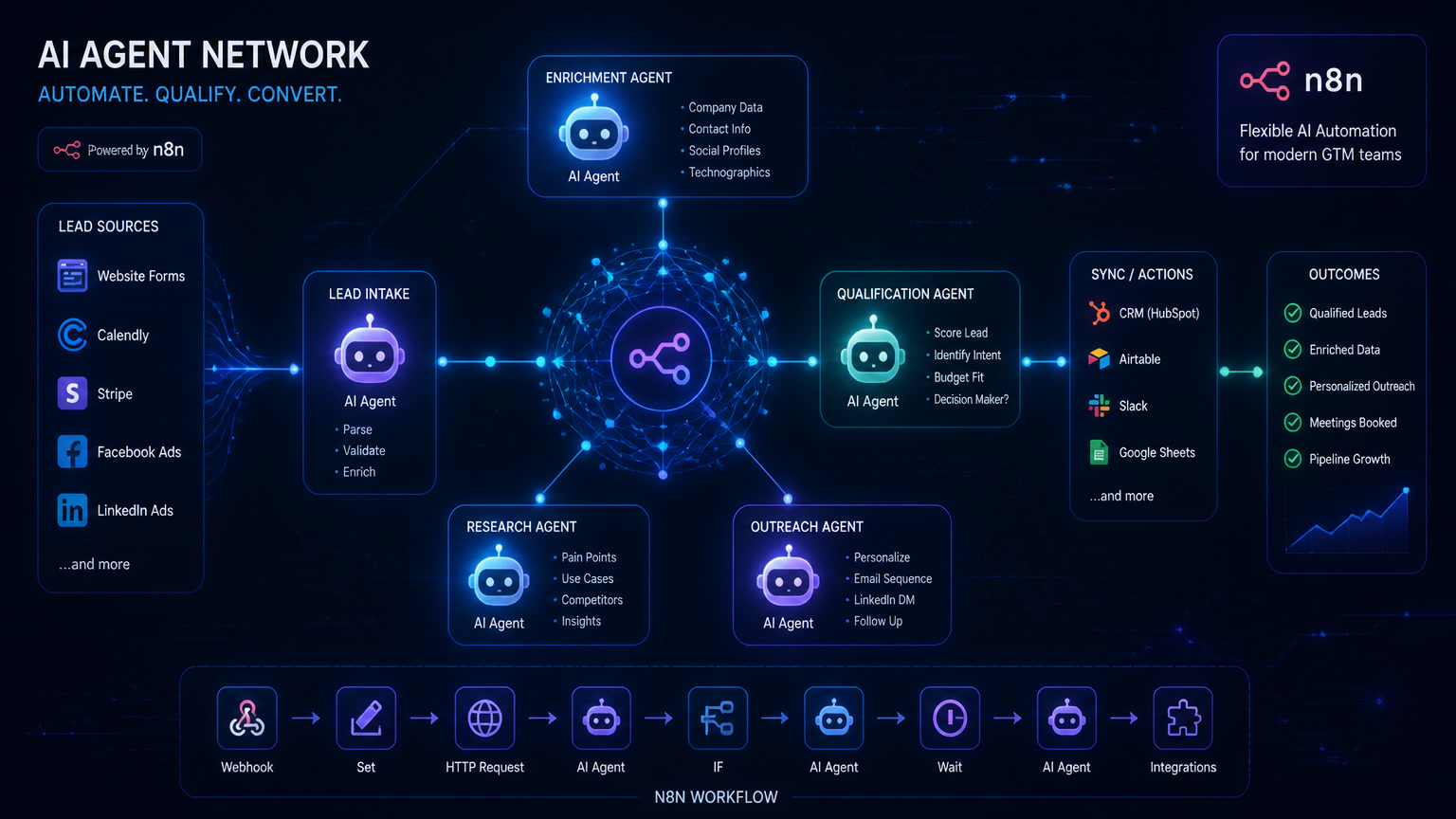
An AI-powered CRM decides four things: which records get enriched, what score a record carries, which stage a deal is probably in, and what to say next. It should be trusted to run the first alone and supervised on the other three — not because the models are weak, but because the evidence they reason from is your own pipeline history, and very few companies have ever audited that history properly.
That single distinction explains most of the gap between what AI CRMs promise in a demo and what they deliver in a quarter. The model is not the constraint. The record is.
What the model is actually reading
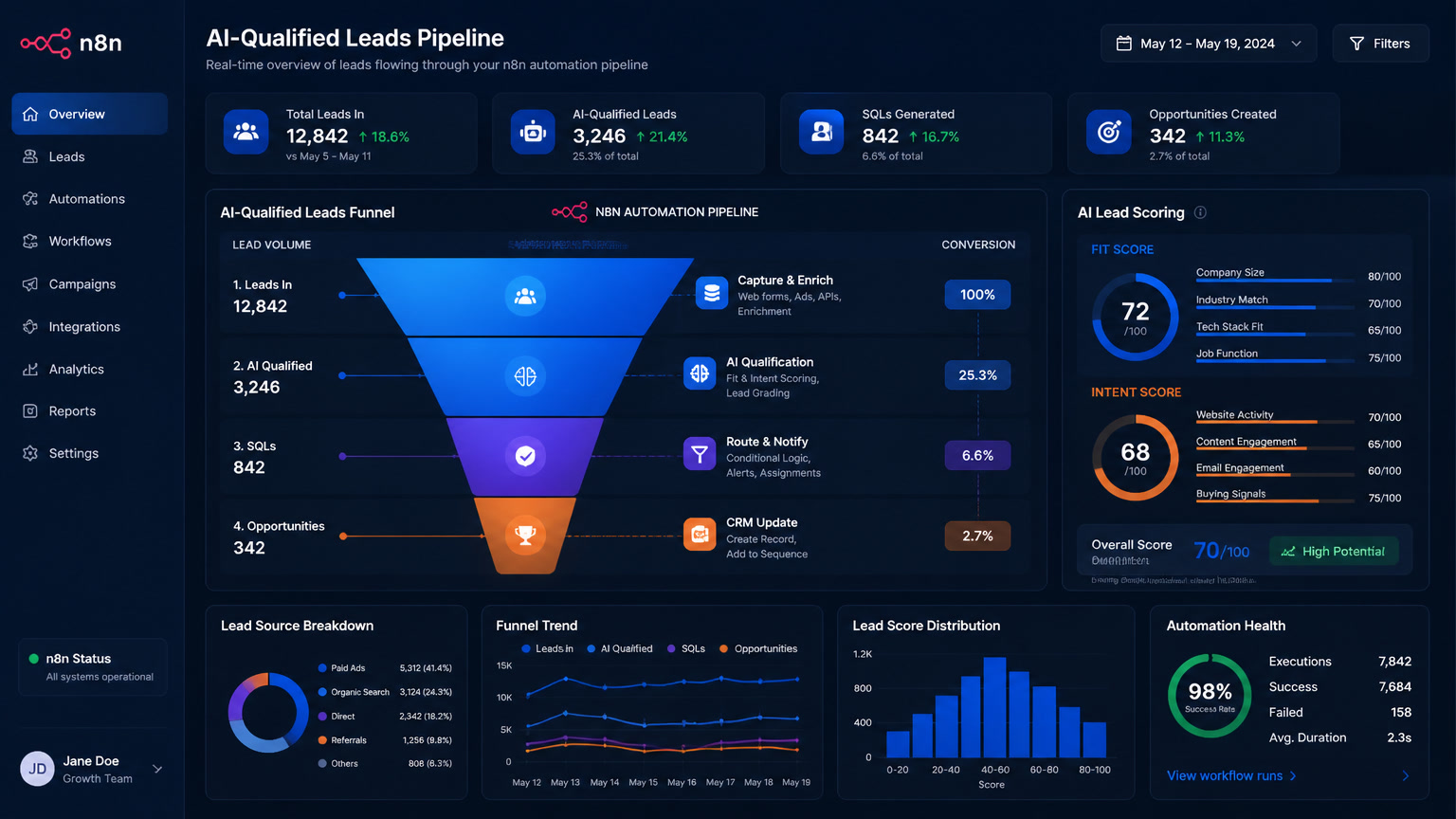
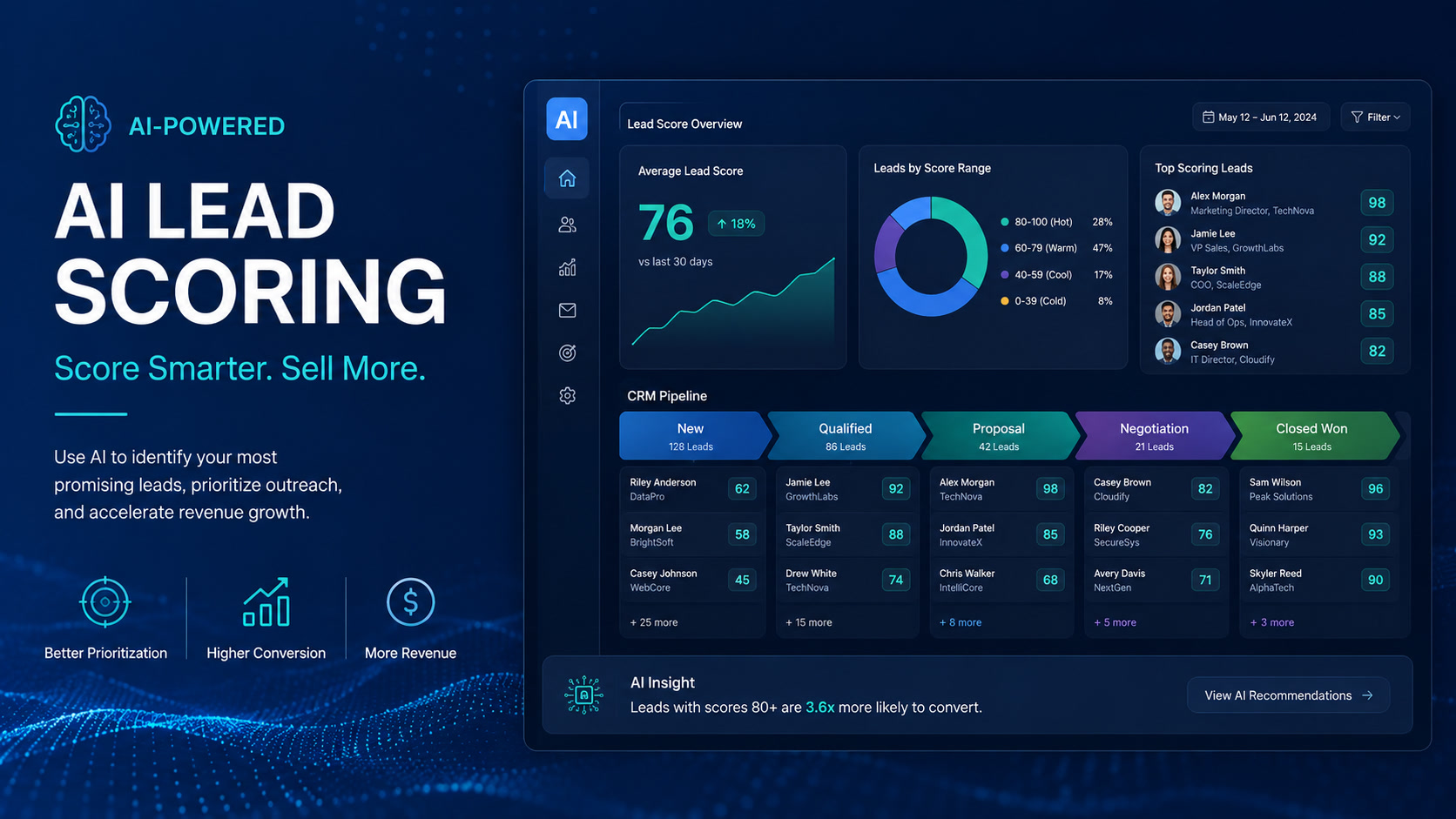
Look at how the vendors describe score creation, because the mechanics are unusually visible. In HubSpot's documentation, building an AI score means choosing a lifecycle transition — say Subscriber to Sales Qualified Lead — and a timeframe, after which the model evaluates the contacts that made that move and generates recommended criteria and points from your account's own data. The same platform lets Breeze Assistant create or edit contact, company and deal scores from conversational prompts, grounded in account context such as your ideal customer profile.
Read that again as an operator. The score is a compressed reading of how your team has used its lifecycle stages. That is exactly what makes it useful, and exactly why a CRM can be full of confident scores that rank the wrong accounts.
Here is the pattern we see repeatedly in client work: the deployments that disappoint do not fail at prediction, they fail at archaeology. The model faithfully learns a process nobody wrote down — deals moved to "qualified" when a meeting was booked rather than when a budget was confirmed, "proposal" when a PDF left the building, "closed won" when the invoice cleared. The score then reproduces the team's administrative habits at machine speed and with machine confidence.
Put bluntly: the model does not learn your buyer. It learns your reps.
Four ways buyers ask for the same thing
The questions people bring to this topic are not four topics. They are one question asked at four levels of commitment, and the answer has to move with the level.
| What people type | What they're really asking | What a useful answer shows |
|---|---|---|
| "AI powered CRM" | Is this a category or a badge on the same software? | Which behaviour is model-driven and which is still a rule someone wrote |
| "CRM with built-in AI lead scoring" | Will the CRM I already pay for do this? | Plan and tier boundaries, not a feature list |
| "Conversational AI lead scoring" | Can I describe the score in words and still audit it later? | What a prompt-built score persists, and what it forgets |
| "AI lead scoring" | Which signals, weighted how? | Fit versus engagement, decay over time, and group limits |
The third row decides more purchases than the other three combined. A score you can describe in a sentence is a score you can audit next quarter. A score that arrived as an opaque number and four unexplained points is one your sales team will quietly ignore, and they will be right to.
The authority matrix: five decisions, three owners
The useful output of an AI CRM design session is not a use-case list. It is a table of decisions with an owner attached to each one.
| Decision | Default owner | What must be written down | What breaks when it's wrong |
|---|---|---|---|
| Fill a blank field from a public source | Model, unattended | Source URL and date per field | Wrong firmographics flow silently into segments and routing rules |
| Recompute a record's score | Model | Score version plus the criteria that changed | Nobody can explain a ranking shift, and trust in the number dies quietly |
| Move a deal between stages | Model proposes, a person approves | Approver, timestamp, and the field that proved the transition | Forecast corruption — and the next model version trains on it |
| Merge or delete a record | Person only | Merge key and which record survived | Irreversible loss of the activity history the model depends on |
| Send a first-touch message | Model drafts, a person sends | Who sent it and which draft | Brand, legal and deliverability exposure on your own domain |
Read the table down the third column. If a cell is empty, that decision is not governed yet — and it will still get made, because an unowned field is filled by whatever wrote to it last.
Two rows are non-negotiable in our builds. Stage changes never run unattended while the stage feeds a forecast, and merges are always human. Everything else is a judgment call you can revisit as the model improves.
Three things to write down before you switch scoring on
Stage exit criteria, one sentence each. Name the field that proves the stage. "Qualified means a budget holder confirmed a number and a date on a recorded call" is a criterion. "Qualified means they seem interested" is a feeling with a dropdown attached. If the proving field does not exist, creating it is the first build task — not an IT ticket to be filed after launch.
A disqualification rule with real weight. A score that can only climb is a dashboard. Force at least one negative signal with enough points behind it to move a record down: wrong geography, no decision-maker contact, an active competitor contract. Without it, the bottom of your pipeline turns into a waiting room that grows every month.
An override log. Whenever a rep disagrees with the score, capture the record, the score and the reason in one field. After a quarter this is the only labelled dataset you will ever get for free, and it is the input for the next version of the criteria.
Which leads to the rule we hold to: if you cannot write the exit criterion, do not automate the transition. Automating an undefined stage does not make it defined. It just makes it faster.
The vendors already document where their responsibility ends
Salesforce's Agentforce developer documentation is blunt about scope: generative AI "isn't a replacement for human judgment," and "you're ultimately responsible for any LLM-generated response you share with your customers." Under accuracy, it warns that the model can hallucinate — fabricate responses not grounded in fact — and tells you to verify key details before you publish a response.
Read that as a scope document rather than a disclaimer. The vendor ships the guardrails: grounding, data masking, toxicity scoring, zero retention. It then hands you the judgment, because a CRM vendor cannot tell you which of your five stage transitions may run unattended. That is a decision about your forecast, your commissions and your renewal risk, and it stays with you no matter how good the model gets.
The same reading applies to packaging. HubSpot's own documentation places the AI score builder behind a Marketing Hub Enterprise subscription while the conversational path runs through Breeze Assistant, which is a polite way of saying the capability has a plan boundary. Check the tier before "AI lead scoring" appears in a board deck. A feature your subscription does not include is a roadmap item, not a capability.
A 30-day pilot that produces a decision, not a demo
- Pick one transition. Not the whole lifecycle. Marketing-qualified to sales-qualified is usually the best first pick, because it is the transition your sales and marketing teams already argue about every week.
- Backfill both sides. Ninety days of records that made the move, plus records of the same age that did not. The negatives are the half everybody skips; without them a score only learns "has activity".
- Run it in shadow mode for two weeks. The score is computed, nothing is routed, nobody's queue changes. You are collecting a comparison, not deploying.
- Compare on identical records. Does the top decile by score convert better than the top decile of the reps' own list? And what share of records did reps override — and can each override be explained in one sentence?
- Decide with a rule you wrote before the results arrived. Our default: automate routing when the score wins on precision and fewer than one in five overrides is unexplained. If overrides cluster on one stage or one segment, the criteria are wrong. Fix the criteria, not the reps.
Thirty days buys you a decision. A demo buys you enthusiasm, and enthusiasm does not survive the first bad month.
The part that stays yours
As models get better at reading the record, the record becomes the constraint. Enrichment gets cheaper and drafting gets better every quarter; stage design stays exactly as good as the last person who thought about it. That is why the durable work in an AI CRM is not model selection — it is writing down the three or four rules your business actually follows, then deciding, one decision at a time, which of them a machine may execute alone.
If your CRM is producing scores nobody trusts, the problem is usually upstream of the model. Our CRM implementation work starts with the stage contract and the override log and only automates what survives the pilot. For the signals themselves, see which lead-scoring signals actually predict a deal; for a smaller team, the SMB build looks different; and if you are evaluating agents more broadly, the pass/fail harness is the same discipline applied to autonomy. Book a CRM audit and bring your stage definitions — that is where the conversation should start.
Frequently Asked Questions
Should an AI CRM be allowed to move a deal to the next stage on its own?
Not while that stage drives a forecast, a commission or a renewal conversation. A model can detect the signals that a stage change is due, but the transition itself should carry a named approver and the field that proved it. An unapproved transition does two kinds of damage: it corrupts the current forecast, and it teaches the next version of the model to repeat the mistake.
Does 'built-in AI lead scoring' mean the CRM plan I already pay for includes it?
Check the tier before you assume it. HubSpot's AI score builder, for example, requires a Marketing Hub Enterprise subscription, while the conversational score creation path runs through Breeze Assistant. 'Built-in' in a vendor's marketing copy usually means available in the platform, not available in your plan.
How long before an AI lead score is worth trusting?
One comparison, not one month. Run the score in shadow mode next to your reps' own prioritisation for a full stage-to-stage cycle, then ask two questions on the same records: does the score's top decile convert better than the reps' top decile, and can every override be explained in one sentence? A score that wins the first question and fails the second is a reporting feature, not an automation.