
AI Lead Scoring: The 3-Stage Framework We Use to Qualify Leads Automatically
How to implement AI lead scoring in your CRM: a 3-stage framework, traditional vs AI comparison, best practices, and real KPIs. Based on real B2B implementations.
AI Lead Scoring: The 3-Stage Framework We Use to Qualify Leads Automatically
AI lead scoring isn't theory. We implement it for B2B clients and the results are concrete: sales teams go from reviewing 20 leads per day to processing thousands, with conversion rates up to 75% higher than traditional methods. The key isn't the algorithm — it's how you structure the process.
In this article we share the 3-stage framework we use at Mintec to implement AI lead scoring in CRMs like Clientify and Salesforce, combined with automations in Make and n8n. This isn't theory. It's what works — and what doesn't — when real leads start coming in.
What Is AI Lead Scoring and Why Is It Different?
Traditional lead scoring assigns points based on fixed rules: "if the lead has a director-level title and the company has over 50 employees, add 30 points." A human defines these rules, and they stay static until someone updates them.
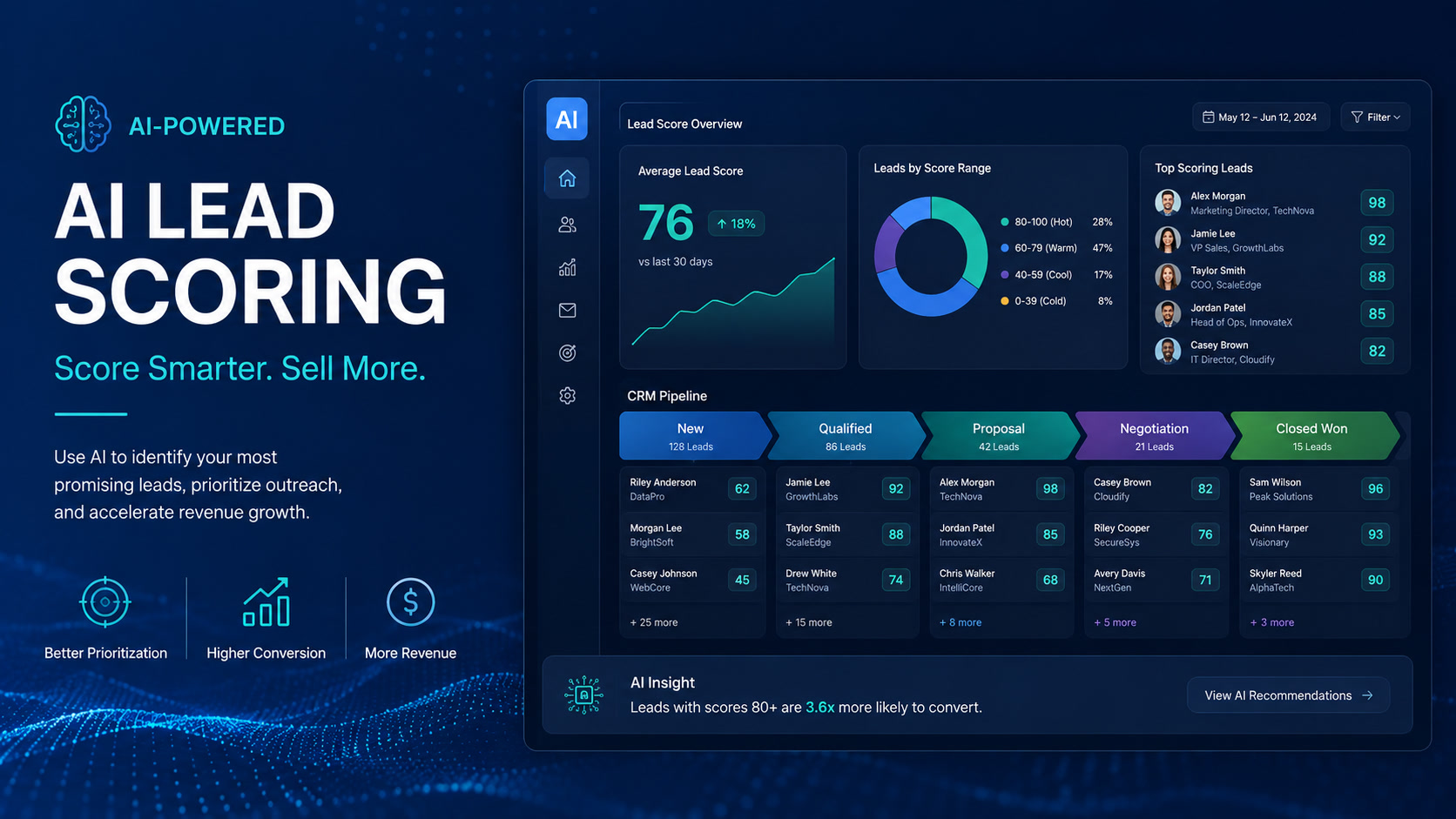
AI lead scoring works differently. Instead of fixed rules, it uses machine learning models trained on your conversion history. The system learns which combinations of signals (job title, industry, web behavior, email responses) best predict a conversion. And it adjusts those weights automatically as new data arrives.
According to Landbase (2026), companies using machine learning for lead scoring report 75% higher conversion rates than traditional methods. Forrester, cited by Brixon Group, documents 10-15% increases in sales productivity and 10-20% improvements in conversions.
The difference isn't incremental. It's structural.
Why Manual Scoring Breaks at Scale
Before we get to the framework, let's understand why the manual approach breaks down. Sales teams spend 70% of their time on non-selling activities. Qualifying leads manually consumes 6+ hours per week per rep, according to industry data compiled by Cubeo AI.
Three failure modes appear consistently as the pipeline grows:
Inconsistent criteria. Every salesperson qualifies differently. One passes a 10-employee company lead. Another rejects it. The pipeline fills with noise.
Data decay. CRM contacts go stale at 30-50% annually. A lead that was perfect six months ago changed jobs, titles, or tech stacks. Manual scoring can't keep up.
Volume ceiling. A rep can review 20-30 leads per day with real attention. AI processes thousands.
When a client tells us "we have 500 leads in CRM but don't know where to start," the problem isn't lead volume. It's that they don't have a system to prioritize them.
The 3-Stage Framework for AI Lead Scoring
We've refined this framework through real implementations with B2B clients in Latin America. It's not theoretical. Each stage solves a specific problem we've seen fail in production.
Stage 1: Definition and Audit (the one everyone skips)
Before configuring any tool, you need to answer: what does a qualified lead look like for your business?
This sounds obvious, but it's the #1 reason implementations fail. Sales has a criteria in their heads, marketing has another, and nobody has written it down.
What to do at this stage:
- Document your ideal customer profile (ICP): company size, industry, contact role, tech stack, behavior signals. Get sales and marketing to sign off on the same document.
- Audit CRM data quality: according to IBM, data inconsistency is the top reason AI systems fail in production. Check which fields are empty, which have incorrect data, and which haven't been updated in 6+ months.
- Establish your baseline: measure your current lead-to-SQL conversion rate, qualification time per lead, and cost per qualified lead. Without a baseline, you can't measure improvement.
Time required: 1-2 days working with sales and marketing teams. It's the slowest stage and the most important.
Stage 2: Pipeline Automation (from fixed rules to dynamic scoring)
This is where the technology comes in. The goal is to replace fixed rules with a system that learns and adjusts on its own.
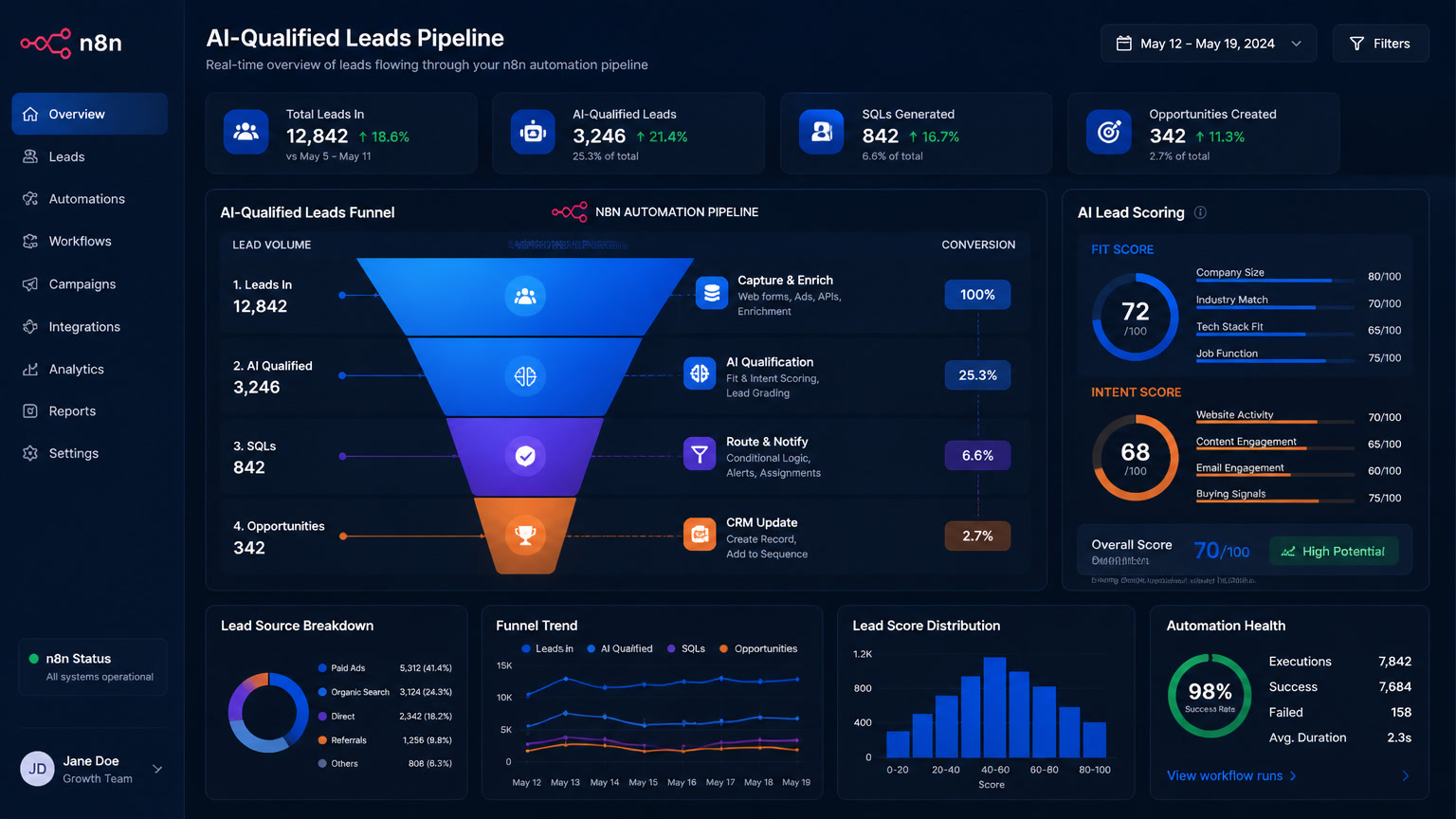
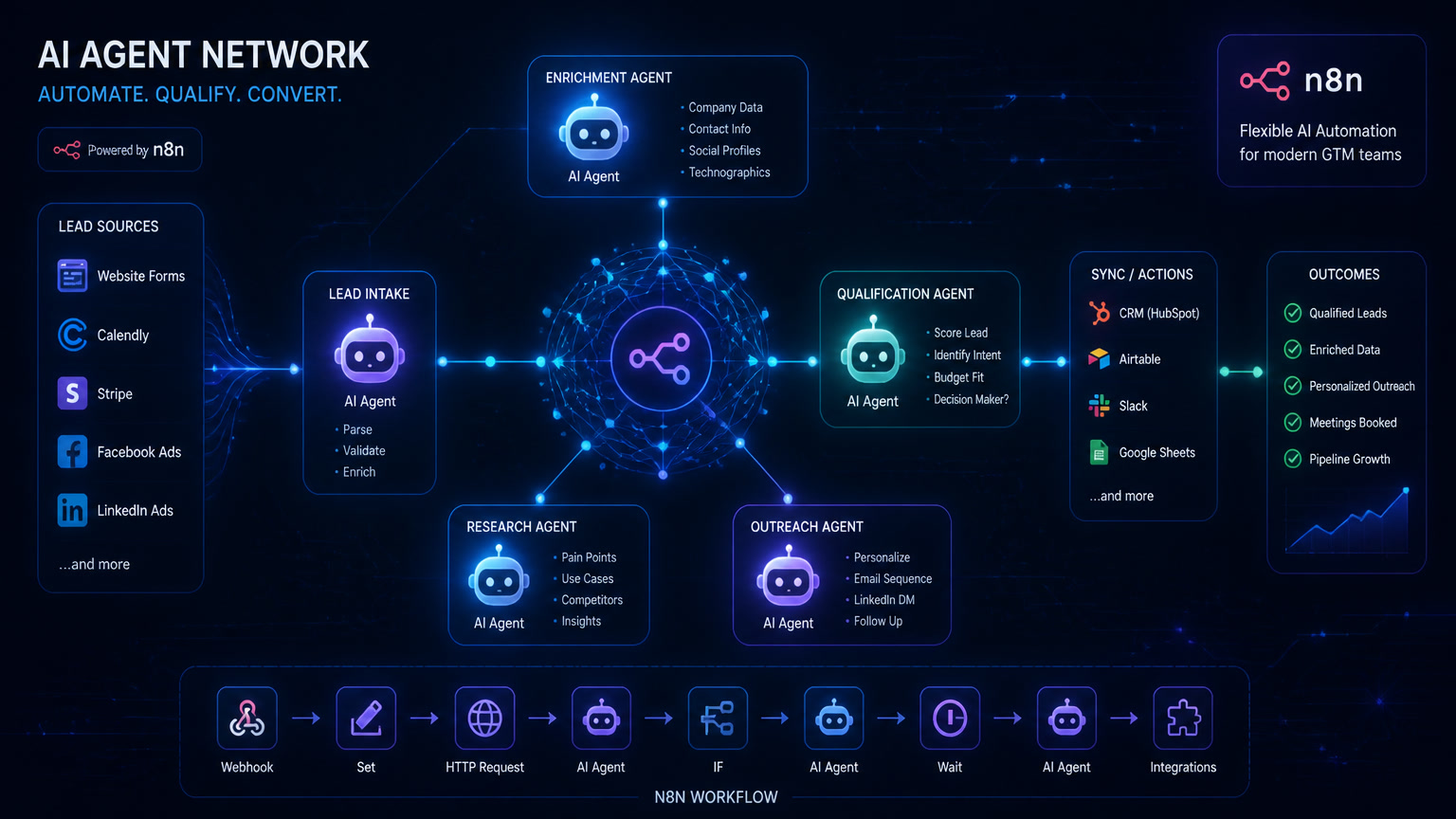
The architecture that works:
Lead enters CRM
  → Auto-enrichment (fill missing data)
    → AI scoring (0-100 based on ICP + behavior)
      → If score > threshold: route to sales with full context
      → If score < threshold: automated nurturing
Key components:
- Data enrichment. 50% of leads have incomplete profiles. An enrichment agent fills missing data: company size, tech stack, LinkedIn, verified email. Without this step, scoring is garbage. We implement this with enrichment APIs connected via Make or n8n.
- Scoring engine. This can be a model trained on your historical data (if you have enough conversion history) or a weighted-rule system that adjusts over time. For clients without historical data, we start with smart rules and migrate to ML when there's enough volume.
- Conditional routing. High-score leads go directly to sales. Mid-score leads enter email nurturing sequences. Low-score leads wait until new enrichment data arrives.
Tools we use:
- Clientify: CRM with native automation capabilities. Ideal for SMBs wanting everything in one platform.
- Make / n8n: To connect CRMs with enrichment APIs, AI models, and communication channels (WhatsApp, email).
- AI models: From lightweight models (logistic regression on CRM data) to more advanced classification APIs.
What doesn't work: trying to get perfect scoring from day one. Start simple and improve iteratively.
Stage 3: Ongoing Monitoring and Optimization (where you win or lose)
AI lead scoring isn't "configure and forget." Buying patterns change, markets shift, and the model needs to adapt.
Metrics we monitor weekly:
| Metric | What it measures | Alarm signal |
|---|---|---|
| Lead-to-SQL conversion rate | % of AI-qualified leads that become opportunities | 2-week sustained drop → adjust scoring criteria |
| Qualification time | Hours/week the team spends manually qualifying | If it hasn't dropped 50% in the first month, automation isn't working |
| Qualification accuracy | % of high-score leads that actually convert | Below 15% accuracy → review training data |
| Cost per qualified lead | Total platform cost / qualified leads generated | Should decrease month over month as the model improves |
When to retrain the model:
- Every 30 days for the first 3 months
- Every 90 days after stabilization
- Immediately after significant changes to product, pricing, or target market
Comparison Table: Traditional vs AI Scoring
| Aspect | Traditional Scoring | AI Scoring |
|---|---|---|
| Criteria updates | Manual, needs human intervention | Automatic, based on conversion data |
| Signals processed | 5-10 variables max | 50+ simultaneous variables |
| Market adaptation | Slow (weeks or months) | Fast (days) |
| Reported accuracy | Variable, depends on human judgment | Up to 75% higher conversions (Landbase 2026) |
| Scalability | 20-30 leads/day per person | Thousands of leads/day, 24/7 |
| Operating cost | High (sales hours) | Low (AI platform cost) |
| Human bias | High (each rep qualifies differently) | Low (consistent criteria) |
What We Learned Implementing This for Real Clients
We've seen the same patterns repeat across every implementation:
The most common mistake: configuring scoring before defining the ICP. A financial services client asked us to automate their lead qualification. We installed the scoring engine, connected the CRM, and got inconsistent results. The problem: nobody had documented what makes a lead "qualified." We spent two days with their sales team defining criteria. After that, the system worked.
The second most common mistake: skipping enrichment. A B2B software client had 3,000 leads in their CRM with incomplete data. The scoring engine assigned middling scores to almost everything because it didn't have enough information. We implemented an auto-enrichment layer (via Make + external APIs) that filled in company profiles, tech stacks, and roles. Scores became usable.
What surprises clients most: how much time it frees for actual selling. A 5-person sales team went from 30 collective hours per week qualifying leads to 3 hours. That's 27 hours/week redirected to what actually matters: closing deals.
According to Salesforce data (via The Starr Conspiracy, 2026), B2B companies using AI for lead generation see an average 73% increase in qualified leads within the first six months.
Conclusion
AI lead scoring isn't magic. It's a structured three-stage process: define what a good lead looks like, build the automation pipeline, and monitor results continuously. Companies that do it well see 2x and 3x improvements in sales efficiency.
At Mintec we implement these systems for B2B clients across Latin America, combining CRMs like Clientify with automations in Make, n8n, and AI. If your sales team is still qualifying leads manually, you're leaving money on the table.
The moment to automate isn't when you have too many leads. It's when you start losing opportunities because you can't figure out which ones to prioritize.
For more on sales automation with AI:
Frequently Asked Questions
What's the difference between traditional lead scoring and AI lead scoring?
Traditional lead scoring uses fixed rules (if company > 100 employees, add 20 points) that go stale over time. AI lead scoring learns from historical conversion data, adjusts weights automatically, and processes hundreds of signals simultaneously without human intervention.
How long does it take to implement AI lead scoring in a CRM?
Technical setup takes 2-4 hours using no-code platforms like Make or n8n. The stage that takes the most time is defining ideal customer profile criteria and auditing CRM data quality. You'll typically see qualified leads flowing within the first week.
Which KPIs measure if AI lead scoring is working?
The three main KPIs are: lead-to-SQL conversion rate (compare before vs after), qualification time per lead (hours/week the team saves), and qualification accuracy (% of AI-qualified leads that actually convert).