Conversational AI Video Editing Just Collided with EU Enforcement Day: Choose Tools by Provenance
EU AI Act Article 50 goes into force August 2, 2026, the same week conversational AI video editing (Gemini Omni Flash) goes mainstream. Here is the provenance-first framework for choosing AI video tools — and why the Omnibus December 2 grace period changes your stack decisions today.
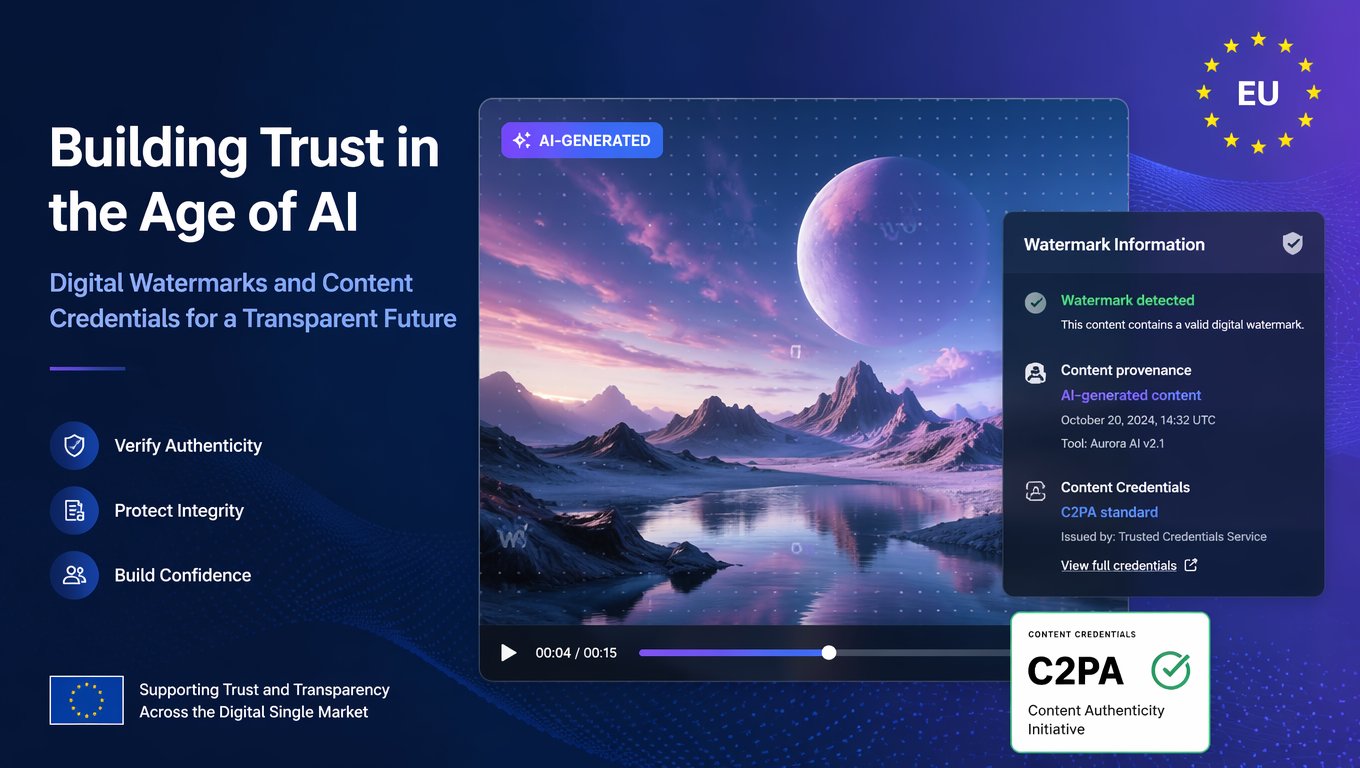
August 2, 2026 is a double deadline for media production: EU AI Act Article 50 (Regulation (EU) 2024/1689) enters into force today, and conversational AI video editing just went mainstream with Gemini Omni Flash. The collision changes how you should pick AI video tools: provenance is no longer a post-production step — it is a tool-selection criterion. Most teams we talk to still choose generators by image quality and prompt fidelity. The file's metadata story barely enters the conversation, and starting today, it is the conversation.
We have spent months building AI video post-processing pipelines and multi-model production workflows for clients. What our testing and production work shows is uncomfortable: across the five leading generators — Veo, Kling, Sora, Runway, Seedance — C2PA does not exist at the point of generation. You cannot retroactively sign what was never asserted at creation with cryptographic honesty. A mark added later only proves that someone added a mark later. That is the gap Article 50 was written to close, and it is why the enforcement date and the Omni Flash rollout landing in the same week is not a coincidence: the tool market just split in two.
What Article 50 requires starting today
The obligation is blunt: any AI-generated or manipulated image, audio, video, or text reaching EU users must carry a machine-readable mark disclosing its artificial origin. The mark must be technically feasible, effective, interoperable, and robust against reasonable processing — re-compression, format conversion, screenshots. Fines run up to €15 million or 3% of global annual turnover.
I am not going to re-explain the implementation here — we published the practical C2PA and watermarking pipeline guide 25 days ago. What matters today is the nuance nobody had when we wrote that guide: the AI Omnibus provisional agreement (May 2026) introduced a grace period. Generative AI systems already on the market before August 2, 2026 have until December 2, 2026 to comply. Any system placed on the market from today must comply immediately.
That single nuance reshapes every tooling decision you make this quarter.
| Situation | Deadline | Practical implication |
|---|---|---|
| Tool already on the market before 08/02/2026 | 12/02/2026 | You can keep using it while you audit, but anything you produce after December must be marked |
| New tool placed on the market from 08/02/2026 | Immediate | No mark at generation = non-compliant tool for EU-exposed work |
| Content generated by pre-existing systems | Marking enforceable from 12/02/2026 | Your backlog of unmarked assets needs a mark-or-retire plan too |
Conversational editing: when the chat becomes the file
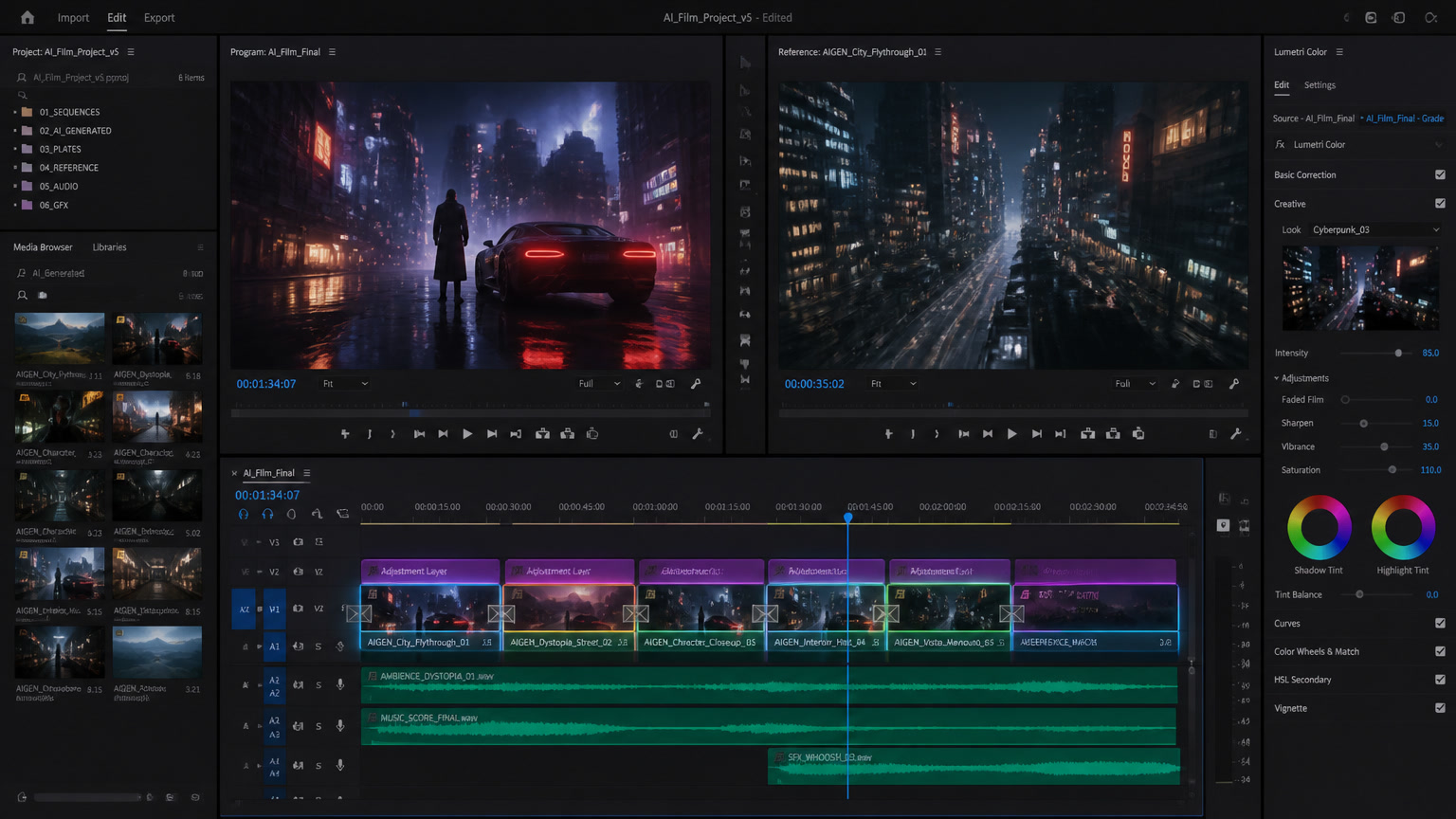
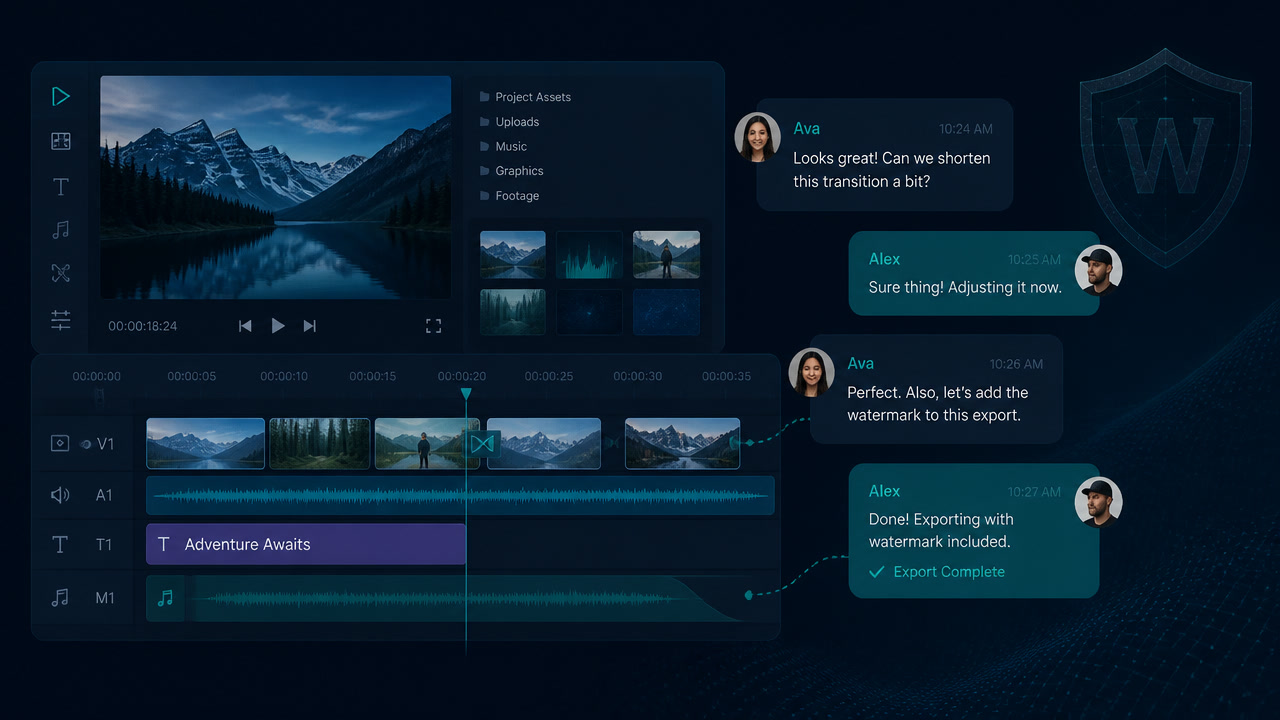
The other headline this week is Google's Gemini Omni Flash, announced at I/O 2026 and now rolling out in the Gemini app, Google Flow, and YouTube Shorts. Its pitch is conversational editing: "cut the close-up", "change the background to an office", "make her look at the camera" — each instruction builds on the last, no timeline, no layers, no exporting between tools.
The detail that matters for this article is not the demo. It is that Omni Flash ships as the first mainstream AI video tool with mandatory provenance baked in: SynthID (Google's imperceptible watermark) + C2PA Content Credentials, with no API flag to disable them. Google confirmed it at launch, and YouTube's Shorts documentation repeats it: avatar-generated and Omni-generated videos carry visible and invisible AI disclosure marks.
Compare that to what our tests found across the other generators:
| Tool | Visible mark | SynthID / invisible watermark | C2PA at generation | Article 50 without extra layer |
|---|---|---|---|---|
| Gemini Omni Flash | ✅ (per Google/YouTube policy) | ✅ SynthID, non-optional | ✅ Non-optional | ✅ |
| Veo 3.1 | ❌ | ❌ (needs external layer) | ❌ | ⚠️ With marking pipeline |
| Kling 3.0 | ❌ | ❌ | ❌ | ⚠️ With marking pipeline |
| Sora 2 | ❌ | ❌ | ❌ | ⚠️ With marking pipeline |
| Runway Gen-4 | ❌ | ❌ | ❌ | ⚠️ With marking pipeline |
| Seedance 2.0 | ❌ | ❌ | ❌ | ⚠️ With marking pipeline |
This does not make the others unusable — it means the compliance burden moves to your pipeline, and if the asset leaves the tool without C2PA, the signature you attach later certifies only that someone attached it, not that generation happened in that tool. We documented the same class of gap in browser-native video processing with WebCodecs: what the client can verify depends entirely on what the file carries inside.
Decision framework: four questions before adopting any generator
As of today, our tool-adoption checklist is four questions. If the first one fails, the rest barely matter:
- Does the tool emit C2PA or a watermark at the point of generation? If no, assume every asset needs an extra marking step that is only partially defensible.
- Was it on the market before August 2, 2026? If yes, you have until December 2 to fix the pipeline. If it is new, compliance is an entry requirement, not a roadmap item.
- Does your client contract require compliant delivery? Clients with EU operations are already adding compliance clauses to briefs. If your tool does not mark, you carry the contractual risk.
- Can the final asset be verified end-to-end? Test the full loop: generate, edit, compress, upload to the platform, then check whether the mark survives. A C2PA that dies in re-encode does not protect you.
The pattern we recommend — and use in our own production — is: native-provenance tools for anything that ships to the world, unmarked tools for internal iteration only (moodboards, concepts, tests) where the asset never gets published and the risk is zero.
What to do this week
Three concrete actions for the next few days:
- Audit your generation stack before December 2. Build the table above with your actual tools and decide per tool: adopt, wrap in a marking pipeline, or demote to internal iteration.
- Demand C2PA in any new tool. For anything launched from August onward, native provenance is not a nice-to-have — it is the floor for EU-exposed work. Making synthetic media accessible taught us the same lesson with captions: whatever the tool does not generate, your team pays for later.
- Review the backlog. Assets generated before December with pre-existing systems also fall under the obligation when redistributed. Retroactively marking a 90-second video costs more than marking at generation.
The good news: compliance is cheap — pennies per minute of video with current marking APIs. The bad news: the tool market just split in two, and most teams still pick generators by resolution and prompt fidelity. Starting today, the right question when evaluating an AI video tool is not "how real does it look" — it is "what does it leave written in the file."
Frequently Asked Questions
What changed on August 2, 2026 for AI video producers?
EU AI Act Article 50 entered into force: all AI-generated or manipulated content reaching EU users must carry a machine-readable mark disclosing its artificial origin. Systems already on the market before August 2 get until December 2, 2026 to comply (AI Omnibus agreement); new systems must comply from day one.
Which AI video tools ship provenance out of the box?
Gemini Omni Flash (Google) is the first mainstream one: SynthID + C2PA Content Credentials, mandatory and non-optional. Based on our testing, Veo, Kling, Sora, Runway, and Seedance do not emit C2PA at generation time.
Do I have until December 2, 2026 to comply with the EU AI Act?
Only if you keep using generative AI systems that were already on the market before August 2, 2026. Any new tool you adopt from today must meet Article 50 from its first use — provenance at generation is the entry requirement, not a roadmap item.