
Can you actually make money with AI automation for small businesses?
Yes — but not the way the gurus sell it. Market data, real agency pricing, and the 3 revenue models we use at Mintec to make AI automation pay.
Yes, you can make real money selling AI automation to small businesses — but not the way the gurus sell it. After 15 years running an agency that now lives off automating processes for businesses across Mexico, Central America, and the US, here's the honest version: the money is not in "AI agents" or flashy demos. It's in boring, tightly-scoped workflows that save real hours every week, sold as a recurring managed service. In this article I'll walk through the data behind that claim, what actually sells, the three revenue models with real numbers, and what it cost us to learn all of it.
The question that keeps showing up (and why that's a good sign)
In August 2026, the thread "Anyone here actually make money doing AI automation for small businesses?" had 35 upvotes and 50 comments in r/automation. Its twin, "Is AI Automation really a realistic way to earn money? Looking for genuine experiences", pulled another 30 comments. And the week's most-voted thread — "AI Agents are overrated, simple automations are still king" (95 upvotes, 40 comments) — closes the circle: the people already doing this work are tired of the hype and asking for evidence.
That combination is a perfect market thermometer. When the people already working in automation debate whether the money is real, it means two things: lots of people are trying to get in (demand for the service, not scarcity), and the "sell AI agents, get rich" narrative has stopped convincing anyone. The people asking aren't looking for a course; they're looking for a business model that works. That's what we're building here.
What the data says: the market is real, and so is the hype
First, the unsurprising part: SMBs are buying automation. According to SMB Group (2026), 42% of companies with 50–499 employees already use AI in at least one business process, up from 23% in 2024. Other adoption trackers put SMB usage growth from 22% in 2024 to 38% in 2026, with businesses that automate reporting an average 35% reduction in operational costs. The services market around this is huge and still growing.
Now the uncomfortable part: Gartner's Hype Cycle for Agentic AI (April 2026) places AI agents at the Peak of Inflated Expectations — only 17% of organizations have deployed them, and Gartner predicts more than 40% of projects will be cancelled by end of 2027 due to escalating costs, unclear business value, and inadequate risk controls. Their direct conclusion: "fully autonomous agents are not ready for the majority of enterprise use cases today."
Translation for anyone selling services: the real demand is in process automation, not autonomous agents. If your pitch starts with the word "agent," you're selling at the peak of the hype cycle. If it starts with "this specific process stops eating 12 hours a week," you're selling where Gartner says the value lives: well-scoped workflows with human oversight.
What actually sells (and what doesn't)
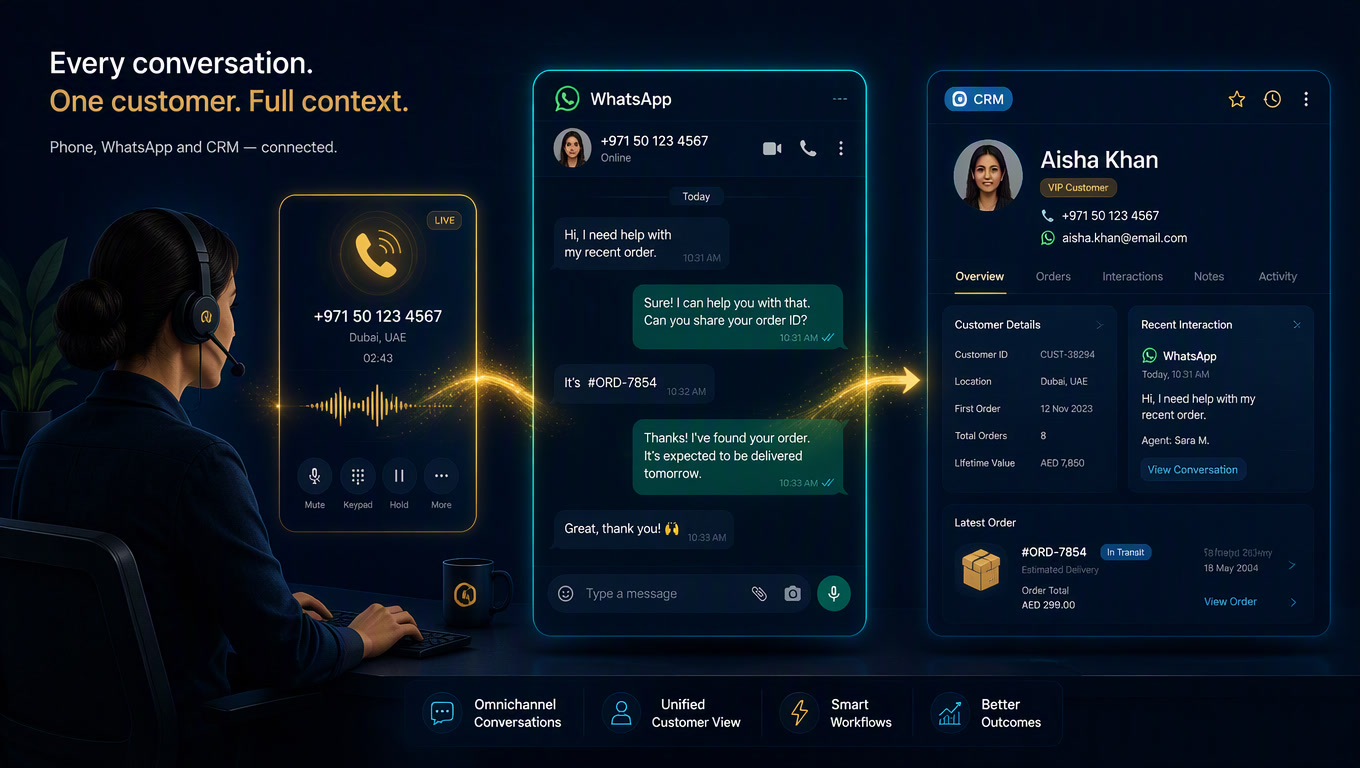
After building WhatsApp chatbots for a dental clinic in Mexico City, WhatsApp order pipelines for retail, CRM automation on Clientify, and voice agents for consultancies, our selling catalog is short and boring. That's not a coincidence — it's the only thing an SMB owner can grasp in a 20-minute call.
| Service | Process it attacks | Why the SMB buys | Delivery difficulty |
|---|---|---|---|
| WhatsApp bot + flow | Support, quoting, orders | 80% of their customers already message them on WhatsApp | Low-mid, reusable templates |
| Lead qualification & follow-up | CRM + n8n, responses in <5 min | Sells more without hiring more reps | Mid |
| CRM automation | Clean data, tasks, pipelines (Clientify, HubSpot, Zoho) | The CRM stops being an expensive spreadsheet | Mid |
| Voice agent | Call reception & scheduling | Stops losing after-hours calls | Mid-high |
| Documents & collections | Contracts, invoices, reminders | Recovers cash flow without chasing clients | Low-mid |
What doesn't sell: "an AI agent for your business" with no defined process, 40-step automations nobody will maintain, and anything the owner can't explain to their business partner. We've also learned to turn down projects with no clear process owner — that's a guaranteed failure, the same call we make in our piece on when not to use AI for automation.
Three revenue models and when to use each
This is the table that cost us the most, because we tried all three models and all three failed until we understood when each one applies:
| Model | How you charge | When it works | When it fails |
|---|---|---|---|
| One-off project (setup) | $1,000–$5,000 USD per build | Client who wants to pay once, standardized delivery | As the core model: no recurring revenue, month 2 doesn't exist |
| Managed retainer | Setup + $500–$3,500 USD/month by workflow count | Most SMBs: they want "this thing to keep working" | Without real monitoring, the retainer is a tax the client cuts |
| Outcome-based | % of savings or generated sales | Measurable processes (collections, leads, orders) | SMBs without clear metrics: impossible to prove the result |
The managed retainer is what sustains our operation, and market numbers back it up: Taskip's 2026 agency pricing review puts the median small-to-mid-market retainer between $2,800 and $7,000 USD/month, with a $1,000–$3,500 floor for SMBs automating 2–3 workflows; other agencies report SMB-grade managed retainers of $500–$3,000/month plus setup. The setup pays for the build; the retainer pays for continuous knowledge-base updates and monitoring — exactly what keeps a chatbot alive past month three, as we detailed in our playbook for selling AI chatbots to local businesses.
What we learned charging for this
Lesson one: the one-off build is bait, not a business. Early on we charged single builds; cash flow was a yo-yo and every client meant a new hunt. When we moved to setup + managed retainer, the operation changed: one delivery specialist can run 8–12 managed retainers (monitoring, knowledge updates, monthly tweaks), while at best they deliver 2–3 builds a month. Capacity becomes predictable, and so does revenue.
Lesson two: the 90-day window decides your churn. Most cancellations hit us between month 1 and month 3, when the client hadn't yet seen the hour savings materialize. Now we measure and report hours saved from month one, and retainers that survive month 3 typically stay 12+ months. We wrote about why automation projects fail — and if your retainer doesn't survive the quarter, the problem is almost never the price; it's that you didn't prove the result.
Lesson three: margins live in standardization, not complexity. Our WhatsApp and CRM flows on n8n and Clientify ship from templates that cut build time from 20+ hours to under 8. Custom complexity gets priced premium (and pays well), but it's the exception, not the model. That's also why we reject automations depending on 15 fragile integrations — the hidden cost of scaling on Zapier we documented applies to any overloaded stack.
Before you sell (or buy): the 3-question check
Whether you're offering this service or hiring it, the same three questions separate a solid operation from a money pit:
- Can the process be scoped in a week? If you need a 30-node diagram to explain it, that's a consulting project, not an automation.
- Is it high-frequency? A flow that runs 50 times a day justifies a retainer; one that runs monthly won't even cover the monitoring coffee.
- Can the result be measured in hours or money? No clear metric, no renewal — and churn eats your margin.
For buyers, the rule is what we apply with our own clients: ask for the specific use case, the expected hours saved, and what happens when the flow breaks. An agency that can't answer those three things is selling hype. For sellers, the orderly entry path starts with how to learn AI automation from scratch — and if you want to see the architecture of what actually sells, our automation and chatbots service is the catalog. Voice agents are a growing part of that stack too, worth a look at our voice AI agents breakdown if you're scoping your service line.
My final take, no hedging: the people making money here aren't selling "AI" — they're selling the promise that Monday runs better than Friday. The autonomous agent that solves everything is keynote fiction; the WhatsApp flow that replies in 30 seconds and logs the order in the CRM is recurring revenue. If any of this sounds like your business, let's talk — but show up with the process in hand, not with the idea of "an agent."
Frequently Asked Questions
How much money can you make selling AI automation to small businesses?
A well-scoped one-off project runs $1,000–$5,000 USD depending on complexity; the sustainable model is setup + managed retainer, $500–$3,500/month for SMBs depending on the number of workflows, with strong margins once delivery is standardized. The most common mistake is charging hours with no recurring revenue.
Which AI automations do small businesses actually buy?
The ones that attack high-frequency processes with visible pain: WhatsApp support and orders, lead qualification, CRM automation, collections, and document handling. SMBs pay for concrete workflows that save hours every week — not abstract 'AI agents'.
How much does it cost to hire an AI automation agency in 2026?
An SMB automating 2–3 workflows pays roughly $1,000–$3,500 USD per month on a managed retainer plus a setup fee. Taskip's 2026 review of agency pricing puts the median small-to-mid-market retainer between $2,800 and $7,000 monthly.