
Restaurant automation: from missed calls to confirmed WhatsApp orders
A 7-stage pipeline for automating restaurant orders, reservations and no-shows on WhatsApp, with real costs compared against the 25% delivery-app commission.
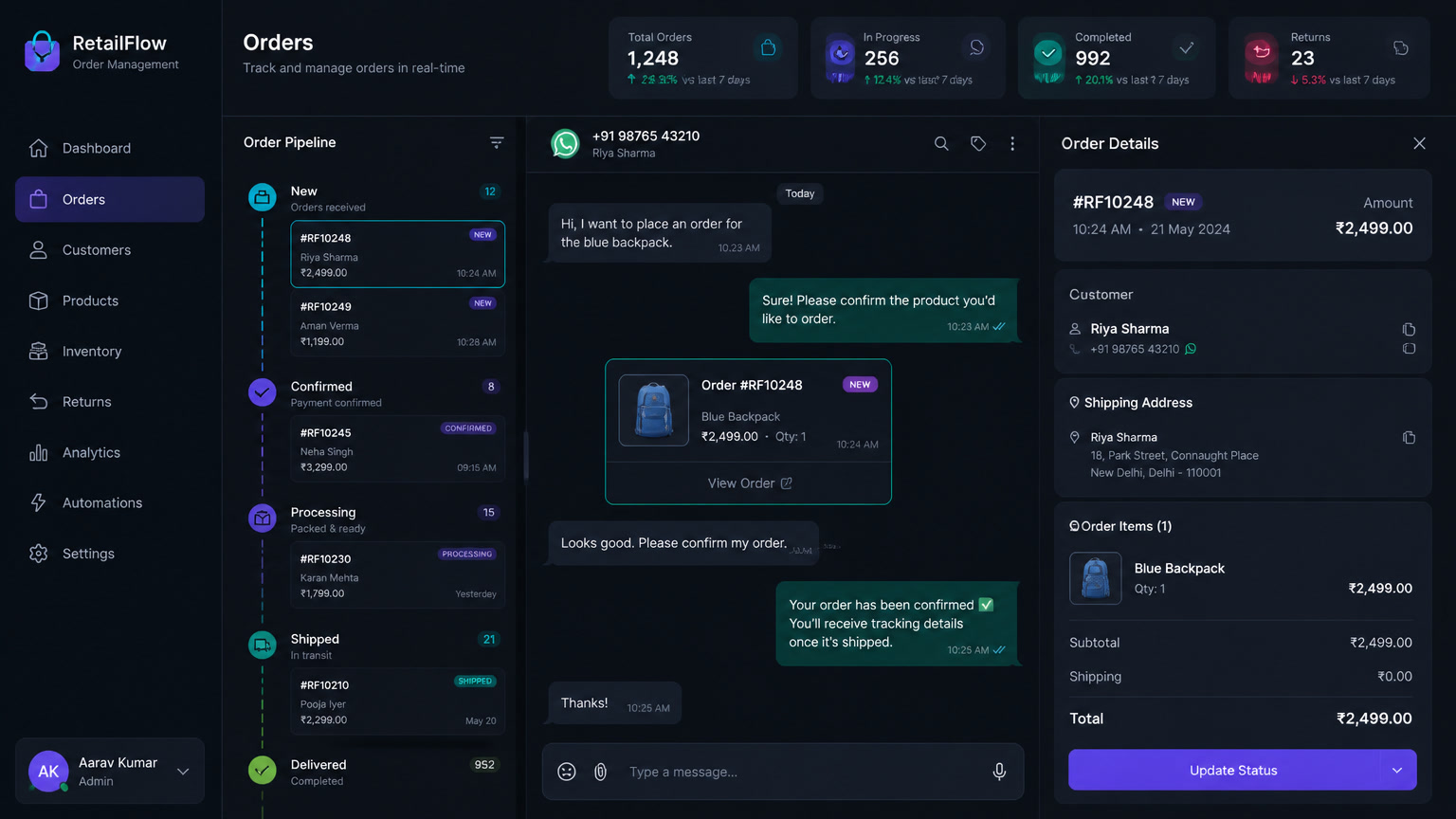
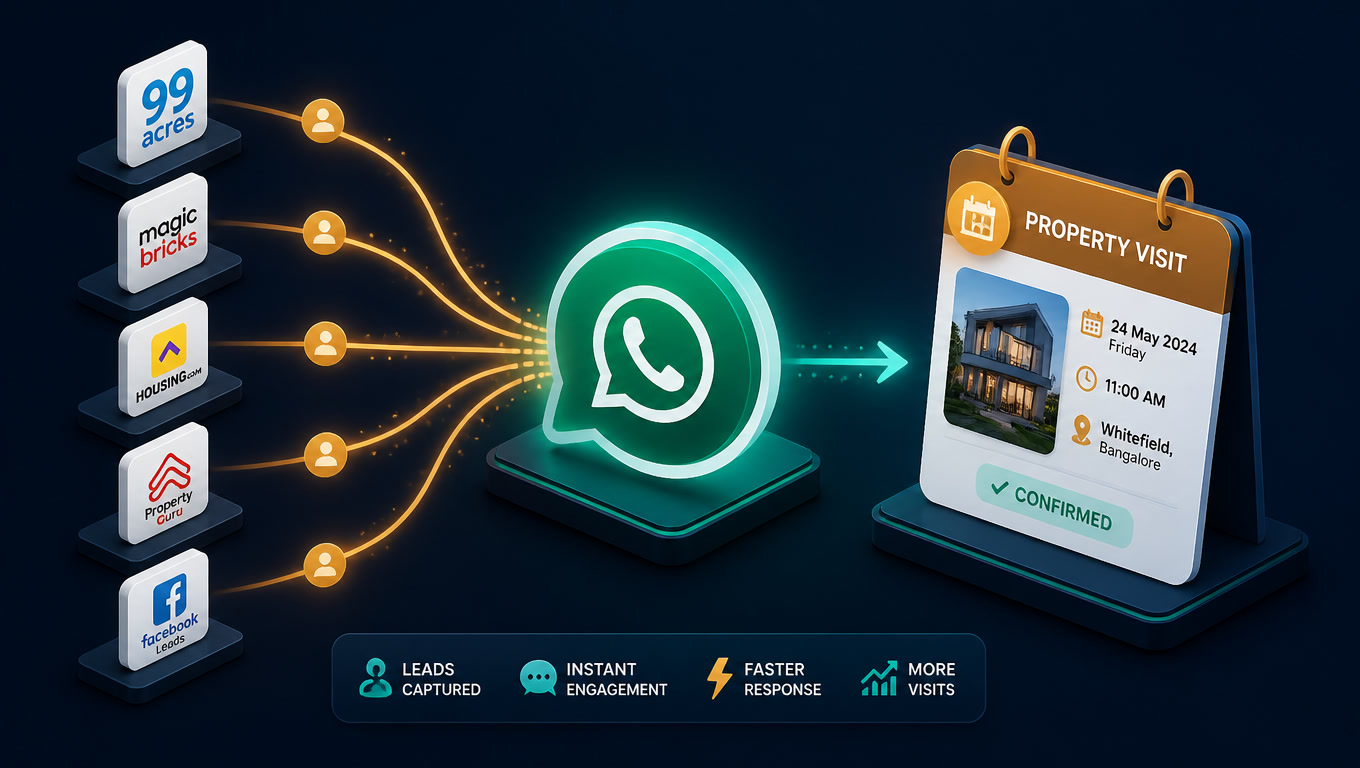
Restaurant automation means connecting the channel where customers already message you —WhatsApp, Instagram, the phone— with the actual operation: live menu, order confirmed with modifications, a ticket that reaches the kitchen without being retyped, a reservation with reminder and deposit, and follow-up that turns one visit into the next. In Latin America that channel is WhatsApp, and since October 1, 2026 ignoring it carries a double price: you lose the order and you pay per message anyway. According to Aurora Inbox, restaurants in the region lose 40-60% of leads by not replying on time on WhatsApp and 20-30% of reservations to no-shows. This article is the blueprint for the alternative: the 7-stage pipeline we build for restaurants, with real costs and an honest comparison against delivery apps.
The three holes the revenue leaks through
Before tools, the problem. In the diagnostics we run for restaurants, the same pattern shows up in three variants:
- The missed call. A customer calls at 9:40pm to order pizza and nobody picks up because a server is stuck at a full table. The order doesn't disappear — it goes to the next place on the list. Kosmo estimates that errors in orders taken by phone or loose messages drop up to 60% with chat-guided ordering.
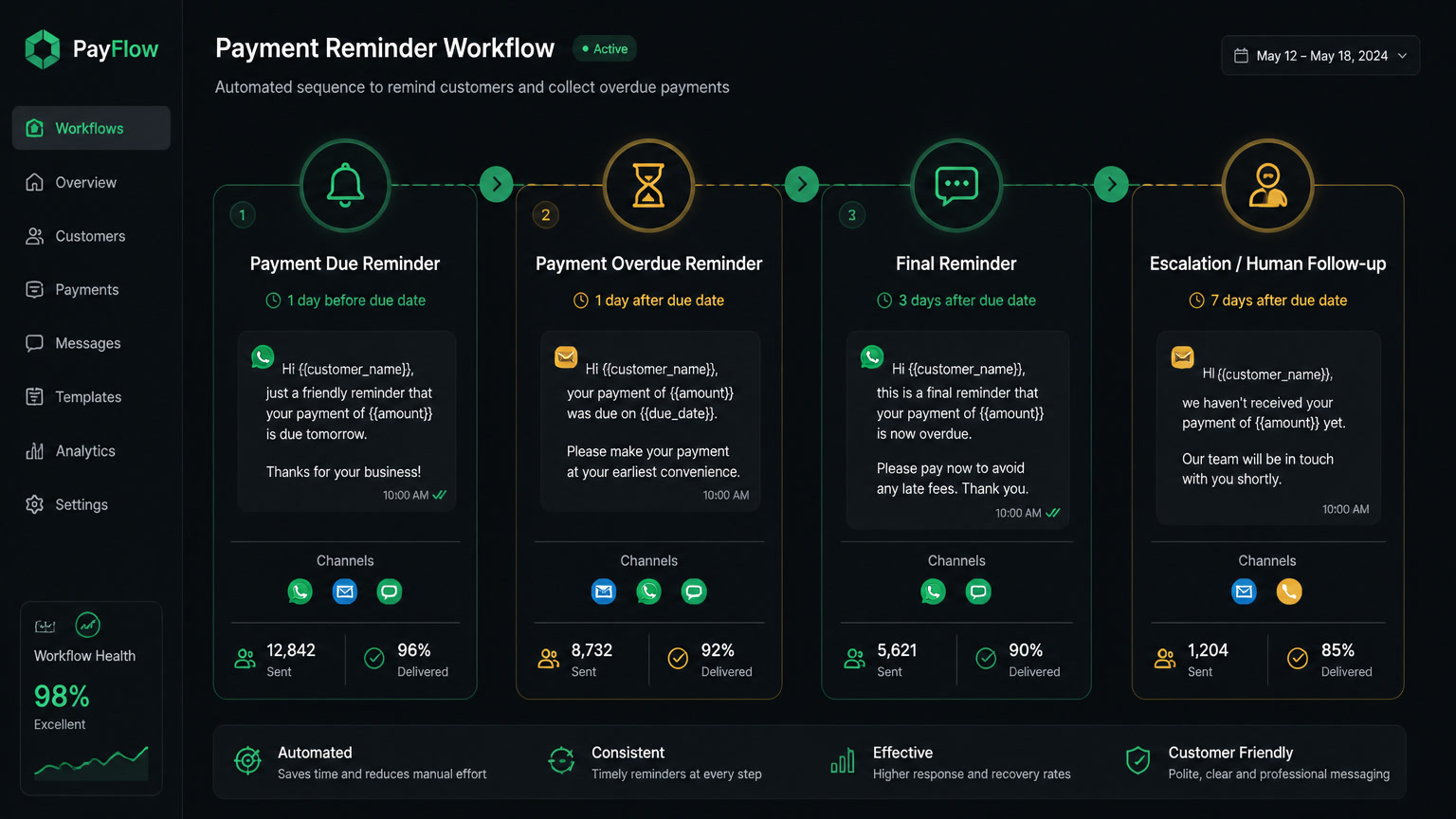
- The ghost reservation. Aurora Inbox reports no-show rates of 22-30% at restaurants that confirm manually. With an automatic reminder 2-4 hours ahead it drops to 10-15%; with an optional deposit, to 5-7%. The reminder isn't courtesy — it's the difference between a full table and a dead table on a Saturday night.
- The botched order. "No onion" that never arrives, extra sauce that never got billed, an incomplete address that triggers three follow-up calls. Kosmo measured up to 60% fewer order errors with an interactive catalog and explicit confirmation, and WhatsApp post-visit surveys sent within 2 hours get 35-45% response versus 5-10% for email.
All three share one root cause: the restaurant runs its most important sales channel with the tool it uses to talk to its supplier — loose messages and goodwill.
October 1 changed the design: every reply now costs
There's a timing trap here. Until September 30, 2026, any free-form reply inside the 24-hour window was free — you could answer as many times as you liked without paying. Since October 1, Meta charges for every service message and for utility templates sent inside the window, at country rates from $0.0008 to $0.026 per message. We broke the change down in WhatsApp will start charging for service messages.
This doesn't make the model more expensive; it forces you to design. A clumsy flow that fires 12 free-form replies per conversation now scales its cost with volume. A well-designed one confirms, summarizes and moves forward in a few messages using batched utility templates. The question stopped being "can I reply as many times as I want?" and became "how many messages does this conversation actually need to move forward?". For 2,000 conversations a month the difference is a few dollars, but that logic gets built on day one or not at all.
The 7-stage pipeline: from notification to plate
The architecture we use, stage by stage. Every row is a design decision, not a generic description:
| Stage | What gets automated | Typical tooling | Key metric |
|---|---|---|---|
| 1. Capture | Calls, Instagram DMs and WhatsApp land in one inbox with an owner and a status | WhatsApp API + n8n + unified inbox | % of messages answered in < 60 s |
| 2. Live menu | Interactive catalog with real availability; sold-out dishes disappear on their own | WhatsApp Catalog + inventory/POS sync | % of menu queries handled without a human |
| 3. Guided order | Items, modifications and quantities with explicit confirmation ("order confirmed, ready in 25 min") | AI agent or question tree + n8n | % of orders needing no correction |
| 4. Payment | Payment link or deposit inside the chat; balance on pickup or on delivery | Mercado Pago / Conekta / Stripe + n8n | % of orders paid before they leave |
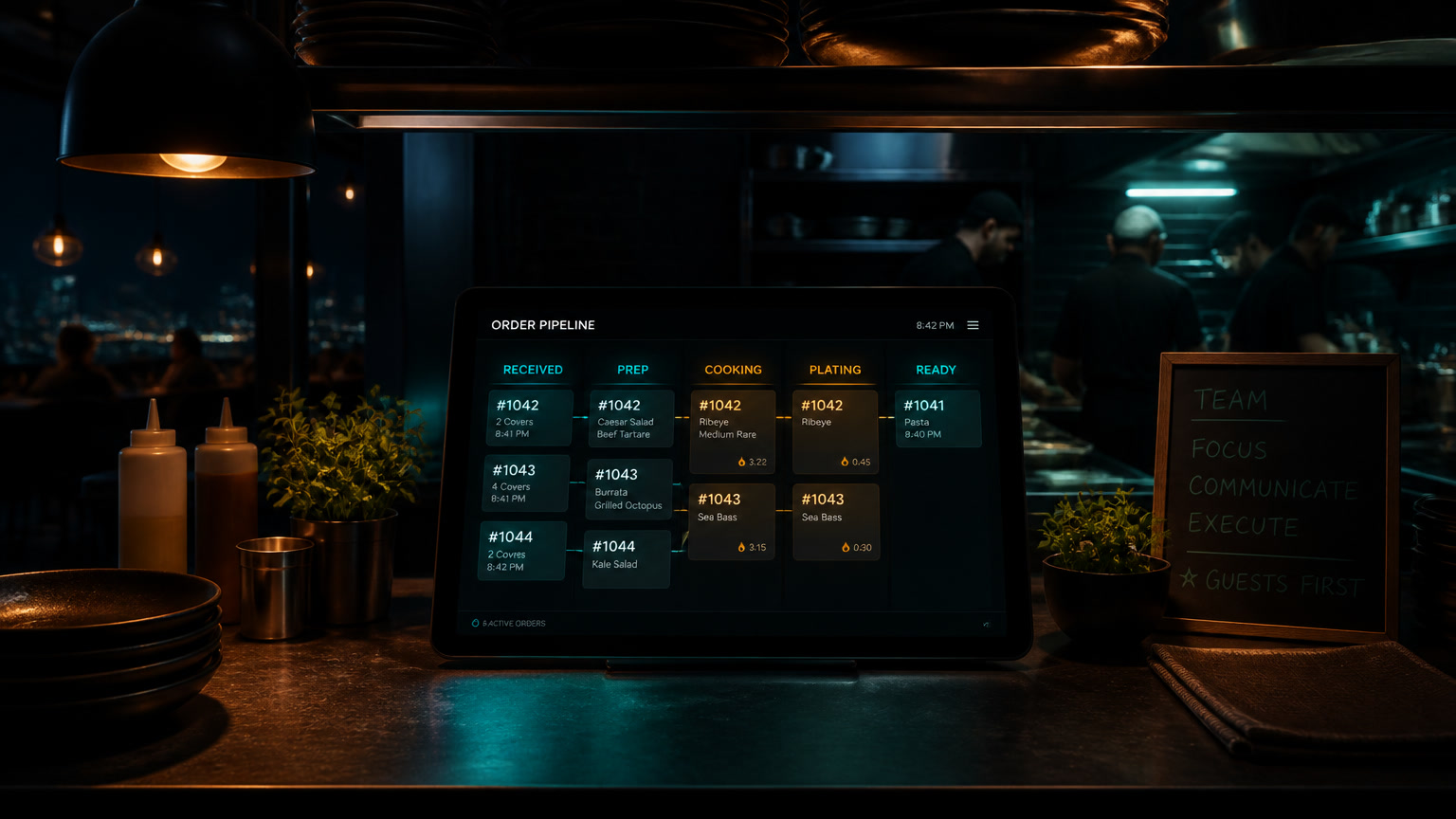
| 5. Kitchen | The ticket is born in the kitchen with nobody retyping the order | Webhook to POS / kitchen display | Order → ticket time |
| 6. Status | Utility templates (confirmed, preparing, ready, on the way), batched | WhatsApp Business API + templates | Orders with full status updates / orders |
| 7. Post-visit | A 3-question survey 1-2h later, review request and repeat-purchase sequence | n8n + CRM | Survey response rate, new reviews |
The stage everyone skips is stage 5: an order that reaches the kitchen through manual entry is an order that eventually arrives wrong. Any restaurant automation that doesn't touch the kitchen system is a pretty chat layer on top of the same manual process. Stage 7 is the other weak link: asking for a review while the experience is fresh is the cheapest reputation lever in the business — we cover it in review and reputation automation.
The reservation layer: reminder, deposit, waitlist
Reservations deserve their own layer because their economics differ from orders. Zenia Partners reports up to 70% fewer booking calls with automated reservations — ask date, time and party size, check real availability (not a notebook), confirm and fire the reminder. Three decisions make the difference:
- Reminder at 2-4 hours. Earlier and it's forgotten; later and there's no time to reassign the table (Kosmo).
- Optional deposit on hard slots. Friday and Saturday night: a small deposit turns a no-show into a cancellation 12 hours ahead — plenty of time to offer the table to the waitlist.
- Active waitlist. When someone cancels, the system offers the slot to the next person waiting before the host even notices.
Here we reuse the architecture from AI agents for appointment scheduling: the only difference is that the "appointment" has simultaneous capacity — 14 four-top tables in the same hour — plus a turnover buffer between seatings.
Which stack fits each restaurant type
Not every restaurant needs the same thing. This is the matrix we use:
| Restaurant type | Automate first | Minimum stack | Approx. monthly cost |
|---|---|---|---|
| Single location, own delivery | Direct WhatsApp ordering against the app commission | WhatsApp catalog + n8n + payment link | $50-120 USD |
| Reservation-heavy (fine dining, grill) | Reservations + reminder + deposit + waitlist | WhatsApp API + booking engine + n8n | $80-180 USD |
| Takeaway / ghost kitchen | 24/7 guided ordering + status + prepaid checkout | Catalog + order agent + POS webhook | $60-150 USD |
| Multi-location chain with POS | POS integration + synchronized inventory + unified reporting | POS API + n8n + CRM + reporting | $200-500 USD |
And the thresholds for knowing it's time to automate (adapted from ManyContacts): more than 30-50 conversations a day, more than 5 simultaneous chats at peak, messages arriving outside service hours, or repeated errors in modifiers. If you meet none of them, your problem isn't tools — it's process, and a paper checklist is cheaper.
The uncomfortable comparison: commission vs fixed stack
Here's the opinion that has gotten us arguments with more than one owner: delivery apps aren't your channel, they're your margin tax. Watsi documents 20-30% commissions per order across regional platforms, and a group of Mexico City restaurants that moved their phone line and delivery app to direct WhatsApp reported saving $4,200 a month. Add what almost nobody counts: the app also keeps the customer, their data and the relationship.
| Option | Cost | Scales with |
|---|---|---|
| Traditional delivery app | 20-30% per order | Your best Saturday |
| Restaurant-specific chatbot SaaS | From 4,497 MXN/month (Kosmo Starter) to 24,997 MXN (multi-site); or $50-300 USD plus $500-3,000 setup depending on platform | Volume and locations |
| Your own modular stack (WhatsApp API + n8n + CRM) | $50-220 USD/month | Fixed: it doesn't rise with every order |
Prices verified in September 2026. Our stance: I'd rather a client pay $150 fixed for infrastructure than a 25% commission on the best Saturday of the month. Your own stack also keeps customer data in your CRM — the same argument we make in WhatsApp retail orders and WhatsApp collections.
What stays human
Automating isn't roboticizing the dining room. Three things stay human:
- Complaints. A complaint handled badly by a bot becomes a one-star review. The system detects frustration and escalates — the full protocol is in retiring AI agents from customer service in time.
- Allergies and ingredient promises. A mistake here isn't a wrong order: it's a health risk. Human answer, always.
- Large groups and events. Nine people, two different menus, a shifted date: that's a conversation, not a form.
The rule: automate the repeatable and leave the exceptional to people — as long as the system can tell one from the other.
The implementation order that works
If we were launching a new restaurant this week, this would be the sequence:
- Week 1: unified inbox with sub-60-second replies and a live menu catalog. That alone captures the orders that today go to voicemail.
- Week 2: reservations with automatic reminders and optional deposits on hard slots. Measurable no-show impact in the first weekend.
- Week 3: guided ordering with payment and a kitchen ticket. Last-minute corrections disappear here.
- Continuous measurement: four numbers on the board — unanswered messages, no-show rate, % of direct orders and order errors.
Automation doesn't strip the soul from a restaurant: it gives back the time currently lost between the phone, the notebook and the WhatsApp inbox. The customer still sees the same person on the floor; what disappears is the wait, the error and the empty table. Talk to us and we'll run the diagnosis on your own numbers.
Frequently Asked Questions
How much does restaurant automation cost?
A modular stack (WhatsApp Business API, self-hosted n8n and a CRM) runs $50-220 USD per month depending on volume. Restaurant-specific SaaS platforms range from $50-300 per month on basic plans to $250-1,400 for multi-location chains (Kosmo starts at 4,497 MXN/month). Against that, delivery apps take 20-30% of every order: for a restaurant billing 100,000 MXN per month in orders, that commission is 5-10 times the cost of running your own stack.
What should a restaurant automate first?
It depends on where the money leaks: if you're losing calls and unanswered messages, automate capture and sub-60-second responses first; if empty tables are the problem, attack reservations with a 2-4 hour reminder and optional deposit; if phone orders arrive wrong, implement guided ordering with explicit confirmation before touching anything else.
What changed on October 1, 2026 for my restaurant's WhatsApp messages?
Since October 1, 2026 Meta charges for every service message (free-form replies inside the 24-hour window) and for utility templates sent inside that window. In practice: reservation reminders, order confirmations and status updates should be sent as utility templates and batched intelligently, because they now cost cents per message instead of being free.