AI Agent Implementation: Why 88% Fail and the Framework That Flips the Odds
88% of enterprise AI agents never make it to production. Here's the real data on why they fail — and a 5-phase implementation framework that works for growing businesses.
AI Agent Implementation: Why 88% Fail and the Framework That Flips the Odds
Eighty-eight percent of enterprise AI agents never make it out of the pilot phase. That is not a typo, and it is not from a skeptic's blog. It is the central finding of multiple 2026 analyses covering enterprise AI agent deployments, confirmed by Gartner, Salesforce, and independent consultants. The gap between the hype and the actual delivery is the untold story of business automation.
This article is not "5 tips for implementing AI." It is a data-driven look at why implementations fail, the structural causes behind the statistics, and an implementation framework we have refined by deploying AI agents in CRM, sales automation, and customer support for companies across Latin America.
The Numbers: 88% Never Reach Production
In April 2026, a detailed analysis published by Velsof covering 7 mathematical truths behind AI agent ROI revealed a brutal reality: 88% of enterprise AI agents never make it to production. 95% of pilots fail to demonstrate positive ROI. These are not startups experimenting with AI — these are established companies with dedicated budgets and data teams.
88% of enterprise AI agents never get past the pilot. 95% cannot demonstrate positive ROI.
The data resonates with what we see directly in our implementation work. In 2026 alone, we have witnessed at least three AI agent implementation attempts that died in the pilot phase. The reasons were consistent: dirty data, unrealistic expectations, and no governance framework.
According to Gartner, while 88% of companies have adopted AI in some form, only 39% report a significant bottom-line impact. The gap between experimenting and scaling is a chasm most organizations do not know how to cross.
The Five Structural Causes of Failure
Drawing from available research and our first-hand deployment experience, here are the five real reasons AI agents fail in production:
1. Fragmented, Low-Quality Data
The most sophisticated AI agent is worthless if the data it consumes is a mess. In most Latin American companies we work with, customer data lives in silos: a partially updated CRM, Excel spreadsheets with duplicate information, unstructured WhatsApp conversations, and accounting systems that do not talk to each other.
An AI agent trained on inconsistent data does not just fail — it fails confidently. It generates wrong answers presented with such certainty that teams trust them.
2. No Governance Framework
Deploying an AI agent without governance is like giving an employee unrestricted database access with no oversight. Microsoft launched Agent 365 in May 2026 precisely to solve this: a unified control plane for managing identities, permissions, and risk for autonomous agents. Salesforce countered with embedded guardrails in Spring '26.
But for the SMB, these enterprise solutions are out of reach. The result: too many companies deploy AI agents without controls, without decision logs, and without auditability.
3. Unrealistic ROI Expectations
The AI agent market is projected to grow from $7.84 billion in 2025 to $52.62 billion by 2030 (46.3% CAGR). Salesforce Agentforce reports $800 million in ARR with 18,500 customers. Microsoft Copilot sits at 70 million paid seats.
These headline numbers create a distorted perception: "if everyone is doing it, it must be easy and cheap."
The reality is that deploying an AI agent that actually solves a business problem requires:
- Investment in data cleaning and structuring
- Workflow definition and mapping
- Iterative testing with real users
- Team training and change management
- Ongoing model maintenance
4. Disconnect from Real Workflows
One of the most common mistakes we see: a company buys a powerful AI tool but never integrates it with actual business processes. The agent becomes an "automation island" that teams ignore because it does not fit their daily routine.
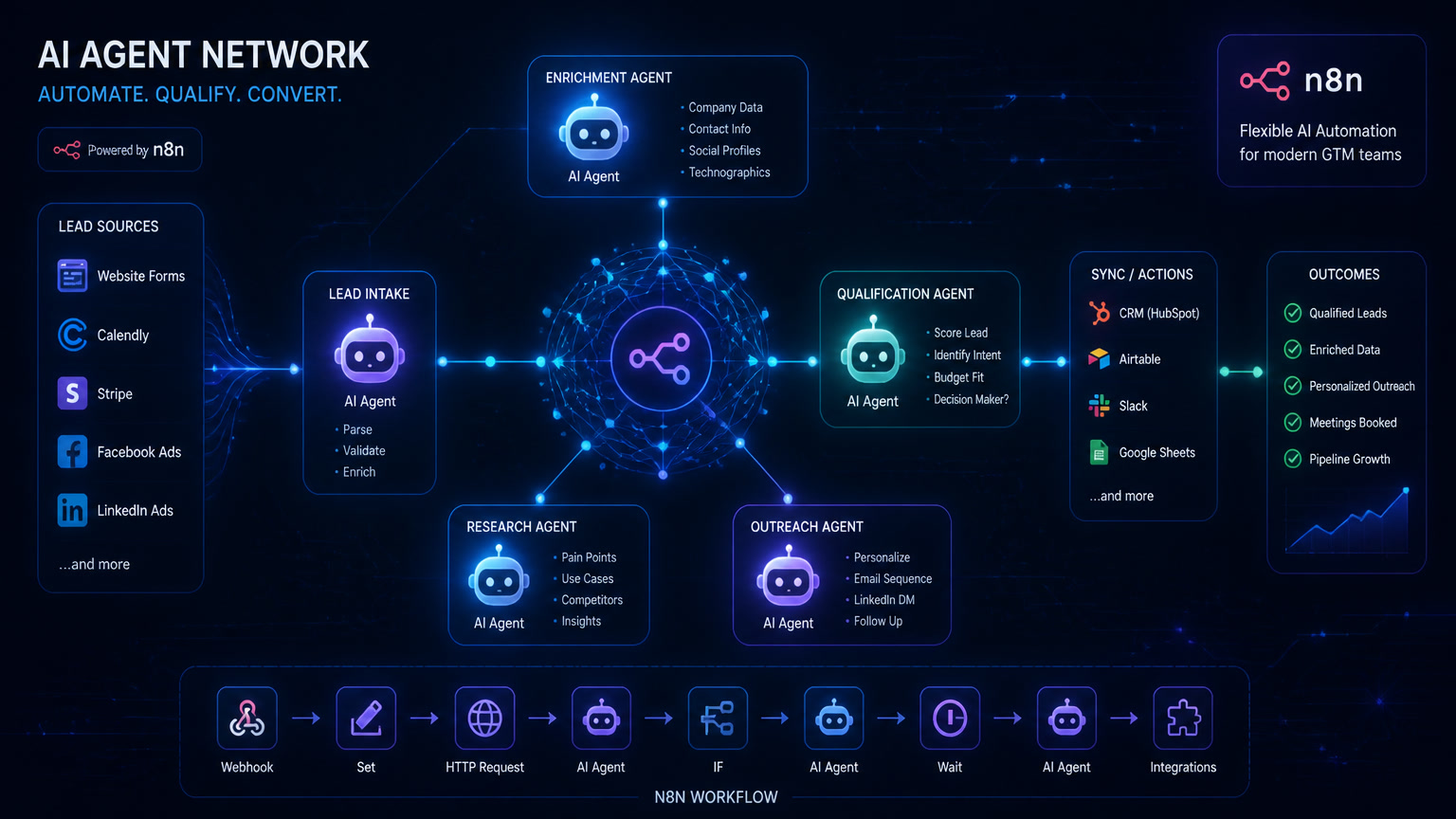
Integration with CRM like Clientify, HubSpot, or Salesforce, messaging platforms (WhatsApp Business API), and automation tools (Make, n8n) is critical. Without that integration layer, the agent is just an expensive experiment.
5. Underestimated Maintenance Cost
An AI agent is not a fire-and-forget project. Models need recalibration. Data changes. Workflows evolve. Agent decisions need constant human oversight, especially in regulated environments.
In our experience, the annual maintenance cost of a production AI agent runs approximately 40-60% of the initial implementation cost. Most companies do not budget for this.
The PILAR Framework: Implementation That Works
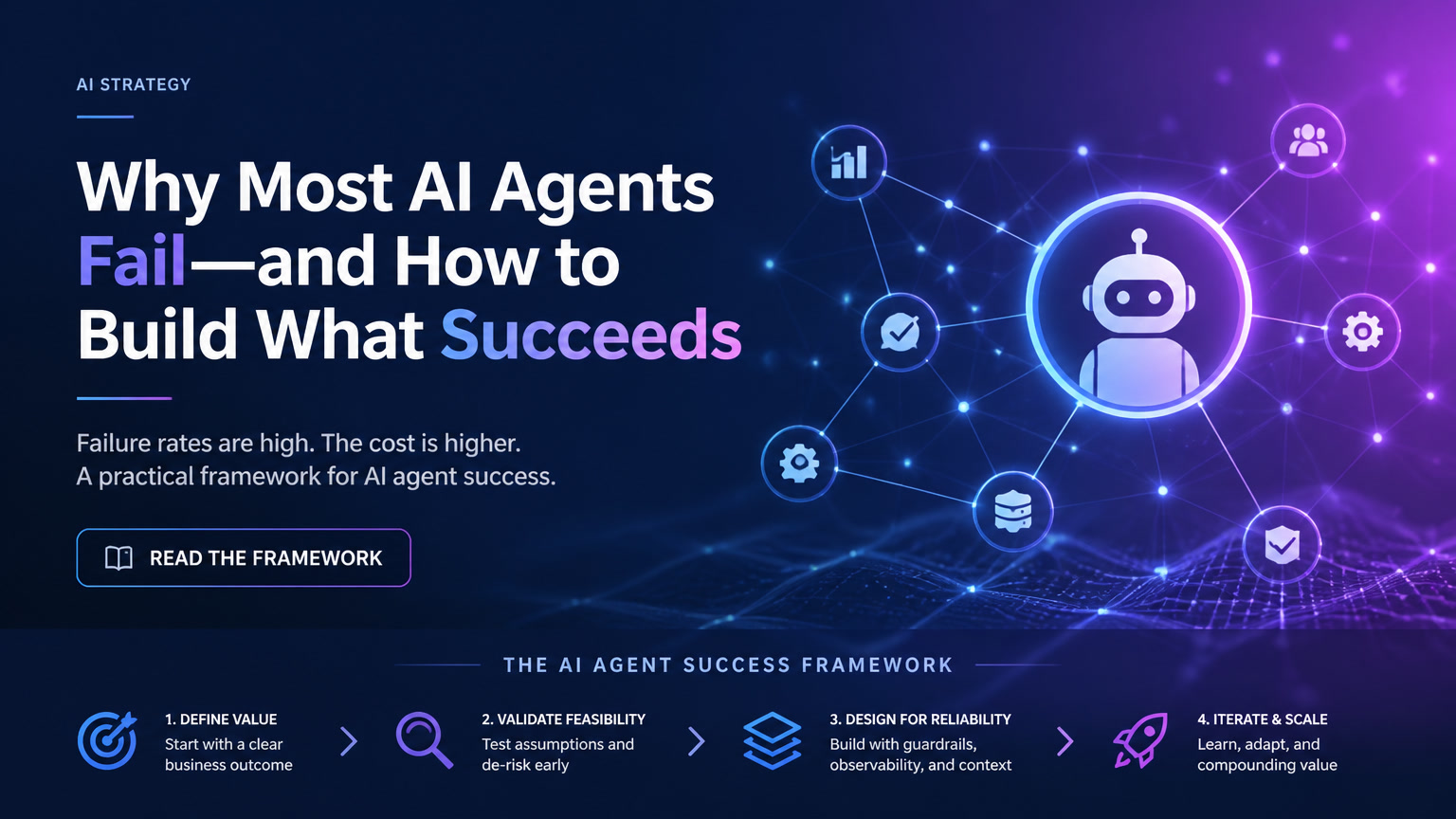
After deploying AI-powered automation for multiple clients, we have developed a five-phase framework we call PILAR (Prepare, Integrate, Launch, Adjust, Review). It is not theoretical — it is what actually works.
Phase 1: Prepare — Data and Process Diagnosis
Before talking about AI agents, we talk about data. This phase answers five questions:
- Where is your customer data? (CRM, WhatsApp, email, web)
- Is it clean and structured?
- Which manual processes repeat more than 10 times a day?
- What is the biggest pain point automation could solve?
- What metrics define success? (response time, close rate, NPS)
Typical duration: 2-4 weeks. Budget allocation: 15-20% of total project.
Phase 2: Integrate — Connect the Platforms
The AI agent needs access to the systems where data lives and actions happen. This means:
- Connect CRM (Clientify, HubSpot, Salesforce) via API
- Integrate WhatsApp Business API with automated flows
- Configure n8n or Make to orchestrate cross-platform workflows
- Set up webhooks for real-time events
- Define data access scope and permissions for the agent
Typical duration: 3-6 weeks. Budget allocation: 30-35% of total.
Phase 3: Launch — Controlled Pilot with Metrics
The pilot is not "deploy and see what happens." It is an experiment with clear hypotheses:
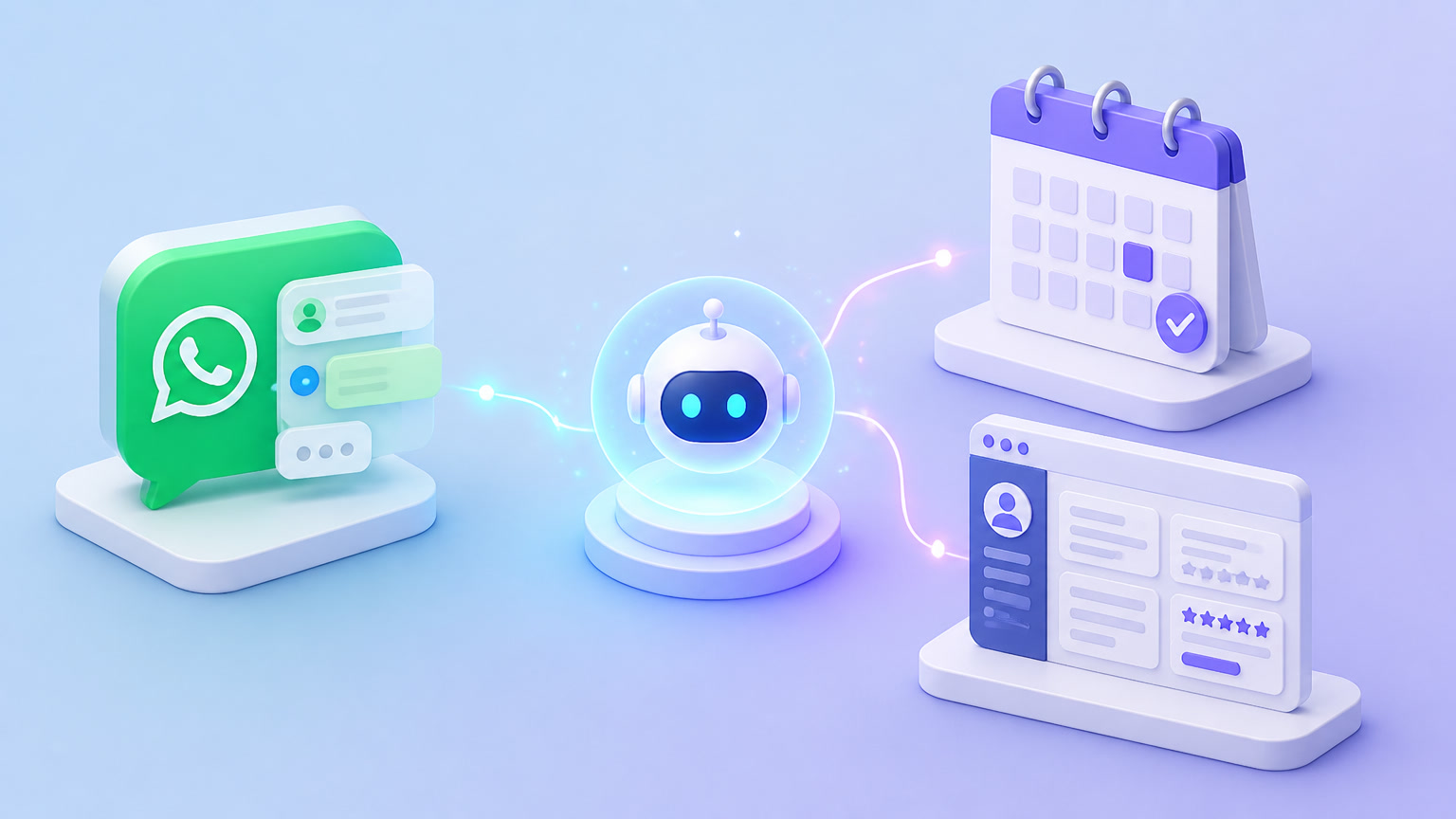
- Scope: One single workflow (e.g., inbound lead classification via WhatsApp)
- Duration: 4-6 weeks
- Metrics: Accuracy, time saved, team satisfaction, human escalation rate
- Oversight: 100% of agent decisions reviewed by a human
Golden rule: If after 6 weeks the agent has not reduced process time by at least 30%, do not scale. Redesign or discard.
Phase 4: Adjust — Iterate on Real Data
With pilot data, refine:
- Model confidence thresholds
- Human escalation rules
- Personalization variables
- Exception flows
This phase is continuous — it does not end when the agent "works." In our deployments, the first 3 months of operation require weekly adjustments.
Phase 5: Review — Maintenance and Evolution
Once in production, the agent needs:
- Monthly accuracy reviews
- Quarterly model retraining
- Decision audits (especially for customer-facing agents)
- Workflow updates when business processes change
Annual maintenance cost: 40-60% of initial implementation. Budget this from day one.
Comparison: AI Agents vs Traditional Automation
| Dimension | Traditional Automation (n8n/Make/Zapier) | AI Agents |
|---|---|---|
| Decision-making | Deterministic (if/else rules) | Probabilistic (model) |
| Exception handling | Limited, manual programming | Adaptive, self-learning |
| CRM integration | API-based, predefined flows | API + contextual understanding |
| Initial cost | Low-medium ($500-5,000) | Medium-high ($5,000-50,000+) |
| Maintenance | Low (only when APIs change) | Medium-high (ongoing recalibration) |
| Best for | Stable, repetitive processes | Variable, decision-intensive processes |
Combining both approaches — using traditional automation for stable flows and AI agents for decision-heavy processes — is the strategy that has delivered the best results for our clients.
When Does an AI Agent Actually Make Sense?
Not every process needs an AI agent. Based on our experience, these are the criteria for a good candidate:
- High volume: The process runs 50+ times a day
- Variability: Decisions do not follow fixed rules (context-dependent)
- Low error cost: The agent can make mistakes without catastrophic consequences
- High correct-decision value: Every good decision generates measurable savings or revenue
- Data availability: At least 1,000 documented historical cases
Concrete examples where we have seen success:
- Inbound lead classification via WhatsApp with Clientify + n8n + OpenAI
- Automated FAQ responses with CRM context
- Quote follow-up sequences with context-aware reminders based on lead behavior
Conclusion: Implementation Is the Product
The AI agent market is headed toward $52 billion by 2030. Salesforce already has 18,500 customers on Agentforce. Microsoft has 70 million Copilot seats. The direction is clear.
But the difference between companies that actually get ROI from this technology and those that waste their budget is not the AI model they choose. It is how they implement it.
At Mintec, we have seen the PILAR framework — Prepare, Integrate, Launch, Adjust, Review — work because it puts emphasis where it belongs: on data, on integration with real systems (CRM, WhatsApp, automation platforms), and on constant iteration.
The 88% failure rate is not a curse. It is a consequence of skipping steps. Companies that follow a disciplined implementation method — no shortcuts, no inflated expectations — are the ones that end up in the 12% that actually scale.
Wondering if your business is ready? The first step is always the data diagnosis. If the data is not ready, neither is the agent.
Related articles: Autonomous AI Agents — AI Agents vs Traditional Automation — AI-Powered CRM — WhatsApp Business Automation — No-Code AI Automation