Build pages for the question AI Mode asks next
Google AI Mode breaks a question into subtopics, then users ask follow-ups. Build one decision page around the next questions: fit, effort, proof, tradeoffs, and the action a buyer can take.
Build pages for the question AI Mode asks next
To prepare a page for AI Mode follow-up questions, do not bolt twenty FAQs onto the bottom. Build the page around the decision that comes after the first answer: whether the option fits, what it takes, what can go wrong, and what the reader should do with the information.
That order matters because the first question rarely settles anything. A buyer who asks, "Should a 40-person B2B team use an AI sales assistant?" may accept a basic explanation, then ask about data access, handoff rules, cost, or whether the team can keep control. A page that only defines the product has helped with turn one and abandoned the real decision.
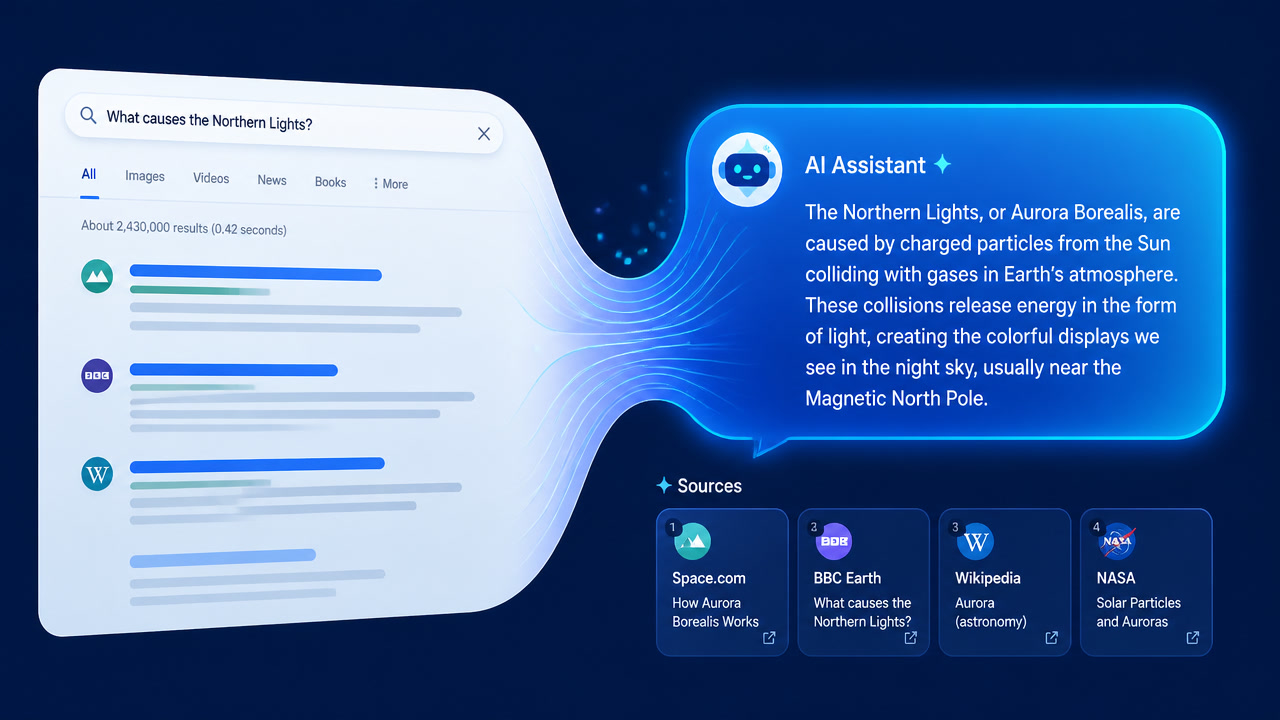
Google says AI Mode uses query fan-out: it breaks a question into related subtopics and runs multiple searches on the user's behalf. That is a useful content-design clue, not a secret ranking trick. Your page has a better chance of being useful when it answers the parts of a decision that need different kinds of support, rather than repeating one broad claim in five formats.
At Mintec, we call the resulting structure a question ladder. It gives the writer a way to make a page work for a human reading from top to bottom and for a search system retrieving one useful section. More importantly, it prevents the usual GEO mistake: confusing a longer page with a more complete one.
A follow-up is not just another keyword
Do not confuse background subqueries with a visible follow-up. Google says query fan-out breaks a question into subtopics and runs several searches, often without showing those searches to the user. A follow-up changes the job: "What is an AI sales assistant?" becomes "Can it work with our CRM without sending customer data to a third party?" The first asks for a definition. The second asks for a recommendation with a constraint.
This is not keyword expansion. Find the decision chain between the two questions: what must be true for a reader to move from curiosity to a sensible next step?
Google's AI features guidance offers no special AI Mode template. A page still has to be indexable, eligible for a Search snippet, and useful to people. Its AI optimization guide asks for expert-led information beyond common knowledge. A generic FAQ pile can look conversational while leaving out the facts that settle a decision.
The five-card question ladder
Start with one real buyer question. Then map the five questions that naturally follow it. The cards are not required headings and they are not a formula for every page. They are a test: if the page cannot answer one of these cards, should it be making the initial recommendation at all?
| Card | The next question | What the page needs |
|---|---|---|
| Answer | What is the recommendation in this situation? | A direct answer, with the condition that makes it true |
| Fit | Who is this right or wrong for? | Constraints: team size, workflow, location, budget, technical requirement, or timing |
| Effort | What has to happen to make it work? | Steps, inputs, owners, dependencies, and any honest range you can support |
| Proof | Why should I believe this? | A source, method, product documentation, first-hand process, or a clearly marked limit |
| Decision | What should I do next? | A comparison, a checklist, or a route to the deeper page that owns the detail |
The answer card keeps the opening from becoming throat-clearing. If the page starts with a sermon about AI changing business, it has not answered anyone yet.
The fit card is where company content usually fails. State the disqualifiers. "This workflow is a poor fit if approvals require a fully deterministic audit trail" beats "flexible for every business."
Effort is the operational work hidden behind the promise. Name the inputs, owner, exception path, and review point. If timing is unknown, say what must be scoped before anyone estimates it.
Proof needs more than a testimonial-shaped sentence. Identify whether the claim comes from product documentation, a dated dataset, a process your team runs, or an opinion. Our live-page GEO practice uses an evidence sheet for the same reason: formatting cannot make an unsupported claim reliable.
The decision card should reduce the next unknown, whether that means a vendor checklist, comparison table, or a link to the technical detail. It should not just end with "contact us."
Work through a real decision chain
Take this question: "Should we use an AI agent to qualify inbound leads before our sales team sees them?"
A weak page answers it with a definition, a few benefits, and a form. The question ladder makes the missing work visible:
- Answer: Yes, when the volume is high enough to justify triage and the team agrees on what the agent may or may not decide.
- Fit: It is a poor first move when lead volume is low, the qualification criteria are undocumented, or a wrong response creates material risk.
- Effort: Someone has to define routing rules, approve source material, test edge cases, and own the exception queue.
- Proof: Explain how the rules were tested, which system holds the source of truth, and which claims require a human review.
- Decision: Link to a readiness checklist or a comparison between a rules-based workflow and an agentic workflow.
Notice what this does not do. It does not guess every possible follow-up. It makes the consequential ones hard to miss. A visitor can keep reading; a system can retrieve the fit or proof section; a sales conversation begins with better questions.
The same approach works for an SEO page. A page that answers "How do we measure GEO?" should not stop at impressions. A buyer will ask whether the signal is stable, whether it led to a visit, and who owns the next test. That is why we keep public-answer checks, Google visibility, and referral or conversion data separate in our citation-volatility method. Combining them makes a prettier dashboard and a worse decision.
Decide what stays together and what deserves its own URL
The temptation is to create one article for every branch in the ladder. That creates a thin cluster of pages that send readers in circles.
Keep questions together when they share the same reader, evidence, and decision. A software evaluation page can reasonably cover fit, migration effort, and tradeoffs together because the reader needs all three before choosing.
Split a question into a dedicated page when one of these changes:
- The evidence is substantially different. A pricing comparison needs current figures and assumptions that do not belong in a general explainer.
- The reader is different. A technical buyer asking about data retention needs more than a sales leader choosing a workflow.
- The answer needs enough detail that the parent page would become evasive or unreadable.
- The follow-up has a distinct action. "How do we implement this?" may deserve an implementation guide with owners and prerequisites.
Use internal links to show the relationship plainly. The parent page should say what the child page answers and why someone should open it. "Read more" wastes the context that a reader and a retrieval system both need.
Our 30-minute GEO audit is useful here. Before publishing a new branch, check whether the site already has a strong answer that is buried, duplicated, or technically unavailable. Another article is not the fix for a page no one can find.
Review the page like a skeptical buyer
Before you publish, run a simple pass. Read only the opening, then each heading and its first two sentences. Can you tell what the recommendation is, when it changes, and what evidence supports it? If not, the page is asking the reader to assemble the argument from scraps.
Then ask four harder questions:
- Which follow-up would expose the weakest claim on this page?
- Does the page acknowledge a condition where the recommendation is wrong?
- Is there a visible source or owner behind every material fact?
- Does each internal link lead to a real answer rather than a generic category page?
This is where editorial judgment matters. Google can retrieve a neatly labeled section, but it cannot make a vague claim useful. A content template cannot supply proof your business has not collected.
Do not turn this into a promise that a page will appear in AI Mode. Google explicitly does not offer one. The goal is narrower: make the next useful question answerable without forcing the reader to start the research again somewhere else.
Measure whether the ladder improved the page
Measure the page as a cluster of signals, not as a citation lottery.
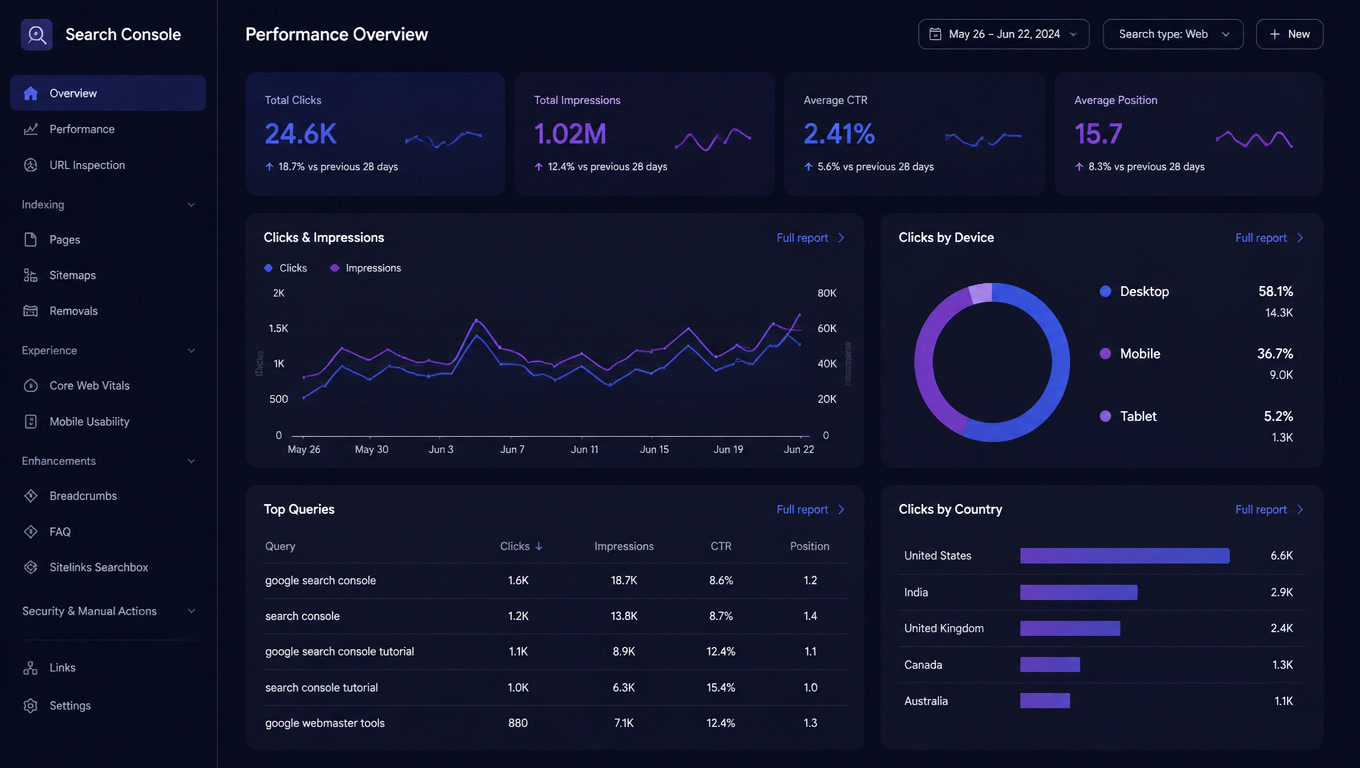
Google's Search Generative AI performance reports can show visibility in its generative features. They cannot tell you that a particular heading won a particular answer. Use them to watch the relevant URL and country over time.
Pair that view with a small, repeatable prompt panel. Record the exact question, locale, date, sources shown, whether the brand description is accurate, and what the next question reveals. Two checks are more useful than a trophy screenshot. If you want a practical way to avoid over-reading those checks, start with our guide to finding AI Mode queries in Search Console, then keep the raw answers alongside the numbers.
Finally, look at referrals and the action that matters after a visit. Visibility, a citation, a click, and a qualified lead are different events. A good content system does not pretend otherwise.
The page that survives the next question is usually the page that does the honest work upfront. It names the constraint, shows the proof, and gives the reader a sensible next move. That is harder than adding an FAQ. It is also far more difficult for a competitor to copy in an afternoon.
Frequently Asked Questions
How should I optimize a page for AI Mode follow-up questions?
Build the page around the decision that follows the initial answer. Give a direct answer first, then make fit, constraints, effort, proof, tradeoffs, and the next action easy to find. Use visible headings and evidence rather than a long list of invented FAQs.
Does FAQ schema make a page appear in Google AI Mode?
No. Google does not offer special markup that guarantees a page will appear in AI Mode or AI Overviews. FAQ schema can describe a real visible FAQ section, but it cannot replace an indexed page with useful, reliable information.
Should every AI Mode follow-up have its own article?
No. Keep closely connected questions on one decision page when a reader needs them together. Split a question into its own page when it needs distinct evidence, a different reader, or enough detail that the parent page would become hard to use.