Document and Contract Automation for Consultants: From First Draft to Signed Deal
Consulting firms lose 10-15 hours per proposal rewriting content that already exists. Heres how to automate the full document lifecycle — proposals, contracts, SOWs — based on 2026 data and real implementations with Latin American firms.
Document and Contract Automation for Consultants: From First Draft to Signed Deal
If your consulting firm or agency still writes proposals from scratch for every client, you are losing 10 to 15 hours per proposal — and 60-70% of that content has already been written before.
This is not an exaggeration. The 2026 data from The Crossing Report confirms that the average professional services proposal contains 60-70% reusable content: service descriptions, team bios, methodology, terms and conditions. And yet, most consulting firms keep rewriting that content from scratch, every single time.
This article is not a tool list. It is a walk through the full document lifecycle in a consulting firm — proposals, contracts, SOWs, engagement letters — with specific cost data for NOT automating, the tools that actually work by firm type, and the implementation wins (and failures) we have seen with Latin American firms.
The cost of not automating: the financial map
Let us start with the numbers, because they are why this is no longer optional.
The math is straightforward. A 10-person firm generating 20 proposals per month invests 200 to 300 hours monthly just on proposals. At a blended internal rate of $75/hour (what you pay your team, not what you bill), that is $15,000 to $22,500 per month in sunk document-production cost — time your team could spend on client service or winning new projects.
But the cost does not stop there. According to the Agency Management Institute benchmarks (2024), firms without automation spend 22-31% of staff time on non-billable admin. Automated firms cut that to 11-16%. Document automation is one of the three highest-ROI back-office processes, as we covered in our ROI of back-office automation article.
The problem is that most Latin American consulting firms know these numbers but do not act — not because they do not want to, but because they do not know where to start. And that is where the "all-in-one platform" approach usually backfires.
The document lifecycle: four stages to automate
Before talking about tools, we need to understand what we are automating. The document lifecycle in a consulting firm has four clear stages:
| Stage | Current (manual) process | Typical problem | Automation opportunity |
|---|---|---|---|
| 1. Creation | Write proposal from scratch, copy-paste from old documents | 60-70% reusable content rewritten with no added value | Content library + AI-assisted generation |
| 2. Customization | Adjust scope, pricing, and team for each client | Copy errors, wrong pricing, outdated terms | Structured brief + dynamic variables |
| 3. Review and approval | Endless emails, conflicting versions, verbal approval | 2-5 days lost in review cycles | Automated approval flow + version control |
| 4. Signing and billing | Print, scan, email, invoice manually | 7-14 days between agreement and first invoice | Integrated e-signature + automatic invoicing |
Each stage has its own solution, and the key decision is not technical but strategic: do you use one platform that does everything (a PSA) or build your own stack with specialized tools? Our PSA vs modular stack analysis covers this tradeoff in detail.
What the 2026 data actually says
The 2026 numbers leave no room for opinions. Here is what we found cross-referencing five independent sources on document automation:
Commercial proposals
The most comprehensive study comes from The Crossing Report (May 2026), which analyzed AI proposal tools across accounting, consulting, and law firms:
- Average manual time: 10-15 hours per proposal
- Time with AI + library: 2-4 hours (60-75% reduction)
- Firms that respond within 48 hours win at significantly higher rates than those that take 5-7 days
Per-tool data is concrete:
- Ignition (accounting): 40% proposal-to-close time reduction, used by 7,000+ firms
- PandaDoc: 65-80% reduction in creation time after building the content library
- Loopio (RFP): 3x faster RFP response production
Automated invoicing
AutoFact AI (2026) data shows automated invoicing drops cost per invoice from EUR 12-20 (manual) to EUR 0.50-3 (automated) — an 85-96% reduction. The cycle goes from 10-14 days to 2-4 days.
Contracts and engagement letters
Contract automation follows a similar pattern. Firms that integrate contract generation with their CRM reduce issuance time from 3-5 business days to under 24 hours, according to The Crossing Reports client onboarding data.
The content library: the secret ingredient everyone ignores
Here is the uncomfortable truth: you can buy the most expensive proposal tool on the market, but without a well-organized content library, the output will be generic.
A minimum viable library takes 3-4 hours to build:
- Select 5-10 winning past proposals (closed projects, strong client fit)
- Extract reusable sections: firm overview, team bios, service descriptions, methodology, terms and conditions
- Tag by client type and service type: a consulting proposal for a manufacturing firm is different from one for a fintech
- Load into your tool: whether Ignition, PandaDoc, or even Claude/ChatGPT with a brief template
The result: where you used to write for 10-15 hours, you now produce a 70-80% quality first draft in 15-30 minutes.
Mintec experience: We implemented this for an IT consulting firm in Mexico City. Their sales team produced 8-12 proposals per month, each taking 12-18 hours. With a content library in Google Docs plus a structured Claude prompt, they cut proposal time to 3-4 hours. The savings: ~100 hours/month that their sales team redirected to prospecting and follow-up. Their close rate climbed 8 percentage points in three months, mainly because they now responded in 48 hours instead of 5-7 days.
Tools by firm type
Not every tool fits every case. Here is our recommendation based on real implementations:
Strategic consulting firms
| Tool | Cost | Best for |
|---|---|---|
| PandaDoc | $49-79/user/month | Full proposals with e-sign and integrated payments |
| Proposify | $49/user/month | Visual proposals with prospect engagement analytics |
| Loopio | ~$2,000-5,000/month | Formal RFP responses (10+ employees, 5+ RFPs/year) |
| Beautiful.ai | $12-40/user/month | AI-generated pitch decks from a text brief |
Accounting firms
Ignition ($65-399/month) is the industry standard, used by 7,000+ firms. It handles proposals, engagement letters, e-signature, and recurring billing in one workflow. Best for firms with recurring services (monthly bookkeeping, tax prep, retainer engagements). If your firm also needs to automate the transition from signed deals to project delivery, the sales-to-delivery handoff automation guide is the natural complement to this process.
Law firms
Clio Grow (bundled from $89/user/month) integrates lead capture with engagement letter generation. Lawyaw (now Clio Draft) ($70/user/month) assembles documents from templates using client data.
The modular stack for Latin America
For Latin American firms where dollar costs of these tools are a factor, the modular stack (CRM + n8n + AI) is a viable alternative:
| Component | Monthly cost | Function |
|---|---|---|
| Clientify (CRM) | $0-99/month | Client management and pipeline |
| n8n self-hosted | $6-20/month | Workflow orchestration between tools |
| OpenAI/Claude API | $20-50/month | AI-generated first drafts |
| E-signature | $0-30/month | HelloSign, DocuSign, or local alternatives |
| Total | $26-199/month |
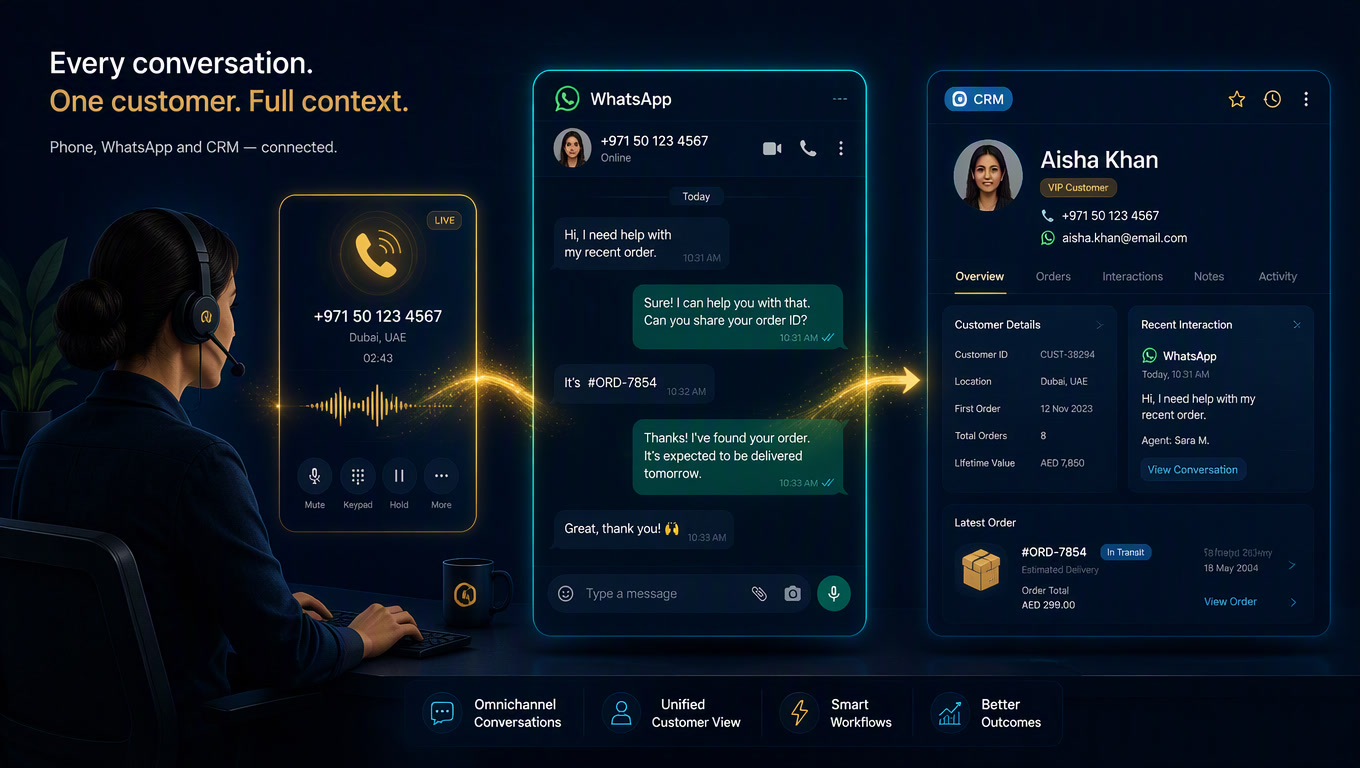
This stack connects via webhooks: when a lead advances to "proposal sent" in Clientify, n8n triggers AI draft generation, sends it for e-signature, and on signing creates the invoice automatically.
The three mistakes we see most often
Having implemented document automation for several clients, these are the recurring errors:
Mistake #1: Automating before standardizing. If every proposal in your firm uses a different format, no AI tool will fix the chaos. Define templates first, then automate.
Mistake #2: Skipping the content library. The most common mistake. Firms buy PandaDoc or Proposify, upload a generic template, and wonder why the AI drafts sound generic. The library of 5-10 winning proposals is 80% of the result.
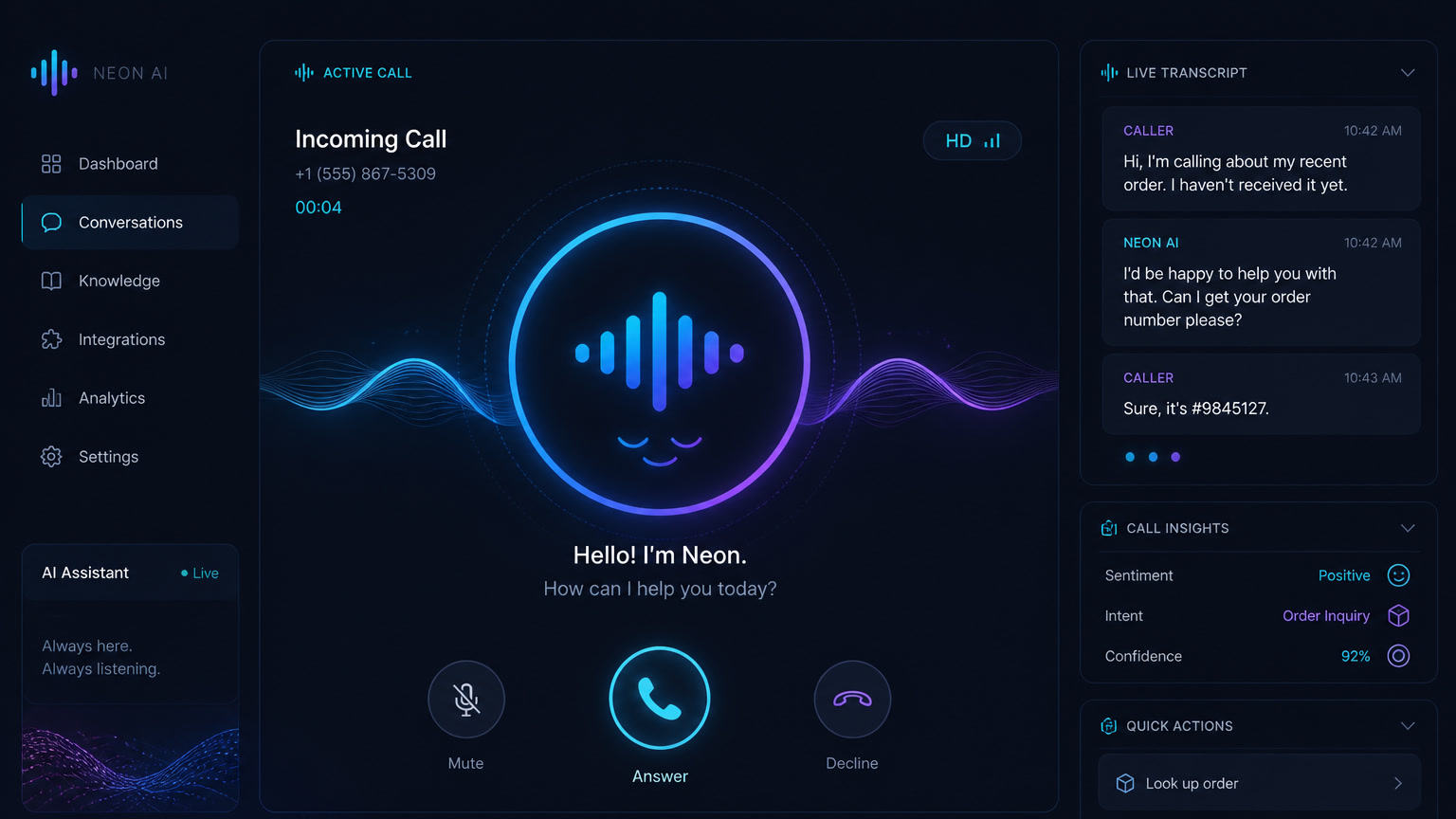
Mistake #3: Automating contracts without human review. According to The Crossing Report, firms that skip human review lose bids they would have won. AI produces a 70-80% quality draft in 15-30 minutes; a human reviews pricing, terms, and client-specific nuance. Speed without review makes you sound generic.
The 5-step implementation
If you want to start today, this is the path:
Week 1: Build the library. Spend 3-4 hours collecting and organizing 5-10 winning proposals. Extract reusable sections and tag by service and client type.
Week 2: Choose your tool. To start, use Claude or ChatGPT with the loaded library and a 2-page brief template. Zero software investment, immediate results.
Week 3: Add e-signature. Integrate DocuSign, HelloSign, or your local e-signature tool. Eliminate the print-scan-email cycle.
Week 4: Connect to your CRM. When a lead moves to "proposal sent," have the CRM trigger automatic draft generation. With Clientify + n8n, this takes hours to configure.
Month 2: Automate billing. When the contract is signed, have the invoice generated automatically. The full cycle: lead → proposal → signature → payment, with zero manual intervention.
The ROI of this process is measurable from the first proposal. A consulting firm producing 15 proposals per month recovers 75-100 hours in month one, which can be redistributed across client service, prospecting, and project delivery. This is not theory — these are the numbers we have seen in every implementation. If you want to explore how to apply this to your firm, contact us.
Frequently Asked Questions
How much time does document automation save consulting firms?
According to The Crossing Report (May 2026), firms that implement AI proposal tools reduce creation time from 10-15 hours to 2-4 hours per proposal — a 60-75% reduction. For a firm generating 20 proposals monthly, that is 100-150 recovered hours per month.
What tools automate documents for professional services firms?
Three categories exist: proposal platforms (Ignition for accounting from $65/mo, PandaDoc for general use from $49/user, Proposify for agencies from $49/user), RFP platforms (Loopio from $2,000/mo), and modular stacks using n8n + CRM + AI APIs that connect the full cycle from CRM to e-signature.
Is contract automation worth it for a 5-person consulting firm?
Yes, especially using free or low-cost tools. A library of 5-10 past winning proposals, loaded into Claude or ChatGPT with a 2-page brief template, cuts proposal time from 10-15 hours to 2-4 hours with zero additional software cost. Setup investment: 3-4 hours.