AI-Powered Customer Support Automation: Chatbots, Agents, and Real Results
AI is now autonomously resolving 44.8% of support tickets. Here is how it actually works, what the data says, and how to implement it without the hype.
AI-Powered Customer Support Automation: Chatbots, Agents, and Real Results
I have seen dozens of "AI support" proposals that promise the moon and deliver a chatbot that handles exactly three FAQs. But I have also seen implementations that actually work, and the gap between the two is enormous. The 2026 data no longer leaves room for hot takes: AI-powered customer support automation is measurable, profitable, and here to stay. The trick is knowing what to buy and how to deploy it.
What the data actually says
Let us start with numbers that are not pulled from a press release. Gartner projects that by end of 2026, 70% of customer interactions in enterprise contact centers will involve some form of AI. Not all will be fully automated — many are AI-assisted — but the volume is undeniable.
The same Gartner research projects $80 billion in global contact center labor cost savings by 2026. This is not aspirational — companies are already reporting these savings. GrooveHQ's April 2026 analysis documents an industry-average autonomous resolution rate of 44.8%. Small teams handling tightly scoped queries achieve up to 89% on the cases they handle.
The cost data is the most striking. Gartner puts the median cost per contact at $1.84 for self-service versus $13.50 for assisted channels. A 7.3x difference is so large that ignoring automation is basically leaving money on the table. For a company handling 10,000 tickets a month, shifting even 30% to self-service saves roughly $35,000 per year.
From decision-tree chatbots to autonomous agents
Between 2018 and 2023, most "chatbots" were decision trees with a nicer UI. Pick an option, then another, and if you were lucky you reached the end without getting stuck. That era is ending.
What is replacing traditional chatbots are autonomous AI agents. The difference is subtle but fundamental: a chatbot follows instructions, an agent pursues a goal. Instead of waiting for the user to select from a menu, the agent understands intent, searches the knowledge base, executes actions, and resolves the issue without escalating to a human.
Intercom's Fin AI Agent reports 50% autonomous resolution on incoming tickets (Automation Atlas, 2026). It is no coincidence they have evolved from a chat tool to a customer service automation platform.
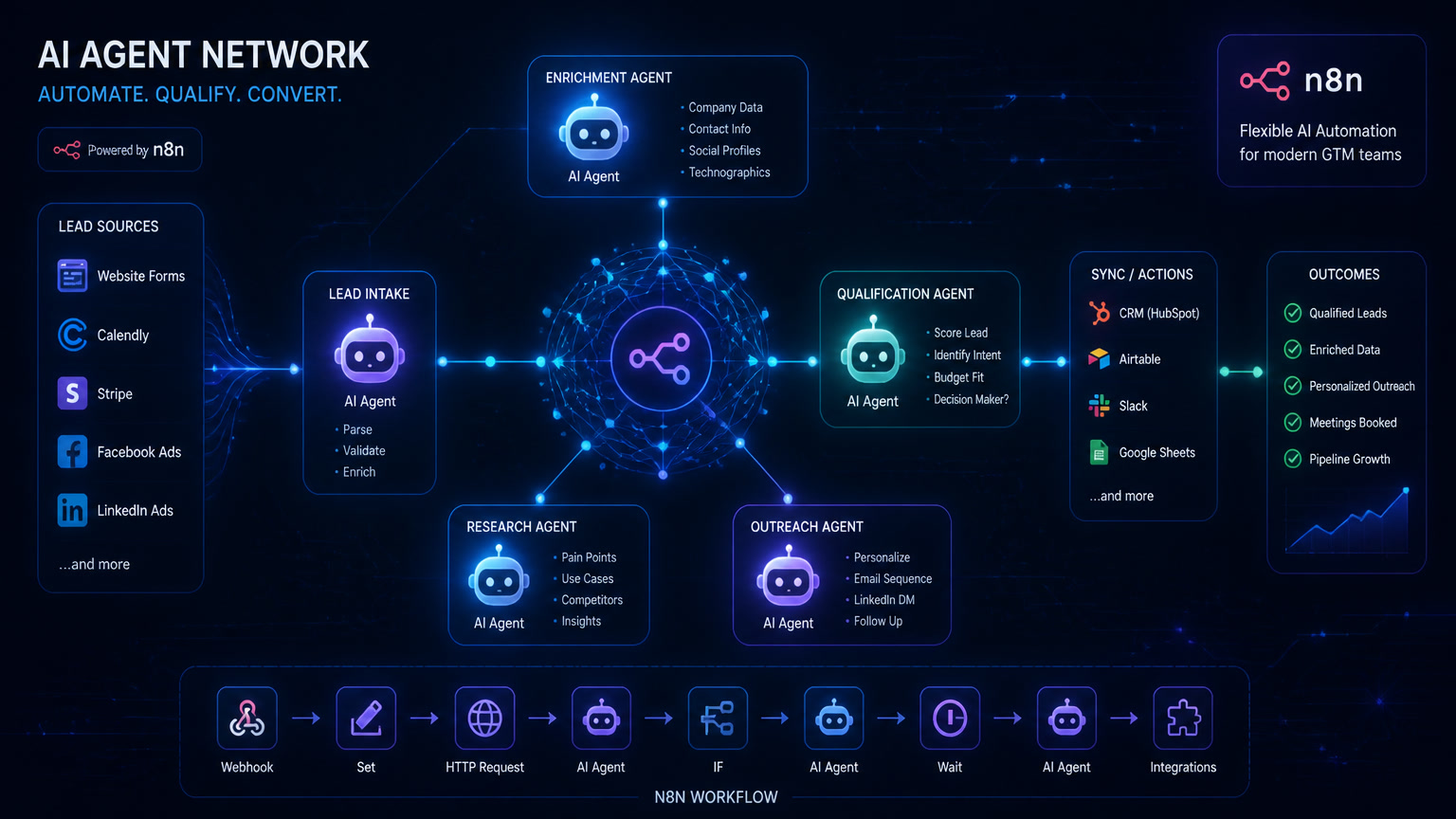
Some companies are already running multi-agent systems where one agent classifies the ticket, another searches documentation, a third executes actions in backend systems (refunds, plan changes, data updates), and only the final result reaches the customer. All within seconds.
The three generations of support automation
Understanding where the industry is helps you decide where to invest:
- Generation 1 (2015-2020): Rules-based chatbots. If/then logic trees. High maintenance, low flexibility. They handle exactly what you program them to handle and fail on anything outside the script. Average resolution rate: 10-20%.
- Generation 2 (2020-2024): NLP-powered bots. Models like BERT and early GPT iterations power intent classification. They understand variations in how users phrase things. Resolution rate: 20-40%.
- Generation 3 (2024-present): Agentic AI. Models like GPT-5 and Claude 4 reason about the problem, access tools and APIs, execute multi-step workflows, and learn from feedback. Resolution rate: 40-89% depending on scope.
Most companies I talk to are still on Gen 1 or 2 and wondering why their chatbot feels dumb. The leap from Gen 2 to Gen 3 is not incremental — it is a completely different paradigm. Instead of mapping intents to responses, you give the AI agent access to your knowledge base, your ticketing system, and your backend APIs, and it figures out the rest.
Where it works and where it does not
There is an uncomfortable truth that AI vendors do not advertise: 45% of queries can be deflected to automation, but only 14% are fully resolved through self-service, according to Gartner. That 31% gap represents tickets where a customer engages with AI but eventually needs a human.
The deployment pattern that works best is tiered resolution:
- The AI agent receives the ticket and classifies it
- If it can resolve it, it does
- If not, it escalates to a human agent with full context
- The human picks up where the AI left off, without the customer repeating anything
Companies deploying this model see results that companies using a dumb chatbot and forgetting about it cannot touch. Forrester reports that organizations deploying AI in customer support see 30-40% reductions in support operating costs.
Types of tickets that actually work with AI
From my research across multiple case studies, here is what maps well to automation:
| Ticket type | AI resolution rate | Complexity |
|---|---|---|
| Password resets / account access | 85-95% | Low |
| Order status and tracking | 75-90% | Low |
| Billing questions and invoices | 60-80% | Medium |
| Product recommendations | 50-70% | Medium |
| Technical troubleshooting | 30-50% | High |
| Complaints and escalations | 10-25% | Very high |
The pattern is clear: the more predictable the answer, the better AI performs. Complex issues that require understanding nuance, emotions, or company policy gray areas still need humans.
Platforms and tools in 2026
The ecosystem is mature with options for every company size:
- Intercom with Fin AI Agent: good for companies with existing knowledge bases, ~50% autonomous resolution, starts at $39/seat/month
- Zendesk with Answer Bot and AI flows: solid if you already use Zendesk, deep ticket integration, AI add-on costs extra
- Freshdesk with Freddy AI: more affordable, good for SMBs, better for simpler setups
- Custom solutions: using models like Claude or GPT-5 connected to your knowledge base via APIs, orchestrated with LangChain or similar frameworks. More work upfront but full control.
The most interesting 2026 trend is CRM-support convergence. Platforms are no longer just tickets — they are operations centers where customer history, past interactions, and purchase data feed the AI agent. Zendesk, Intercom, and Freshdesk are all competing in exactly this space.
The dark side: data privacy and compliance
Nobody talks about this enough in the AI support hype. When you pipe your customer conversation data through a third-party AI model, where does that data go? Are you compliant with GDPR, CCPA, or your industry regulations?
Some platforms now offer on-premise or private cloud deployment options for regulated industries like healthcare and finance. If you handle sensitive data, this needs to be part of your evaluation from day one — not an afterthought when the privacy audit comes.
How to start without failing
Based on what I have seen work and fail, here is the practical playbook:
Audit your current tickets. Review the last 500 tickets. Categorize them by type, frequency, and resolution path. Identify the repetitive, predictable ones with clear answers. Those are automation candidates. Tickets requiring human judgment, contextual reasoning, or non-binary decisions are not.
Define a narrow scope. Do not try to automate all support at once. Start with one category: password resets, shipping tracking, billing FAQs. Measure resolution rate, customer satisfaction, and escalation rate before expanding.
Invest in your knowledge base. An AI agent is only as good as the documentation it consumes. If your help articles are confusing, incomplete, or outdated, the agent will hallucinate answers. Fix the knowledge base first. Rewrite your top 20 support articles with clear, structured information that an AI can parse.
Monitor escalation rate. The magic metric is not "how many tickets the AI resolves" but "how many it escalates unnecessarily." High escalation means the AI is not understanding edge cases well. Low escalation with low resolution means the AI is resolving incorrectly — which is worse.
Measure CSAT segmented. Track customer satisfaction separately for AI vs human interactions. I have seen cases where AI outperforms humans on CSAT (faster, more consistent) and the reverse. Without segmented data, you cannot know what to improve.
Have a human fallback plan. When the AI cannot resolve an issue, the transition to a human agent must feel seamless. The customer should not have to repeat themselves. The human should see the full conversation history and what the AI already tried. This sounds obvious but most implementations get it wrong.
What is next
By 2027, I expect three trends to accelerate:
Voice agents. Serious voice agent implementations are already handling complete calls without human intervention. Not the "press 1 for" IVR assistants — natural conversations where the agent speaks, understands context, and resolves issues. The latency has dropped to under 500ms for response generation, making real-time conversation feel natural.
Proactive support. Instead of waiting for a customer to have a problem, AI agents will detect anomalies (a failed payment, an upcoming renewal, a feature the customer might need) and reach out proactively. This flips the support model from reactive to preventative.
Back-office automation. The next leap is not resolving tickets faster but resolving them without anyone touching them. If a customer requests a refund, the AI agent processes it directly in the payment system without human approval for each case. Companies with modern systems are already doing this, and the results are dramatic — some report 60% of refund requests handled end-to-end by AI.
Related articles
- AI Agents vs. Traditional Automation: What Actually Works for Business Processes
- WhatsApp Business API: How Automation Is Reshaping Sales and Customer Support
- AI-Powered CRM: Beyond Traditional Customer Management
When to call a human
Here is my honest take: AI customer support is not ready to replace your entire support team. It is ready to handle the boring, repetitive, high-volume tickets so your human agents can focus on the complex, emotional, high-value interactions that actually need human judgment.
The companies that get this right think of AI not as a replacement but as a force multiplier. Your best support agent can now handle 3x the tickets because the AI is filtering out the noise. Your customers get faster responses for simple issues and better attention for complex ones. Everyone wins.
If you are considering automating customer support in your business, start with an honest assessment of your current processes. At Mintec, we help companies design and implement automation and chatbot systems that actually deliver — no empty promises.
For more context, check out our coverage of AI agents vs traditional automation, WhatsApp Business automation, and our automation and chatbots service.
Frequently Asked Questions
How are AI agents different from traditional support chatbots?
Traditional chatbots follow fixed flows or scripted intents. AI agents can interpret a request, retrieve relevant knowledge, use approved tools, and hand off unresolved work with the customer context preserved.
Which support tickets should a team automate first?
Start with high-volume, predictable requests that have clear knowledge-base answers, such as account access, order status, or routine billing questions. Keep complaints, policy exceptions, and complex troubleshooting in the human queue.
How should a team measure whether AI support is working safely?
Track autonomous resolution, escalation rate, repeat contacts, and CSAT separately for AI-assisted and human-assisted cases. Review sampled conversations so a low escalation rate does not hide incorrect resolutions.