The End of the One-Ad-Fits-All: Why Meta and TikTok Demand 6 Creative Angles Per Campaign
Meta now converts. TikTok discovers. Running the same creative across both platforms is burning your budget. Here's the creative split framework —6 simultaneous angles— that winning brands are using in 2026, and how to produce them without a studio budget.
The End of the One-Ad-Fits-All: Why Meta and TikTok Demand 6 Creative Angles Per Campaign
If you're still running the same creative —or two minor variations— across Meta and TikTok, you're not optimizing your ad spend. You're paying twice to reach the wrong part of the same funnel.
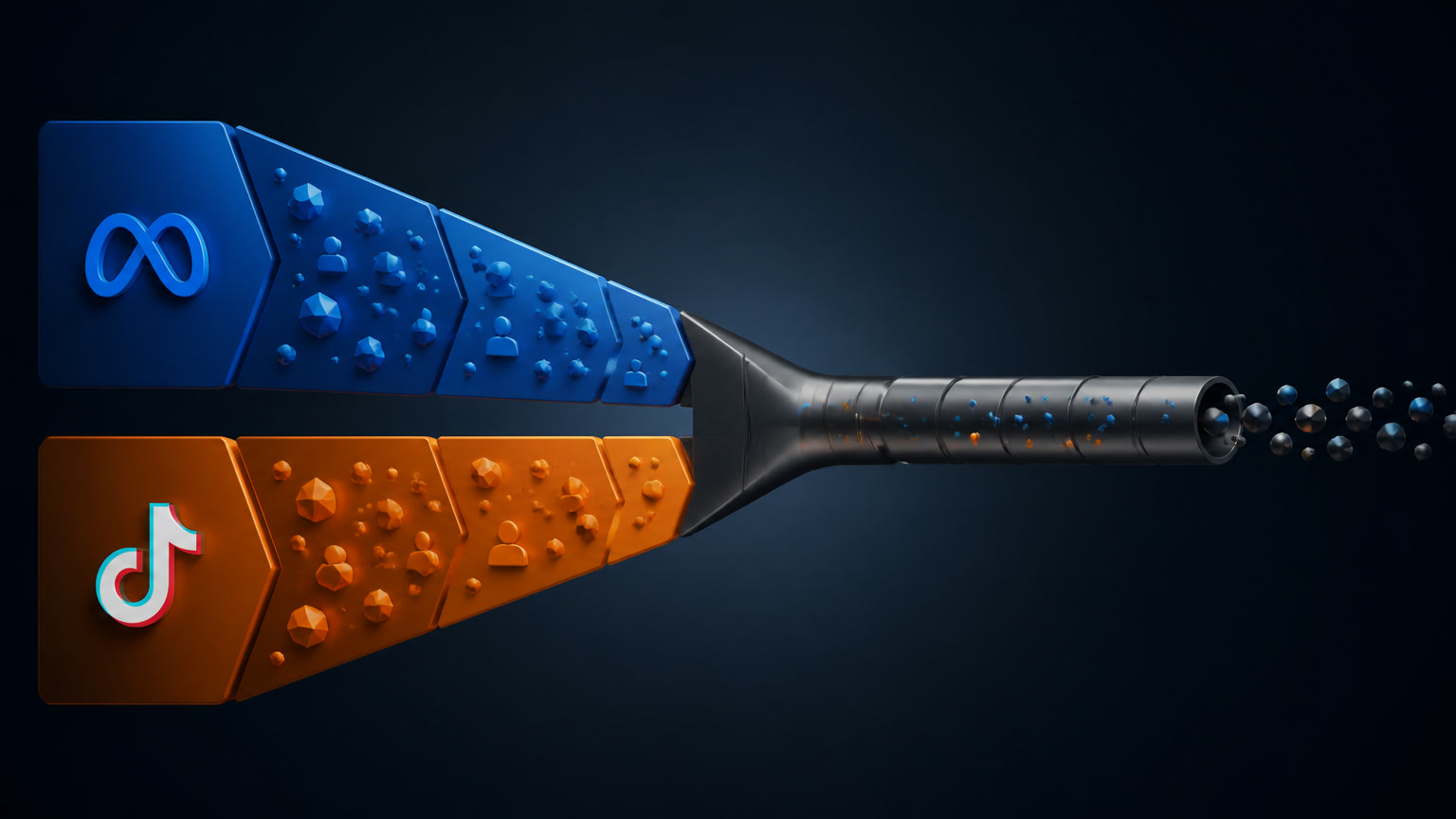
This isn't an opinion. It's what the data from 2026 is showing without ambiguity. Meta and TikTok no longer compete for the same advertising space. They split the funnel. And the creative that works on one platform typically underperforms on the other.
The latest analysis from CoinIS (June 2026) maps this divergence clearly: Meta dominates conversion with Advantage+ Shopping, deep purchase-intent signals, and CAPI. TikTok owns discovery with viral reach and trend-driven engagement. And the brands that are winning —not just the ones spending the most— are running 4 to 6 distinct creative angles simultaneously per campaign, not one or two with slight tweaks.
The obvious problem: if you used to need 2 creatives per campaign and now you need 6, your production capacity becomes your bottleneck. This isn't a list of tips. It's a framework for understanding the split and a tactical guide to scaling production without a studio.
Why Meta and TikTok Stopped Being the Same Channel
For years, the standard playbook was: produce one ad, run it on Facebook, Instagram, and —after a vertical crop— TikTok. That era is over for three structural reasons.
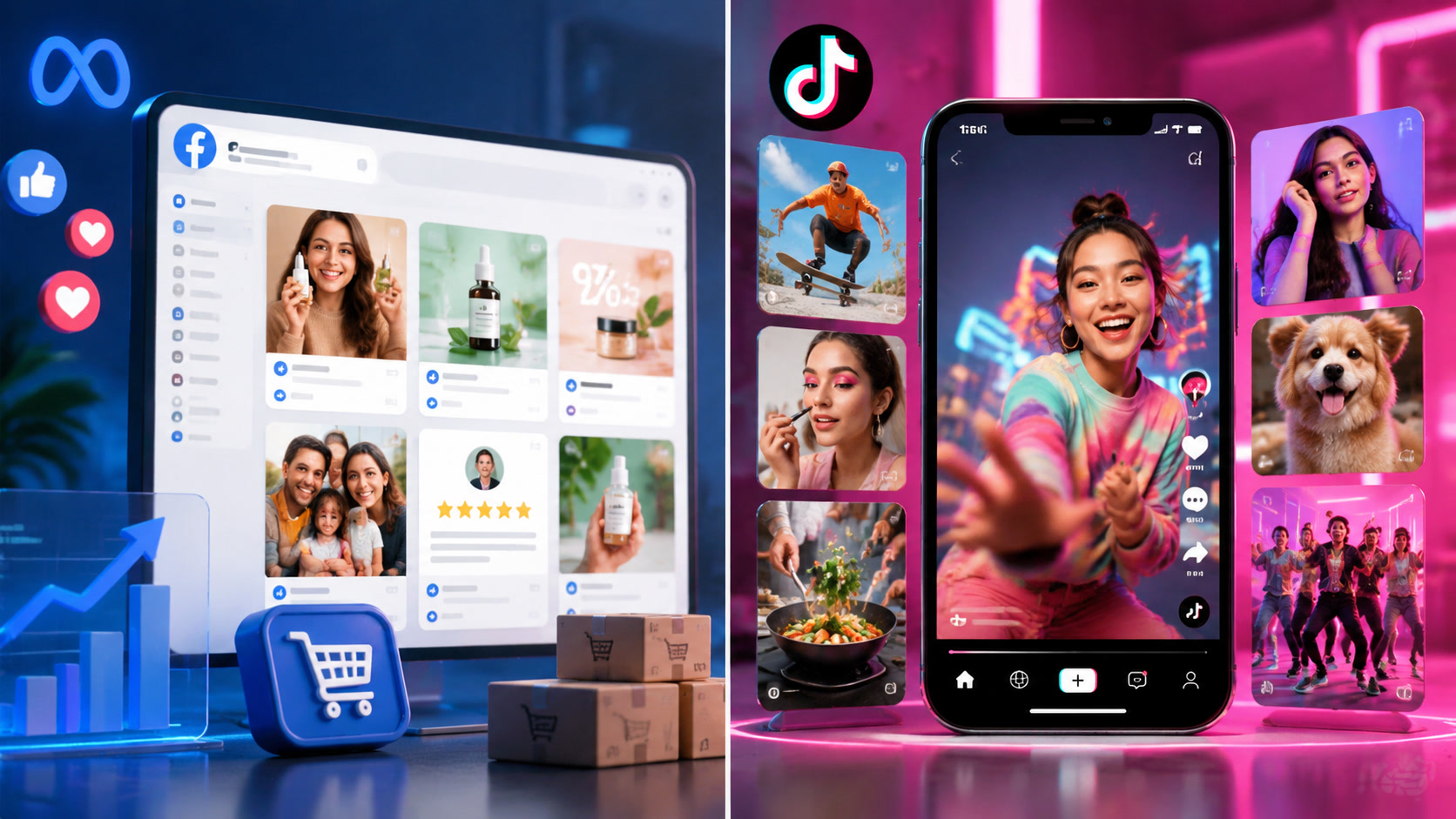
Meta became a conversion machine. The Advantage+ algorithm no longer segments audiences; it finds them. And it does this better the more conversion signals it receives. Meta knows who's going to buy before that person sees your ad. Its strength is middle and bottom of funnel: offers, testimonials, social proof, price comparisons. The creatives that work on Meta are the ones that close sales.
TikTok is still a discovery engine. 88% of TikTok Shop users discover brands they want to buy within the platform (Shop Social Report, 2026). TikTok rewards entertainment, authenticity, and trend-jacking. Its winning creatives don't sell — they hook. Three-second hooks, native formats, content that doesn't look like an ad.
The same user behaves differently on each platform. That user browses Meta to compare and decide, and scrolls TikTok to discover and get inspired. Showing them the same ad in both contexts isn't brand consistency — it's noise.
"Winning brands now run 4-6 creative angles simultaneously per campaign across both platforms, not one or the other." — CoinIS, Meta vs TikTok Ecommerce Ads 2026
The Creative Split Matrix: 3 Platforms × 2 Funnel Stages
At Mintec, we use a straightforward matrix to plan multi-platform creative production. We call it the Creative Split Matrix:
Meta (conversion)
| Stage | Creative Angle | Format |
|---|---|---|
| Middle of funnel | Video testimonial (real customer solving a real problem) | 15-30s, structured testimonial |
| Middle of funnel | Comparison or before/after vs. competition | Carousel or 30s video |
| Bottom of funnel | Offer + urgency (limited-time discount + direct link) | Static + aggressive CTA |
| Bottom of funnel | Social proof (review scores, case studies, customer count) | Short video or carousel |
TikTok (discovery)
| Stage | Creative Angle | Format |
|---|---|---|
| Top of funnel | Pure entertainment hook (trend or native format, no selling) | 7-15s, TikTok-native |
| Top of funnel | "Day in the life" or behind-the-scenes showing real product use | 15-30s, POV |
| Top of funnel | Authentic UGC (customer or employee showing the product unscripted) | 15-30s, raw |
| Middle of funnel | "Did you know…?" (curious fact or problem-solution hook) | 15-30s, educational |
Every campaign should have at least one creative from each quadrant active simultaneously. Not sequentially. Simultaneously. Because the user who discovers you today on TikTok may be ready to buy tomorrow on Meta — and if they don't see your message in both channels with the right angle, you lose the sale.
This is also why Meta's Andromeda algorithm rewards creative diversity: the more distinct angles you upload, the more data the system has to find which combination works for which segment.
The Real Bottleneck Isn't Strategy — It's Production
The framework is clear. The problem is operational: producing 6 distinct creatives (not variations) per campaign requires a content volume that most in-house teams and smaller agencies don't have.
Brands with budget solve this by hiring studios, production companies, and dedicated UGC teams. What about everyone else?
Three approaches are working in 2026 to scale production without multiplying the budget:
1. UGC with a brief, not with luck
User-generated content isn't new, but most brands treat it as free and random. It's not. The brands scaling UGC treat their creators as content vendors with structured briefs. They send a 3-point brief: what to show, what to say, what not to say. They get 10-15 clips per session that can be repurposed into 3-4 distinct angles for both Meta and TikTok.
The numbers: Resident (NectarSleep, DreamCloud) reported a 0.89 ROAS with traditionally produced ads vs. 1.08 with creator UGC — zero production cost (Shop Social Report, 2026). That's a 21% performance lift at 90% lower cost.
2. AI as a production layer, not a creative substitute
Here's a distinction most brands miss: AI doesn't replace creative strategy, but it can multiply the variations of a proven concept. Using AI video generation tools —like the ones we build at Mintec with Virtalio— lets you take a single recorded testimonial and generate 3 versions: one for Meta Feed (square), one for Meta Stories (vertical with overlays), and one for TikTok (vertical with accelerated pacing and dynamic captions).
This isn't "creating content with AI." It's optimizing and diversifying human content with AI. The concept and authenticity come from the person; the multi-platform adaptation comes from the machine.
3. The rotating template model
The third path —and the most underused— is creating format templates that get filled with new content weekly. Instead of producing 6 creatives from scratch every campaign, define 6 standard formats (testimonial, comparison, UGC, trend hook, educational, offer) and produce fresh content to fill them. Week one is expensive. By week three, you're producing 6 creatives per campaign in the same time you used to produce 2.
This approach pairs well with Virtalio's AI video pipeline, which automates the adaptation layer so your team focuses on capturing the raw content that matters.
What This Means for Brands and Agencies in LATAM
For Latin American advertisers, this creative split has an extra implication. Historically, brands in LATAM have operated with tighter budgets and less access to production studios. The good news: the creative split levels the playing field.
UGC and native TikTok formats don't require expensive production. They require content strategy. And that's exactly where an experienced agency makes the difference. In our work with brands across Mexico, Colombia, and Central America, the brands seeing the best ROAS in 2026 aren't the ones spending the most on production — they're the ones investing the most in angle variety.
One Colombian beauty brand we work with went from 2 creatives per campaign to 5 using the rotating template model. In 60 days, their Meta ROAS went from 1.8x to 3.2x, and their organic TikTok reach multiplied 4x. They didn't hire more people. They just stopped producing "pretty ads" and started producing different ads.
This ties directly to what we covered in our LinkedIn Ads Agency Certification analysis: differentiation in 2026 isn't about which platform you use — it's about how you adapt your message to each platform without losing brand consistency.
The Cost of Not Adapting
The creative split isn't a theory. It's a consequence of user behavior and how the platforms are optimizing their algorithms. Meta rewards conversion. TikTok rewards engagement. Asking one creative to do both jobs on both channels is like asking a single TV commercial to sell a product and be entertaining enough that nobody changes the channel.
Brands that keep running the same ad across Meta and TikTok in 2026 won't fail spectacularly. They'll bleed slowly: budget wasted on creatives that underperform on one platform, missed opportunities on the other, inconclusive data that teaches the algorithm nothing about what works.
Starting is simple. You don't need 6 creatives tomorrow. You need 3: a testimonial for Meta, an entertainment hook for TikTok, and one UGC format for both. Launch them simultaneously. Measure which performs where. And next week, double the angles that worked.
That's the real competitive advantage in 2026: not producing more, but producing with different intent for each funnel stage.
At Mintec we design multi-platform paid media strategies for brands in LATAM and the US. If you want an audit of your current creative split, reach out.
Sources: CoinIS — Meta vs TikTok Ecommerce Ads 2026, Shop Social Report by Influencer (June 2026), EMARKETER — Social Commerce FAQ 2026